Review
. 2020 Nov 26:2020:8861903.
doi: 10.1155/2020/8861903. eCollection 2020.

Changes in Hippocampal Plasticity in Depression and Therapeutic Approaches Influencing These Changes

Affiliations
Review

Changes in Hippocampal Plasticity in Depression and Therapeutic Approaches Influencing These Changes

Wenbo Xu et al. Neural Plast. .

Abstract

Depression is a common neurological disease that seriously affects human health. There are many hypotheses about the pathogenesis of depression, and the most widely recognized and applied is the monoamine hypothesis. However, no hypothesis can fully explain the pathogenesis of depression. At present, the brain-derived neurotrophic factor (BDNF) and neurogenesis hypotheses have highlighted the important role of plasticity in depression. The plasticity of neurons and glial cells plays a vital role in the transmission and integration of signals in the central nervous system. Plasticity is the adaptive change in the nervous system in response to changes in external signals. The hippocampus is an important anatomical area associated with depression. Studies have shown that some antidepressants can treat depression by changing the plasticity of the hippocampus. Furthermore, caloric restriction has also been shown to affect antidepressant and hippocampal plasticity changes. In this review, we summarize the latest research, focusing on changes in the plasticity of hippocampal neurons and glial cells in depression and the role of BDNF in the changes in hippocampal plasticity in depression, as well as caloric restriction and mitochondrial plasticity. This review may contribute to the development of antidepressant drugs and elucidating the mechanism of depression.


Conflict of interest statement

The authors declare no conflict of interest.

Figures
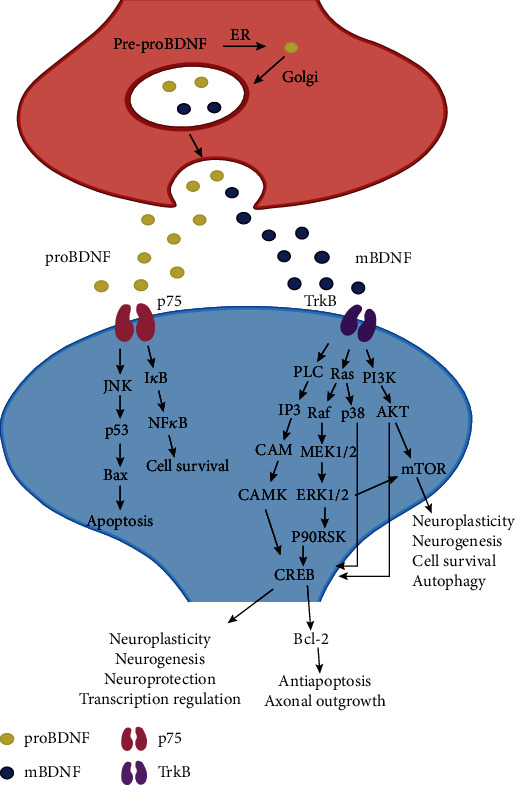
Figure 1
Figure 1
Diagrams of the BDNF-relevant signaling pathways. BDNF: brain-derived neurotrophic factor; ER: endoplasmic reticulum; TrkB: tropomyosin receptor kinase B; PLC: phospholipase C; IP3: inositol triphosphate; CAM: calmodulin; CAMK: CAM-dependent protein kinase; p90RSK: 90 kDa ribosomal S6 kinase; ERK1/2: extracellular-regulated kinase 1/2; PI3K: phosphoinositide 3-kinase; AKT: protein kinase B; mTOR: mammalian target of rapamycin; CREB: cAMP-response element binding protein; JNK: c-Jun N-terminal kinase; Bax: Bcl-2-associated X protein; NF-κB: nuclear factor-κB; IκB: an inhibitor of NF-κB.
Figure 2
Figure 2
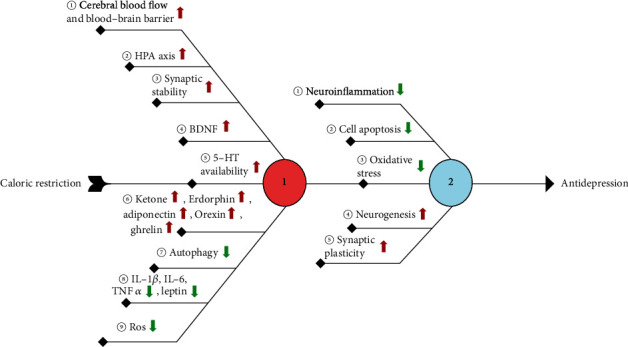
The molecular mechanism involved in the antidepressant effect of caloric restriction.
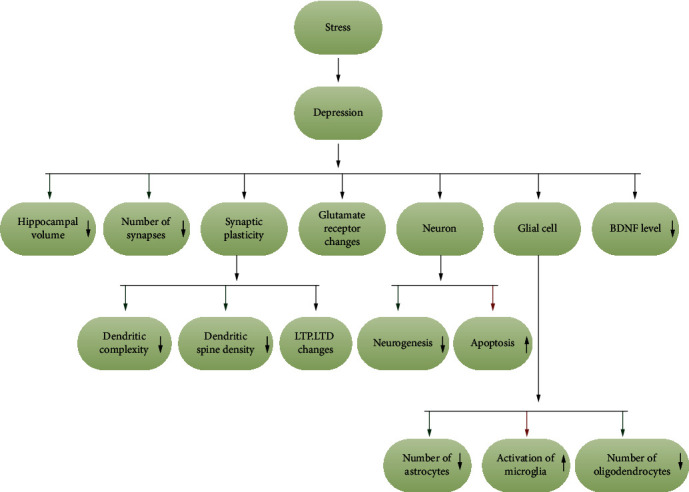
Figure 3
Figure 3
Changes in hippocampal plasticity in depression.

References

    1. Huang Y., Wang Y., Wang H., et al. Prevalence of mental disorders in China: a cross-sectional epidemiological study. Lancet Psychiatry. 2019;6(3):211–224. doi: 10.1016/S2215-0366(18)30511-X. - DOI - PubMed
    1. Sheline Y. I., Liston C., McEwen B. S. Parsing the hippocampus in depression: chronic stress, hippocampal volume, and major depressive disorder. Biological Psychiatry. 2019;85(6):436–438. doi: 10.1016/j.biopsych.2019.01.011. - DOI - PubMed
    1. Cao B., Passos I. C., Mwangi B., et al. Hippocampal subfield volumes in mood disorders. Molecular Psychiatry. 2017;22(9):1352–1358. doi: 10.1038/mp.2016.262. - DOI - PMC - PubMed
    1. Maller J. J., Broadhouse K., Rush A. J., Gordon E., Koslow S., Grieve S. M. Increased hippocampal tail volume predicts depression status and remission to anti-depressant medications in major depression. Molecular Psychiatry. 2018;23(8):1737–1744. doi: 10.1038/mp.2017.224. - DOI - PubMed
    1. Ding Y., Dai J. Advance in stress for depressive disorder. Advances in Experimental Medicine and Biology. 2019;1180:147–178. doi: 10.1007/978-981-32-9271-0_8. - DOI - PubMed

Publication types

MeSH terms

Substances

LinkOut - more resources