. 2021 Mar:22:100979.
doi: 10.1016/j.genrep.2020.100979. Epub 2020 Dec 4.

Comprehensive in silico identification of impacts of ACE2 SNPs on COVID-19 susceptibility in different populations

Affiliations

Comprehensive in silico identification of impacts of ACE2 SNPs on COVID-19 susceptibility in different populations

Alireza Paniri et al. Gene Rep. 2021 Mar.

Abstract

The COVID-19 pandemic emerges a reminder that wide spectrum discrepancy in response to SARS-CoV-2 infection and antiviral drugs among different populations might be due to their different ACE2 SNPs and/or miRNAs profile. ACE2 is the major component for SARS-CoV-2s' cell entry, and disruption of its 3D structure could influence virus-ACE2 interaction. In this study we aimed to investigate the consequence of 16,860 SNPs within ACE2 on its expression as well as protein folding, function, and stability by using several beneficial bioinformatics tools. Only 64 SNPs including 60 intronic, and 4 missense showed different frequencies among different populations. Two missense SNPs including rs149039346 and rs147311723 have been predicted to strongly influence the function and stability of ACE2. rs1514283 creates new acceptor splice site. Also, rs4646175 creates new donor and acceptor splice site. PolymiRTS, and miRSNPs have predicted that rs3746444, rs113808830, and rs3751304 showed a MAF > 0.001, and disrupted mRNA target sites or mRNA function. Finally, rs3746444 hsa-miR-499a-3p, rs113808830 hsa-miR-4532, rs3751304 hsa-miR-6763-3p and hsa-miR-26b-5p were strongly hybridized with ACE2 and might influence its function. Collectively, this study shed some light on fundamental roles of ACE2 SNPs for its interaction with COVID-19, and consequently susceptibility to virus. Therefore, different responses of patients with COVID-19 to ACE2 blocker drugs might be due to their unique ACE2 SNPs. We further discussed the impact of SNPs on miRNAs profile as a factor that may modulate drug response or susceptibility to COVID-19.

Keywords: ACE2; ACE2, angiotensin converting enzyme 2; Ang, angiotensin; COVID-19; In silico; MAF, minor allele frequency; Polymorphism; SARS-CoV-2; SNP, polymorphism; SNPs; miRNAs; miRNAs, micro RNAs.


Conflict of interest statement

The authors declare that they have no known competing financial interests or personal relationships that could have appeared to influence the work reported in this paper.

Figures
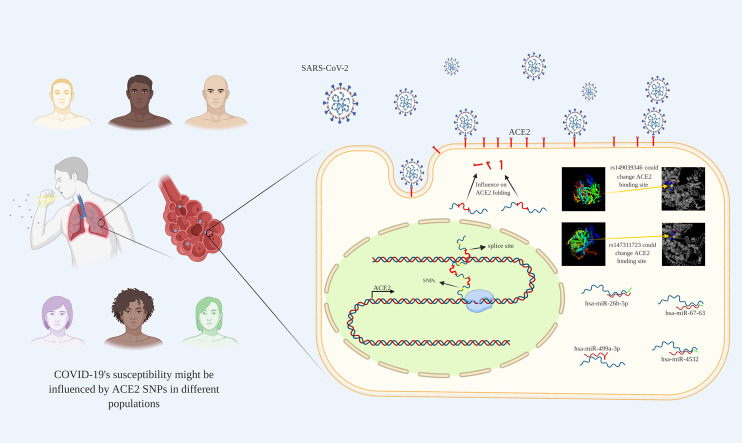
Unlabelled Image
Graphical abstract
Fig. 1
Fig. 1
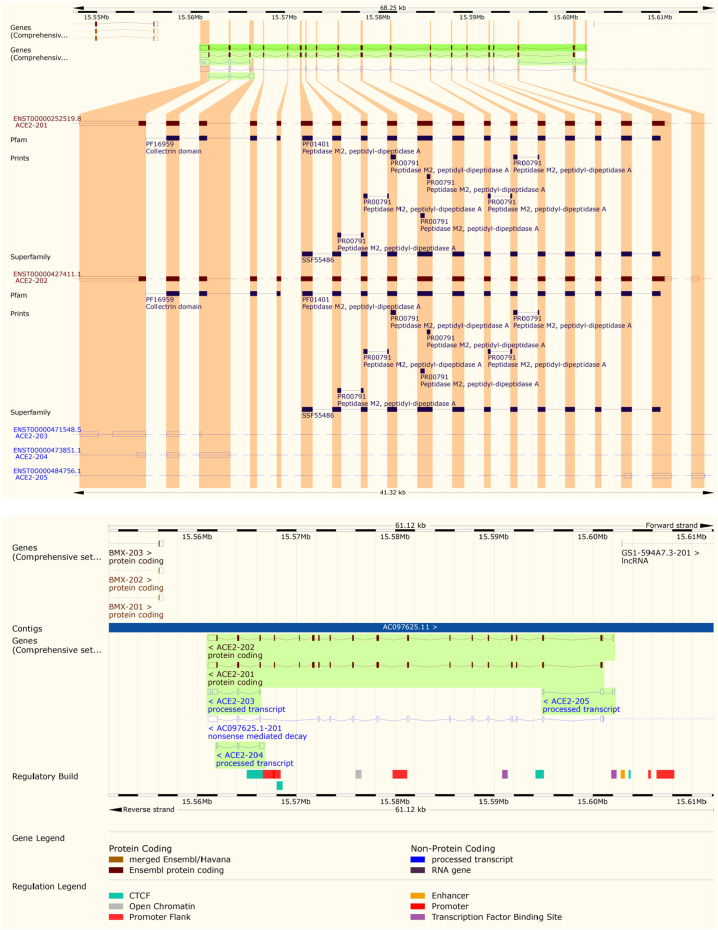
Ensembl gene map of ACE2 and its variants. (A) location of ACE2 on chromosome X and its structure including coding and noncoding region; (B) distribution of ACE2 variants reveals that most variants are intronic.
Fig. 1
Fig. 1
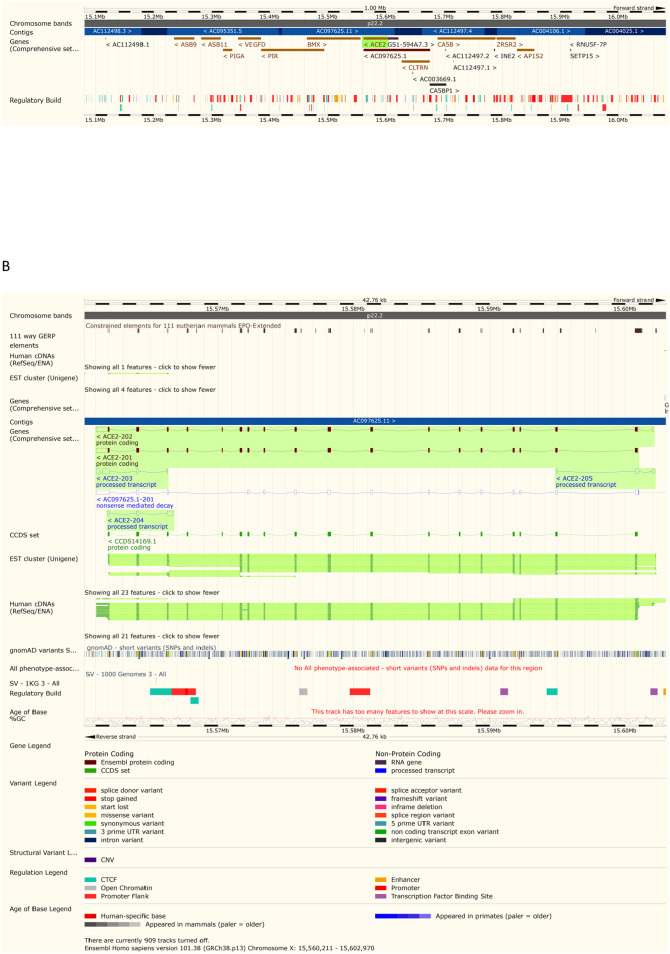
Ensembl gene map of ACE2 and its variants. (A) location of ACE2 on chromosome X and its structure including coding and noncoding region; (B) distribution of ACE2 variants reveals that most variants are intronic.
Fig. 2
Fig. 2
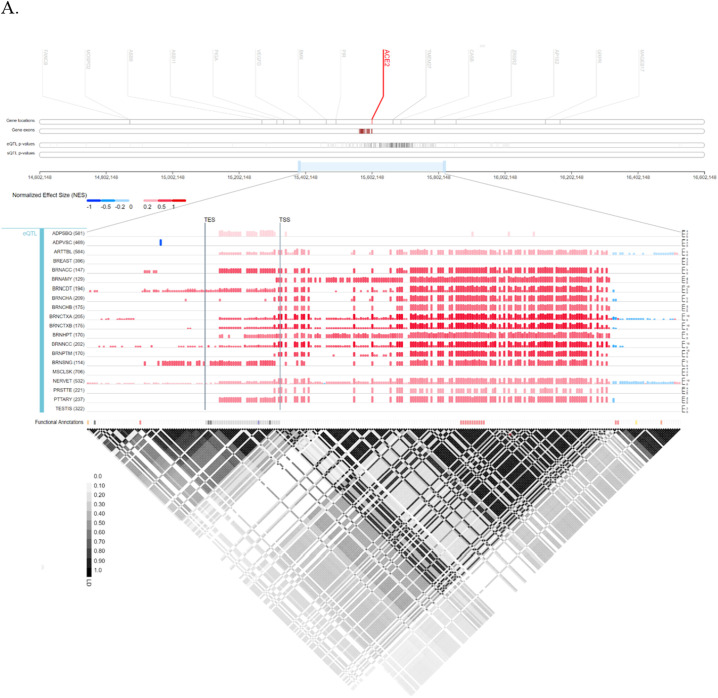
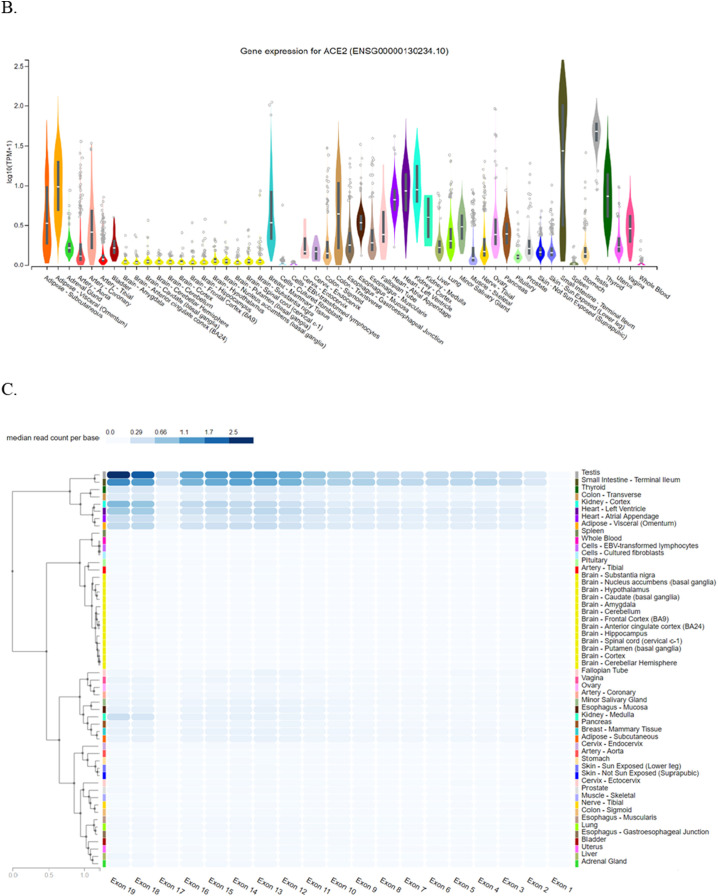
Location of ACE2 along with eQTL mapping in Gtex. (A) Expression quantitative trait loci (eQTL) categorizes genetic variants of ACE2 and their effects on its expression profile; (B) comparison of ACE2 expression levels in different tissues. Several tissues with different expression levels of ACE2 are represented; some of them show a significant expression level of ACE2 including small intestine-terminal lumen but some others such as spleen show lower levels of ACE2; (C) exon expression of ACE2 in several tissues with median read count per base score. Read count was used to quantify gene expression (by RNA-seq) by counting the number of reads that map (i.e. align) to each gene. Raw read counts are affected by factors such as transcript length (longer transcripts have higher read counts, at the same expression level) and total number of reads.
Fig. 2
Fig. 2
Location of ACE2 along with eQTL mapping in Gtex. (A) Expression quantitative trait loci (eQTL) categorizes genetic variants of ACE2 and their effects on its expression profile; (B) comparison of ACE2 expression levels in different tissues. Several tissues with different expression levels of ACE2 are represented; some of them show a significant expression level of ACE2 including small intestine-terminal lumen but some others such as spleen show lower levels of ACE2; (C) exon expression of ACE2 in several tissues with median read count per base score. Read count was used to quantify gene expression (by RNA-seq) by counting the number of reads that map (i.e. align) to each gene. Raw read counts are affected by factors such as transcript length (longer transcripts have higher read counts, at the same expression level) and total number of reads.
Fig. 3
Fig. 3
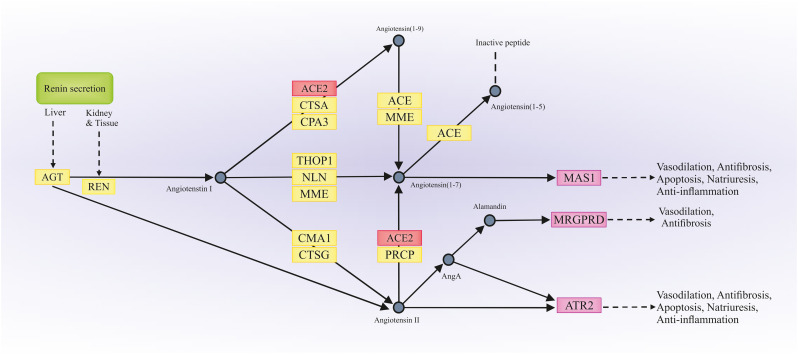
Prediction of biological pathways and function of ACE2 by KEGG. The renin-angiotensin system (RAS) is a peptidergic system with endocrine characteristics involved in the regulation of the blood pressure and hydro-electrolytic balance. In the classical RAS, the renin enzyme cleaves its substrate angiotensinogen (AGT) forming the decapeptide angiotensin I that is in turn cleaved by angiotensin-converting enzyme (ACE) to produce the angiotensin II, a key player of this system. In addition to (ACE)/angiotensin II/AT1R and AT2R axis, other signaling pathways in the RAS, such as ACE2/angiotensin-(1–7)/MAS and angiotensin IV/insulin-regulated aminopeptidase (IRAP), and other active peptides of the RAS, with physiological relevance as angiotensin III, angiotensin A and alamandine, are now widely recognized. AGT; angiotensinogen; REN: renin; ACE2: angiotensin-converting enzyme 2; CTSA: cathepsin A; CPA3: carboxypeptidase A3; THOP1: thimet oligopeptidase 1; NLN: neurolysin; MME: membrane metallo-endopeptidase; CMA1: chymase 1, mast cell; CTSG: cathepsin G; PRCP: prolylcarboxipeptidase; AngA: angiotensin A; MAS1: MAS1 oncogene; MRGPRD: MAS Related GPR Family Member D; ATR2: ATR Serine/Threonine Kinase.
Fig. 4
Fig. 4
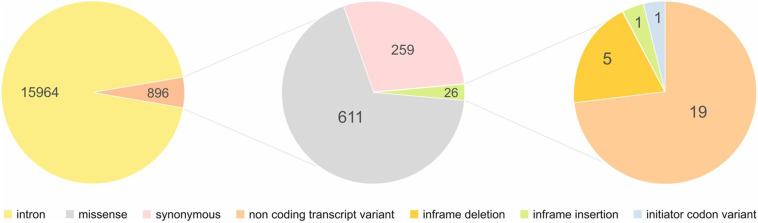
Pie chart of ACE2 SNPs distribution. Most variants within ACE2 are intronic, and missense variants constitute the majority of exonic variants.
Fig. 5
Fig. 5
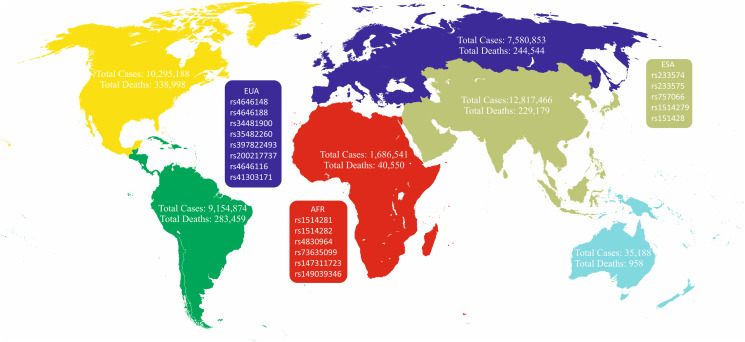
Map visualizing COVID-19 pandemy and different ACE2 SNPs among different continents. COVID-19 influenced some populations more than others, and caused relatively higher mortality and morbidity in these zones including East Asia, America, and Europe. Broad spectrum of patient's manifestations emerges this hypothesis that different ACE2 SNPs may be responsible for this discrepancy. ESA: East Asia; AFR: Africa EUA: Europe.
Fig. 6
Fig. 6
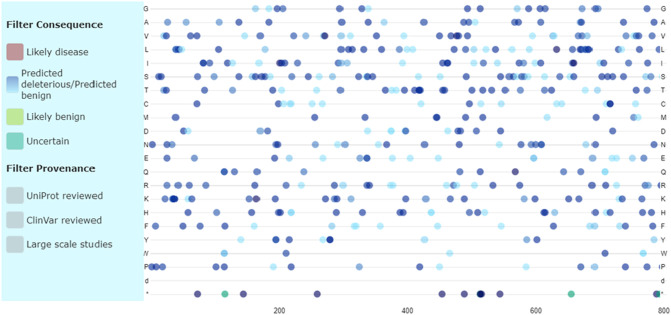
Investigation of functional impacts of ACE2 SNPs by Uniprot. Some of ACE2 SNPs were revealed deleterious or benign, and handful number of them indicated uncertain phenotype.
Fig. 7
Fig. 7
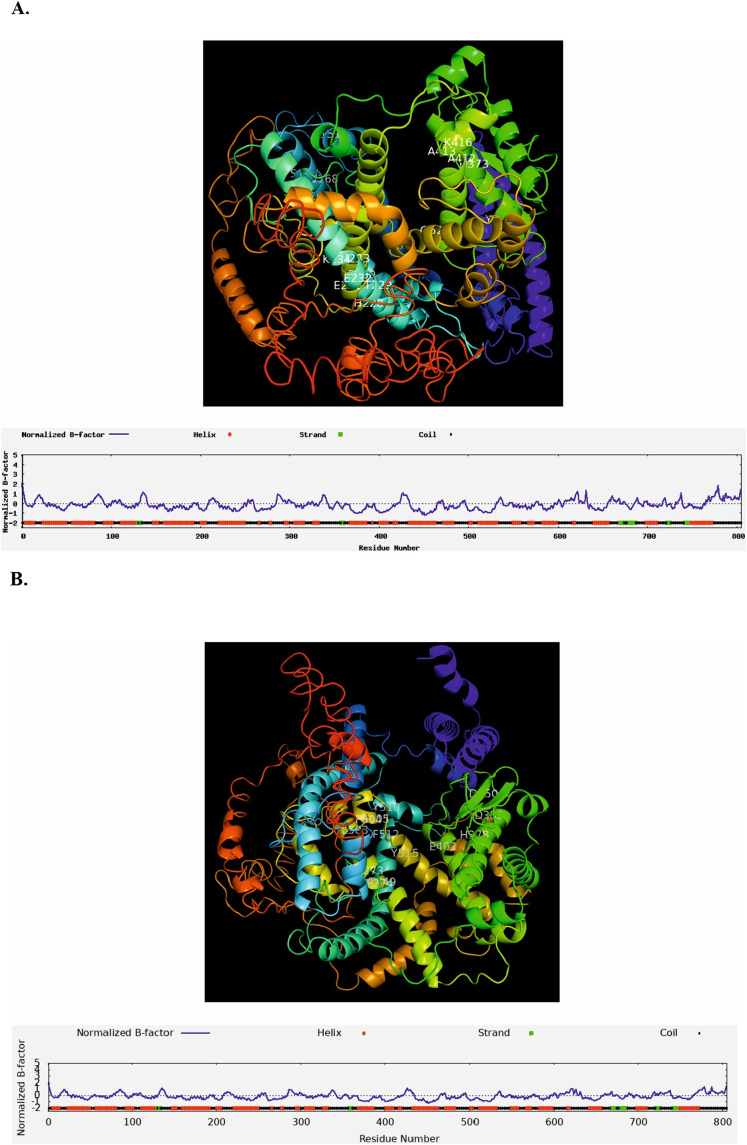
3D structure prediction and ligand binding sites prediction of native ACE2 and ACE2 with rs149039346 and rs147311723. (A) 3D structure of native ACE2 and possible ligand binding site residues predicted as 151, 167, 168, 169, 228, 229, 230, 231, 232, 233, 234, 373, 381, 412, 413, 416, 522; (B) 3D structure of ACE2 with rs149039346 (S692P) and possible ligand binding site residues predicted as 273, 274, 350, 378, 382, 402, 449, 503, 504, 505, 510, 512, and 515; (C) 3D structure of ACE2 with rs147311723 (L731F) and possible ligand binding site residues predicted as 151, 167, 168, 169, 228, 229, 230, 231, 232, 233, 234, 373, 381, 412, 413, 416, 522; (D) enzyme commission (EC) numbers and active sites (402, and 515) are shown for native ACE2 and with rs149039346 and rs147311723. B-factor is a value indicating the extent of the inherent thermal mobility of residues/atoms in proteins. Based on the distributions and predictions of the B-factor profile (BFP), residues with BFP values higher than 0 are less stable in experimental structures.
Fig. 8
Fig. 8
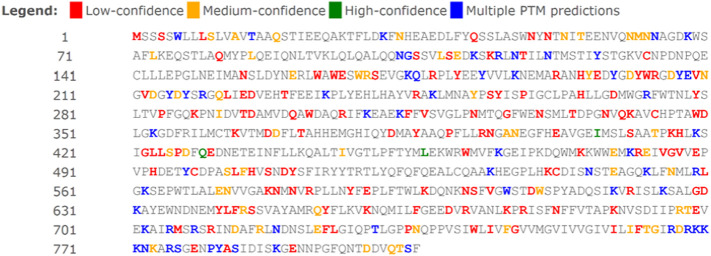
Prediction of post-translational modifications of ACE2.
Fig. 9
Fig. 9
Analysis of transmembrane topology and signal peptides of ACE2. The plot is obtained by computing the total probability that a residue belongs to a helix, cytoplasmic, or noncytoplasmic region summed over all possible paths through the model, and shows the posterior probabilities of cytoplasmic, noncytoplasmic, tramsmembsrane helix, and signal peptide.
Fig. 10
Fig. 10
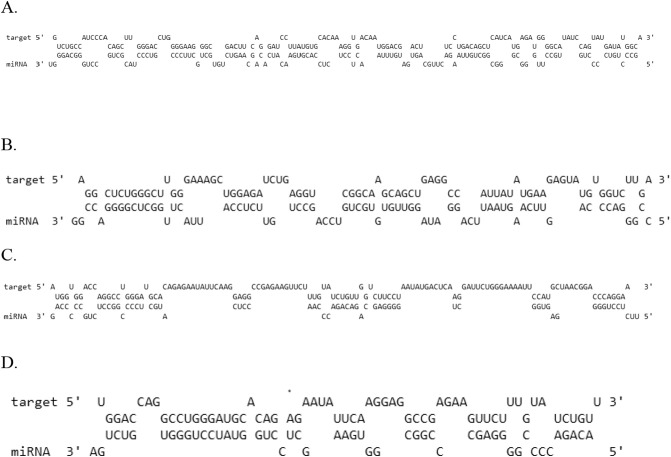
ACE2 mRNA hybridization with different miRNAs. (A) hsa-miR-499a-3p; (B) hsa-miR-26b-5p; (C) hsa-miR-6763-3p; (D) hsa-miR-4532.
Fig. 11
Fig. 11
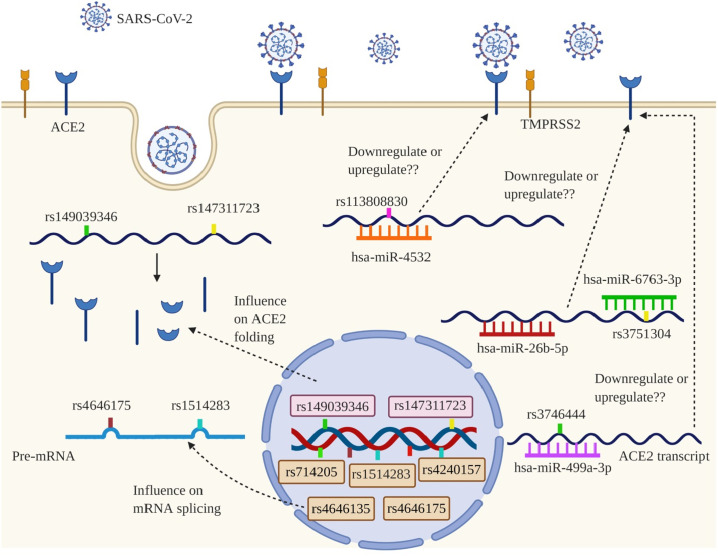
ACE2 SNPs influencing SARS-CoV-2s' cell entry by disrupting ACE2 transcript processing or stability. Two missense SNPs including rs149039346, and rs147311723 have been predicted to change ACE2 folding. Furthermore, rs714205, rs1514283, rs4240157, rs4646135, and rs4646175 may interfere with ACE2 splicing process, and probably lead to lower ACE2 expression. Moreover, rs3746444 can disrupt hsa-miR-499a-3p seeds target, and rs113808830 and rs3751304 can create seeds target for hsa-miR-4532, and hsa-miR-6763-3p, respectively.

References

    1. Calcagnile M., Forgez P., Iannelli A., Bucci C., Alifano M., Alifano P. 2020. ACE2 Polymorphisms and Individual Susceptibility to SARS-CoV-2 Infection: Insights From an In Silico Study. bioRxiv.
    1. Cao Y., Li L., Feng Z., Wan S., Huang P., Sun X.…Wang W. Comparative genetic analysis of the novel coronavirus (2019-nCoV/SARS-CoV-2) receptor ACE2 in different populations. Cell Discovery. 2020;6(1):1–4. - PMC - PubMed
    1. Chappel M., Ferrario C. ACE and ACE2: their role to balance the expression of angiotensin II and angiotensin-(1–7) Kidney Int. 2006;70(1):8–10. - PubMed
    1. Chen C., Yang S., Chaugai S., Wang Y., Wang D.W. Meta-analysis of Hsa-mir-499 polymorphism (rs3746444) for cancer risk: evidence from 31 case-control studies. BMC Medical Genetics. 2014;15(1):126. - PMC - PubMed
    1. Chen Y., Shan K., Qian W. Asians do not exhibit elevated expression or unique genetic polymorphisms for ACE2, the cell-entry receptor of SARS-CoV-2. Preprint at doi. 2020:10.

LinkOut - more resources