


Long-Term Efficacy of a Novel Spinal Cord Stimulation Clinical Workflow Using Kilohertz Stimulation: Twelve-Month Results From the Vectors Study
- PMID: 33296127
- PMCID: PMC8246544
- DOI: 10.1111/ner.13324
Long-Term Efficacy of a Novel Spinal Cord Stimulation Clinical Workflow Using Kilohertz Stimulation: Twelve-Month Results From the Vectors Study
Abstract
Background and objectives: Multiple variables play a role in spinal cord stimulation (SCS) treatment outcomes, including patient anatomy, pain pattern, lead location, stimulation parameters, and so on. A wide range of stimulation parameters are considered safe and on-label, and as a result a growing number of new frequencies and frequency-combinations are being incorporated into standard practice. A standardized approach to therapy delivery may provide more consistent outcomes for more patients. The Vectors study evaluated whether there is significant sustained improvement in pain and functional outcomes when therapy is delivered using a standardized approach.
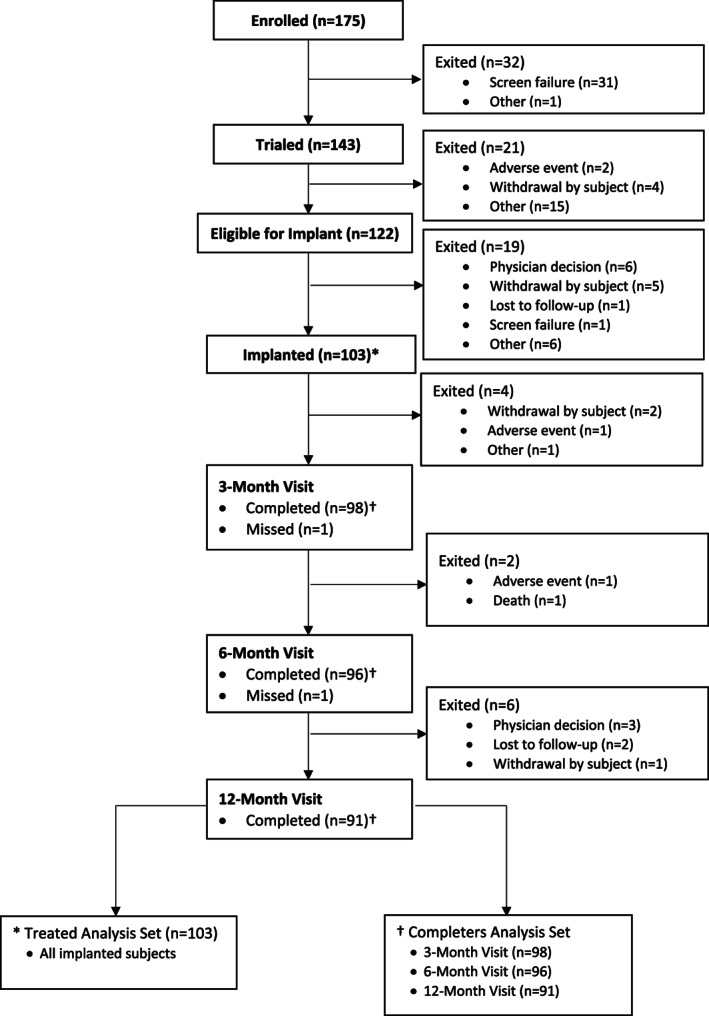
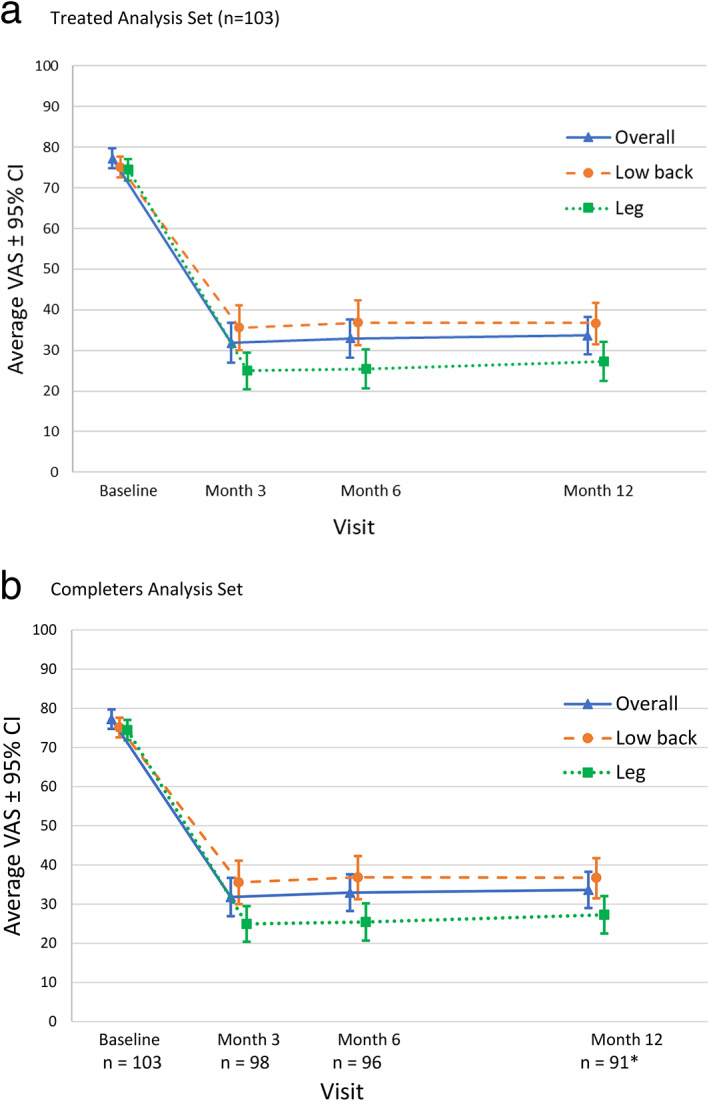
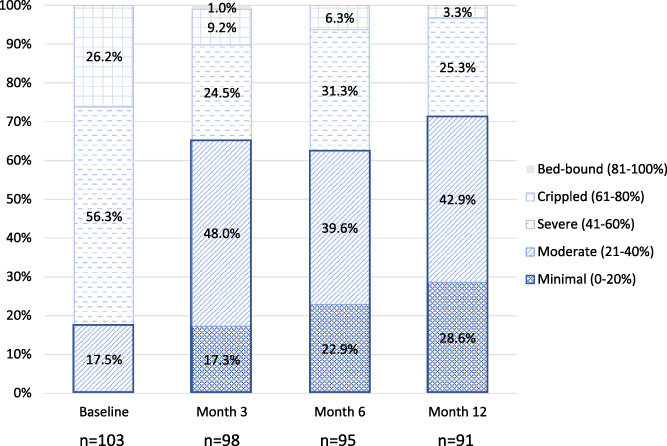
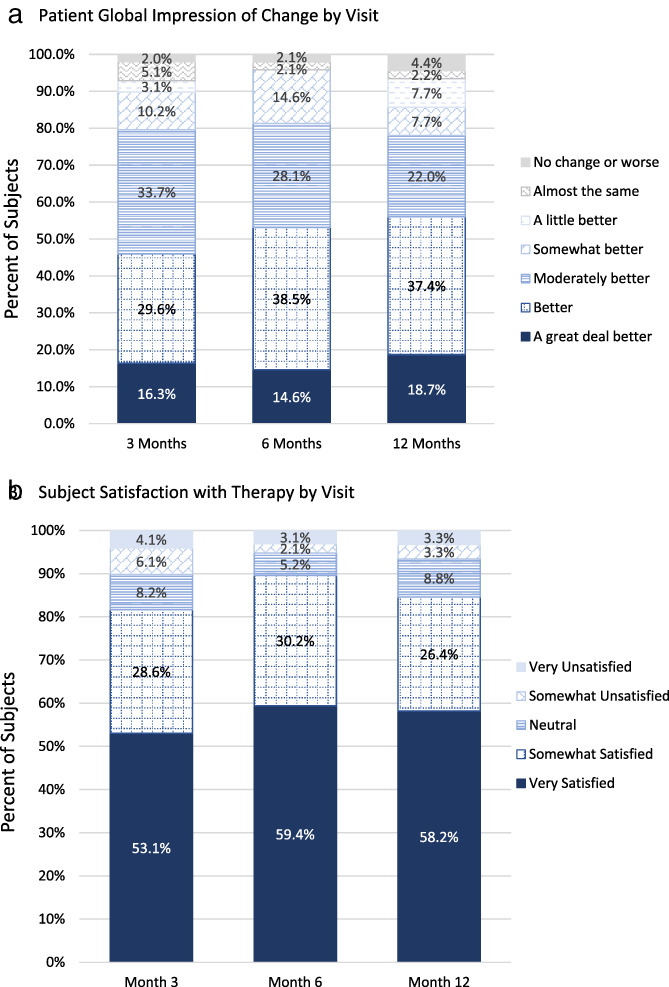
Materials and methods: Vectors, a post-market, single-arm study evaluated the safety and efficacy of SCS with an implantable neurostimulator starting with 1 kHz stimulation, targeting the T9-T10 disc space following paresthesia mapping. Subjects with chronic intractable low back and leg pain (visual analogue scale [VAS] ≥ 50 mm) were enrolled. The primary endpoint was change in overall pain (VAS) at the three-month visit compared to baseline. Subjects were followed through 12 months. Secondary endpoints included changes in low back and leg pain, quality of life (European Quality of Life - Five Dimensions, EQ-5D-5L), disability (Oswestry Disability Index, ODI), individual subject goals, and subject satisfaction.
Results: There was a significant reduction in overall pain (VAS; 45.4 mm) through the three-month visit, which was sustained through 12 months. At 12 months, 79% of subjects had ≥50% improvement in at least one pain domain (overall, lowback or leg) with 85% of subjects reporting therapy satisfaction. There was a decrease in disability and an improvement in quality of life with 70% of subjects achieving a personal activity goal by the three-month visit.
Conclusions: Long-term pain relief and improvement in quality of life and function were achieved when following a standardized workflow.
Clinical trial registration: The Clinicaltrials.gov registration number for the study is NCT03345472.
Keywords: Chronic neuropathic pain; functional outcomes; high-frequency stimulation; pain relief; prospective.
© 2020 Medtronic. Neuromodulation: Technology at the Neural Interface published by Wiley Periodicals LLC on behalf of International Neuromodulation Society.
Figures
References
-
- Kapural L, Yu C, Doust MW et al. Comparison of 10‐kHz high‐frequency and traditional low‐frequency spinal cord stimulation for the treatment of chronic Back and leg pain: 24‐month results from a multicenter, randomized, controlled pivotal trial. Neurosurgery 2016;79:667–677. 10.1227/NEU.0000000000001418. - DOI - PMC - PubMed
MeSH terms
Associated data
LinkOut - more resources
Full Text Sources
Medical
Research Materials
