


Predictors of misconceptions, knowledge, attitudes, and practices of COVID-19 pandemic among a sample of Saudi population
- PMID: 33296420
- PMCID: PMC7725365
- DOI: 10.1371/journal.pone.0243526
Predictors of misconceptions, knowledge, attitudes, and practices of COVID-19 pandemic among a sample of Saudi population
Abstract
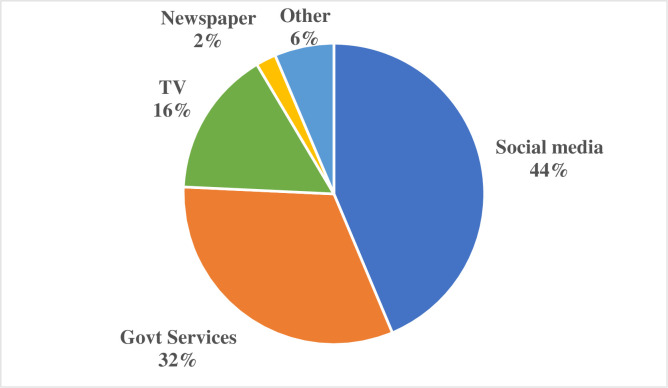
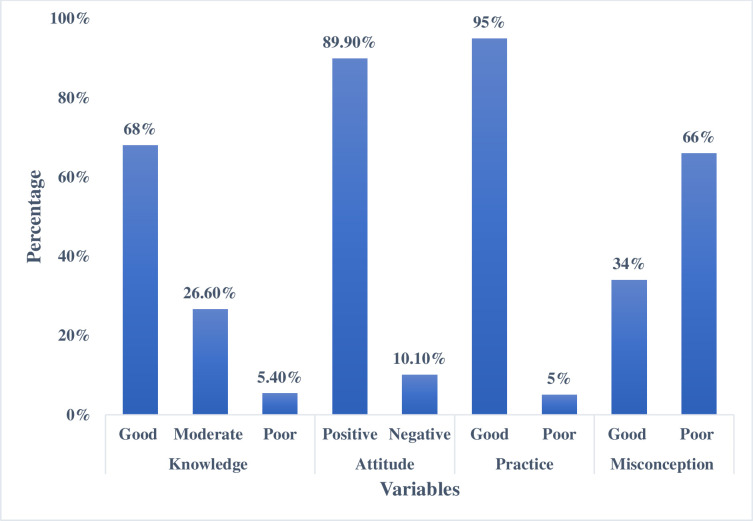
This study intends to explore the predictors of misconceptions, knowledge, attitudes, and practices concerning the COVID-19 pandemic among a sample of the Saudi population and we also assessed their approaches toward its overall impact. This online cross-sectional survey was conducted at the Faculty of Medicine, Rabigh, King Abdulaziz University (KAU) in Jeddah, Saudi Arabia (SA). Participants were approached via social media (SM), and 2006 participants (953 [47.5%] females and 1053 [52.5%] males) were included in this study. SM was the leading source of information for 43.9% of the study participants. Most of the participants had various misconceptions such as "females are more vulnerable to develop this infection, rinsing the nose with saline and sipping water every 15 minutes protects against Coronavirus, flu and pneumonia vaccines protect against this virus." About one-third of participants (31.7%) had self-reported disturbed social, mental, and psychological wellbeing due to the pandemic. Many participants became more religious during this pandemic. Two-thirds of the study participants (68.1%) had good knowledge scores. Attitudes were highly positive in 93.1%, and practice scores were adequate in 97.7% of the participants. Participants' educational status was a predictor of high knowledge scores. Male gender and divorced status were predictors of low practice scores, and aged 51-61 years, private-sector jobs, and student status were predictors of high practice scores. Being Saudi was a predictor of a positive attitude, while the male gender and divorced status were predictors of a negative attitude. Higher education was a predictor of good concepts, while the older age and businessmen were predictors of misconceptions. Overall, our study participants had good knowledge, positive attitudes, and good practices, but several myths were also prevalent. Being a PhD and a Saudi national predicted high knowledge scores and positive attitudes, respectively. A higher education level was a predictor of good concepts, and students, private-sector jobs, and aged 51-61 years were predictors of high practice scores. Study participants had good understanding of the effects of this pandemic.
Conflict of interest statement
The authors have declared that no competing interests exist.
Figures
References
-
- COVID-19 Dashboard by the Center for Systems Science and Engineering (CSSE) at John Hopkins University & Medicine. Available at: COVID-19 Dashboard by the Center for Systems Science and Engineering (CSSE) at John Hopkins University & Medicine. Available at: https://coronavirus.jhu.edu/map.html [Accessed on 21 May 2020]
-
- Mohamed RA, Aleanizy FS, Alqahtani FY, et al. Common co-morbidities are challenging in the diagnosis of Middle East Respiratory Syndrome (MERS-CoV) in Saudi Arabia. Science 2020;23:119–125. - PubMed
Publication types
MeSH terms
LinkOut - more resources
Full Text Sources
Medical
