


Psychological distress in the face of a pandemic: An observational study characterizing the impact of COVID-19 on immigrant outpatient mental health
- PMID: 33296817
- PMCID: PMC7805919
- DOI: 10.1016/j.psychres.2020.113595
Psychological distress in the face of a pandemic: An observational study characterizing the impact of COVID-19 on immigrant outpatient mental health
Abstract
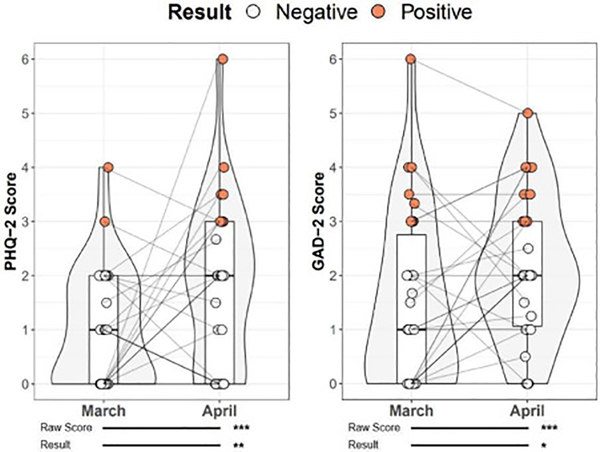
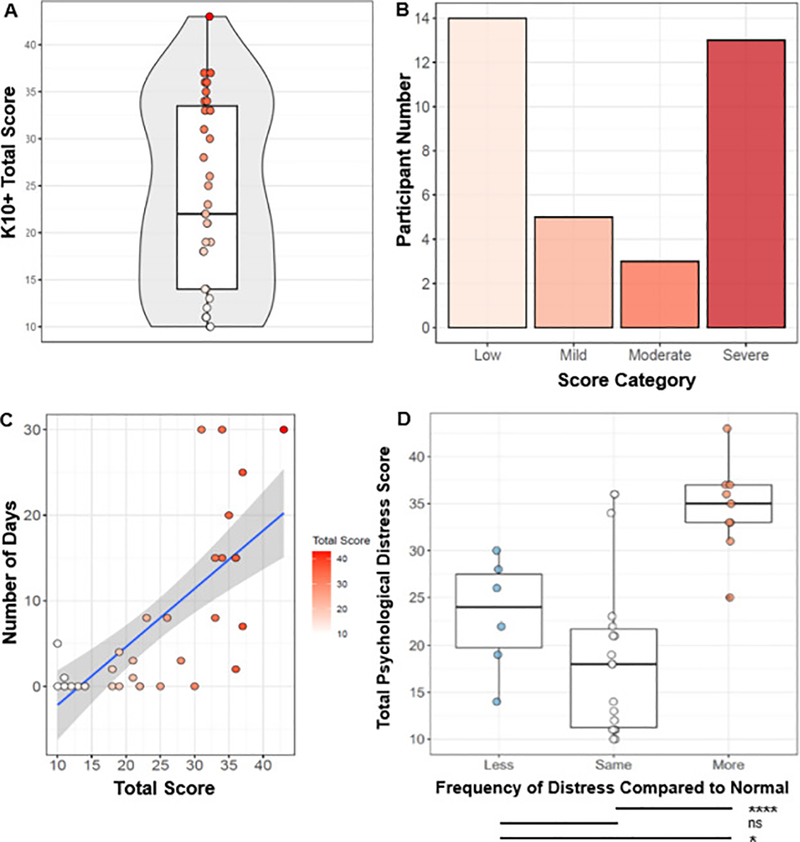
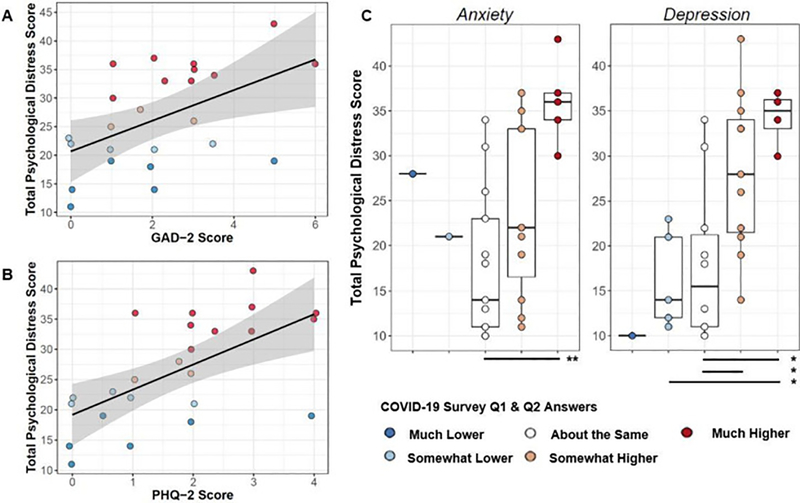
Undocumented immigrants have disproportionately suffered during the novel coronavirus disease 2019 (COVID-19) pandemic due to factors including limited medical access and financial insecurity, which can exacerbate pandemic-associated distress. Psychological outcomes for immigrant outpatients were assessed after transition to telepsychiatry in March 2020. Mental health was assessed with Patient Health Questionnaire (PHQ-2) and Generalized Anxiety Disorder (GAD-2) inventories, a novel coronavirus-specific survey, and the Kessler Psychological Distress Scale (K10+). Feedback on telepsychiatry sessions and access to non-clinical resources were also gathered, after which multivariable linear regression modeling identified psychosocial factors underlying changes in distress levels. 48.57% and 45.71% of participants reported worsened anxiety and depression levels due to the pandemic, respectively. From March to April, PHQ-2 and GAD-2 scores significantly increased by 0.81 and 0.63 points, respectively. The average total psychological distress score was 23.8, with 60% of scores reflecting serious mental illness. Factors that most influenced K10+ scores included a pre-existing depressive disorder, food insecurity, and comfort during telepsychiatry visits. 93.75% of participants believed access to remote psychiatry helped their mental health during COVID-19. The negative impact of COVID-19 on mental health in vulnerable populations stems from medical and psychosocial factors such as pre-existing psychiatric conditions and unmet essential needs.
Keywords: Anxiety; COVID-19; Depression; Distress; Mental health; Telepsychiatry; Vulnerable populations.
Copyright © 2020. Published by Elsevier B.V.
Conflict of interest statement
Conflicts of Interest
The authors have no conflicts to report.
Figures
References
-
- Akaike H. Maximum likelihood identification of gaussian autoregressive moving average models. Biometrika, 60 (1973), pp. 255–265.
-
- Akaike H. A New Look at the Statistical Model Identification. IEEE Transactions on Automatic Control, 19 (1974), pp. 716–723.
-
- Andrews G, Slade T. Interpreting scores on the Kessler Psychological Distress Scale (K10). Australian and New Zealand Journal of Public Health, 25 (2001), pp. 494–497. - PubMed
-
- Bekteshi V, van Hook M. Contextual Approach to Acculturative Stress Among Latina Immigrants in the U.S. Journal of Immigrant and Minority Health, 17 (2015), pp. 1401–1411. - PubMed
-
- Bell KR, Brockway JA, Fann JR, Cole WR, De Lore JS, Bush N, Lang AJ, Hart T, Warren M, Dikmen S, Temkin N, Jain S, Raman R, Stein MB. Concussion treatment after combat trauma: Development of a telephone based, problem solving intervention for service members. Contemporary Clinical Trials, 40 (2015), pp. 54–62. - PubMed
Publication types
MeSH terms
Grants and funding
LinkOut - more resources
Full Text Sources
Other Literature Sources
Medical
Research Materials
Miscellaneous
