Phenogenomic heterogeneity of post-transplant plasmablastic lymphomas
- PMID: 33297669
- PMCID: PMC8719101
- DOI: 10.3324/haematol.2020.267294
Phenogenomic heterogeneity of post-transplant plasmablastic lymphomas
Abstract
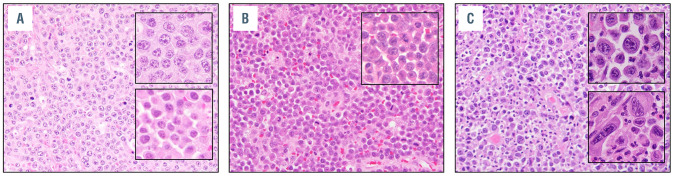
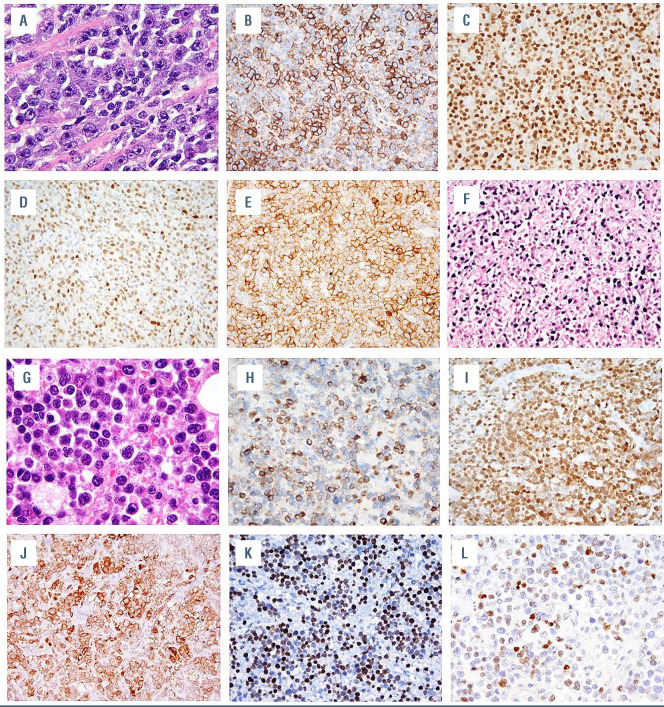
Plasmablastic lymphoma (PBL) is a rare and clinically aggressive neoplasm that typically occurs in immunocompromised individuals, including those with HIV infection and solid organ allograft recipients. Most prior studies have focused on delineating the clinicopathologic features and genetic attributes of HIV-related PBLs, where MYC deregulation and EBV infection, and more recently, mutations in JAK/STAT, MAP kinase, and NOTCH pathway genes have been implicated in disease pathogenesis. The phenotypic spectrum of post-transplant (PT)-PBLs is not well characterized and data on underlying genetic alterations are limited. Hence, we performed comprehensive histopathologic and immunophenotypic evaluation and targeted sequencing of 18 samples from 11 patients (8 males, 3 females, age range 12-76 years) with PT-PBL; 8 de novo and 3 preceded by other types of PTLDs. PT-PBLs displayed morphologic and immunophenotypic heterogeneity and some features overlapped those of plasmablastic myeloma. Six (55%) cases were EBV+ and 5 (45%) showed MYC rearrangement by fluorescence in situ hybridization. Recurrent mutations in epigenetic regulators (KMT2/MLL family, TET2) and DNA damage repair and response (TP53, mismatch repair genes, FANCA, ATRX), MAP kinase (KRAS, NRAS, HRAS, BRAF), JAK/STAT (STAT3, STAT6, SOCS1), NOTCH (NOTCH1, NOTCH3, SPEN), and immune surveillance (FAS, CD58) pathway genes were observed, with EBV+ and EBV- cases exhibiting similarities and differences in their mutational profiles. Clinical outcomes also varied, with survival ranging from 0-15.9 years postdiagnosis. Besides uncovering the biological heterogeneity of PT-PBL, our study highlights similarities and distinctions between PT-PBLs and PBLs occurring in other settings and reveals potentially targetable oncogenic pathways in disease subsets.
Figures
References
-
- Swerdlow SH, Campo E, Harris NL, et al. WHO Classification of Tumours of Haematopoietic and Lymphoid Tissues. Revised 4th edition, Volume 2. 2016.
-
- Morscio J, Dierickx D, Nijs J, et al. Clinicopathologic comparison of plasmablastic lymphoma in HIV-positive, immunocompetent, and posttransplant patients: single-center series of 25 cases and meta-analysis of 277 reported cases. Am J Surg Pathol. 2014;38(7):875-886. - PubMed
-
- Castillo JJ, Bibas M, Miranda RN. The biology and treatment of plasmablastic lymphoma. Blood. 2015;125(15):2323-2330. - PubMed
MeSH terms
Grants and funding
LinkOut - more resources
Full Text Sources
Medical
Research Materials
Miscellaneous