


Skin manifestations after bariatric surgery
- PMID: 33298045
- PMCID: PMC7726855
- DOI: 10.1186/s12895-020-00120-z
Skin manifestations after bariatric surgery
Abstract
Background: Skin signs observed in morbid obesity may change as the weight reduces, especially post-bariatric surgery (BaS). Data concerning the skin findings exclusively in post-BaS patients remain limited.
Methods: Seventy post-BaS patients were examined for cutaneous abnormalities. The patients were divided into those with successful weight loss (% excessive body weight loss (EBWL) of at least 50%) and a non-successful group (%EBWL < 50%).
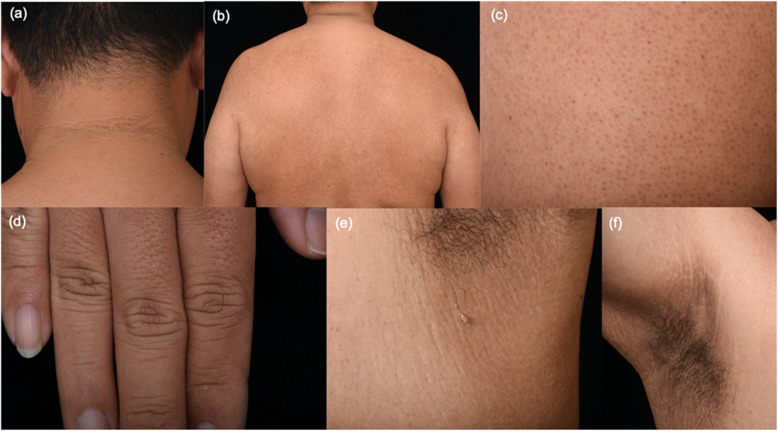
Results: Forty-six patients with successful weight loss demonstrated a significantly lower prevalence of acanthosis nigricans on the neck, axillae and inguinal areas, keratosis pilaris (KP) and pebble fingers. However, a higher prevalence of alopecia was observed. After adjustment with patients' factors, KP (adjusted odds ratio (aOR) = 0.21, 95%CI 0.06-0.74, p = 0.02) and pebble fingers (aOR = 0.09, 95%CI 0.01-0.89, p = 0.04) remained significantly less likely in patients with successful weight loss. Laboratory results comparing pre- and post-surgery values revealed significant decreases in fasting plasma glucose, hemoglobin A1c, and triglyceride and an increase of high-density lipoproteins in both groups. However, significant decreases of liver aminotransferases (AST and ALT) were observed only in the successful group (p = 0.04, 0.003). Nonetheless, a decrease in vitamin B12 (p = 0.01) was observed in the successful group.
Conclusion: Weight loss after BaS provided an improvement for metabolic profiles. Successful weight reduction resulted in better skin improvement. However, nutritional supplements may be necessary.
Trial registration: Thai Clinical Trials Registry TCTR20171003002 . Registered October 3. 2017, retrospectively registered.
Keywords: Bariatric surgery; Cutaneous sign; Obesity; Skin; Weight loss.
Conflict of interest statement
YI, WD, NT, SU, PB, CK, SK, PA, and PR have no competing interests.
Figures
References
-
- Ng M, Fleming T, Robinson M, Thomson B, Graetz N, Margono C, et al. Global, regional, and national prevalence of overweight and obesity in children and adults during 1980-2013: a systematic analysis for the global burden of disease study 2013. Lancet. 2014;384:766–781. doi: 10.1016/S0140-6736(14)60460-8. - DOI - PMC - PubMed
Publication types
MeSH terms
Grants and funding
LinkOut - more resources
Full Text Sources
Medical
