. 2020 Dec 9;20(1):592.
doi: 10.1186/s12935-020-01693-y.

Berberine reduces temozolomide resistance by inducing autophagy via the ERK1/2 signaling pathway in glioblastoma

Affiliations

Berberine reduces temozolomide resistance by inducing autophagy via the ERK1/2 signaling pathway in glioblastoma

Huiling Qu et al. Cancer Cell Int. .

Retraction in

Abstract

Background: The ability to treat glioblastoma (GBM) using the chemotherapeutic agent temozolomide (TMZ) has been hampered by the development of therapeutic resistance. In this study, we assessed the ability of the isoquinoline alkaloid berberine to alter GBM TMZ resistance using two different TMZ-resistant cell lines to mimic a physiologically relevant GBM experimental system.

Methods: By treating these resistant cell lines with berberine followed by TMZ, we were able to assess the chemosensitivity of these cells and their parental strains, based on their performance in the MTT and colony formation assays, as well as on the degree of detectable apoptosis that was detected in the strains. Furthermore, we used Western blotting to assess autophagic responses in these cell lines, and we extended this work into a xenograft mouse model to assess the in vivo efficacy of berberine.

Results: Through these experiments, our findings indicated that berberine enhanced autophagy and apoptosis in TMZ-resistant cells upon TMZ treatment in a manner that was linked with ERK1/2 signaling. Similarly, when used in vivo, berberine increased GBM sensitivity to TMZ through ERK1/2 signaling pathways.

Conclusions: These findings demonstrate that berberine is an effective method of increasing the sensitization of GBM cells to TMZ treatment in a manner that is dependent upon the ERK1/2-mediated induction of autophagy, thus making berberine a potentially viable therapeutic agent for GBM treatment.

Keywords: Autophagy; Berberine; Chemoresistance; ERK1/2; GBM.


Conflict of interest statement

The authors declare no competing interests.

Figures
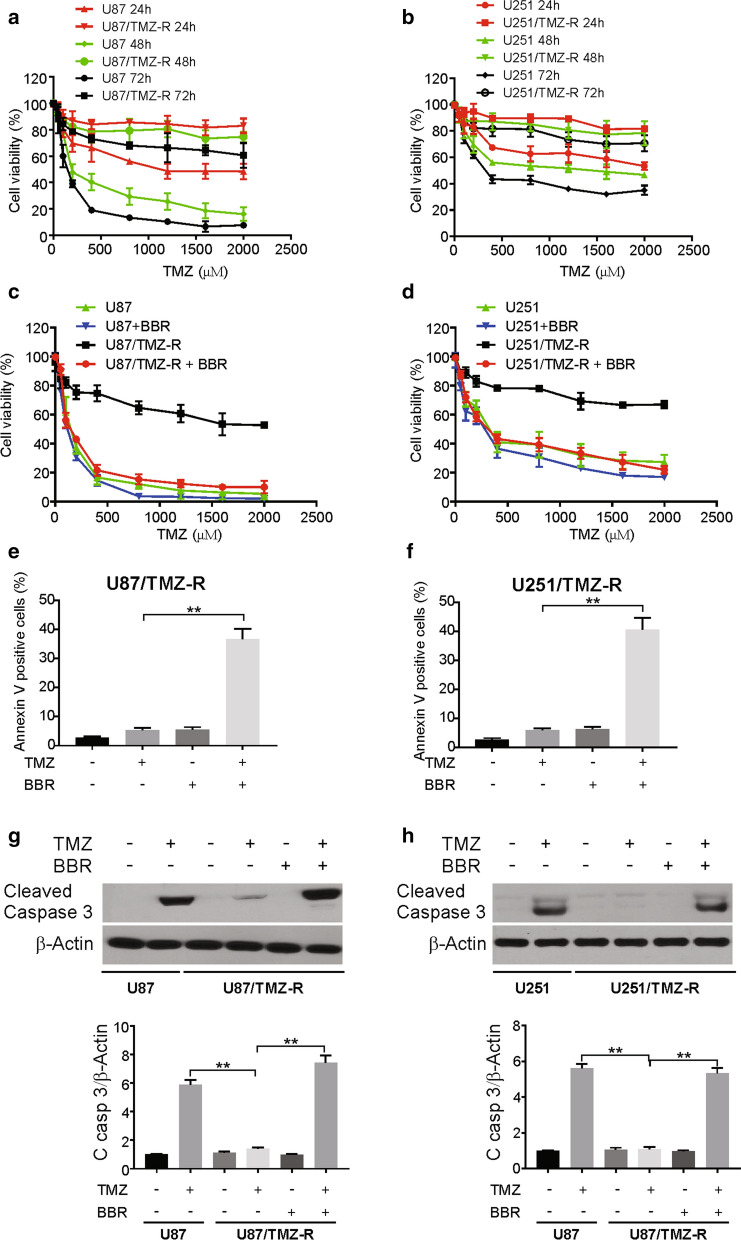
Fig. 1
Fig. 1
Berberine resensitizes TMZ resistance cells to TMZ in GBM cells. a and b Parental and TMZ resistance cells were treated with increasing concentrations of TMZ for 24, 48 72 h. Cell viability was analyzed by MTT assay. c and d TMZ resistance cells were treated with TMZ with or without 10 μM berberine for 72 h. Cell viability was analyzed by MTT assay. e and f TMZ resistance cells were treated with 100 μM TMZ with or without 10 μM berberine for 72 h. Apoptosis was analyzed flow cytometry. g and h Parental and TMZ resistance cells were treated with 100 μM TMZ with or without 10 μM berberine as indicated for 24 h. Cleaved caspase 3 was analyzed by western blotting and normalized to β-actin. BBR: berberine. Results were presented as means ± SD from three independent experiments. **, P < 0.01
Fig. 2
Fig. 2
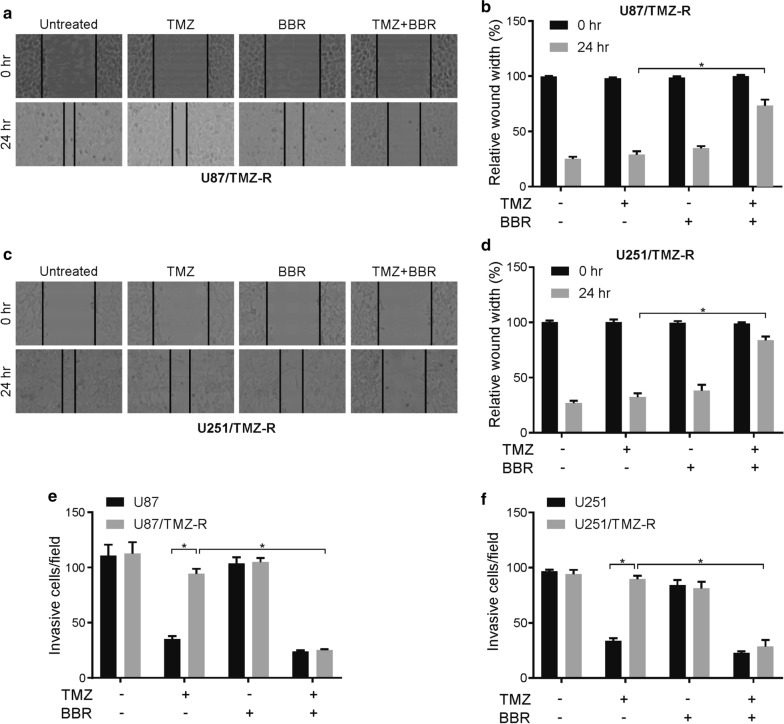
Berberine inhibits migration and invasion in TMZ resistance GBM cells. a and b TMZ resistance U87 cells were treated with 100 μM TMZ with or without 10 μM berberine for 24 h. The migration (wound healing) ability was analyzed as indicated. c and d TMZ resistance U251 cells were treated with 100 μM TMZ with or without 10 μM berberine for 24 h. The migration (wound healing) ability was analyzed as indicated. e TMZ resistance U87 cells were treated with 100 μM TMZ with or without 10 μM berberine for 24 h. The invasion ability was analyzed as indicated. f TMZ resistance U251 cells were treated with 100 μM TMZ with or without 10 μM berberine for 24 h. The invasion ability was analyzed as indicated. BBR: berberine. Results were presented as means ± SD from three independent experiments. *, P < 0.05
Fig. 3
Fig. 3
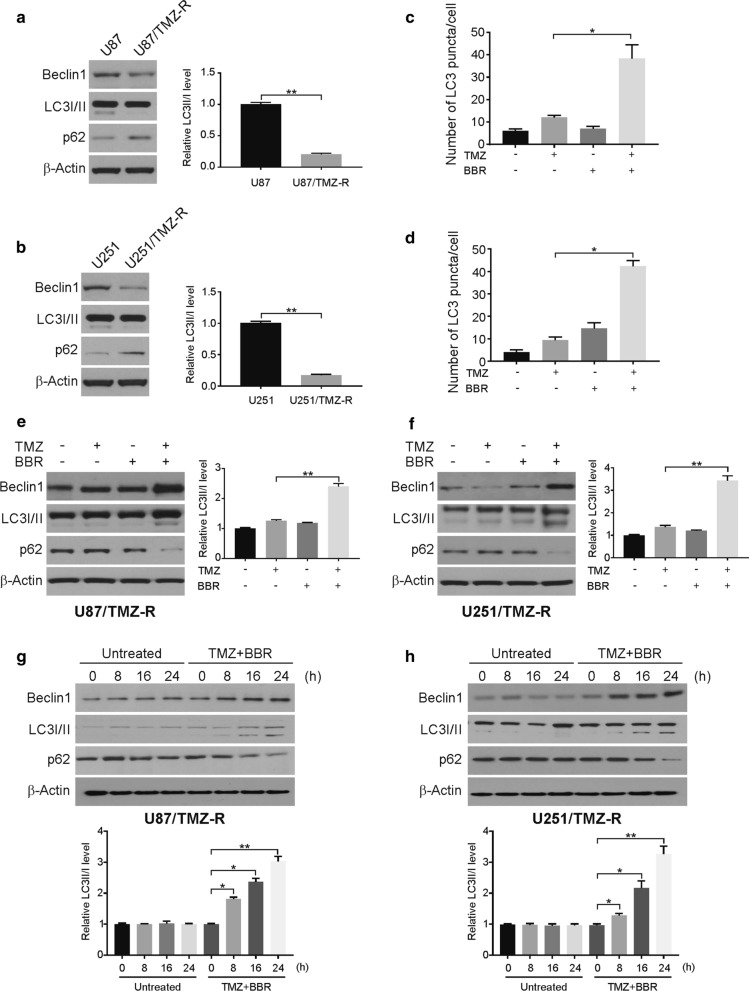
Berberine promotes TMZ-induced autophagy in TMZ-R cells. a and b The indicated protein level was analyzed by western blotting in parental and TMZ resistance cells. LC3 II was normalized to LC3 I. c TMZ-R U87 cells were transfected with GFP-LC3 plasmid, followed by treatment with 100 μM TMZ with or without 10 μM berberine for 24 h. The numbers of GFP-LC3 puncta were quantified with confocal microscopy. d TMZ-R U251 cells were transfected with GFP-LC3 plasmid, followed by treatment with 100 μM TMZ with or without 10 μM berberine for 24 h. The numbers of GFP-LC3 puncta were quantified with confocal microscopy. e and f TMZ resistance cells were treated with 100 μM TMZ with or without 10 μM berberine as indicated for 24 h. Indicated proteins level were analyzed by western blotting. LC3 II was normalized to LC3 I. g and h TMZ resistance cells were treated with 100 μM TMZ and 10 μM berberine as indicated time points. Indicated proteins level were analyzed by western blotting. LC3 II was normalized to LC3 I. BBR: berberine. Results were presented as means ± SD from three independent experiments. *, P < 0.05
Fig. 4
Fig. 4
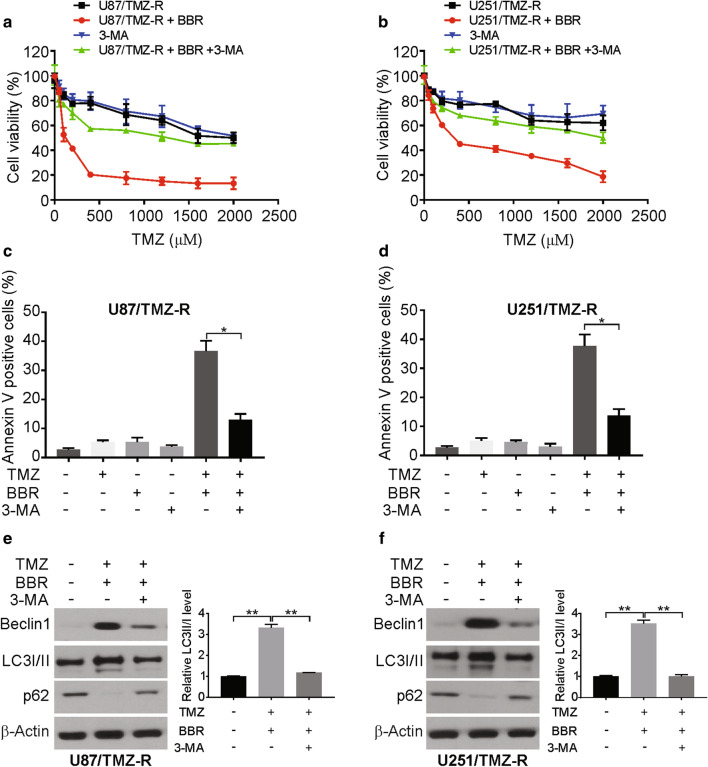
Autophagy induction is required for berberine-induced TMZ resensitization in TMZ-R cells. a and b TMZ resistance cells were treated with increasing concentrations of TMZ with or without berberine and 1 mM 3-MA for 72 h. Cell viability was analyzed by MTT assay. c and d TMZ resistance cells pretreated with 1 mM 3-MA were treated with 100 μM TMZ with or without 10 μM berberine for 24 h. Apoptosis was analyzed flow cytometry. e and f TMZ resistance cells pretreated with 1 mM 3-MA were treated with 100 μM TMZ with or without 10 μM berberine for 24 h. Indicated proteins level were analyzed by western blotting. LC3 II was normalized to LC3 I. BBR: berberine. Results were presented as means ± SD from three independent experiments. *, P < 0.05
Fig. 5
Fig. 5
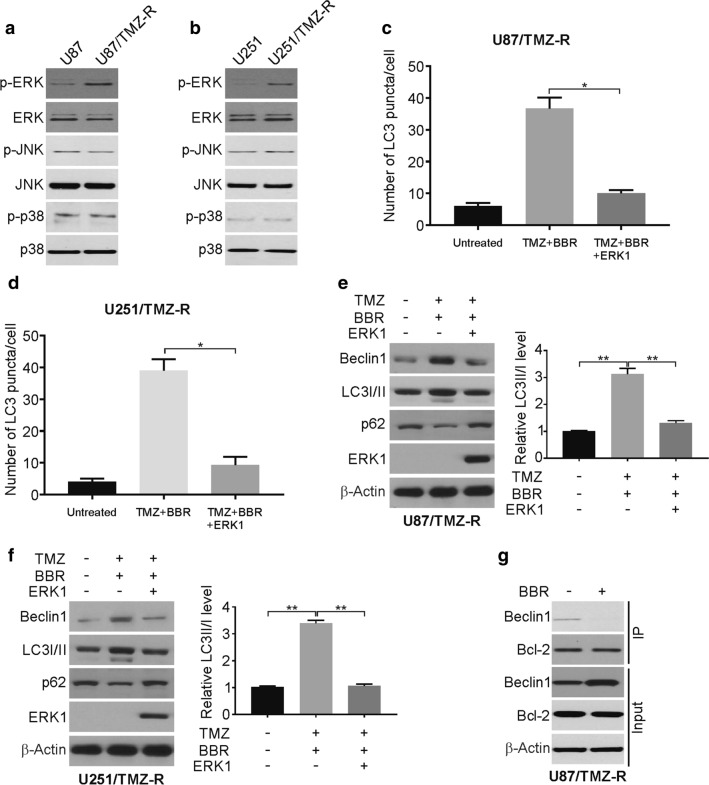
Berberine induces autophagy via ERK signaling inhibition. a and b Total and phosphorylation ERK was analyzed by western blotting in parental and TMZ resistance cells. c and d TMZ-R U87 and U251 cells were transfected with GFP-LC3 with or without ERK1 plasmid, followed by treatment with 100 μM TMZ with 10 μM berberine for 24 h. The numbers of GFP-LC3 puncta were quantified with confocal microscopy. e and f TMZ-R U87 and U251 cells were transfected with ERK1 plasmid, followed by treatment with 100 μM TMZ with 10 μM berberine for 24 h. Indicated proteins level were analyzed by western blotting. LC3 II was normalized to LC3 I. g IP experiment was performed with antibody against Bcl-2 in berberine-treated TMZ-R cells. Then the Beclin1 was analyzed by western blotting. BBR: berberine. Results were presented as means ± SD from three independent experiments. *, P < 0.05
Fig. 6
Fig. 6
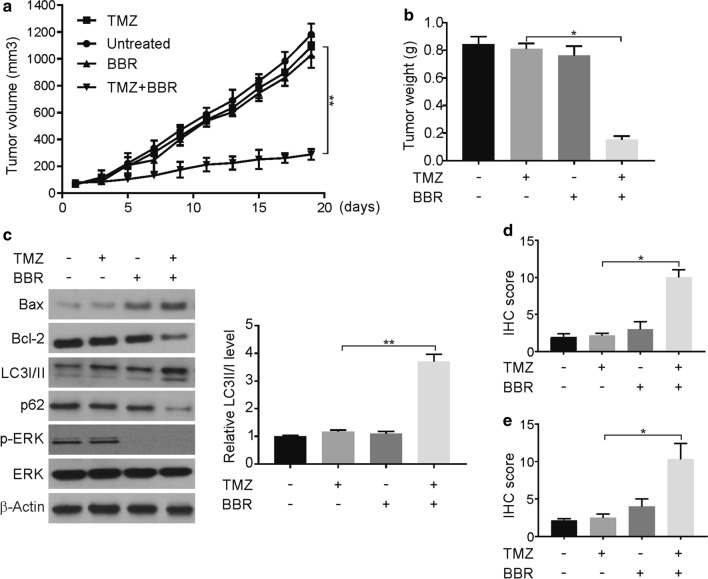
Berberine resensitizes TMZ to TMZ-R tumors in vivo. a Nude mice were injected s.c. with 4 × 10TMZ-R cells. After 1 week, mice were treated with TMZ, berberine or their combination. Tumor volume was calculated and plotted with p values, n = 6 in each group. b Tumor weight at the end of the experiment. c The indicated proteins in randomly selected tumors were analyzed by Western blotting. LC3 II was normalized to LC3 I. d Paraffin-embedded sections of TMZ-R tumor tissues from mice treated were analyzed by active caspase 3 staining. e Paraffin-embedded sections of TMZ-R tumor tissues from mice treated were analyzed by LC3B staining. BBR: berberine. Results were presented as means ± SD from three independent experiments. *, P < 0.05

References

    1. Davis ME. Glioblastoma: overview of disease and treatment. Clin J Oncol Nurs. 2016;20:S2–8. doi: 10.1188/16.CJON.S1.2-8. - DOI - PMC - PubMed
    1. Lim M, Xia Y, Bettegowda C, Weller M. Current state of immunotherapy for glioblastoma. Nat Rev Clin Oncol. 2018;15:422–442. doi: 10.1038/s41571-018-0003-5. - DOI - PubMed
    1. Paolillo M, Boselli C, Schinelli S. Glioblastoma under Siege: an overview of current therapeutic strategies. Brain Sci. 2018 doi: 10.3390/brainsci8010015. - DOI - PMC - PubMed
    1. Noroxe DS, Poulsen HS, Lassen U. Hallmarks of glioblastoma: a systematic review. ESMO Open. 2016;1:e000144. doi: 10.1136/esmoopen-2016-000144. - DOI - PMC - PubMed
    1. Tseng WL, Hsu HH, Chen Y, Tseng SH. Tumor recurrence in a glioblastoma patient after discontinuation of prolonged temozolomide treatment. Asian J Neurosurg. 2017;12:727–730. doi: 10.4103/ajns.AJNS_39_15. - DOI - PMC - PubMed

Publication types