


Severe paradoxical reaction in tuberculous meningitis
- PMID: 33299795
- PMCID: PMC7702007
- DOI: 10.1016/j.idcr.2020.e01009
Severe paradoxical reaction in tuberculous meningitis
Abstract
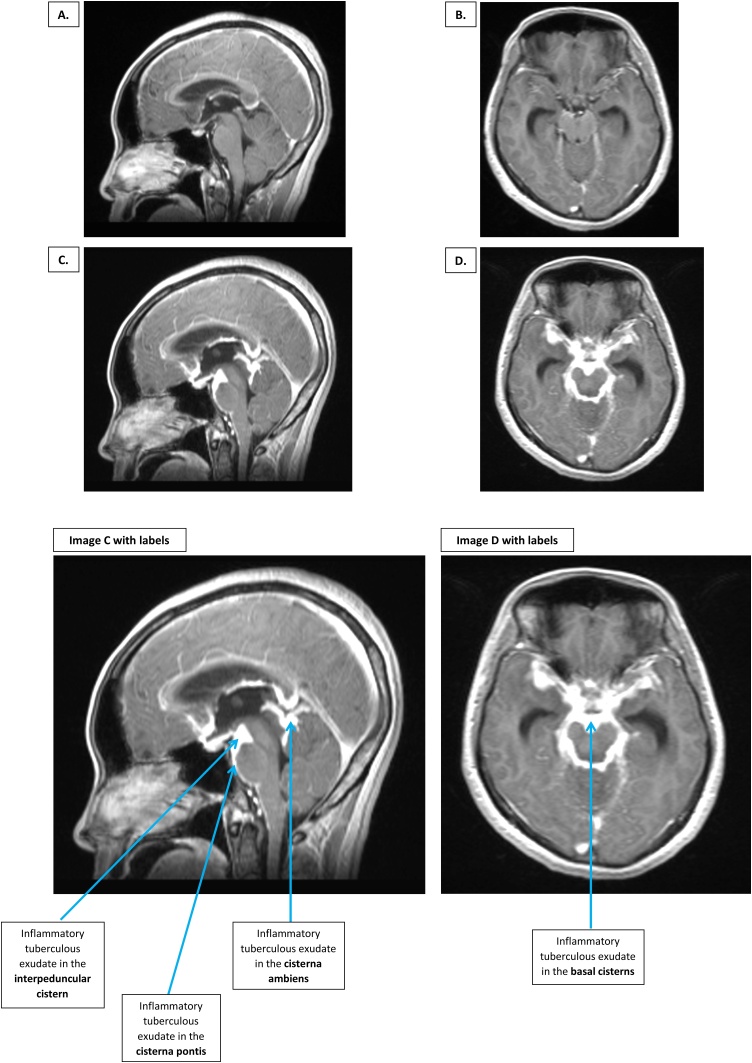
A 31-year-old female presented with a 3-week history of fever and headache. CSF Ziehl-Neelsen smear microscopy revealed acid-fast bacilli, and CSF GeneXpert MTB/RIF was positive for Mycobacterium tuberculosis with no mutations of rifampicin resistance. Tuberculous meningitis (TBM) was diagnosed. Baseline contrast-enhanced brain magnetic resonance imaging (MRI) was unremarkable. Eight weeks later the patient developed markedly reduced visual acuity and clinical signs consistent with left 3rd and 6th cranial nerve palsies. Repeat contrast-enhanced brain MRI revealed extensive tuberculous exudate filling the basal cisterns of the brain consistent with a severe paradoxical reaction of TBM. High dose intravenous dexamethasone was administered, with visual acuity returning to near-normal over 3-4 weeks. In TBM paradoxical inflammatory reactions are common yet difficult to predict. When severe, they may result in substantial neurological morbidity and death. Prompt host directed therapies such as corticosteroids may reduce chances of permanent neurological damage.
Keywords: Paradoxical reaction; Tuberculous meningitis.
© 2020 The Author(s).
Conflict of interest statement
The authors report no declarations of interest.
Figures
References
-
- Donovan J., Phu N.H., Thao L.T.P. Adjunctive dexamethasone for the treatment of HIV-uninfected adults with tuberculous meningitis stratified by Leukotriene A4 hydrolase genotype (LAST ACT): study protocol for a randomised double blind placebo controlled non-inferiority trial. Wellcome Open Res. 2018;3:32. - PMC - PubMed
-
- Bell L.C.K., Breen R., Miller R.F., Noursadeghi M., Lipman M. Paradoxical reactions and immune reconstitution inflammatory syndrome in tuberculosis. Int J Infect Dis. 2015;32:39–45. - PubMed
-
- Garg R.K., Malhotra H.S., Kumar N. Paradoxical reaction in HIV negative tuberculous meningitis. J Neurol Sci. 2014;340:26–36. - PubMed
Publication types
Grants and funding
LinkOut - more resources
Full Text Sources
Other Literature Sources
