


Host range projection of SARS-CoV-2: South Asia perspective
- PMID: 33301987
- PMCID: PMC7833252
- DOI: 10.1016/j.meegid.2020.104670
Host range projection of SARS-CoV-2: South Asia perspective
Abstract
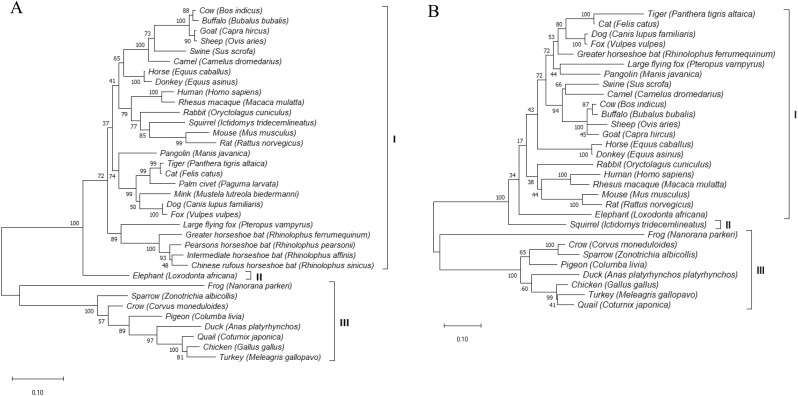
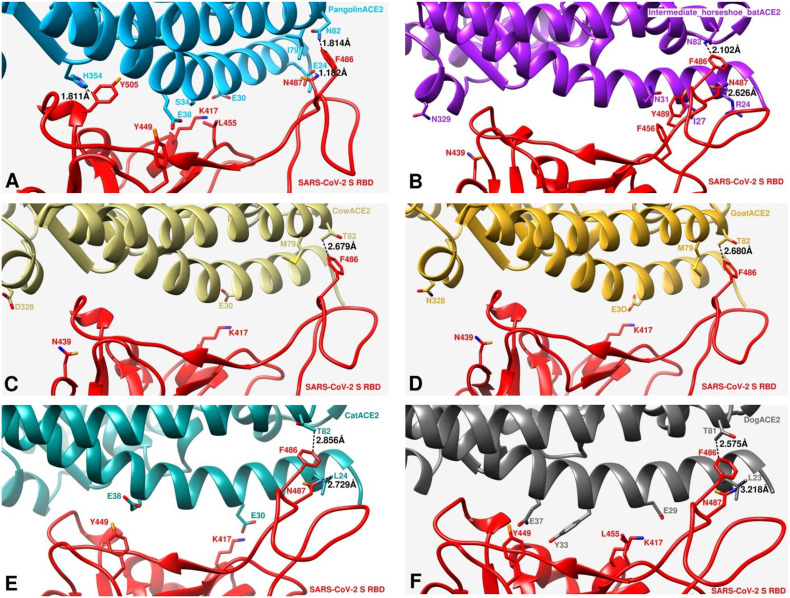
Severe Acute Respiratory Syndrome Coronavirus 2 (SARS-CoV-2), the causing agent of Coronavirus Disease-2019 (COVID-19), is likely to be originated from bat and transmitted through intermediate hosts. However, the immediate source species of SARS-CoV-2 have not yet been confirmed. Here, we used diversity analysis of the angiotensin I converting enzyme 2 (ACE2) that serves as cellular receptor for SARS-CoV-2 and transmembrane protease serine 2 (TMPRSS2), which has been proved to be utilized by SARS-CoV-2 for spike protein priming. We also simulated the structure of receptor-binding domain of SARS-CoV-2 spike protein (SARS-CoV-2S RBD) with the ACE2s to investigate their binding affinity to determine the potential intermediate animal hosts that could spread the SARS-CoV-2 to humans in South Asia. We identified cow, buffalo, goat and sheep, which are predominant species in the household farming system in South Asia that can potentially be infected by SARS-CoV-2. All the bird species studied along with rat and mouse were considered less potential to interact with SARS-CoV-2. The interaction interfaces of SARS-CoV-2S RBD and ACE2 protein complex suggests pangolin as a potential intermediate host in SARS-CoV-2. Our results provide a valuable resource for the identification of potential hosts for SARS-CoV-2 in South Asia and henceforth reduce the opportunity for a future outbreak of COVID-19.
Keywords: ACE2; COVID-19; Host range; SARS-CoV-2; TMPRSS2.
Copyright © 2020 Elsevier B.V. All rights reserved.
Conflict of interest statement
All authors have declared that no competing interests exist.
Figures

References
-
- Anguiano L., Riera M., Pascual J., Soler M.J. Circulating ACE2 in cardiovascular and kidney diseases. Curr. Med. Chem. 2017;24:3231–3241. - PubMed
-
- Country Comparison . CIA; 2020. Population.https://www.cia.gov/library/publications/the-world-factbook/fields/335ra... July.
-
- Drosten C., Kellam P., Memish Z.A. Evidence for camel-to-human transmission of MERS coronavirus. N. Engl. J. Med. 2014;371(14):1359–1360. - PubMed
MeSH terms
Substances
LinkOut - more resources
Full Text Sources
Other Literature Sources
Medical
Miscellaneous
