


Does gait bout definition influence the ability to discriminate gait quality between people with and without multiple sclerosis during daily life?
- PMID: 33302221
- PMCID: PMC7946343
- DOI: 10.1016/j.gaitpost.2020.11.024
Does gait bout definition influence the ability to discriminate gait quality between people with and without multiple sclerosis during daily life?
Abstract
Background: There is currently no consensus about standardized gait bout definitions when passively monitoring walking during normal daily life activities. It is also not known how different definitions of a gait bout in daily life monitoring affects the ability to distinguish pathological gait quality. Specifically, how many seconds of a pause with no walking indicates an end to one gait bout and the start of another bout? In this study, we investigated the effect of 3 gait bout definitions on the discriminative ability to distinguish quality of walking in people with multiple sclerosis (MS) from healthy control subjects (HC) during a week of daily living.
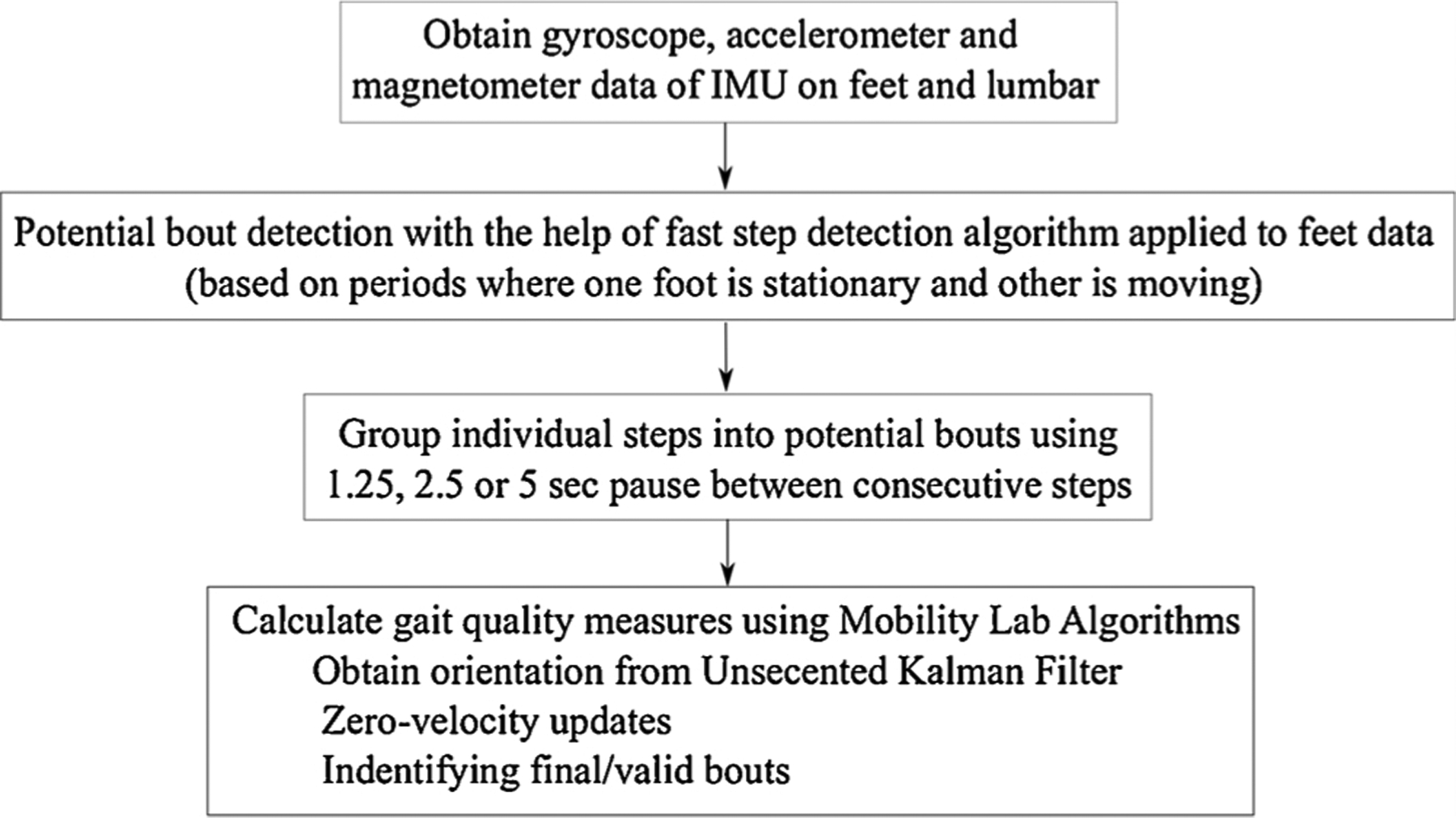
Methods: 15 subjects with MS and 16 HC wore instrumented socks on each foot and one Opal sensor over the lower lumbar area for a week of daily activities for at least 8 h/day. Three gait bout definitions were based on the length of the pause between the end of one gait bout and start of another bout (1.25 s, 2.50 s, and 5.0 s pause). Area under the curve (AUC) was used to compare gait quality measures in MS versus HC.
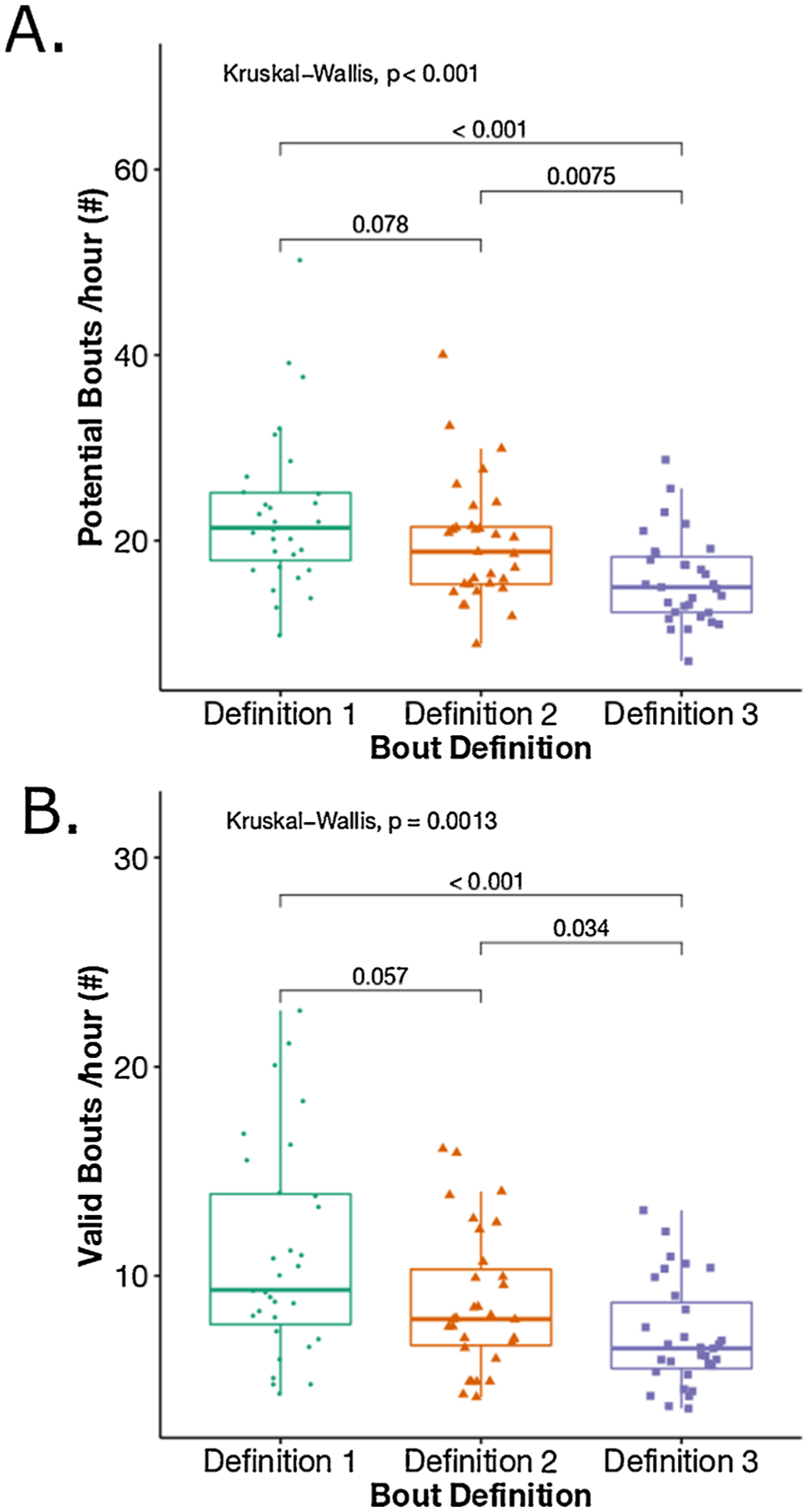
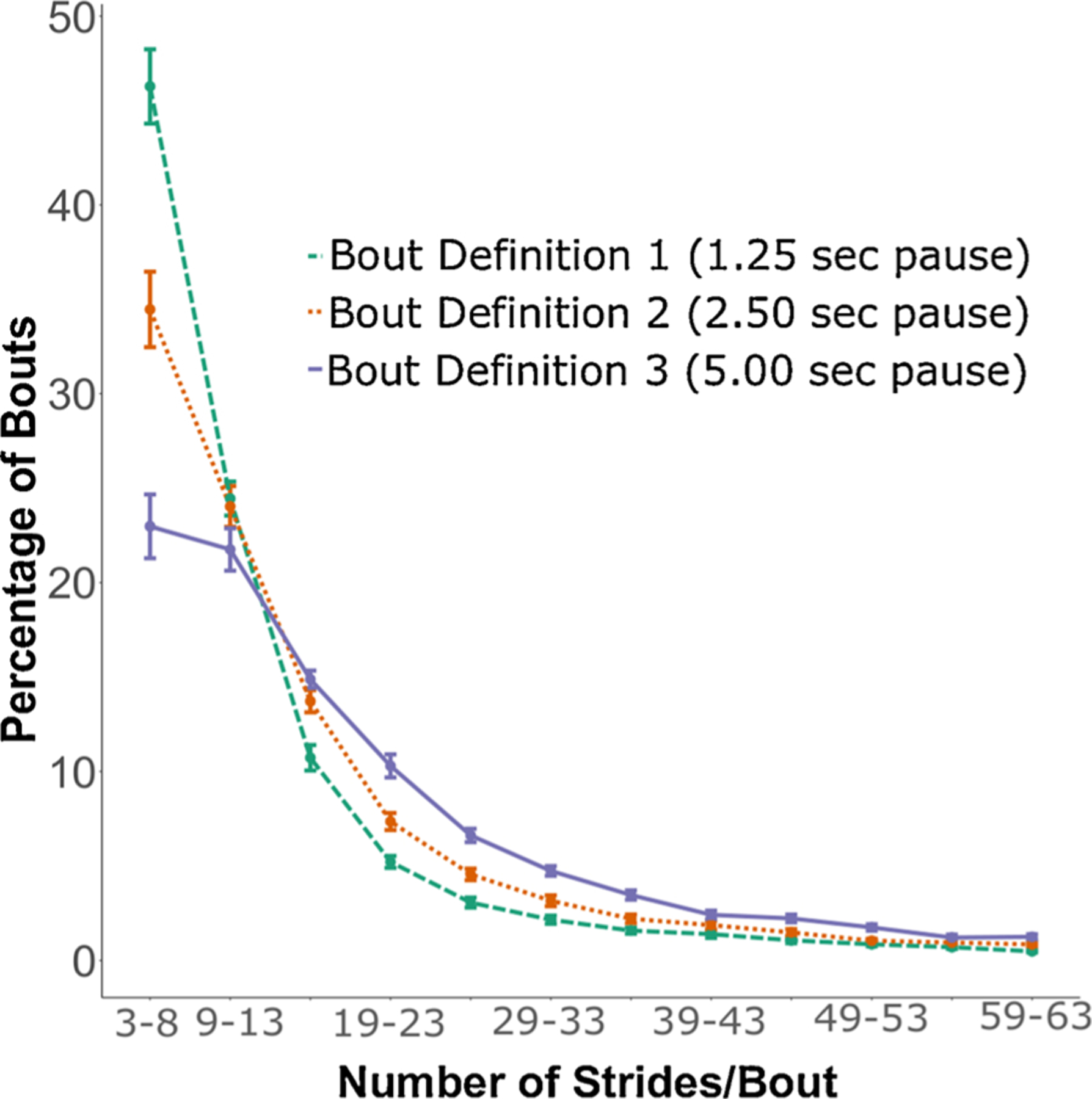
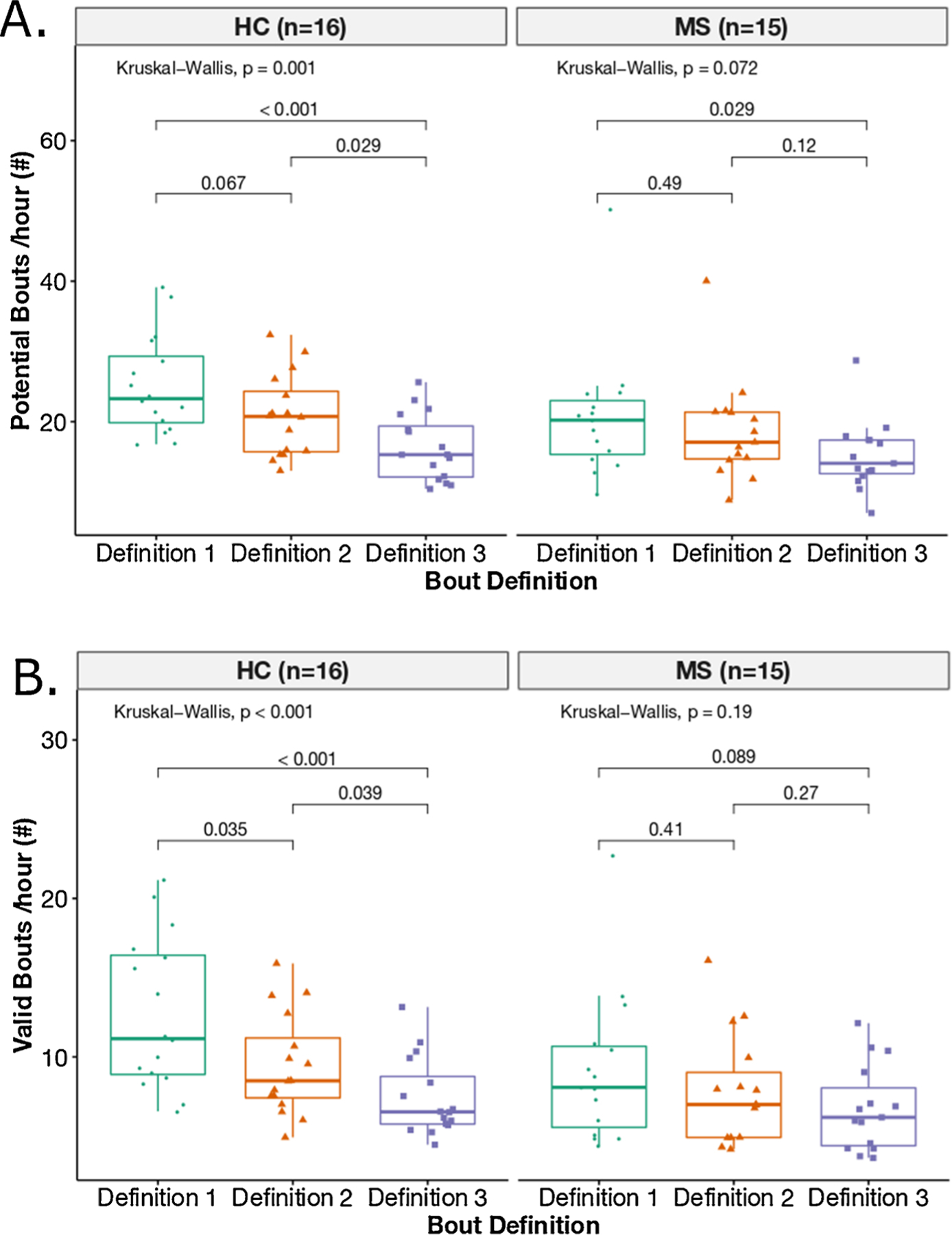
Results: Total number of gait bouts over the week were statistically significantly different across bout definitions, as expected. However, AUCs of gait quality measures (such as gait speed, stride length, stride time) discriminating people with MS from HC were not different despite the 3 bout definitions.
Significance: Quality of gait measures that discriminate MS from HC during daily life are not influenced by the length of a gait bout, despite large differences in quantity of gait across bout definitions. Thus, gait quality measures in people with MS versus controls can be compared across studies using different gait bout definitions with pause lengths ≤5 s.
Keywords: Bout; Free-living; Gait; Multiple sclerosis; Wearable sensors.
Copyright © 2020 Elsevier B.V. All rights reserved.
Conflict of interest statement
Declaration of Competing Interest
Drs. McNames, El-Gohary and Horak have significant financial interests in APDM Wearable Technologies, a company that may have a commercial interest in the results of this research. Dr. Horak has also received honoraria from: British Columbia PT Association, Neuropore, Sanofi, Takeda, Adamas, Penn State University, University of Michigan, Johns Hopkins University. This potential conflict of interest has been reviewed and managed by OHSU. Dr. Spain receives honoraria from TG therapeutics.
Figures
References
Publication types
MeSH terms
Grants and funding
LinkOut - more resources
Full Text Sources
Other Literature Sources
Medical
