. 2020 Dec 8;12(12):1189.
doi: 10.3390/pharmaceutics12121189.

The Delivery of the Novel Drug 'Halicin' Using Electrospun Fibers for the Treatment of Pressure Ulcer against Pathogenic Bacteria

Affiliations

The Delivery of the Novel Drug 'Halicin' Using Electrospun Fibers for the Treatment of Pressure Ulcer against Pathogenic Bacteria

Walaa S Aburayan et al. Pharmaceutics. .

Abstract

Pressure ulcer or bedsore is a form of skin infection that commonly occurs with patients admitted to the hospital for an extended period of time, which might lead to severe complications in the absence of medical attention, resulting in infection either by drug-sensitive or drug-resistant bacteria. Halicin, a newly discovered drug effective against several bacterial strains, including multidrug-resistant bacteria, was investigated to reduce bacterial infection burden. This study aims to formulate halicin into electrospun fibers to be applied in bedsores as antibacterial dressing to assess its efficacy against gram-positive (Staphylococcus aureus) and gram-negative bacteria (Escherichia coli and Acinetobacter baumannii) by studying the minimum inhibitory concentration (MIC) and bacterial zone of inhibition assays. The diameters of inhibition growth zones were measured, and the results have shown that the drug-loaded fibers were able to inhibit the growth of bacteria compared to the halicin discs. The release profile of the drug-loaded fibers exhibited a complete release of the drug after 2 h. The results demonstrated that the drug-loaded fibers could successfully release the drug while retaining their biological activity and they may be used as a potential antimicrobial dressing for patients with pressure ulcers caused by multidrug resistant bacteria.

Keywords: antibacterial dressing; electrospinning; electrospun fibers; halicin; pressure ulcer.


Conflict of interest statement

The authors declare no conflict of interest.

Figures
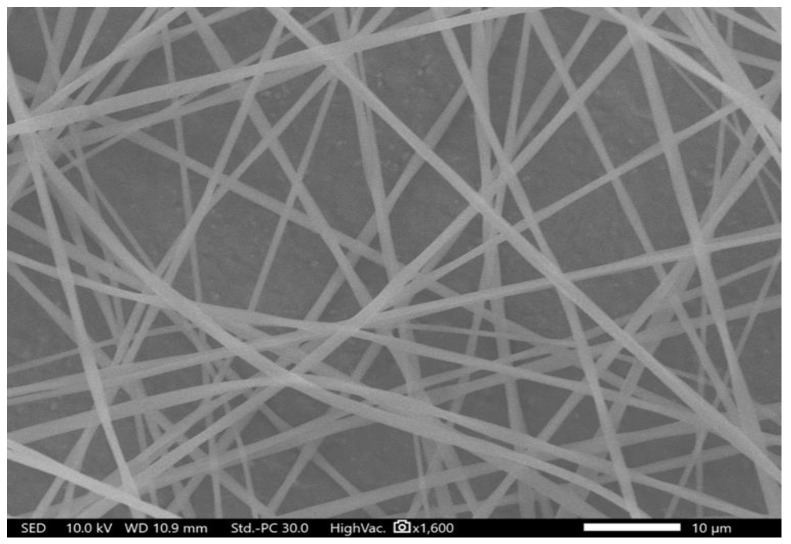
Figure 1
Figure 1
Drug-loaded electrospun fibers showing a smooth, un-beaded, and un-porous appearance of the yielded fibers indicating their successful preparation.
Figure 2
Figure 2
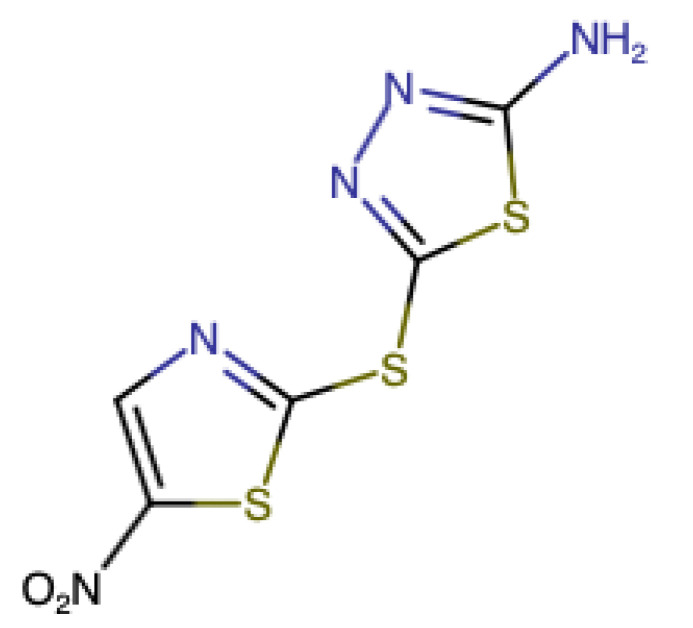
The chemical structure of halicin, which was drawn by chem-space.com.
Figure 3
Figure 3
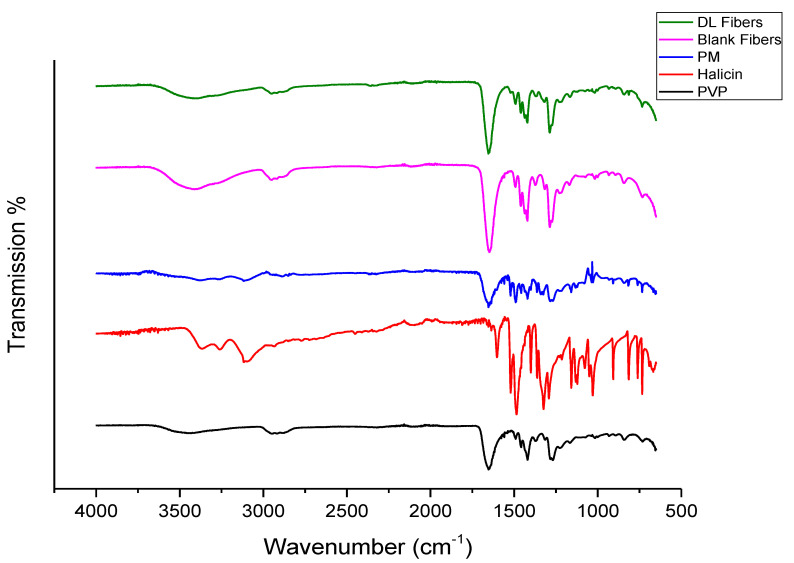
Fourier-transform infrared spectroscopy (FTIR) transmissions of polyvinylpyrrolidone (PVP), halicin, physical mixture (PM), blank and drug-loaded fibers, showing the distinctive drug peaks at 761 to 734 cm−1 that appear in the PM and the drug-loaded fibers compared to the blank fibers.
Figure 4
Figure 4
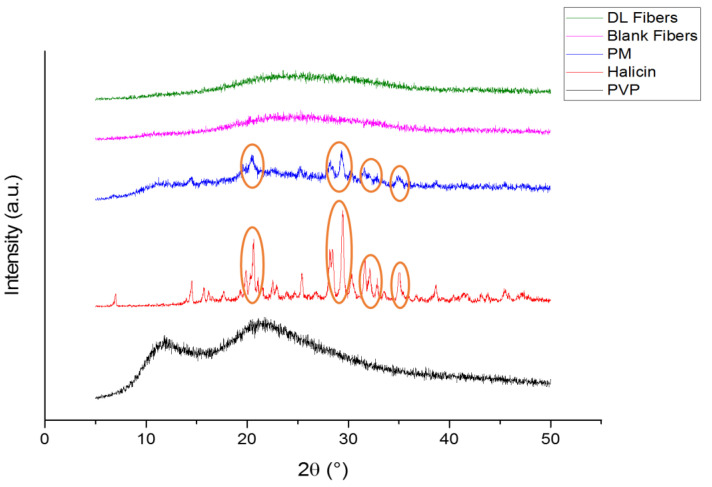
X-ray diffraction (XRD) patterns of PVP, halicin, PM, blank and drug-loaded fibers showing that the drug is in the crystalline form (presence of characteristic peaks) while the polymer is in the amorphous form (broad halos). The presence of halicin distinct peaks is also present in the PM which are absent in the drug-loaded fibers indicating the molecular dispersion of the drug within the fibers.
Figure 5
Figure 5
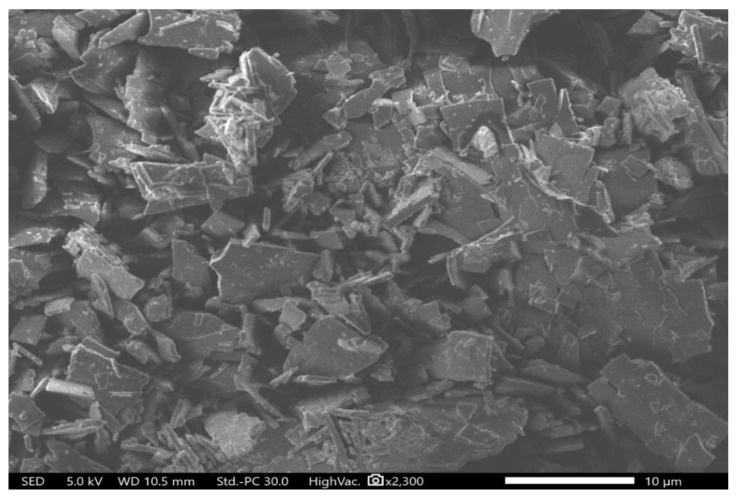
Scanning electron microscopy (SEM) image of halicin crystal showing the drug crystal structure.
Figure 6
Figure 6
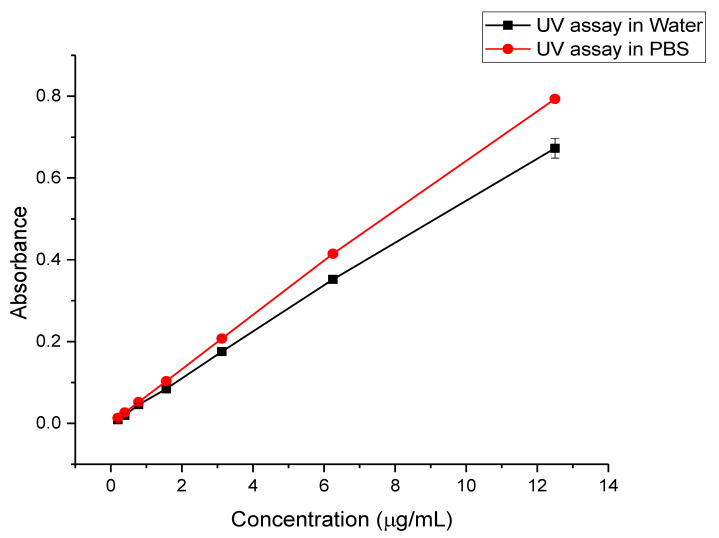
Halicin UV calibration curves using deionized water (DW) (for drug loading (DL) determination) and phosphate buffer saline (PBS) pH 7.4 (for the release study). Both curves showed good linearity at a concentration range of 12.5 to 0.2 μg/mL, with the r2 of 0.9994 and 0.9995 for DW and PBS, respectively.
Figure 7
Figure 7
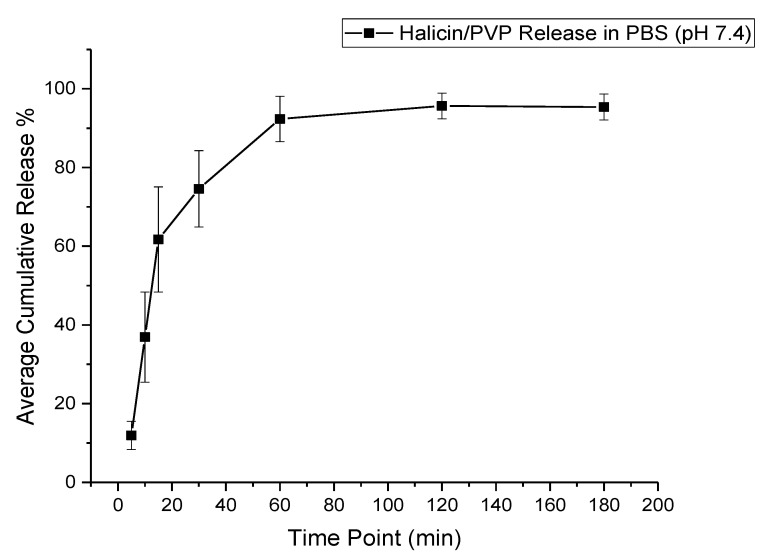
Cumulative release profile of the drug-loaded fibers showing a burst release of the drug (~60%) after 15 min and a full drug release after 120 min.
Figure 8
Figure 8
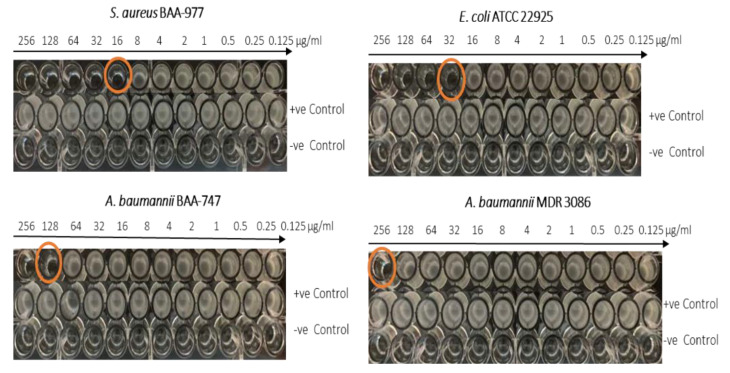
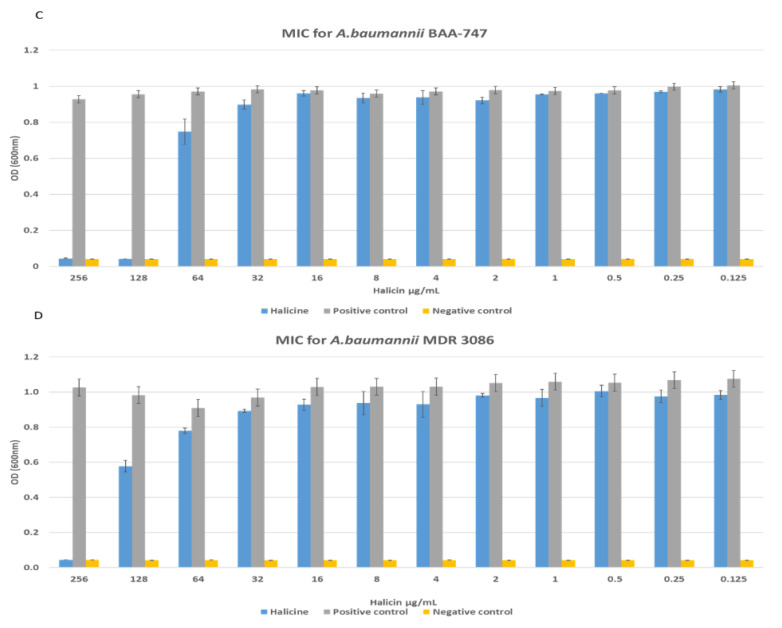
The minimum inhibitory concentration (MIC) values of halicin against S. aureus (BAA 977), E. coli (ATCC 22925), A. baumannii (BAA 747), and A. baumannii (MDR 3086), in which the minimum concentration (orange circled) is defined as the lowest concentration of no bacterium growth. The MIC was found at 16 μg/mL, 32 μg/mL, 128 μg/mL, and 256 μg/mL against S. aureus, E. coli, A. baumannii, and MDR A. baumannii, respectively.
Figure 9
Figure 9
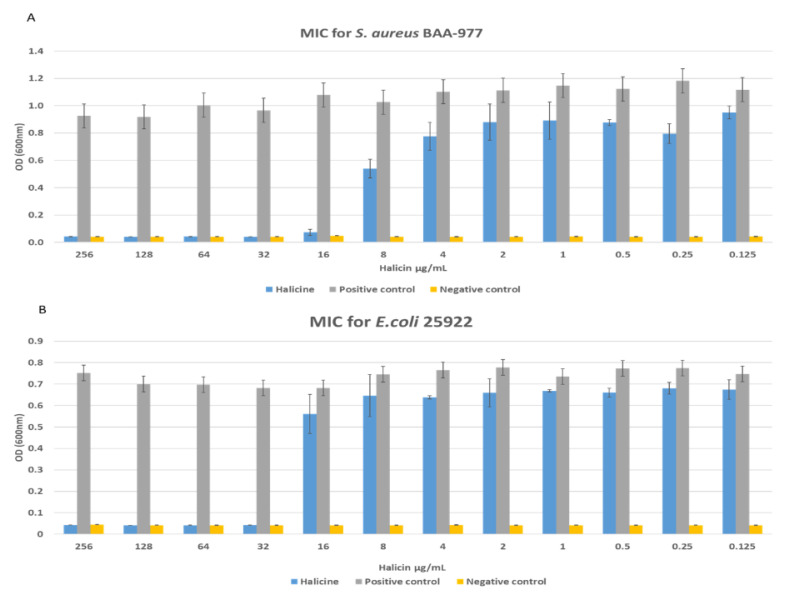
The MIC values were found at 16 μg/mL, 32 μg/mL, 128 μg/mL, and 256 μg/mL against S. aureus (A), E. coli (B), A. baumannii (C), and MDR A. baumannii (D), respectively.
Figure 9
Figure 9
The MIC values were found at 16 μg/mL, 32 μg/mL, 128 μg/mL, and 256 μg/mL against S. aureus (A), E. coli (B), A. baumannii (C), and MDR A. baumannii (D), respectively.
Figure 10
Figure 10
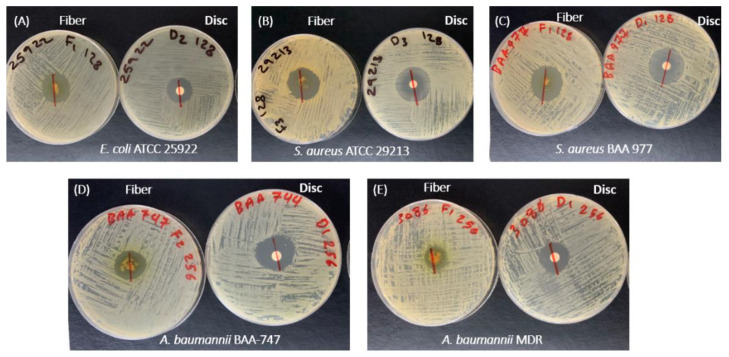
Zone of inhibition of the drug-loaded electrospun fibers compared to an equivalent concentration of the free drug in a sterile disc. The zone of inhibition of the drug-loaded fibers was 27 mm, 21 mm, 30 mm, 20 mm, and 18 mm for E. coli (A), S. aureus ATCC 29,213 (B), S. aureus BAA 977 (C), A. baumannii BAA-747 (D), and MDR A. baumannii (E), respectively, while it was 20 mm, 28 mm, 28 mm, 24 mm, and 21 mm for the halicin discs, respectively.

References

    1. Gebhardt K. Pressure ulcer prevention. Part 1. Causes of pressure ulcers. [(accessed on 28 August 2020)];Nurs. Times. 2002 98:41–44. Available online: http://www.ncbi.nlm.nih.gov/pubmed/11933809. - PubMed
    1. Thomas D.R. Prevention and Treatment of Pressure Ulcers. J. Am. Med Dir. Assoc. 2006;7:46–59. doi: 10.1016/j.jamda.2005.10.004. - DOI - PubMed
    1. Gefen A. Reswick and Rogers pressure-time curve for pressure ulcer risk. Part 1. Nurs. Stand. Royal Coll. Nurs. 2009;23:64. doi: 10.7748/ns.23.45.64.s53. - DOI - PubMed
    1. Gefen A. Reswick and Rogers pressure-time curve for pressure ulcer risk. Part 2. Nurs. Stand. 2009;23:40–45. doi: 10.7748/ns.23.46.40.s50. - DOI - PubMed
    1. Callam M.J., Ruckley C.V., Harper D.R., Dale J.J. Chronic ulceration of the leg: Extent of the problem and provision of care. BMJ. 1985;290:1855–1856. doi: 10.1136/bmj.290.6485.1855. - DOI - PMC - PubMed

LinkOut - more resources