


The assembly and importance of a novel ecosystem: The ant community of coffee farms in Puerto Rico
- PMID: 33304482
- PMCID: PMC7713940
- DOI: 10.1002/ece3.6785
The assembly and importance of a novel ecosystem: The ant community of coffee farms in Puerto Rico
Abstract
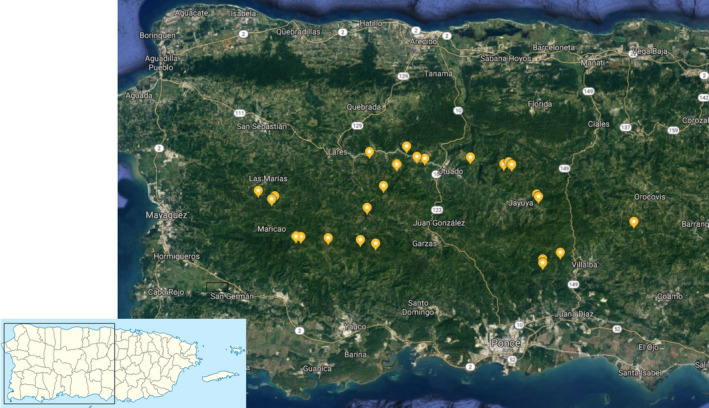
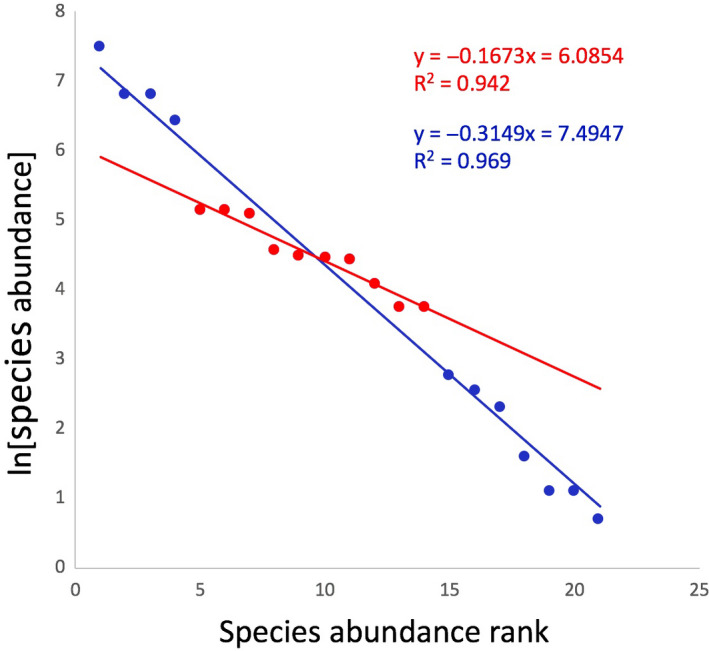
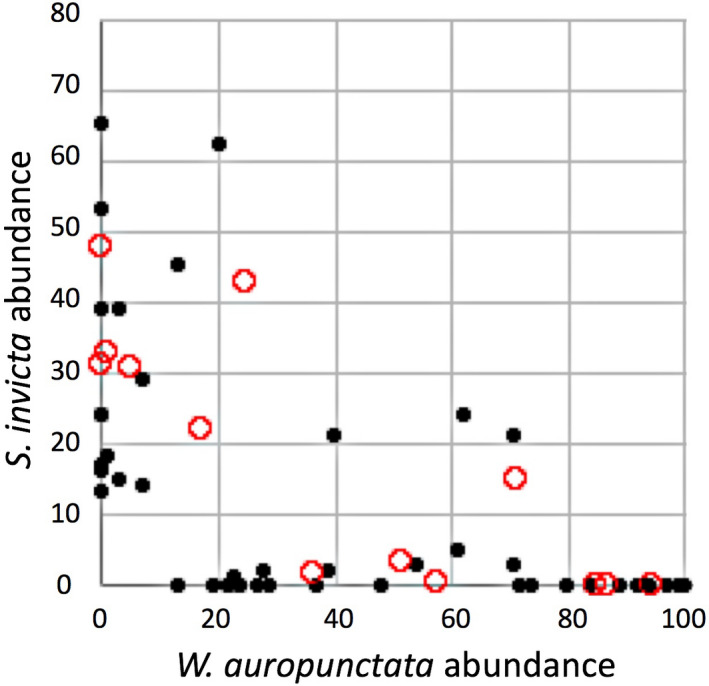
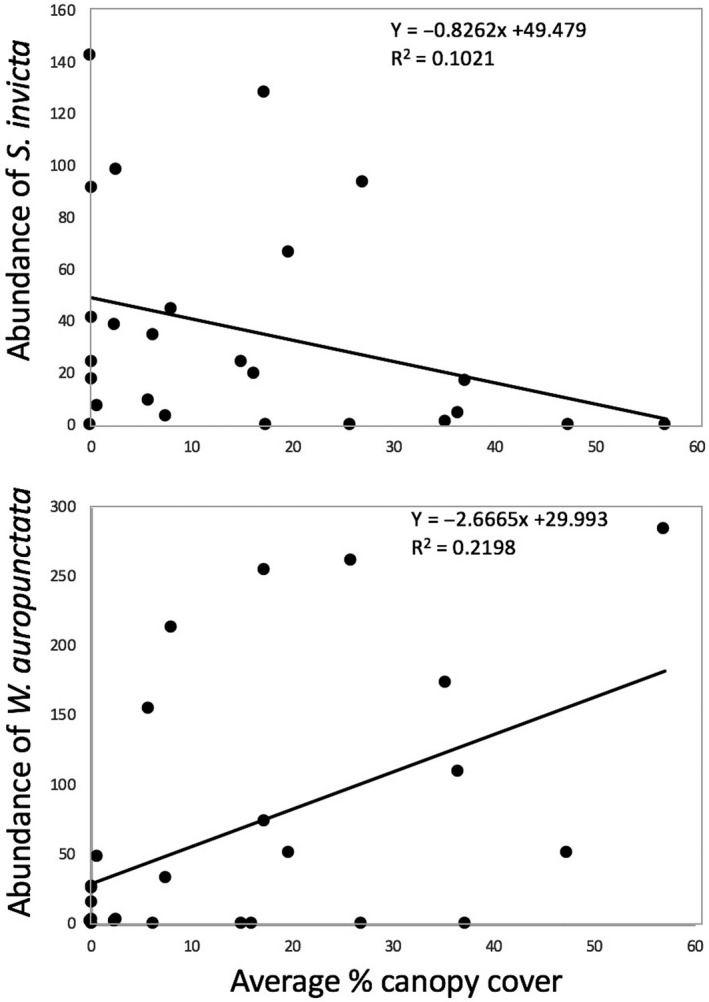
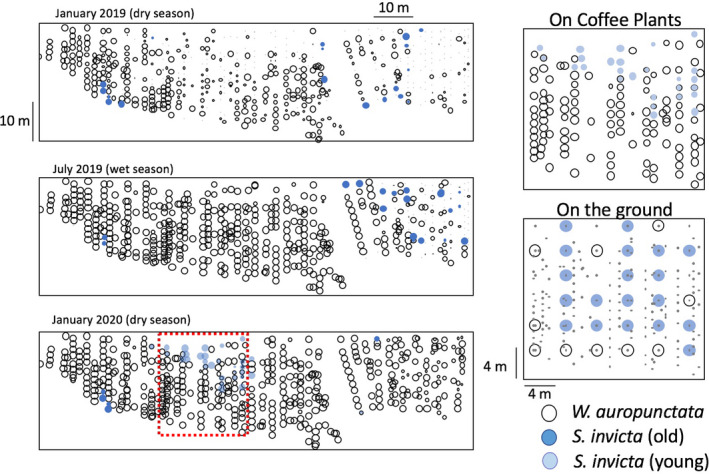
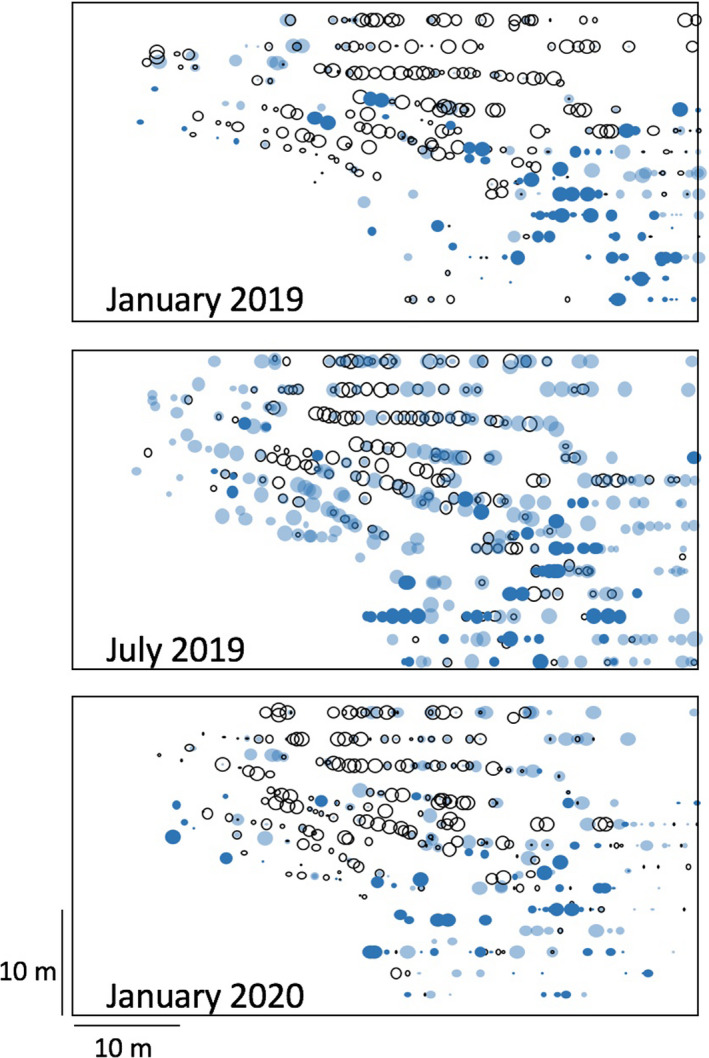
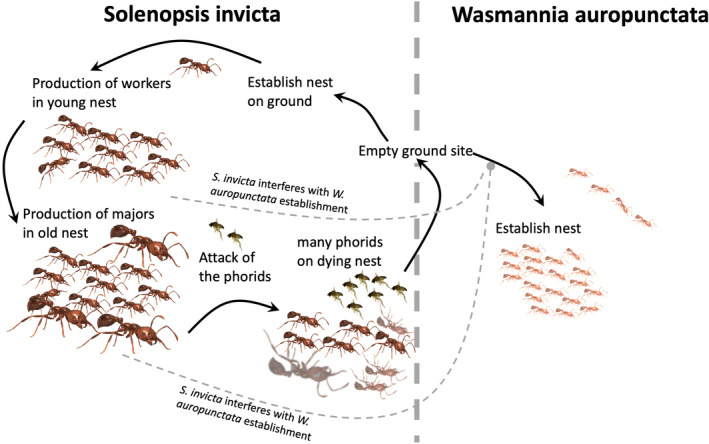
Agricultural ecosystems are by their very nature novel and by definition the more general biodiversity associated with them must likewise constitute a novel community. Here, we examine the community of arboreally foraging ants in the coffee agroecosystem of Puerto Rico. We surveyed 20 coffee plants in 25 farms three times in a period of one year. We also conducted a more spatially explicit sampling in two of the farms and conducted a species interaction study between the two most abundant species, Wasmannia auropunctata and Solenopsis invicta, in the laboratory. We find that the majority of the most common species are well-known invasive ants and that there is a highly variable pattern of dominance that varies considerably over the main coffee producing region of Puerto Rico, suggesting an unusual modality of community structure. The distribution pattern of the two most common species, W. auropunctata and S. invicta, suggests strong competitive exclusion. However, they also have opposite relationships with the percent of shade cover, with W. auropunctata showing a positive relationship with shade, while S. invicta has a negative relationship. The spatial distribution of these two dominant species in the two more intensively studied farms suggests that young colonies of S. invicta can displace W. auropunctata. Laboratory experiments confirm this. In addition to the elaboration of the nature and extent of this novel ant community, we speculate on the possibilities of its active inclusion as part of a biological control system dealing with several coffee pests, including one of the ants itself, W. auropunctata.
Keywords: Solenopsis invicta; Wasmannia auropunctata; biological control; coexistence; community structure; dominance; invasive species.
© 2020 The Authors. Ecology and Evolution published by John Wiley & Sons Ltd.
Conflict of interest statement
The authors declare no competing interests.
Figures
References
-
- Armbrecht, I. , & Gallego, M. C. (2007). Testing ant predation on the coffee berry borer in shaded and sun coffee plantations in Colombia. Entomologia Experimentalis et Applicata, 124(3), 261–267. 10.1111/j.1570-7458.2007.00574.x - DOI
-
- Braga, R. R. , Gómez‐Aparicio, L. , Heger, T. , Vitule, J. R. S. , & Jeschke, J. M. (2018). Structuring evidence for invasional meltdown: Broad support but with biases and gaps. Biological Invasions, 20(4), 923–936. 10.1007/s10530-017-1582-2 - DOI
-
- Chirino, M. G. , Gilbert, L. E. , & Folgarait, P. J. (2009). Behavior and development of Pseudacteon curvatus (Diptera: Phoridae) varies according to the social form of its host Solenopsis invicta (Hymenoptera: Formicidae) in its native range. Environmental Entomology, 38(1), 198–206. 10.1603/022.038.0125 - DOI - PubMed
-
- Davidson, D. W. (1997). The role of resource imbalances in the evolutionary ecology of tropical arboreal ants. Biological Journal of the Linnean Society, 61(2), 153–181. 10.1111/j.1095-8312.1997.tb01785.x - DOI
Associated data
LinkOut - more resources
Full Text Sources
