


Design and Implementation of the Irie Homes Toolbox: A Violence Prevention, Early Childhood, Parenting Program
- PMID: 33304875
- PMCID: PMC7701241
- DOI: 10.3389/fpubh.2020.582961
Design and Implementation of the Irie Homes Toolbox: A Violence Prevention, Early Childhood, Parenting Program
Erratum in
-
Corrigendum: Design and Implementation of the Irie Homes Toolbox: A Violence Prevention, Early Childhood, Parenting Program.Front Public Health. 2021 Jan 13;8:630819. doi: 10.3389/fpubh.2020.630819. eCollection 2020. Front Public Health. 2021. PMID: 33520926 Free PMC article.
Abstract
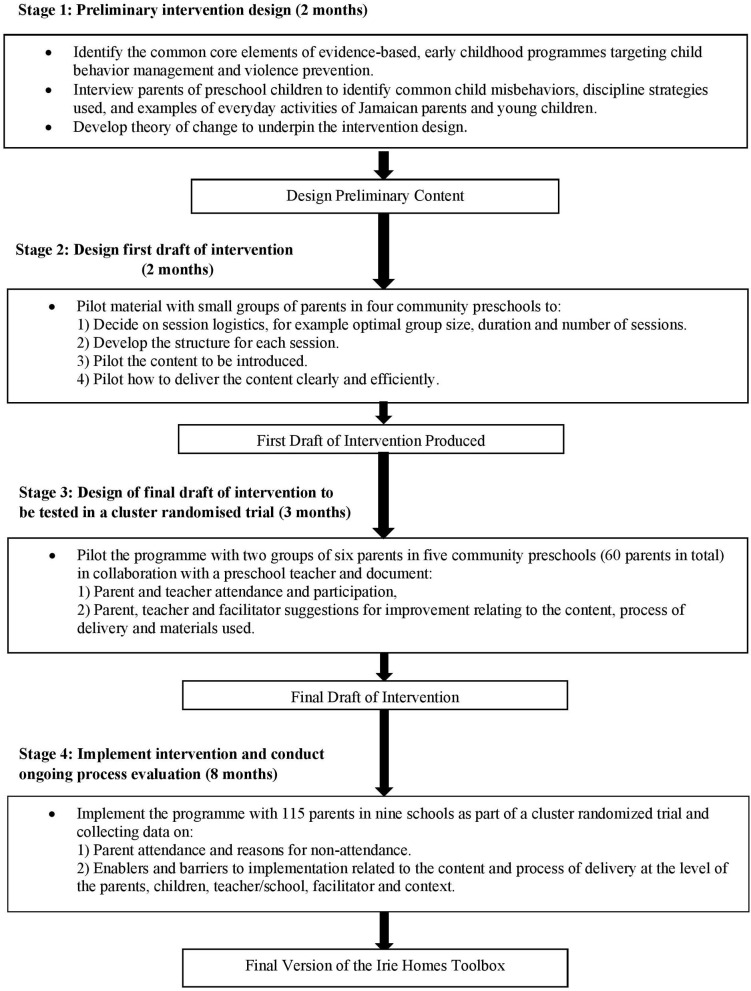
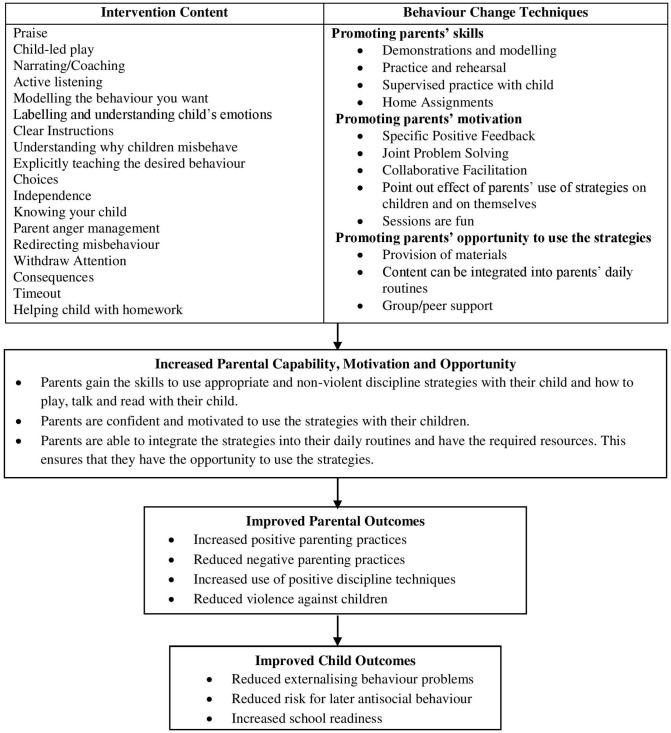
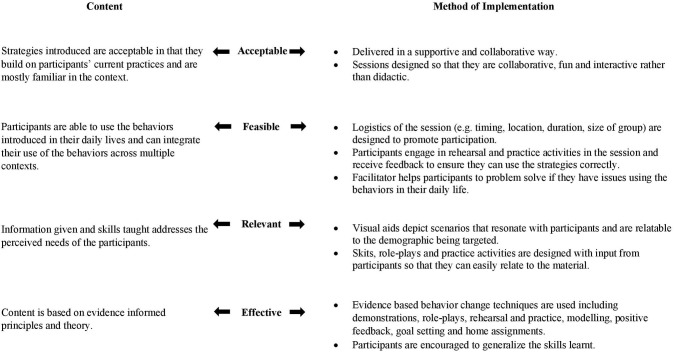
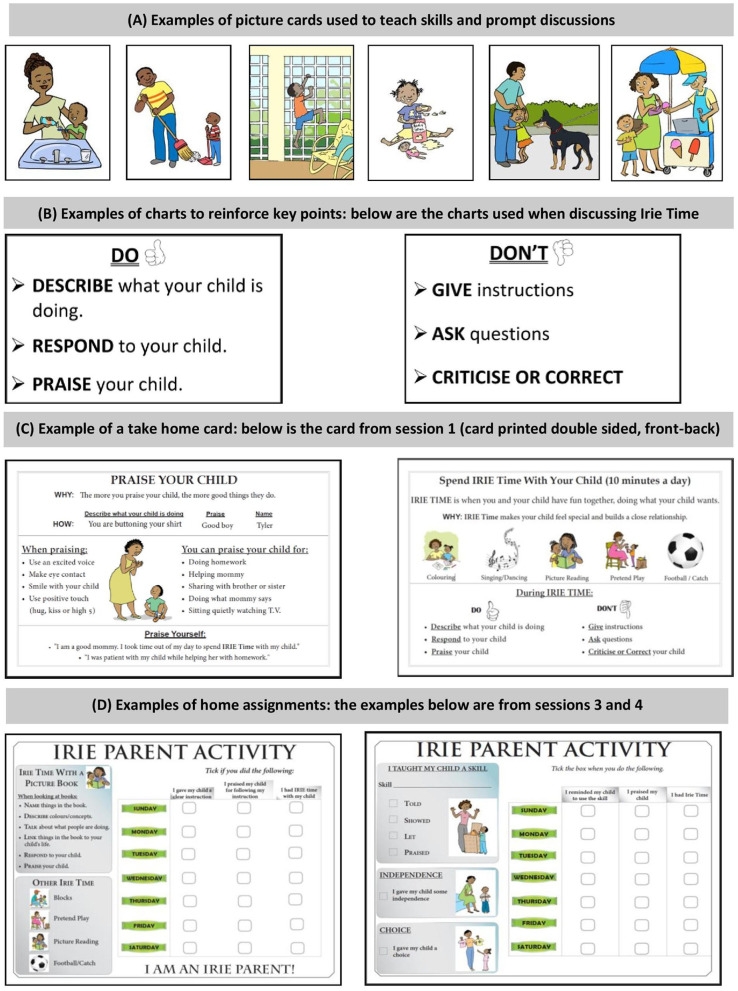
This paper describes the development of the Irie Homes Toolbox, a violence prevention program targeting parents of children aged two to six years. The intervention was designed to complement an existing, teacher-training, violence prevention program, the Irie Classroom Toolbox, thus promoting an integrated approach across home and school settings. The Irie Homes Toolbox was developed through a four-stage process by integrating data from theory, formative research, and practice to ensure the intervention is acceptable, feasible, relevant, and effective in the context. The perspectives of Jamaican preschool teachers and parents of preschool children, who are the end users, were integrated into the design of the intervention throughout the development process. Stage one involved integrating theory and formative research to inform the initial intervention design. Stages two and three involved iterative cycles of design, implementation and evaluation of the intervention content, process of delivery, structure and materials. Stage four involved a further cycle of learning through a process evaluation conducted as part of a cluster-randomized controlled trial. Data from each of these four stages was used to inform the design and ongoing revisions of the toolbox with the aim of developing a low-cost, scalable and sustainable intervention for the Jamaican context. The resulting program is theory-informed and uses empirically derived content and behavior change principles operationalized for the context in which it will be delivered. The Irie Homes Toolbox is suitable for integration into the existing preschool provision in Jamaica, thus utilizing an existing service and existing staff and increasing the likelihood for wide-scale dissemination.
Keywords: behavior change; early childhood; intervention development; low-and middle-income country; parent training; violence prevention.
Copyright © 2020 Francis and Baker-Henningham.
Figures
References
-
- UNICEF A Familiar Face: Violence in the Lives of Children and Adolescents. New York, NY: UNICEF; (2017).
-
- UNICEF Hidden in Plain Sight: A Statistical Analysis of Violence against Children. New York, NY: UNICEF; (2014). 200p.
Publication types
MeSH terms
LinkOut - more resources
Full Text Sources
Medical
