


Distinct polymorphisms in a single herpesvirus gene are capable of enhancing virulence and mediating vaccinal resistance
- PMID: 33306739
- PMCID: PMC7758048
- DOI: 10.1371/journal.ppat.1009104
Distinct polymorphisms in a single herpesvirus gene are capable of enhancing virulence and mediating vaccinal resistance
Abstract
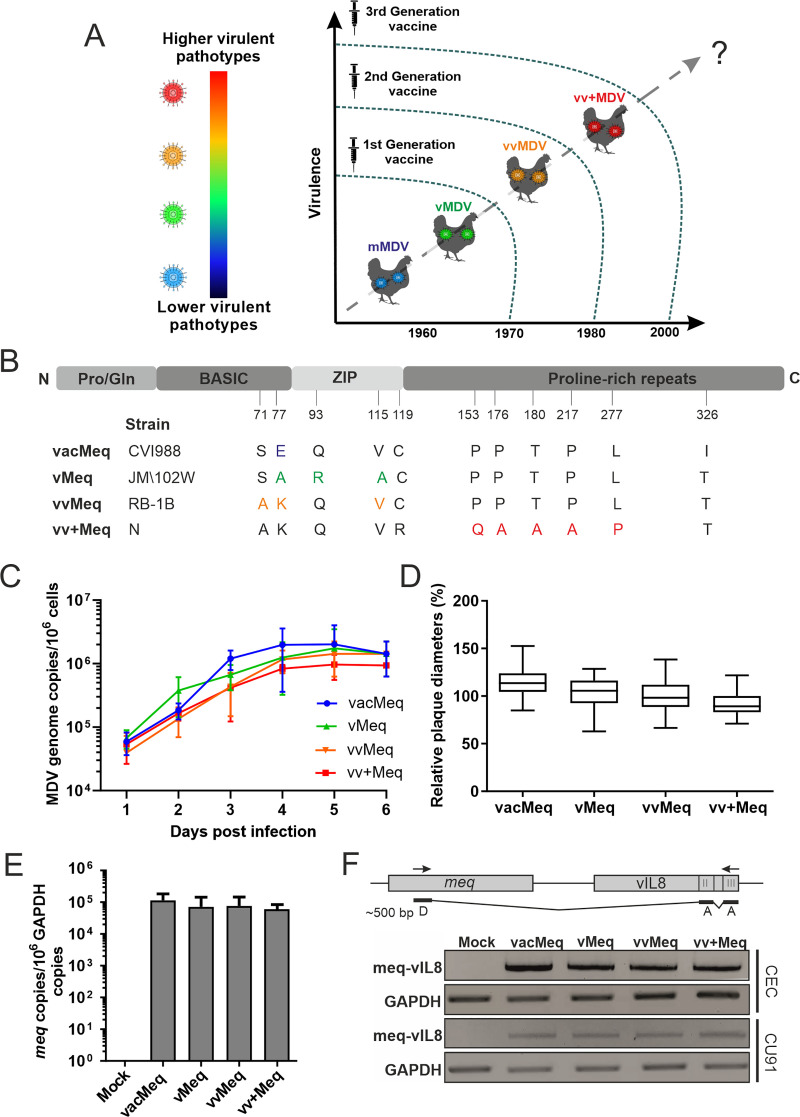
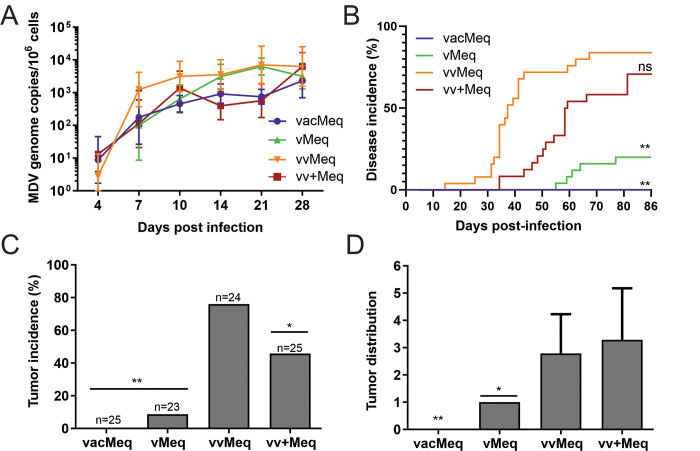
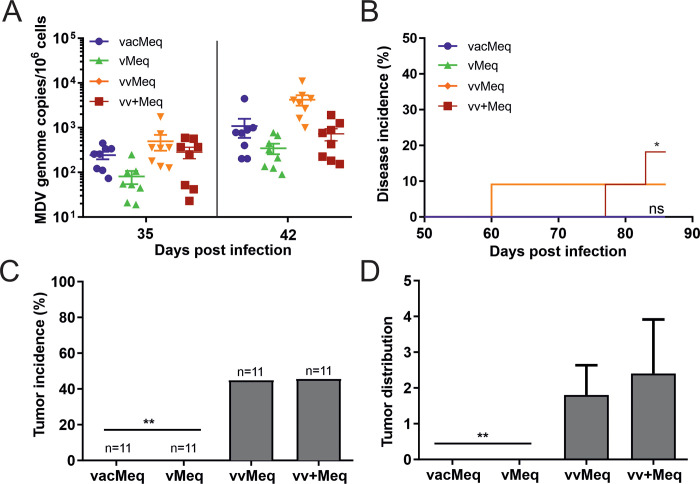
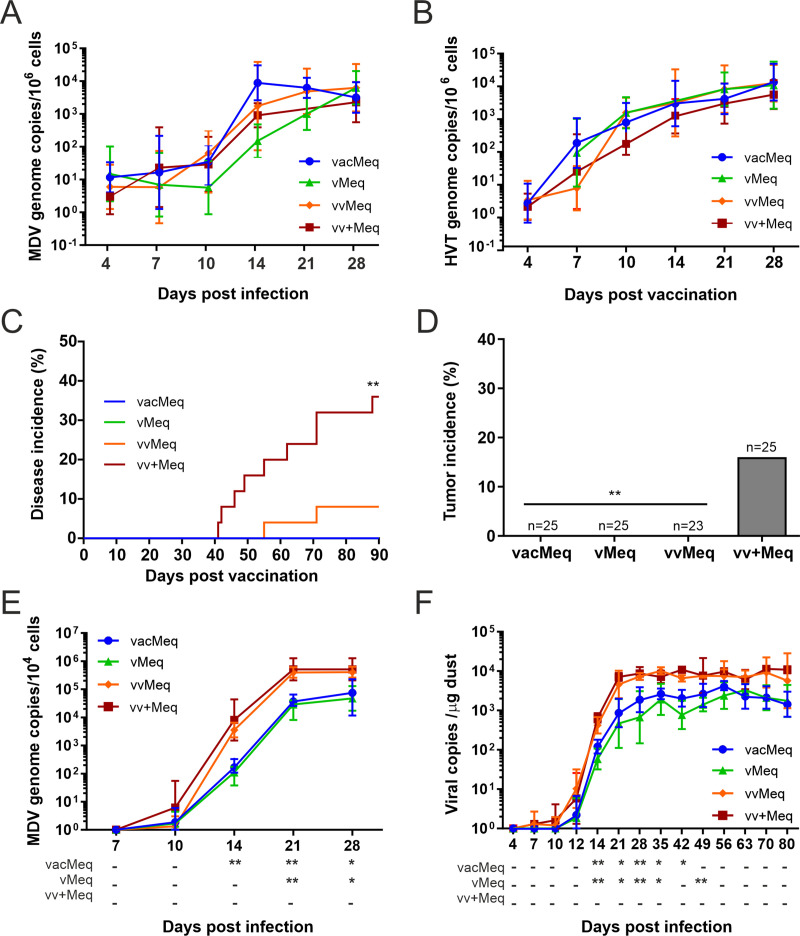
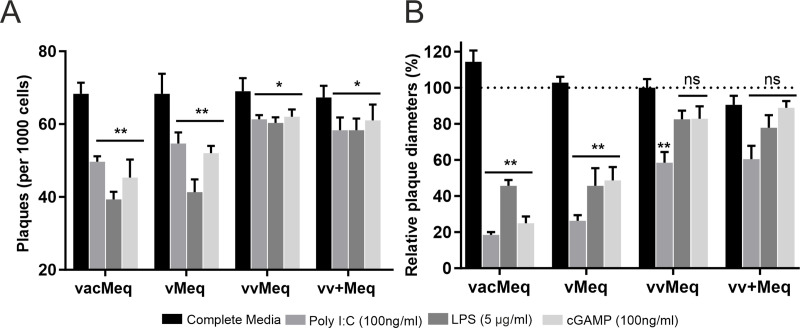
Modified-live herpesvirus vaccines are widely used in humans and animals, but field strains can emerge that have a higher virulence and break vaccinal protection. Since the introduction of the first vaccine in the 1970s, Marek's disease virus overcame the vaccine barrier by the acquisition of numerous genomic mutations. However, the evolutionary adaptations in the herpesvirus genome responsible for the vaccine breaks have remained elusive. Here, we demonstrate that point mutations in the multifunctional meq gene acquired during evolution can significantly alter virulence. Defined mutations found in highly virulent strains also allowed the virus to overcome innate cellular responses and vaccinal protection. Concomitantly, the adaptations in meq enhanced virus shedding into the environment, likely providing a selective advantage for the virus. Our study provides the first experimental evidence that few point mutations in a single herpesviral gene result in drastically increased virulence, enhanced shedding, and escape from vaccinal protection.
Conflict of interest statement
The authors have declared that no competing interests exist.
Figures
References
-
- Read AF, Mackinnon MJ. Pathogen evolution in a vaccinated world In: Stearns SC, Koella JC, editors. Evolution in Health and Disease. 2nd ed Oxford, UK: Oxford University Press; 2007. p. 139–52.
Publication types
MeSH terms
Substances
LinkOut - more resources
Full Text Sources
