


Fish nutrient composition: a review of global data from poorly assessed inland and marine species
- PMID: 33308365
- PMCID: PMC10195510
- DOI: 10.1017/S1368980020003857
Fish nutrient composition: a review of global data from poorly assessed inland and marine species
Abstract
Objective: Our understanding of the nutrient contribution of fish and other aquatic species to human diets relies on nutrient composition data for a limited number of species. Yet particularly for nutritionally vulnerable aquatic food consumers, consumption includes a wide diversity of species whose nutrient composition data are disparate, poorly compiled or unknown.
Design: To address the gap in understanding fish and other aquatic species' nutrient composition data, we reviewed the literature with an emphasis on species of fish that are under-represented in global databases. We reviewed 164 articles containing 1370 entries of all available nutrient composition data (e.g. macronutrients, micronutrients and fatty acids) and heavy metals (e.g. Pb and Hg) for 515 species, including both inland and marine species of fish, as well as other aquatic species (e.g. crustaceans, molluscs, etc.) when those species were returned by our searches.
Results: We highlight aquatic species that are particularly high in nutrients of global importance, including Fe, Zn, Ca, vitamin A and docosahexaenoic acid (DHA), and demonstrate that, in many cases, a serving can fill critical nutrient needs for pregnant and lactating women and young children.
Conclusions: By collating the available nutrient composition data on species of fish and other aquatic species, we provide a resource for fisheries and nutrition researchers, experts and practitioners to better understand these critical species and include them in fishery management as well as food-based programmes and policies.
Keywords: Aquatic food systems; Fish access; Food security; Marine food systems; Nutrition security; Small indigenous species.
Figures
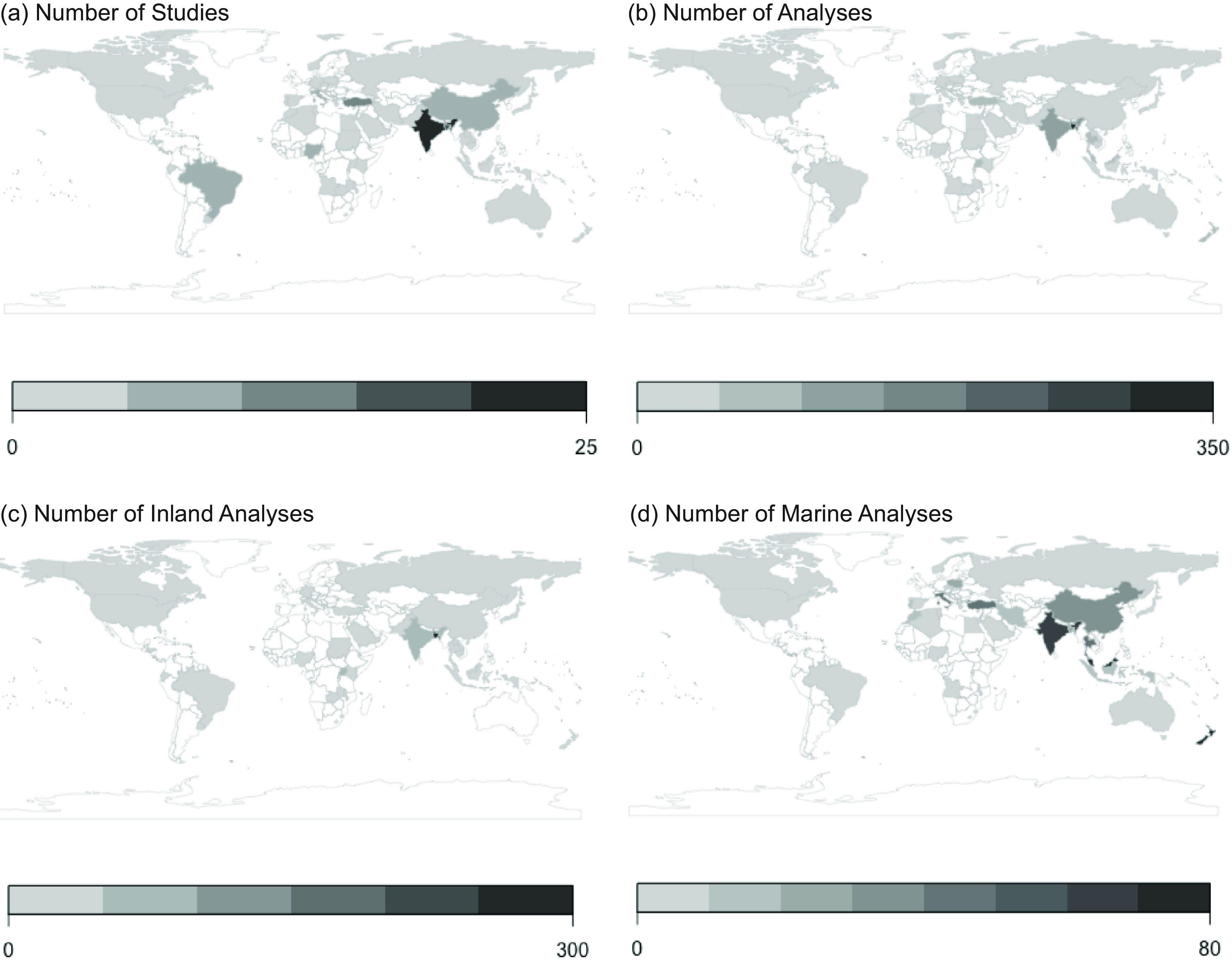
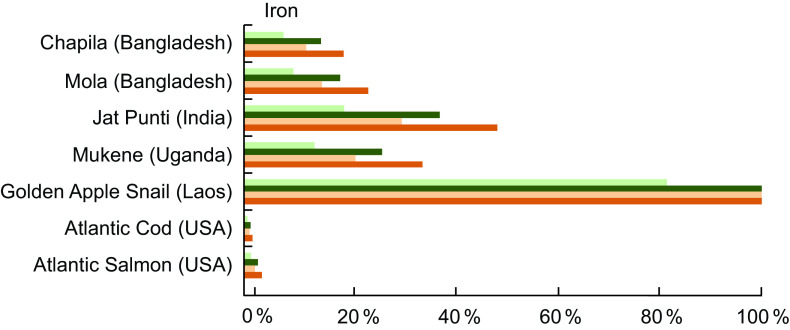
 , Pregnant women;
  , lactating women;
  , children 6-11 months;
  , children 12-24 months
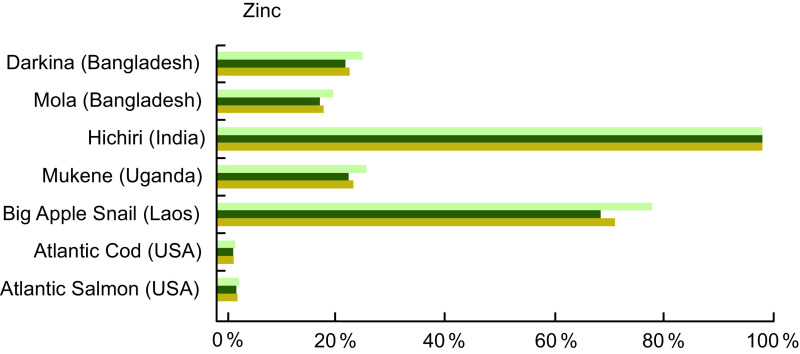 , Pregnant women; , lactating women;
  , children 6-24 months
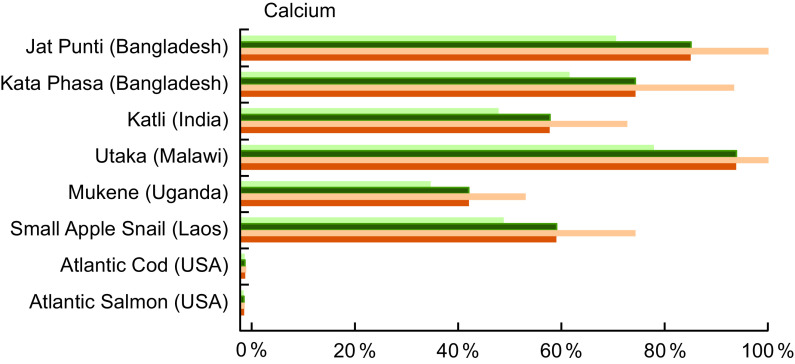 , Pregnant women; , lactating women; , children 6-11 months; , children 12-24 months
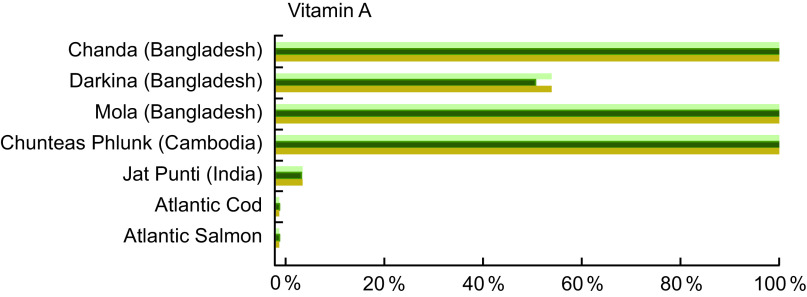 , Pregnant women; , lactating women; , children 6-24 months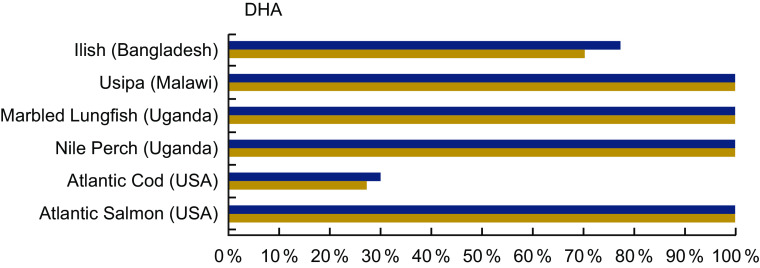
 , Pregnant and lactating women; , children 6-24 months
References
-
- FAO (2016) State of the World’s Fisheries and Aquaculture. Rome: FAO.
-
- Oehlenschlager J (2012) Seafood: nutritional benefits and risk aspects. Int J Vitam Nutr Res 82, 168–176. - PubMed
-
- FAO (editor) (2017) FAO/INFOODS Food Composition Database for Biodiversity Version 4.0-BioFoodComp4.0. Rome, Italy: FAO.
-
- CIFRI (editor) (2017) NutriFishIn. Barrackpore, India: ICAR-Central Inland Fisheries Research Institute.
Publication types
MeSH terms
Substances
LinkOut - more resources
Full Text Sources
Miscellaneous
