


Examining subjective sleep quality in adults with hoarding disorder
- PMID: 33309063
- PMCID: PMC8091966
- DOI: 10.1016/j.jpsychires.2020.10.044
Examining subjective sleep quality in adults with hoarding disorder
Abstract
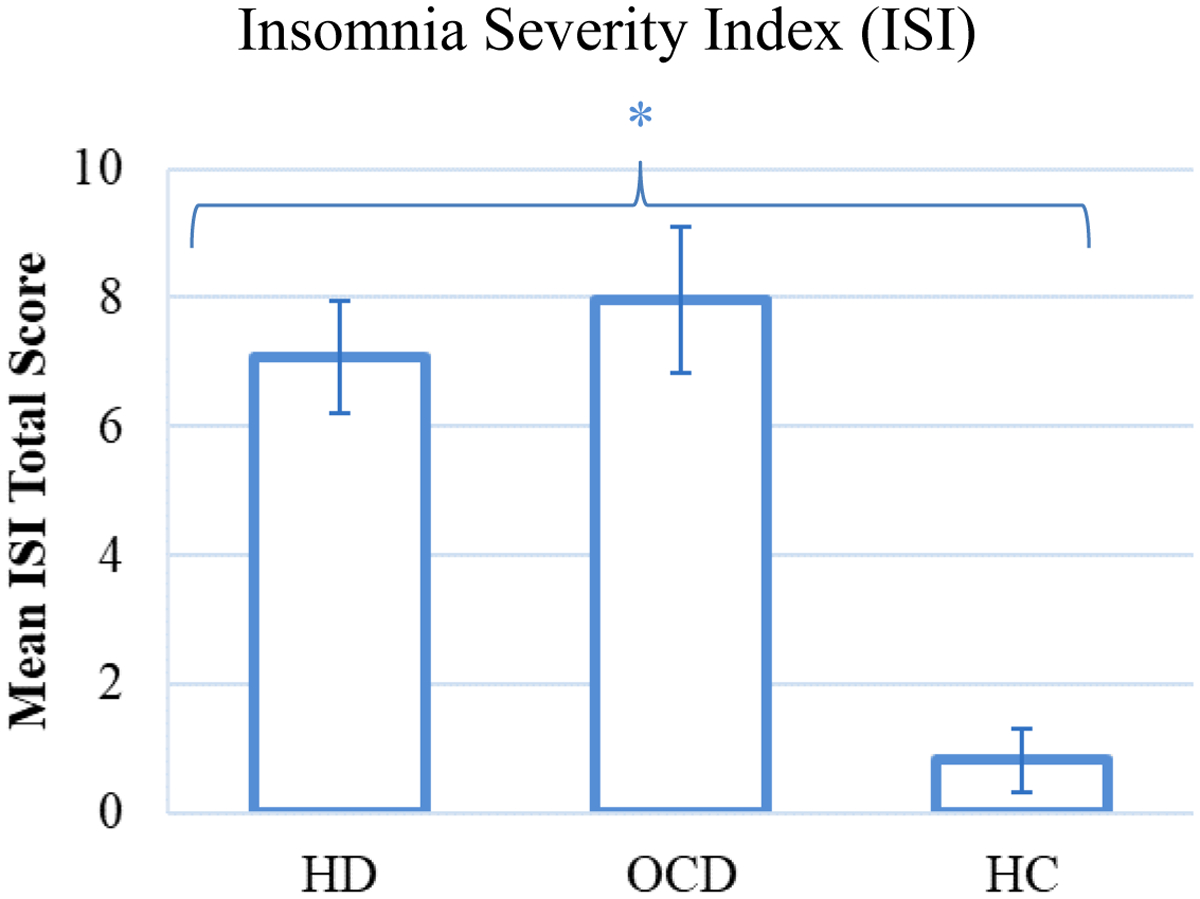
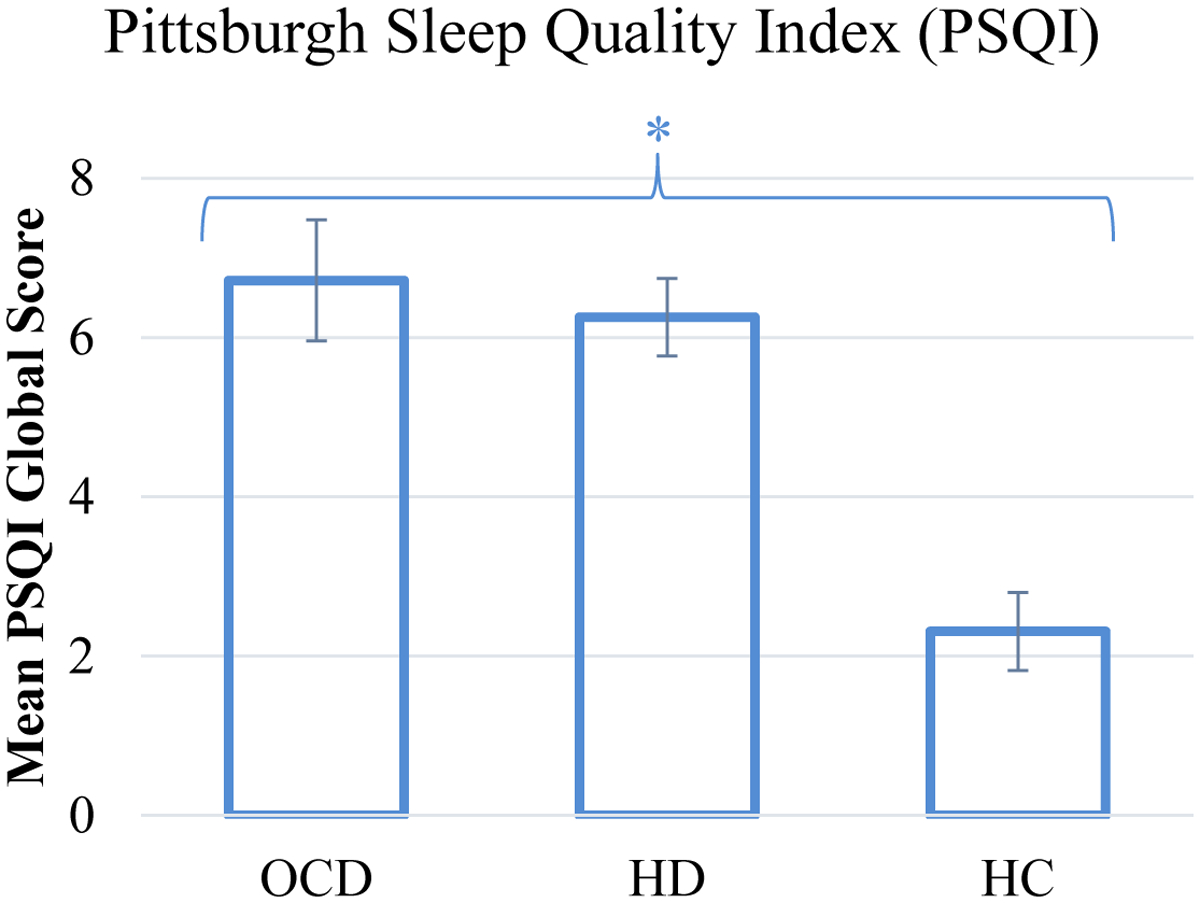
Hoarding disorder (HD), characterized by difficulty parting with possessions and functionally impairing clutter, affects 2-6% of the population. Originally considered part of Obsessive-Compulsive Disorder (OCD), HD became a distinct diagnostic entity in the Diagnostic and Statistical Manual of Mental Disorders (DSM-5) in 2013. While sleep impacts OCD, little is known about sleep in HD. As HD patients often report poor sleep in clinical settings, understanding global subjective sleep quality and disturbances may lead to novel therapeutic targets. To address this gap, the authors used a sample of convenience: an existing data set designed to screen research study eligibility and explore the psychopathology and phenomenology of OCD and HD. The data set included information collected from individuals with HD (n = 38), OCD (n = 26), and healthy participants (n = 22) about insomnia, sleep quality, and mood using interviews and structured instruments including the Insomnia Severity Index (ISI), Pittsburgh Sleep Quality Index (PSQI), and Depression Anxiety Stress Scales (DASS). In this data set, HD and OCD groups reported significantly greater insomnia symptoms and poorer sleep quality compared with healthy controls while controlling for depression, age, and gender. A sizable minority of HD and OCD individuals met criteria for comorbid sleep disorders. OCD and HD groups differed in delayed sleep phase prevalence. To our knowledge, this is the first study examining subjective sleep quality and insomnia in HD as compared to healthy individuals and those with OCD, while controlling for relevant clinical characteristics. Given that there are evidence-based treatments for insomnia and other sleep disorders, our study raises the possibility that treatment interventions targeting sleep may improve HD outcomes.
Keywords: Hoarding; Hoarding disorder; Insomnia; OCD; Sleep quality; obsessive-compulsive disorder.
Copyright © 2020 Elsevier Ltd. All rights reserved.
Figures
References
-
- American Psychiatric Association (Ed.). (2013). Diagnostic and statistical manual of mental disorders: DSM-5 (5th ed). American Psychiatric Association.
-
- Arch JJ, Eifert GH, Davies C, Vilardaga JCP, Rose RD, & Craske MG (2012). Randomized clinical trial of cognitive behavioral therapy (CBT) versus acceptance and commitment therapy (ACT) for mixed anxiety disorders. Journal of Consulting and Clinical Psychology, 80(5), 750–765. 10.1037/a0028310 - DOI - PMC - PubMed
-
- Ayers CR, Saxena S, Espejo E, Twamley EW, Granholm E, & Wetherell JL (2014). Novel Treatment for Geriatric Hoarding Disorder: An Open Trial of Cognitive Rehabilitation Paired with Behavior Therapy. The American Journal of Geriatric Psychiatry, 22(3), 248–252. 10.1016/j.jagp.2013.02.010 - DOI - PMC - PubMed
Publication types
MeSH terms
Grants and funding
LinkOut - more resources
Full Text Sources
Other Literature Sources
Medical
Research Materials
Miscellaneous
