Review
. 2021 Feb:169:100-117.
doi: 10.1016/j.addr.2020.12.004. Epub 2020 Dec 9.

Challenges and opportunities for antiviral monoclonal antibodies as COVID-19 therapy

Affiliations
Review

Challenges and opportunities for antiviral monoclonal antibodies as COVID-19 therapy

Carlos Cruz-Teran et al. Adv Drug Deliv Rev. 2021 Feb.

Abstract

To address the COVID-19 pandemic, there has been an unprecedented global effort to advance potent neutralizing mAbs against SARS-CoV-2 as therapeutics. However, historical efforts to advance antiviral monoclonal antibodies (mAbs) for the treatment of other respiratory infections have been met with categorical failures in the clinic. By investigating the mechanism by which SARS-CoV-2 and similar viruses spread within the lung, along with available biodistribution data for systemically injected mAb, we highlight the challenges faced by current antiviral mAbs for COVID-19. We summarize some of the leading mAbs currently in development, and present the evidence supporting inhaled delivery of antiviral mAb as an early intervention against COVID-19 that could prevent important pulmonary morbidities associated with the infection.


Figures

Unlabelled Image
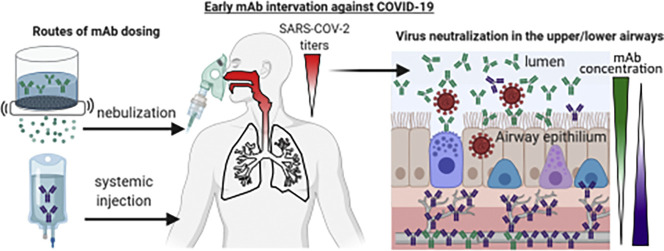
Graphical abstract
Fig. 1
Fig. 1
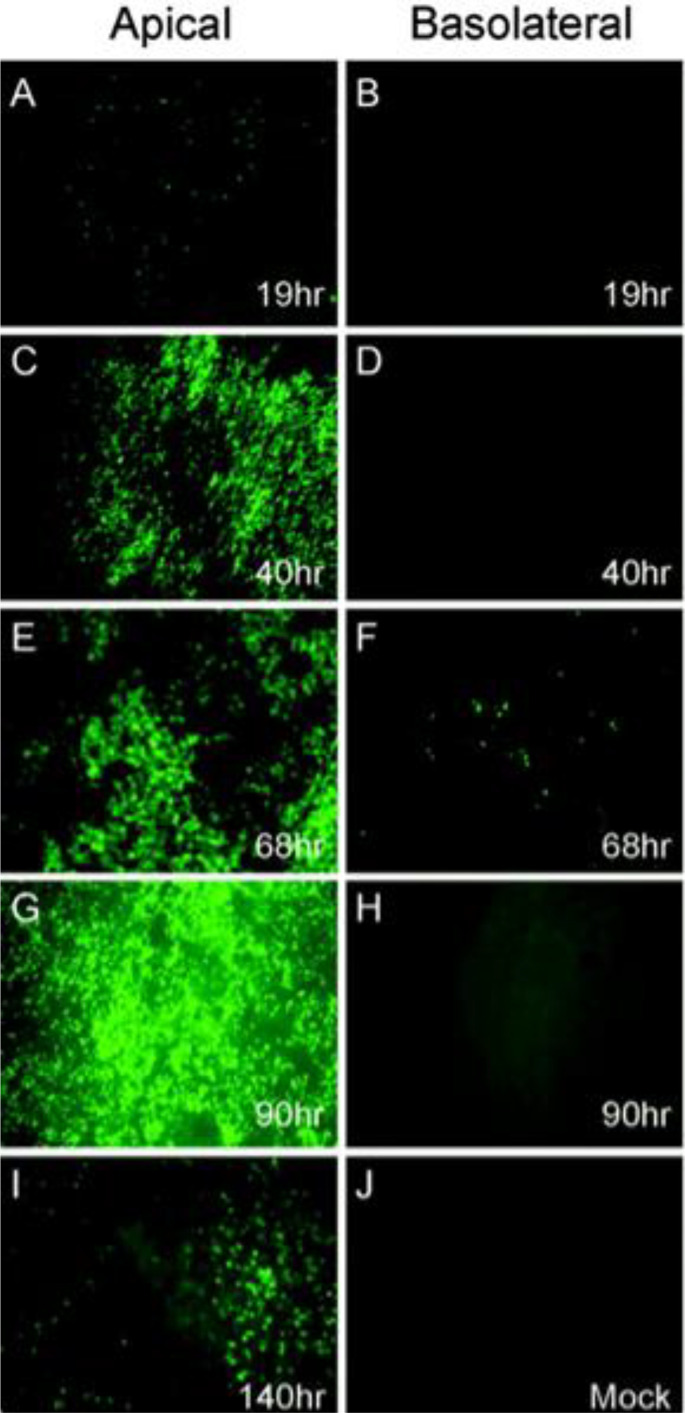
Infection and spread of SARS-CoV GFP infection in HAE over time after apical or basolateral inoculation. HAE were inoculated via the apical (A, C, E, G, and I) or basolateral (B, D, F, and H) compartments with SARS-CoV GFP and GFP-positive cells and assessed over time (1 to 5 days post-infection). Apical inoculation leads to progressive increase in GFP fluorescence over time, with significant infection after 40 h (C) and maximum fluorescence after 90 h (G). Basolateral infection is not effective, only a small proportion of cells are GFP positive 68 h after infection. Results are representative of three repeats. Adapted from [26] with permission from American Society for Microbiology, Journal of Virology.
Fig. 2
Fig. 2
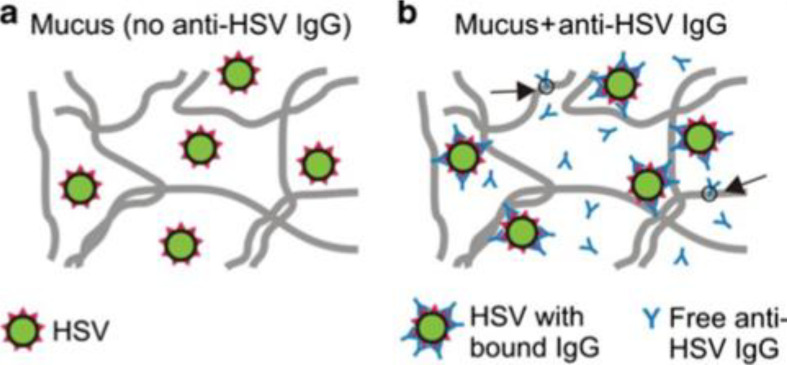
Proposed mechanism of antibody (Ab)-mediated trapping of viruses in mucus. Schematic showing (a) herpes simplex virus (HSV) readily penetrating native cervicovaginal mucus (CVM) with little-to-no endogenous HSV immunoglobulin G (IgG), and (b) anti-HSV IgG trapping HSV in CVM by multiple transient, low affinity bonds in mucins. By forming only short-lived, low-affinity bonds with mucus, free Ab, such as IgG, are able to diffuse rapidly through mucus and bind to viruses. As IgG molecules accumulate on the virus surface, they form multiple low-affinity bonds between the virus and mucus gel. A sufficient number of these transient low-affinity bonds ensure viruses are effectively trapped in mucus at any given time, thereby reducing the flux of infectious virions that can reach target cells. Adapted from [69] with permission from Springer Nature.
Fig. 3
Fig. 3
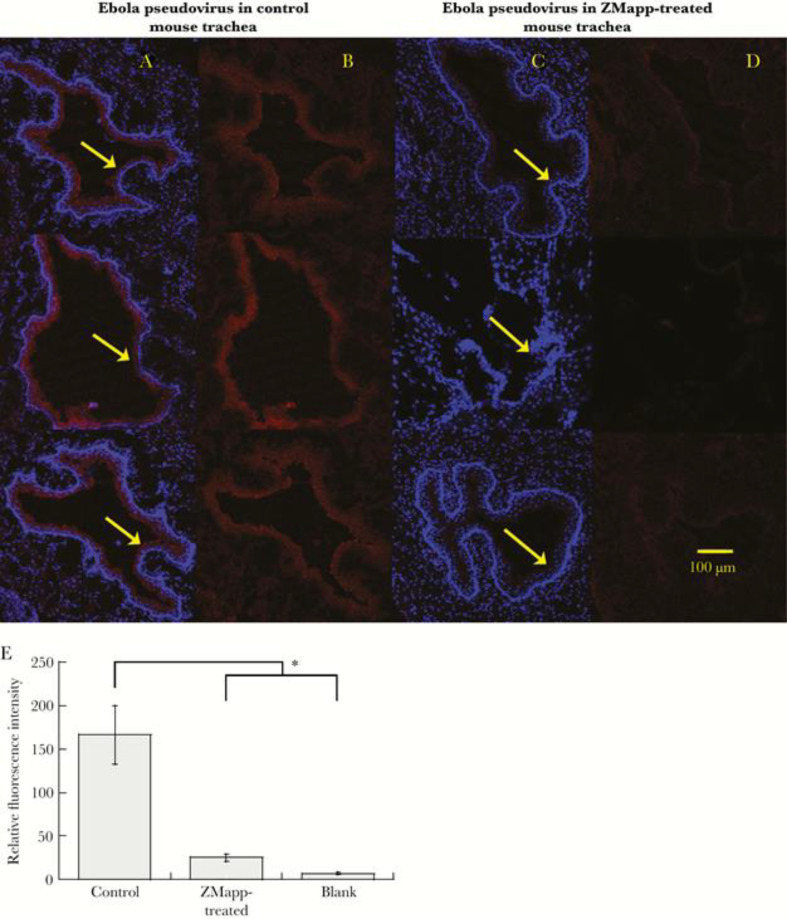
Ebola pseudovirus distribution in the mouse lung airways. A–D, Representative transverse 50-μm-thick frozen tissue sections showing the distribution of Ebola pseudovirus in the mouse trachea treated with phosphate-buffered saline (PBS) (A, B) or ZMapp (C, D). Red corresponds to Ebola pseudovirus, and blue corresponds to 4′,6-diamidino-2-phenylindole (DAPI)-stained cell nuclei. Arrows indicate the inner lining of the trachea. E, Quantification of Ebola pseudovirus signal in mouse trachea treated with PBS (control) or ZMapp compared with blank tissue. Data represent n = 3 mice per group with, on average, 10 tissue sections quantified per mouse. Error bars represent standard error of the mean. * indicates a statistically significant difference (P < 0.05) based on a two-tailed Student's t-test assuming unequal variance. Adapted from [71] with permission from Oxford Academic Press, Journal of Infectious Diseases.
Fig. 4
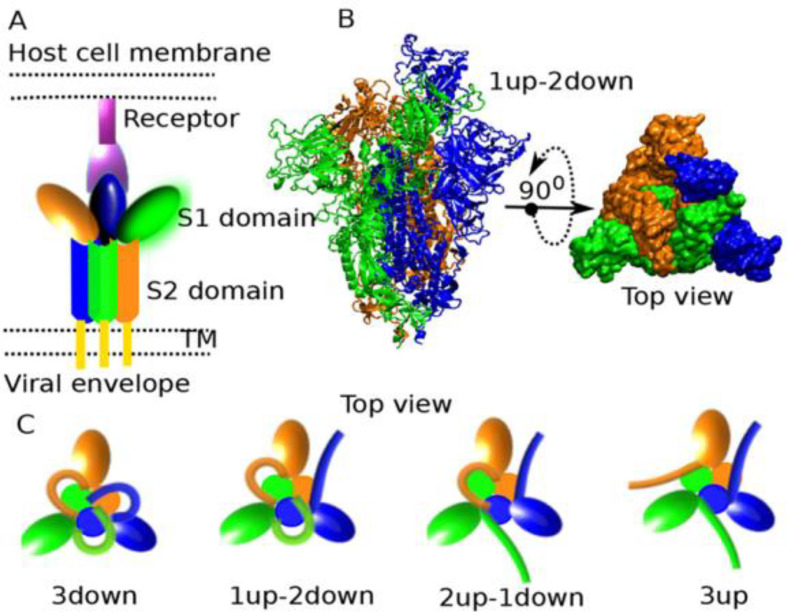
Fig. 4
Conformations of SARS-CoV-2 spike protein. A) Schematic depicting S protein bound to ACE2 receptor, including S1 and S2 subunits. B) Top and side view of S protein with one S1 subunit in up conformation. C) Movement of the S1 subunit makes it possible for spike protein to assume conformations where alL S1 units are down, one S1 unit is up, two S1 units are up, or all S1 units are up. Reproduced from [95] with permission from ACS, https://pubs.acs.org/doi/10.1021/acs.jpclett.0c01431. Further permission related to the material excerpted should be directed to the ACS.
Fig. 5
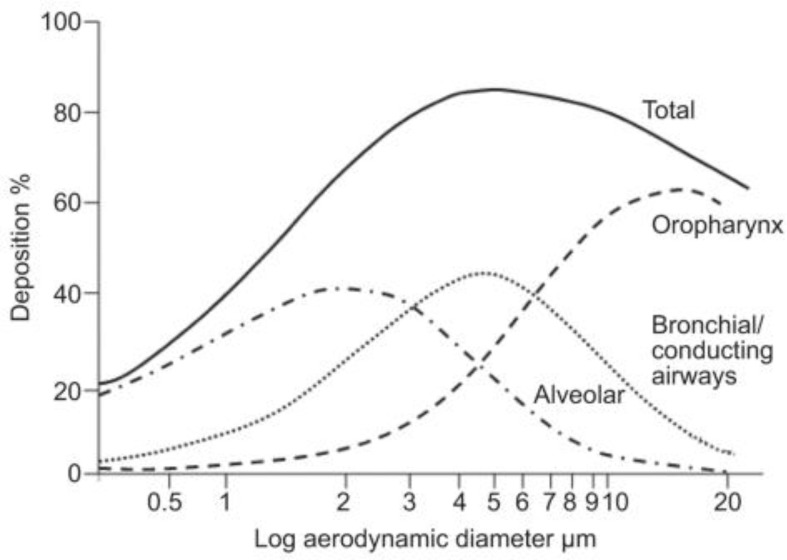
Fig. 5
Relationship between aerosol diameter and lung deposition predicted by the Model by the International Commission on Radiological Protection. Aerosols with diameters >5 μm deposit mainly on the oropharynx, whereas particles with sizes <5 μm can travel deeper into the lung and deposit in the bronchial/conducting airways or reach the alveoli (diameter < 1 μm). Reproduced with permission of the © ERS 2020: European Respiratory Journal 37 (6) 1308–1417; DOI: https://doi.org/10.1183/09031936.00166410 Published 1 June 2011.

References

    1. Cohen J. Why Flu Vaccines Don't Protect People for Long. 2020. https://www.sciencemag.org/news/2020/08/why-flu-vaccines-don-t-protect-p...
    1. CDC Vaccine Effectiveness: How Well Do the Flu Vaccines Work? 2020. https://www.cdc.gov/flu/vaccines-work/vaccineeffect.htm
    1. Wright P.F., Karron R.A., Belshe R.B., Thompson J., Crowe J.E., Jr., Boyce T.G., Halburnt L.L., Reed G.W., Whitehead S.S., Anderson E.L., Wittek A.E., Casey R., Eichelberger M., Thumar B., Randolph V.B., Udem S.A., Chanock R.M., Murphy B.R. Evaluation of a live, cold-passaged, temperature-sensitive, respiratory syncytial virus vaccine candidate in infancy. J. Infect. Dis. 2000;182:1331–1342. - PubMed
    1. Brandenburg A.H., Groen J., van Steensel-Moll H.A., Claas E.C., Rothbarth P.H., Neijens H.J., Osterhaus A.D. Respiratory syncytial virus specific serum antibodies in infants under six months of age: limited serological response upon infection. J. Med. Virol. 1997;52:97–104. - PubMed
    1. Ray G.T., Lewis N., Klein N.P., Daley M.F., Wang S.V., Kulldorff M., Fireman B. Intraseason waning of influenza vaccine effectiveness. Clin. Infect. Dis. 2019;68:1623–1630. - PMC - PubMed

Publication types

MeSH terms