. 2021 Mar 1;50(4):2244-2259.
doi: 10.1039/d0cs00589d.

Contemporary methods for generation of aryl radicals

Affiliations

Contemporary methods for generation of aryl radicals

Nikita Kvasovs et al. Chem Soc Rev. .

Abstract

The synthetic utility of aryl radicals has been established in the last century, however, their broad applications were hampered by ineffective generation methods. It was in the last decade, that a rapid development of various redox systems took place, thus triggering a renaissance of aryl radical chemistry. This tutorial review focuses on the start-of-the-art methods for generation of aryl radicals. Primarily, various light-induced systems, including photoredox catalysis, visible light transition metal catalysis, and chemistry of electron donor-acceptor complexes, are reviewed. The main current precursors of aryl radicals are evaluated together with the selected examples of their modern applications.


Conflict of interest statement

Conflicts of interest

There are no conflicts to declare.

Figures

Fig. 1
Fig. 1
Generation and transformations of aryl radicals.
Figure 2
Figure 2
C–H bond-dissociation energy comparison.
Fig. 3
Fig. 3
Generalized EDA complex formation.
Scheme 1
Scheme 1
Sanford’s directed arylation using diazonium salts.
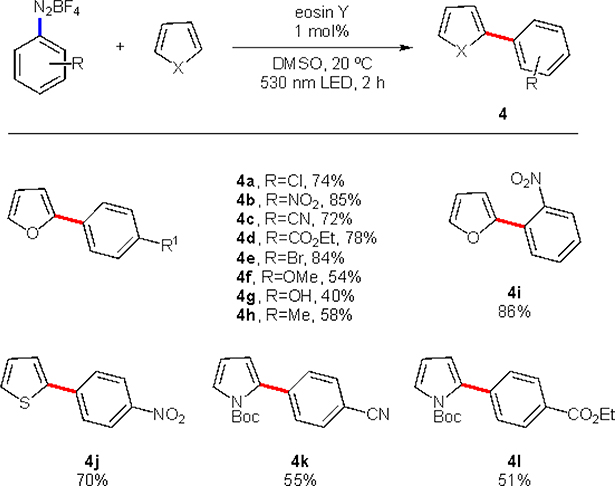
Scheme 2
Scheme 2
König’s C–H arylation of heteroarenes.
Scheme 3
Scheme 3
Proposed mechanism for König’s C–H arylation of heteroarenes.
Scheme 4
Scheme 4
(a) Gevorgyan’s C–H amination reaction (b) Proposed mechanism.
Scheme 5
Scheme 5
Hypothetical patways towards aryl radicals from diazonium salts.
Scheme 6
Scheme 6
(a) Studer’s oxyarylation of alkenes (b) Proposed mechanism.
Scheme 7
Scheme 7
(a) Mo’s electrochemical Sandmeyer reaction (b) Upscale synthesis.
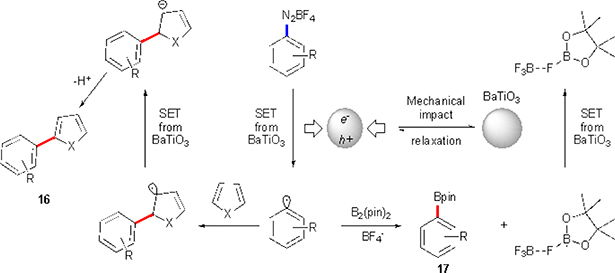
Scheme 8
Scheme 8
Proposed mechanism for Kubota’s and Ito’s C–H arylation and borylation reactions.
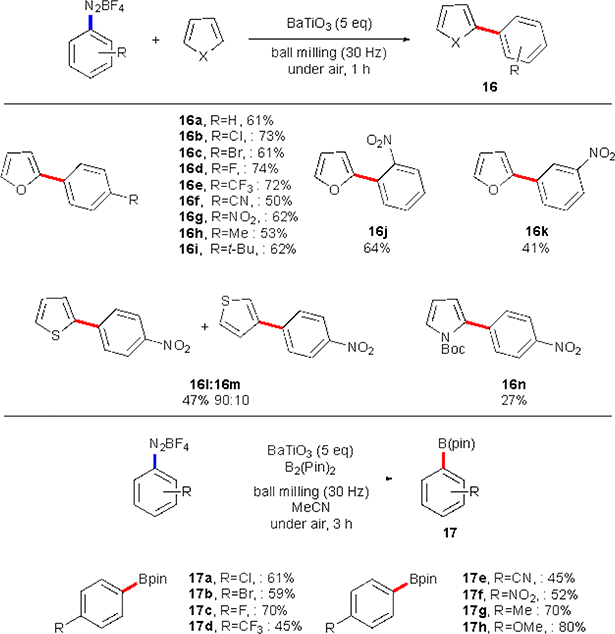
Scheme 9
Scheme 9
Scope of Kubota’s and Ito’s C–H arylation and borylation reactions.
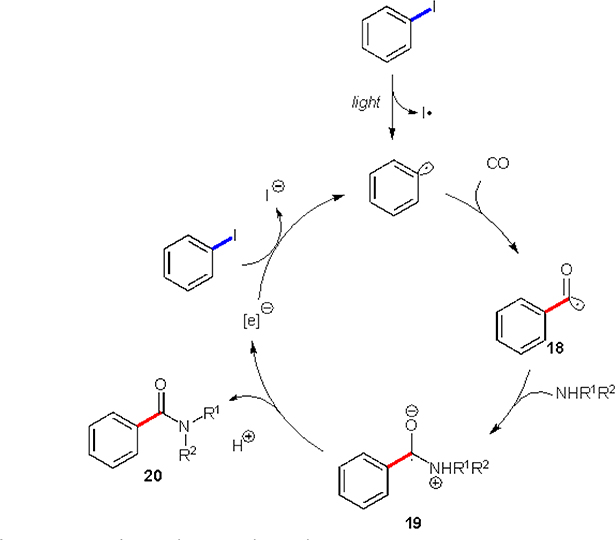
Scheme 10
Scheme 10
Ryu’s mechanistic hypothesis.
Scheme 11
Scheme 11
Ryu’s scope of photoinduced aminocarbonylation.
Scheme 12
Scheme 12
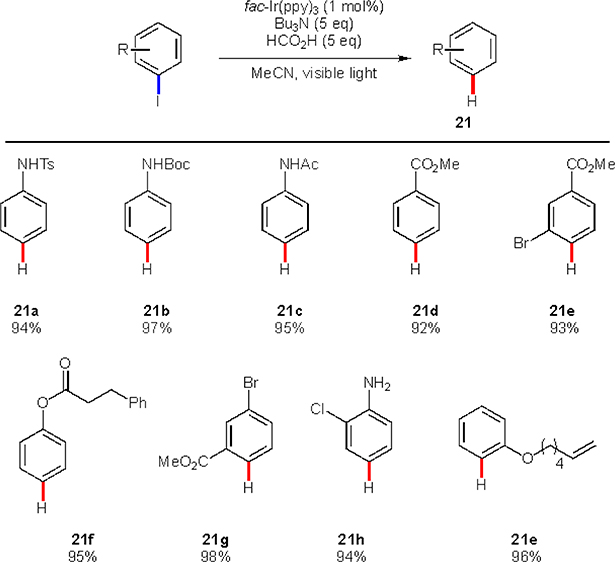
Stephenson’s reduction of aryl iodides.
Scheme 13
Scheme 13
Proposed mechanism to Stephenson’s reduction.
Scheme 14
Scheme 14
König’s proposed mechanism of reduction.
Scheme 15
Scheme 15
König’s aryl halide reduction.
Scheme 16
Scheme 16
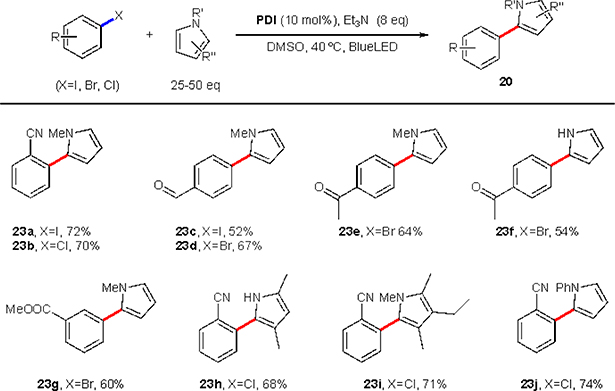
König’s arylation of pyrroles.
Scheme 17
Scheme 17
General mechanistic concept for combined electrochemistry-photochemistry activation mode of aryl halides.
Scheme 18
Scheme 18
Lambert’s and Lin’s borylation and stannylation scope.
Scheme 19
Scheme 19
Scope of Wickens’ phosphorylation and arylation reactions.
Scheme 20
Scheme 20
Proposed mechanistic patway for Gevorgyans desaturation reaction.
Scheme 21
Scheme 21
Scope of Gevorgyan’s desaturation protocol.
Scheme 22
Scheme 22
Radical clock experiment.
Scheme 23
Scheme 23
Arndsten’s carbonylation protocol.
Scheme 24
Scheme 24
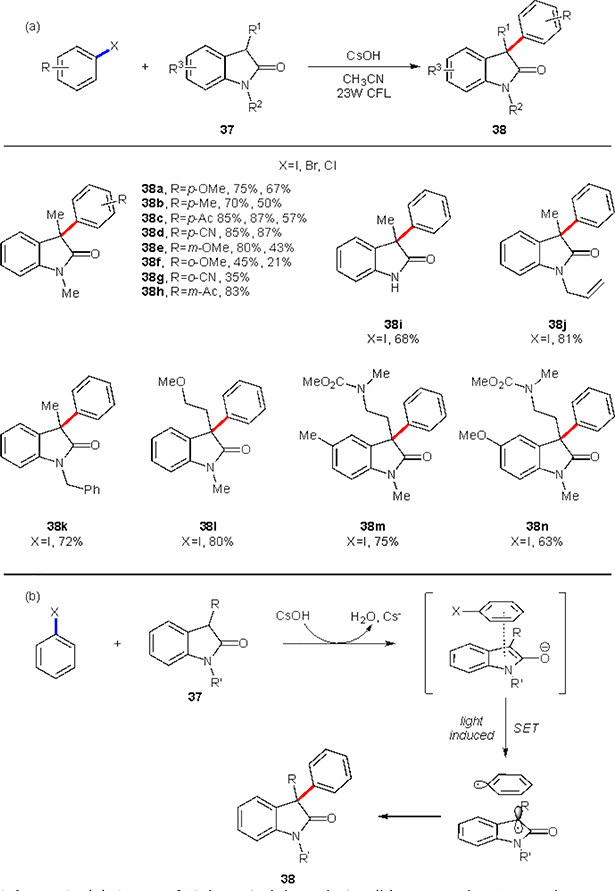
(a) Scope of Xia’s oxyindole arylation (b) Proposed EDA complex.
Scheme 25
Scheme 25
(a) Li’s proposed SET path for formation of aryl radical from aryl triflate.(b) Scope of borylation reaction.
Scheme 26
Scheme 26
Scope of Li’s iodination of aryl triflates.
Scheme 27
Scheme 27
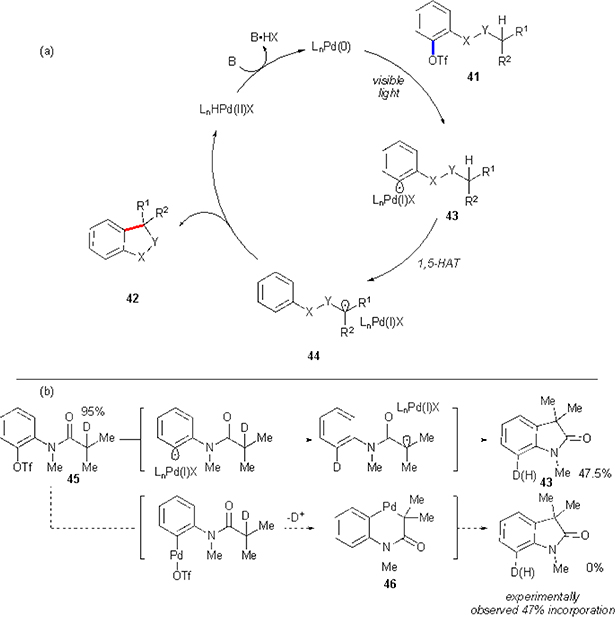
Scope of Gevorgyan’s cyclization of aryl triflates.
Scheme 28
Scheme 28
(a) Gevorgyan’s mechanistic proposal for cyclization of aryl triflates. (b) Labelling studies.
Scheme 29
Scheme 29
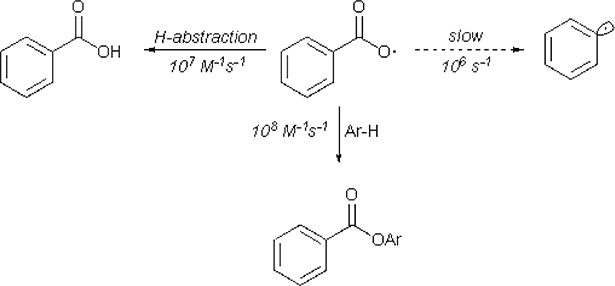
Competetive reaction rates for reactions of benzoyl radical.
Scheme 30
Scheme 30
Greaney’s radical protodecarboxylation.
Scheme 31
Scheme 31
Glorious’ mechanistic hypothesis for formation of aryl radicals from benzoic acids.
Scheme 32
Scheme 32
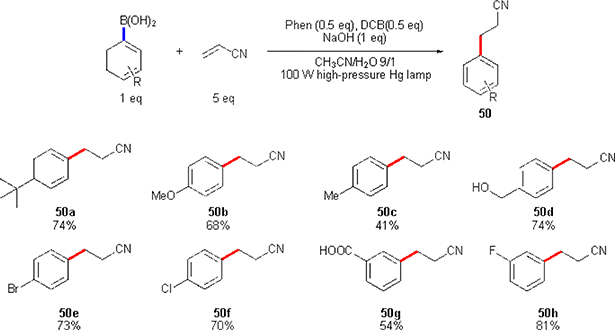
Scope of Glorious’ decarboxylative arylation.
Scheme 33
Scheme 33
Yoshimi’s Meerwein arylation of Michael acceptors.
Scheme 34
Scheme 34
Proposed mechanism for Yoshimi’s arylation of Michael acceptors.
Scheme 35
Scheme 35
Scope of Xiao’s C–H arylation reaction.
Scheme 36
Scheme 36
Proposed mechanism for Xiao’s C–H arylation reaction.
Scheme 37
Scheme 37
Studer’s oxyarylation of alkenes using I(III) reagents.
Scheme 38
Scheme 38
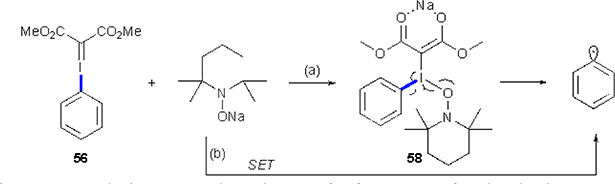
Studer’s proposed mechanism for formation of aryl radical.
Scheme 39
Scheme 39
Mechanism of Ritter’s fluorination reaction.
Scheme 40
Scheme 40
Scope of Ritter’s fluorination reaction.
Scheme 41
Scheme 41
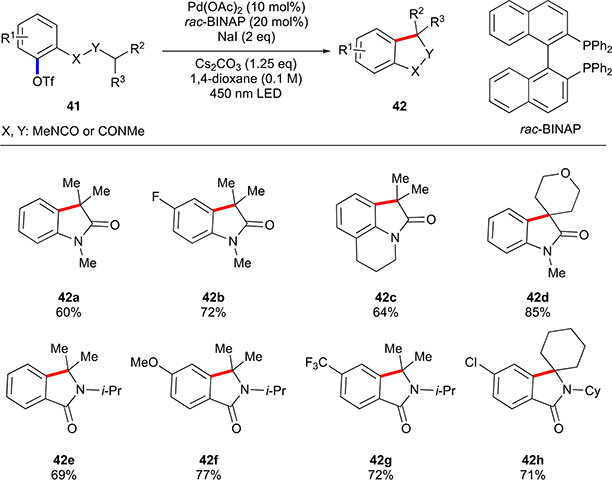
Scope Li’s tandem cyclization products.
Scheme 42
Scheme 42
Proposed mechanism for Li’s tandem cyclization reaction.

References

    1. Meerwein H, Büchner E and van Emster K, J. Prakt. Chem, 1939, 152, 237–266.
    1. Pratsch G and Heinrich MR, in Radicals in Synthesis III, eds. Heinrich M and Gansäuer A, Springer Berlin Heidelberg, Berlin, Heidelberg, 2012, pp. 33–59.
    1. Kuivila HG, Acc. Chem. Res, 1968, 1, 299–305;
    2. Rosa AM, Lobo AM, Branco PS and Sundaresan P, Tetrahedron, 1997, 53, 285–298.
    1. Galli C, Chem. Rev, 1988, 88, 765–792.
    1. Romero NA and Nicewicz DA, Chem. Rev, 2016, 116, 10075–10166; - PubMed
    2. Shaw MH, Twilton J and MacMillan DWC, J. Org. Chem, 2016, 81, 6898–6926. - PMC - PubMed

LinkOut - more resources