


Molecular probes for the human adenosine receptors
- PMID: 33313997
- PMCID: PMC7954947
- DOI: 10.1007/s11302-020-09753-8
Molecular probes for the human adenosine receptors
Abstract
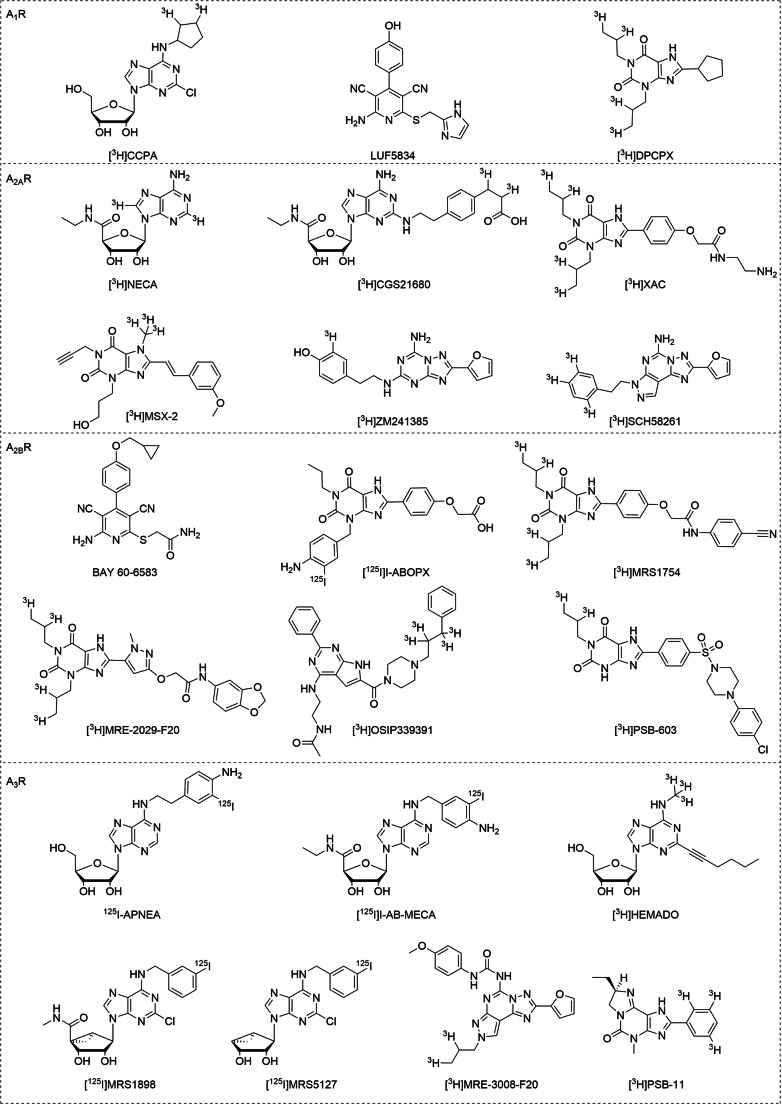
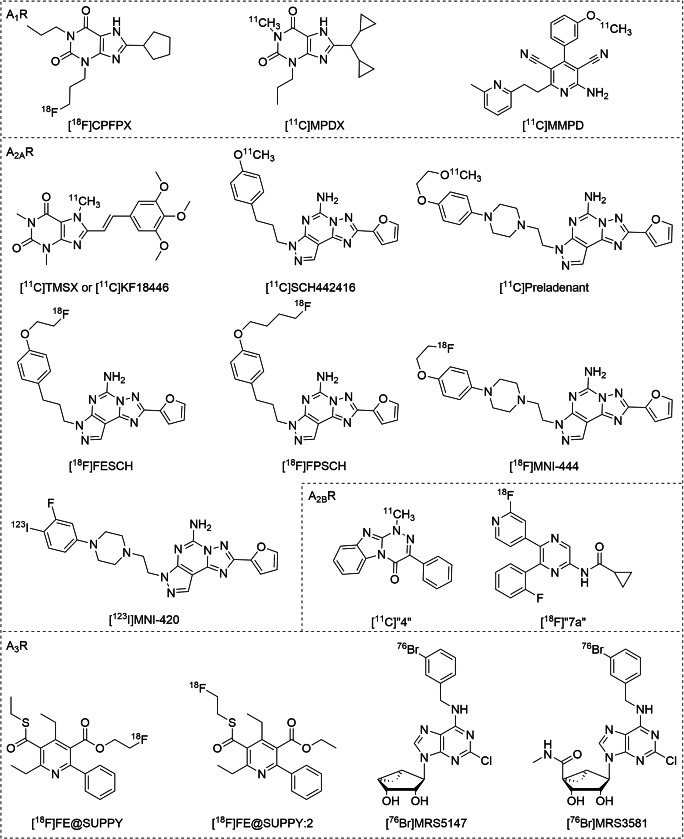
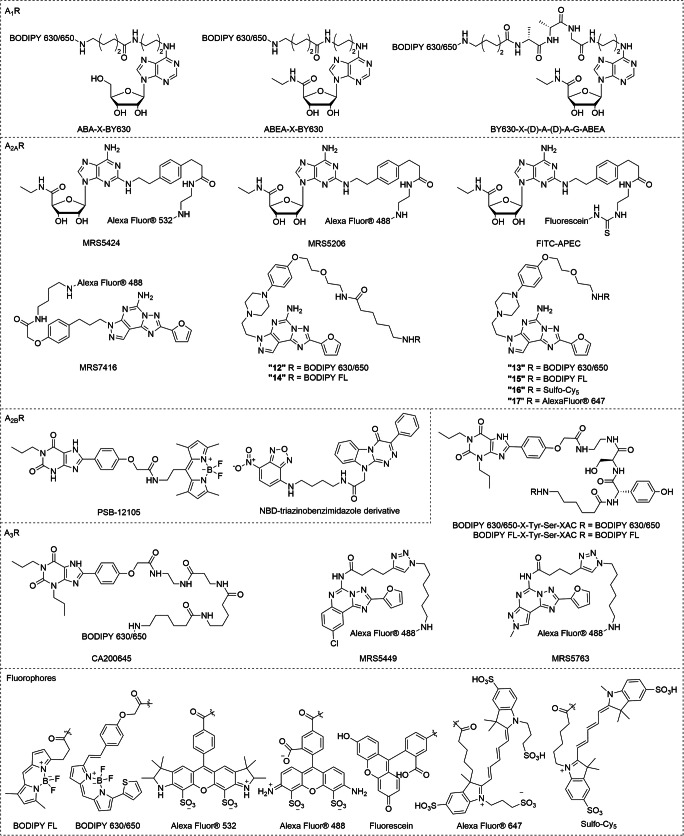
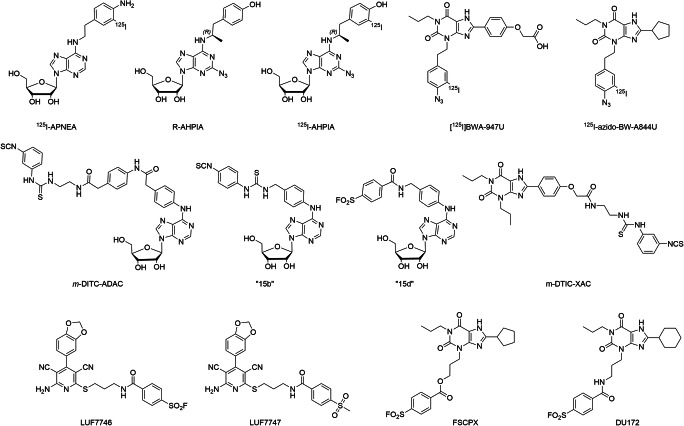
Adenosine receptors, G protein-coupled receptors (GPCRs) that are activated by the endogenous ligand adenosine, have been considered potential therapeutic targets in several disorders. To date however, only very few adenosine receptor modulators have made it to the market. Increased understanding of these receptors is required to improve the success rate of adenosine receptor drug discovery. To improve our understanding of receptor structure and function, over the past decades, a diverse array of molecular probes has been developed and applied. These probes, including radioactive or fluorescent moieties, have proven invaluable in GPCR research in general. Specifically for adenosine receptors, the development and application of covalent or reversible probes, whether radiolabeled or fluorescent, have been instrumental in the discovery of new chemical entities, the characterization and interrogation of adenosine receptor subtypes, and the study of adenosine receptor behavior in physiological and pathophysiological conditions. This review summarizes these applications, and also serves as an invitation to walk another mile to further improve probe characteristics and develop additional tags that allow the investigation of adenosine receptors and other GPCRs in even finer detail.
Keywords: Adenosine receptors; Chemical biology; Covalent ligands; Fluorescent ligands; GPCR; PET ligands; Probes; Radioligands.
Conflict of interest statement
X Yang declares that she has no conflict of interest.
L.H. Heitman declares that she has no conflict of interest.
A.P. IJzerman declares that he has no conflict of interest.
D van der Es declares that he has no conflict of interest.
Figures
References
-
- Glukhova A, Thal DM, Nguyen AT, Vecchio EA, Jorg M, Scammells PJ, May LT, Sexton PM, Christopoulos A. Structure of the adenosine A1 receptor reveals the basis for subtype selectivity. Cell. 2017;168(5):867–877. - PubMed
-
- Soethoudt M, Stolze SC, Westphal MV, van Stralen L, Martella A, van Rooden EJ, Guba W, Varga ZV, Deng H, van Kasteren SI, Grether U, IJzerman AP, Pacher P, Carreira EM, Overkleeft HS, Ioan-Facsinay A, Heitman LH, van der Stelt M. Selective photoaffinity probe that enables assessment of cannabinoid CB2receptor expression and ligand engagement in human cells. J Am Chem Soc. 2018;140(19):6067–6075. - PMC - PubMed
Publication types
MeSH terms
Substances
LinkOut - more resources
Full Text Sources
Other Literature Sources
Miscellaneous
