


Fluorescence devices for the detection of dental caries
- PMID: 33319353
- PMCID: PMC8677328
- DOI: 10.1002/14651858.CD013811
Fluorescence devices for the detection of dental caries
Abstract
Background: Caries is one of the most prevalent and preventable conditions worldwide. If identified early enough then non-invasive techniques can be applied, and therefore this review focusses on early caries involving the enamel surface of the tooth. The cornerstone of caries detection is a visual and tactile dental examination, however alternative methods of detection are available, and these include fluorescence-based devices. There are three categories of fluorescence-based device each primarily defined by the different wavelengths they exploit; we have labelled these groups as red, blue, and green fluorescence. These devices could support the visual examination for the detection and diagnosis of caries at an early stage of decay.
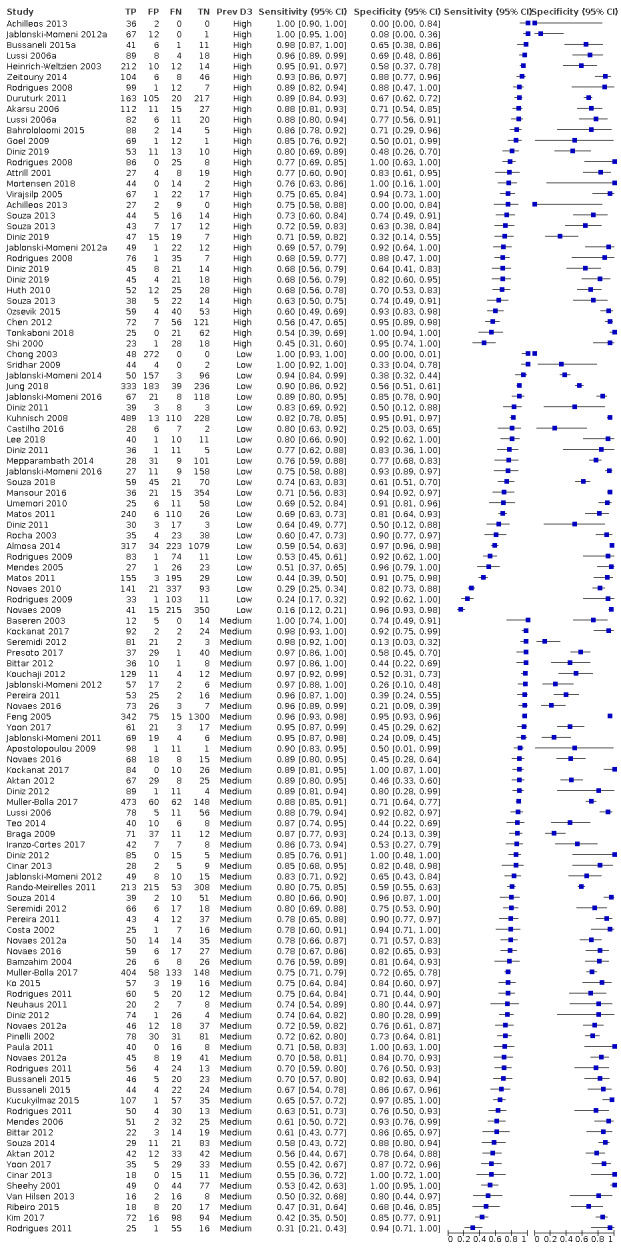
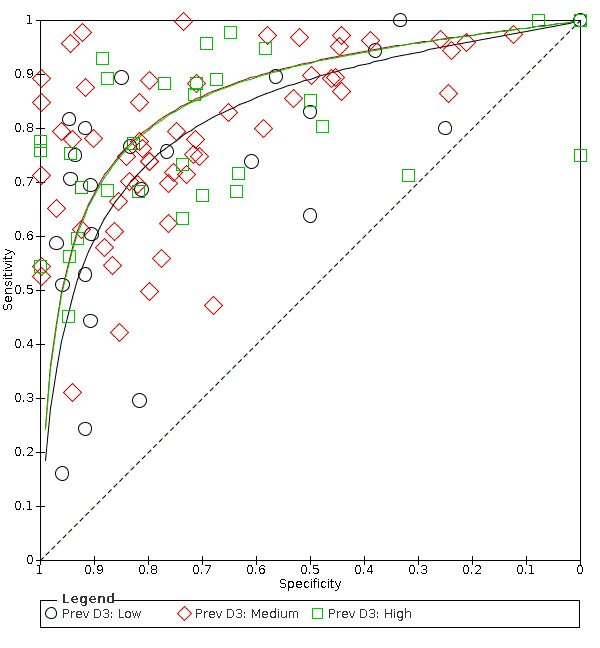
Objectives: Our primary objectives were to estimate the diagnostic test accuracy of fluorescence-based devices for the detection and diagnosis of enamel caries in children or adults. We planned to investigate the following potential sources of heterogeneity: tooth surface (occlusal, proximal, smooth surface or adjacent to a restoration); single point measurement devices versus imaging or surface assessment devices; and the prevalence of more severe disease in each study sample, at the level of caries into dentine.
Search methods: Cochrane Oral Health's Information Specialist undertook a search of the following databases: MEDLINE Ovid (1946 to 30 May 2019); Embase Ovid (1980 to 30 May 2019); US National Institutes of Health Ongoing Trials Register (ClinicalTrials.gov, to 30 May 2019); and the World Health Organization International Clinical Trials Registry Platform (to 30 May 2019). We studied reference lists as well as published systematic review articles.
Selection criteria: We included diagnostic accuracy study designs that compared a fluorescence-based device with a reference standard. This included prospective studies that evaluated the diagnostic accuracy of single index tests and studies that directly compared two or more index tests. Studies that explicitly recruited participants with caries into dentine or frank cavitation were excluded.
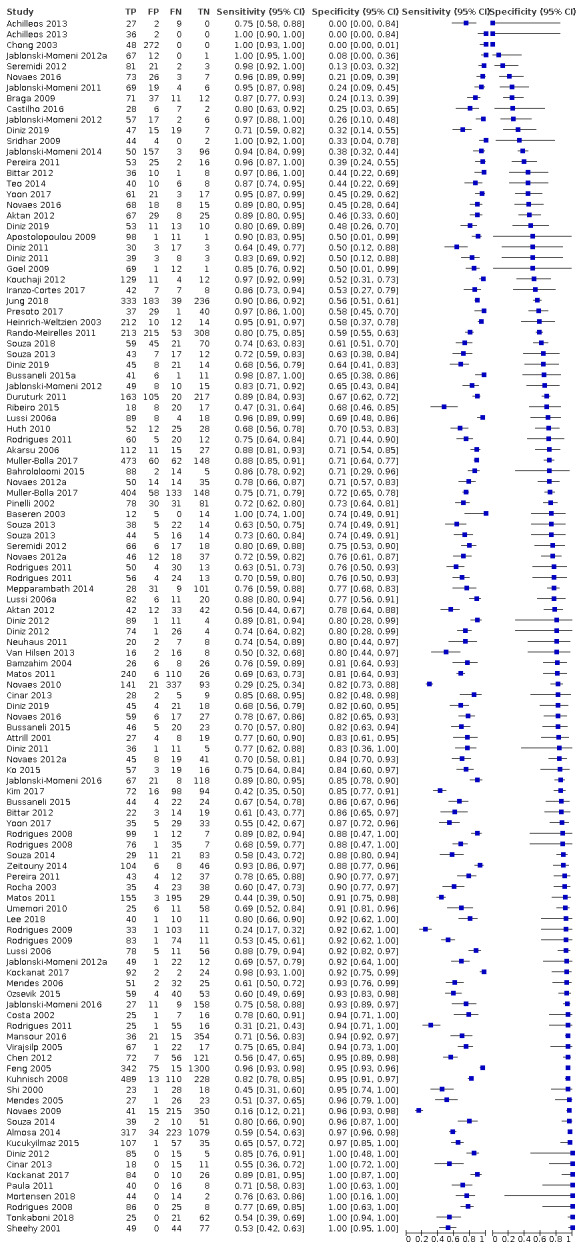
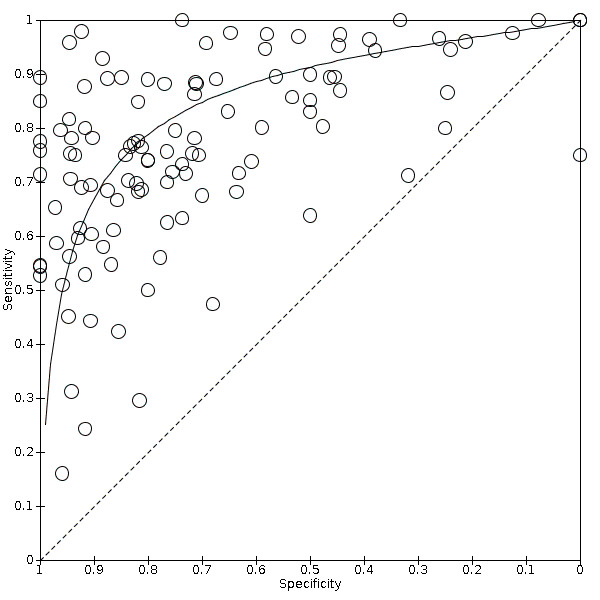
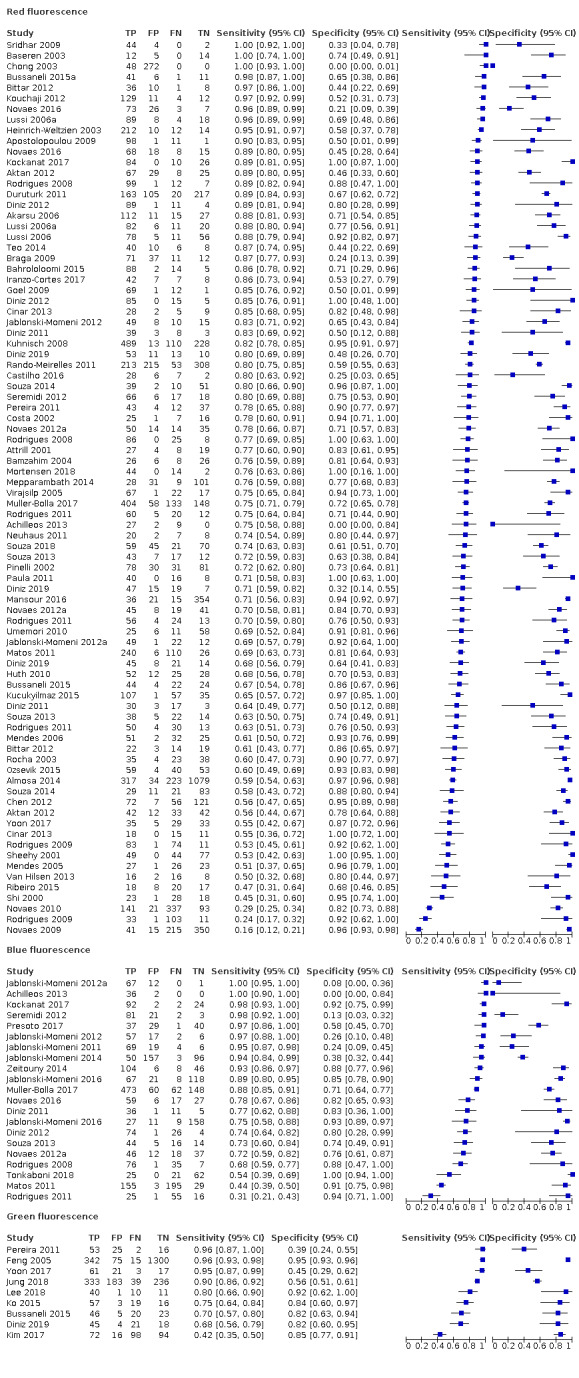
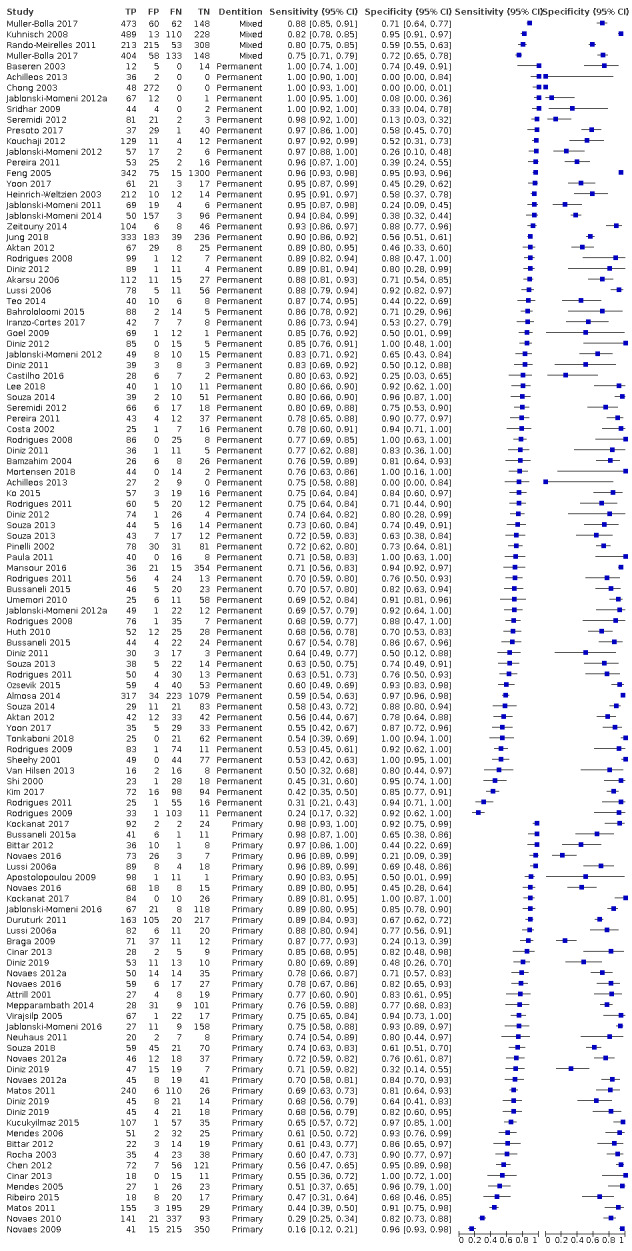
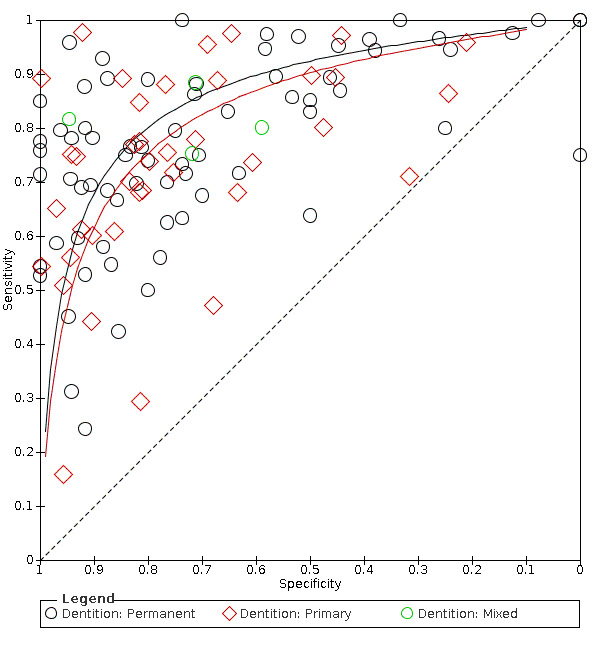
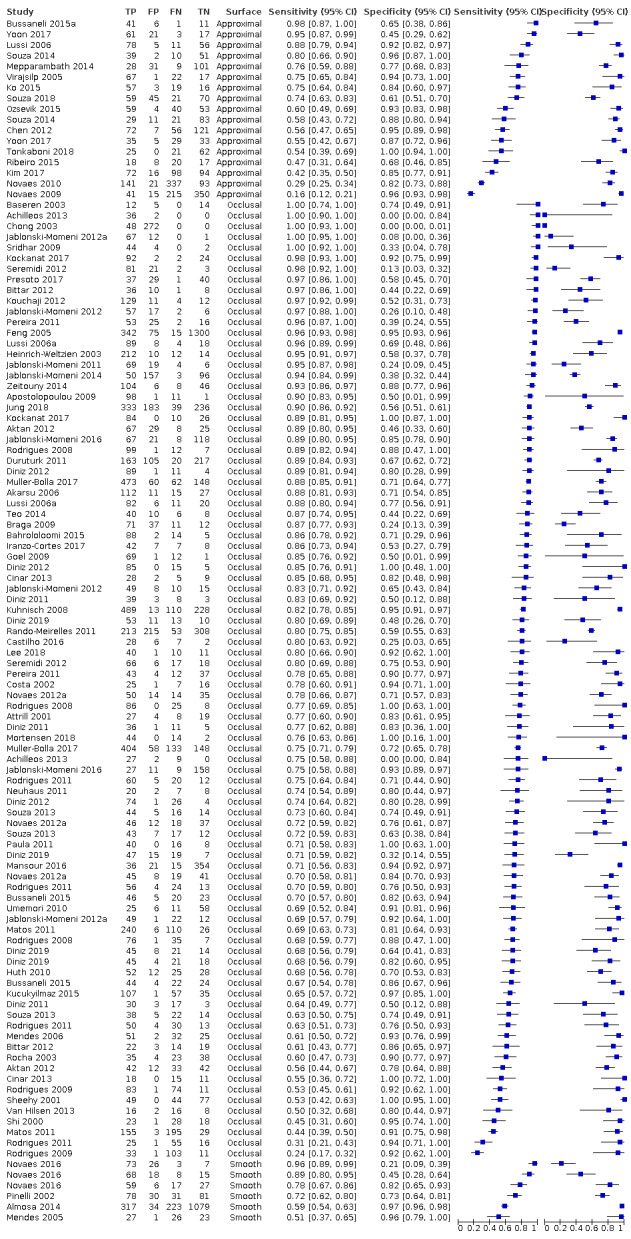
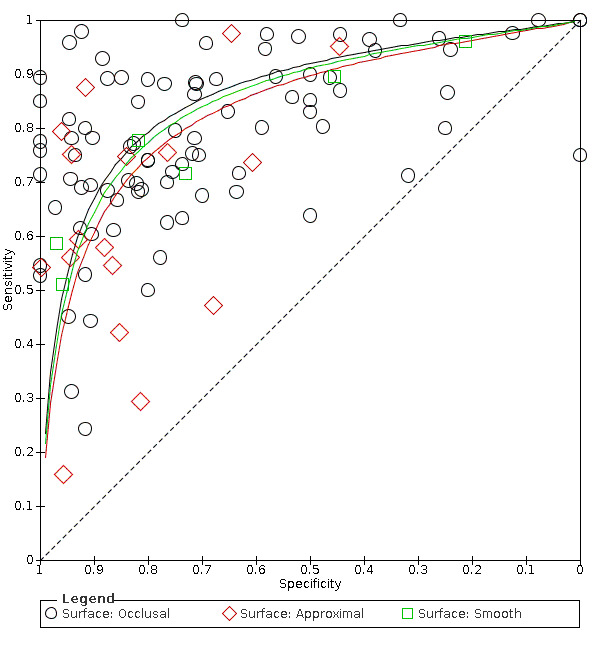
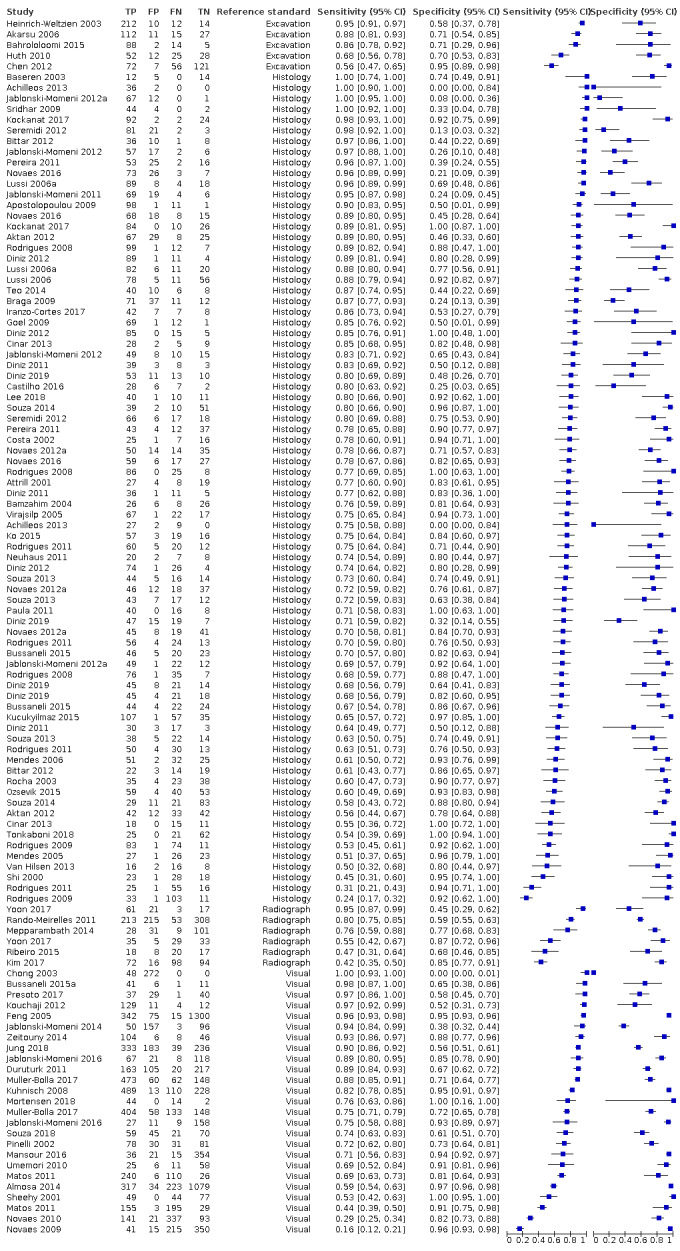
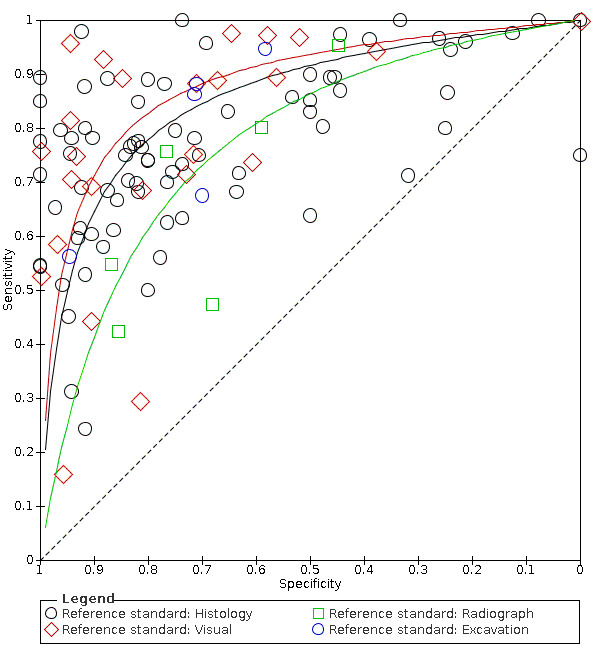
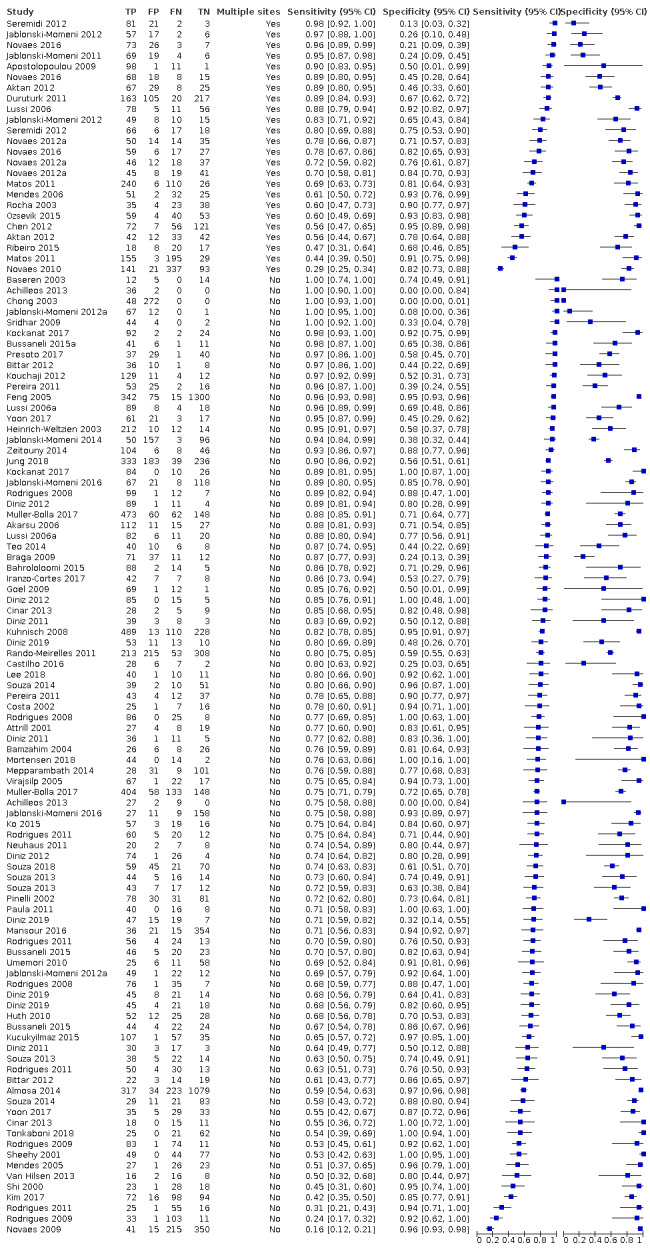
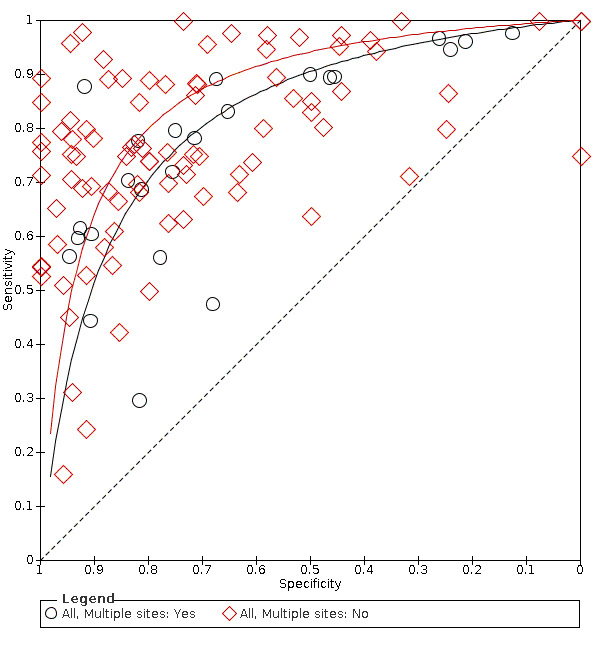
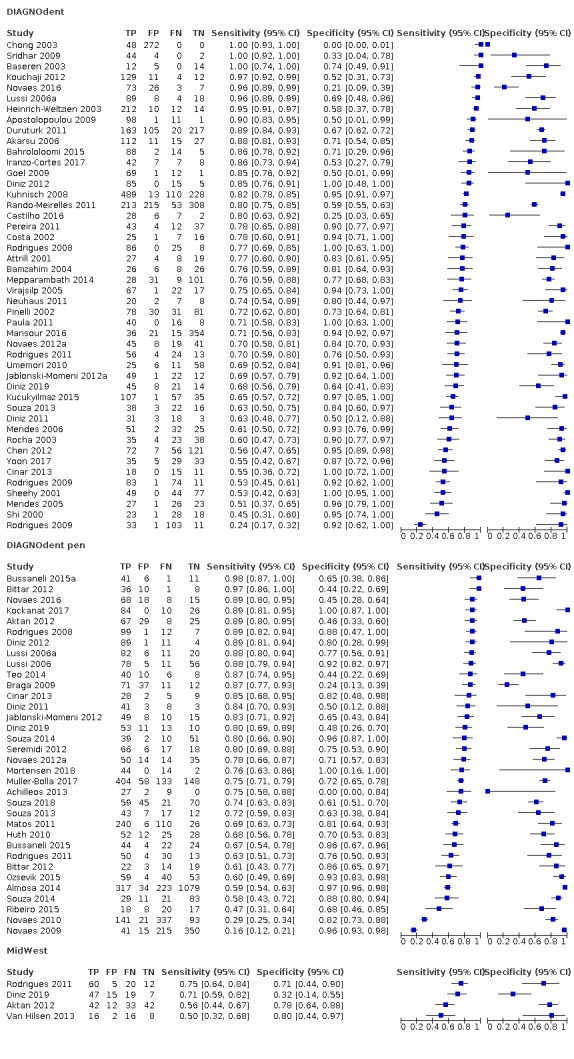
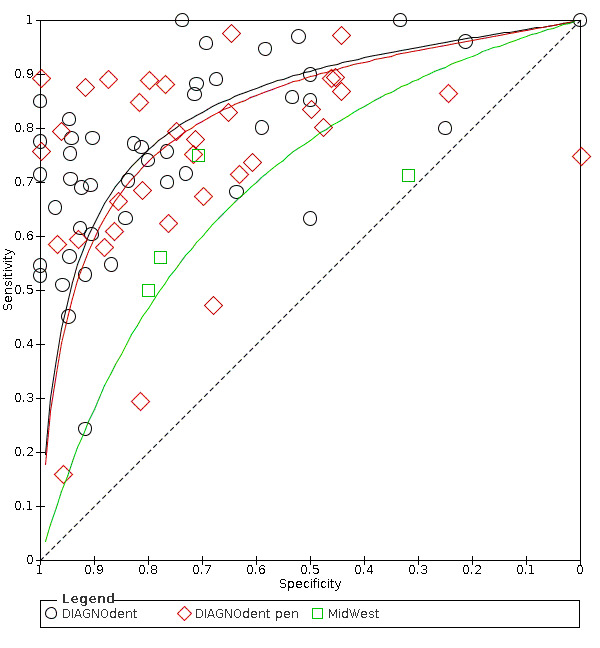
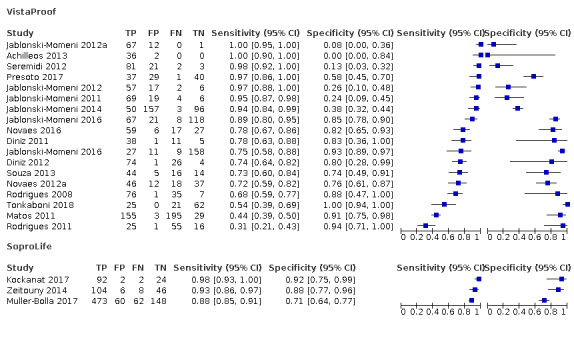
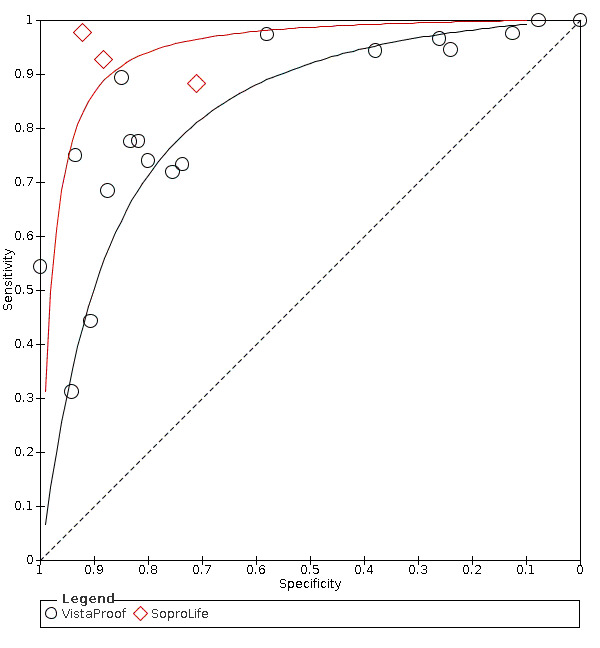
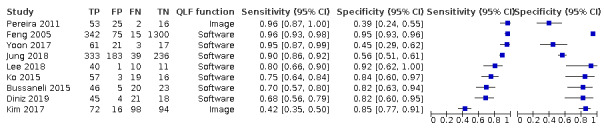
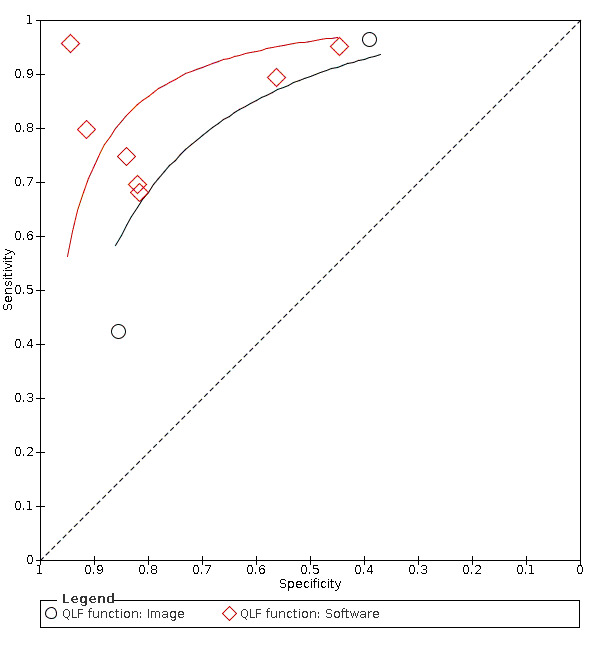
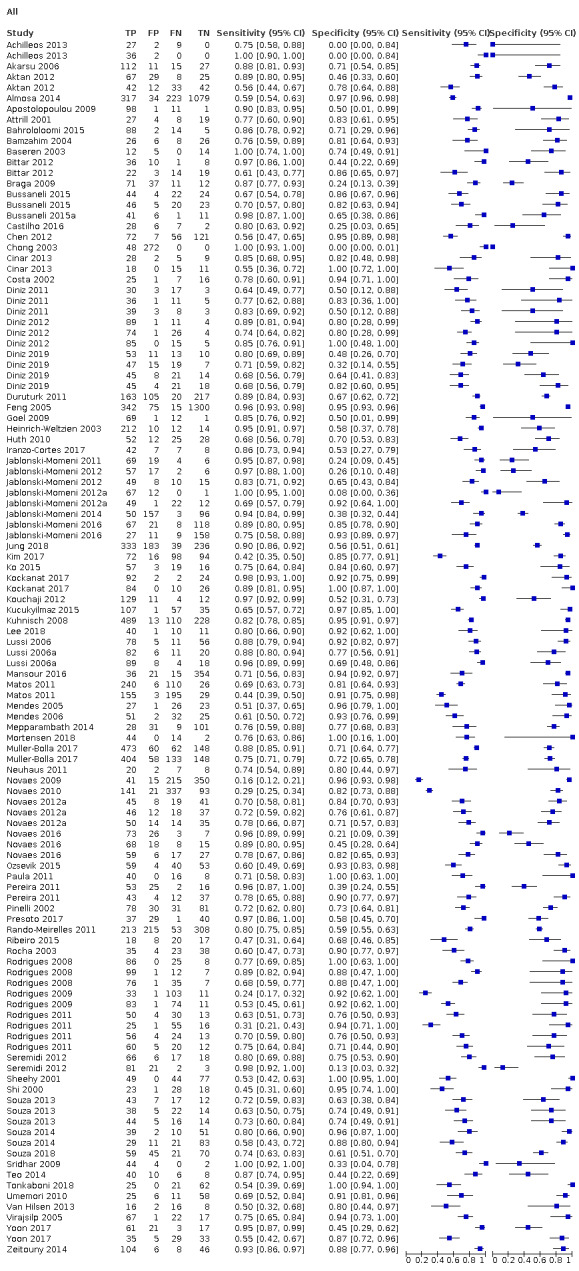
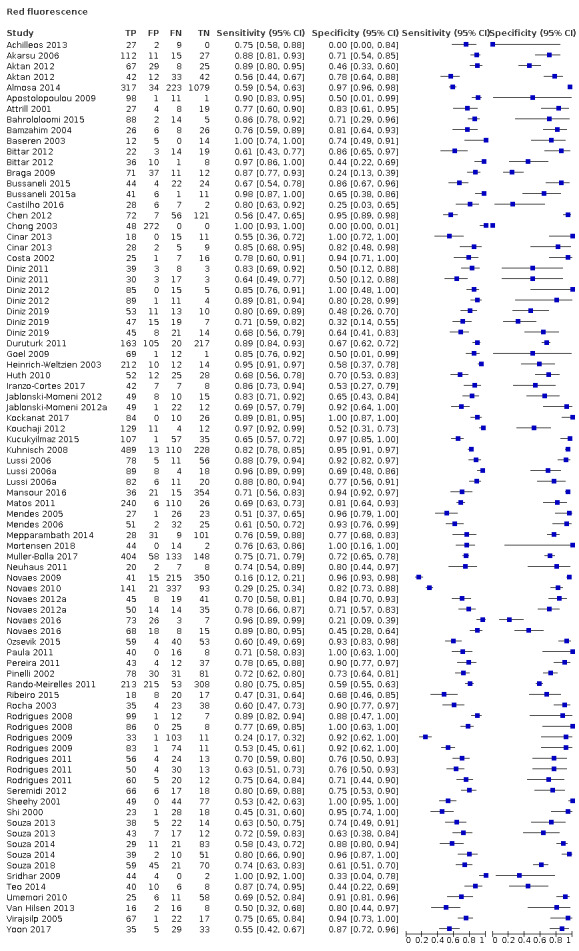
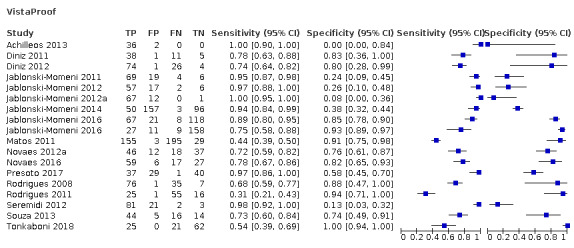
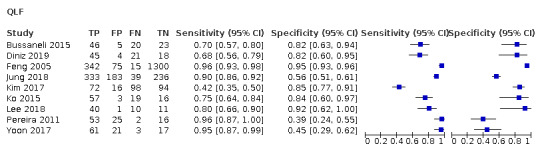
Data collection and analysis: Two review authors extracted data independently using a piloted study data extraction form based on the Quality Assessment of Diagnostic Accuracy Studies 2 (QUADAS-2). Sensitivity and specificity with 95% confidence intervals (CIs) were reported for each study. This information has been displayed as coupled forest plots and summary receiver operating characteristic (SROC) plots, displaying the sensitivity-specificity points for each study. We estimated diagnostic accuracy using hierarchical summary receiver operating characteristic (HSROC) methods. We reported sensitivities at fixed values of specificity (median 0.78, upper quartile 0.90).
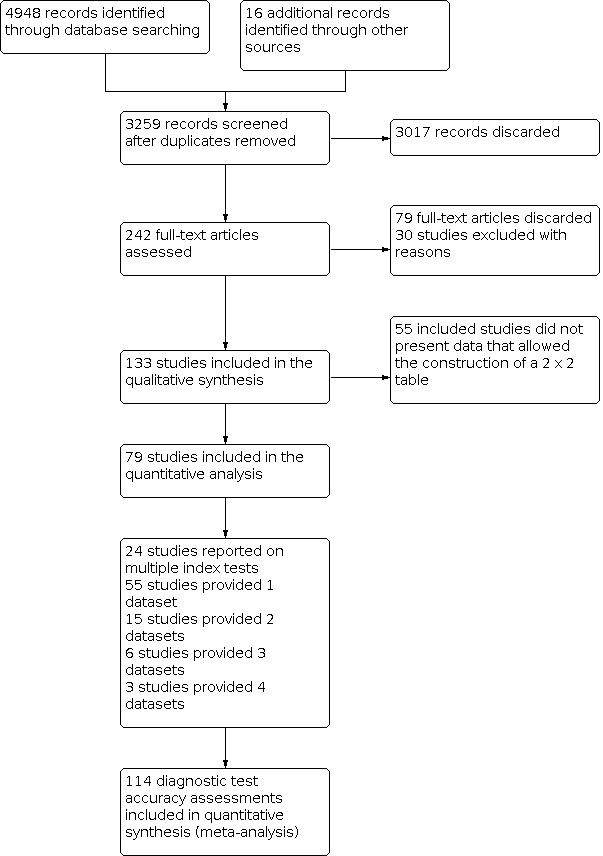
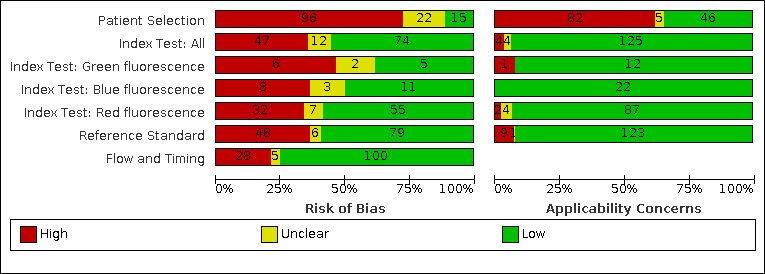
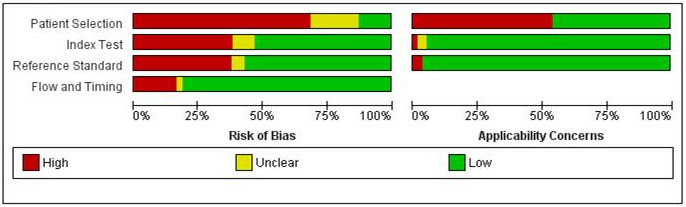
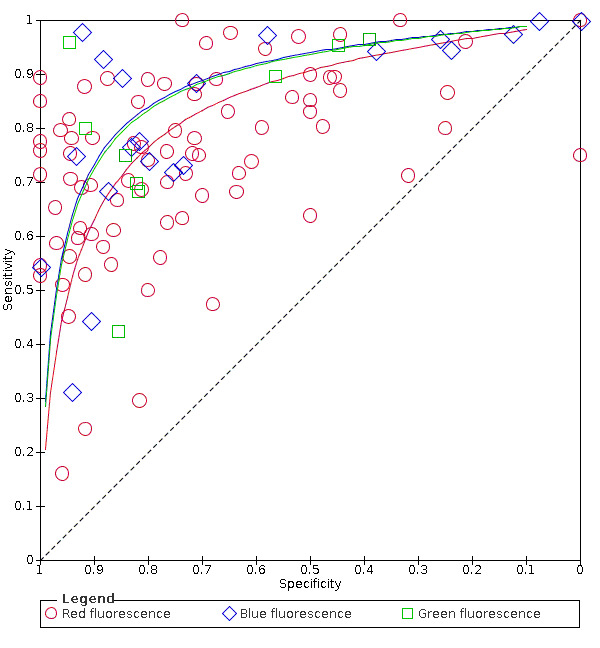
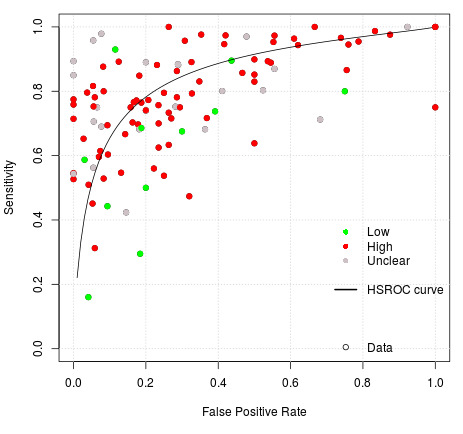
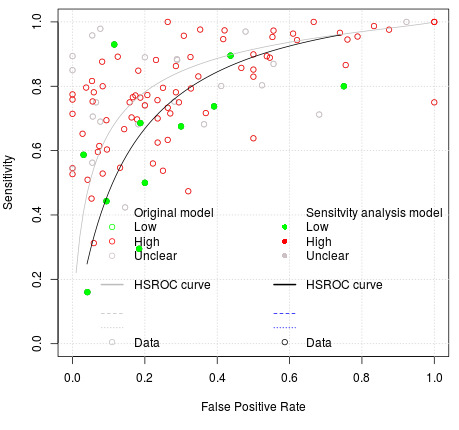
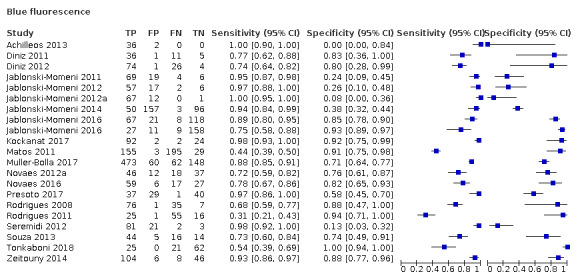
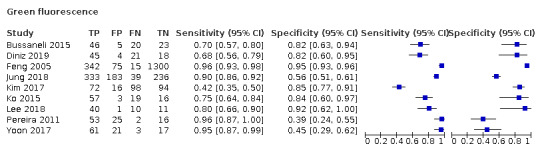
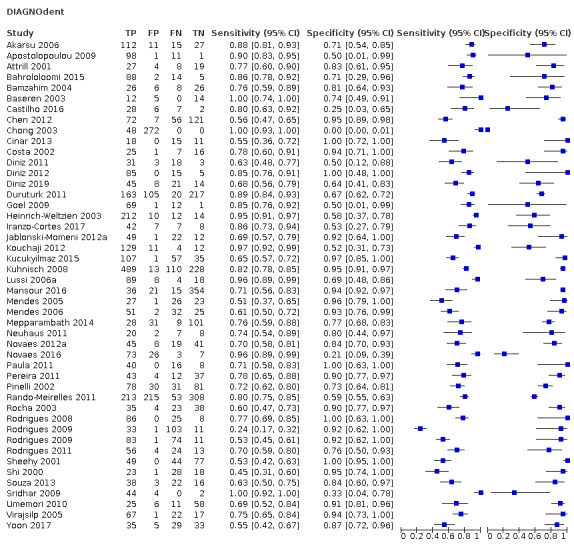
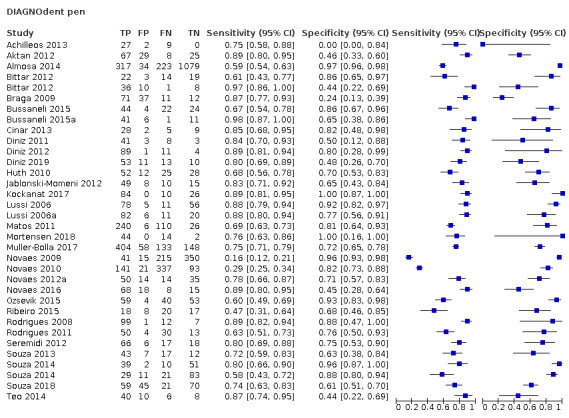
Main results: We included a total of 133 studies, 55 did not report data in the 2 x 2 format and could not be included in the meta-analysis. 79 studies which provided 114 datasets and evaluated 21,283 tooth surfaces were included in the meta-analysis. There was a high risk of bias for the participant selection domain. The index test, reference standard, and flow and timing domains all showed a high proportion of studies to be at low risk of bias. Concerns regarding the applicability of the evidence were high or unclear for all domains, the highest proportion being seen in participant selection. Selective participant recruitment, poorly defined diagnostic thresholds, and in vitro studies being non-generalisable to the clinical scenario of a routine dental examination were the main reasons for these findings. The dominance of in vitro studies also means that the information on how the results of these devices are used to support diagnosis, as opposed to pure detection, was extremely limited. There was substantial variability in the results which could not be explained by the different devices or dentition or other sources of heterogeneity that we investigated. The diagnostic odds ratio (DOR) was 14.12 (95% CI 11.17 to 17.84). The estimated sensitivity, at a fixed median specificity of 0.78, was 0.70 (95% CI 0.64 to 0.75). In a hypothetical cohort of 1000 tooth sites or surfaces, with a prevalence of enamel caries of 57%, obtained from the included studies, the estimated sensitivity of 0.70 and specificity of 0.78 would result in 171 missed tooth sites or surfaces with enamel caries (false negatives) and 95 incorrectly classed as having early caries (false positives). We used meta-regression to compare the accuracy of the different devices for red fluorescence (84 datasets, 14,514 tooth sites), blue fluorescence (21 datasets, 3429 tooth sites), and green fluorescence (9 datasets, 3340 tooth sites) devices. Initially, we allowed threshold, shape, and accuracy to vary according to device type by including covariates in the model. Allowing consistency of shape, removal of the covariates for accuracy had only a negligible effect (Chi2 = 3.91, degrees of freedom (df) = 2, P = 0.14). Despite the relatively large volume of evidence we rated the certainty of the evidence as low, downgraded two levels in total, for risk of bias due to limitations in the design and conduct of the included studies, indirectness arising from the high number of in vitro studies, and inconsistency due to the substantial variability of results.
Authors' conclusions: There is considerable variation in the performance of these fluorescence-based devices that could not be explained by the different wavelengths of the devices assessed, participant, or study characteristics. Blue and green fluorescence-based devices appeared to outperform red fluorescence-based devices but this difference was not supported by the results of a formal statistical comparison. The evidence base was considerable, but we were only able to include 79 studies out of 133 in the meta-analysis as estimates of sensitivity or specificity values or both could not be extracted or derived. In terms of applicability, any future studies should be carried out in a clinical setting, where difficulties of caries assessment within the oral cavity include plaque, staining, and restorations. Other considerations include the potential of fluorescence devices to be used in combination with other technologies and comparative diagnostic accuracy studies.
Antecedentes: La caries es una de las afecciones más frecuentes y prevenibles en todo el mundo. Si se identifican con suficiente antelación, se pueden aplicar técnicas no invasivas y, por lo tanto, esta revisión se centra en las caries tempranas que afectan la superficie del esmalte del diente. La piedra angular de la detección de la caries es una exploración dental visual y táctil; sin embargo, existen métodos alternativos de detección, entre los que se incluyen los dispositivos basados en la fluorescencia. Hay tres categorías de dispositivos basados en la fluorescencia, cada una de ellas definida principalmente por las diferentes longitudes de onda que utilizan; estos grupos se han llamado fluorescencia roja, azul y verde. Estos dispositivos podrían apoyar la exploración visual para la detección y el diagnóstico de la caries en una etapa temprana de descomposición.
Objetivos: Los objetivos principales fueron determinar la exactitud de la prueba diagnóstica de dispositivos basados en la fluorescencia para la detección y el diagnóstico de la caries del esmalte en niños o adultos. Se planificó investigar las siguientes fuentes potenciales de heterogeneidad: superficie dental (oclusal, proximal, superficie lisa o adyacente a una restauración); dispositivos de medición de punto único frente a dispositivos de imagen o de evaluación de superficie; y la prevalencia de enfermedades más graves en cada muestra de estudio, a nivel de caries en la dentina. MÉTODOS DE BÚSQUEDA: El documentalista del Grupo Cochrane de Salud Oral (Cochrane Oral Health Group) realizó una búsqueda en las siguientes bases de datos: MEDLINE Ovid (1946 al 30 de mayo de 2019); Embase Ovid (1980 al 30 de mayo de 2019); Registro de ensayos en curso de los Institutos Nacionales de Salud de los Estados Unidos (ClinicalTrials.gov, hasta el 30 de mayo de 2019); y la Plataforma de Registro Internacional de Ensayos Clínicos de la Organización Mundial de la Salud (hasta el 30 de mayo de 2019). Se estudiaron las listas de referencias y las revisiones sistemáticas publicadas. CRITERIOS DE SELECCIÓN: Se incluyeron diseños de estudios de exactitud diagnóstica que compararon un dispositivo basado en la fluorescencia con un estándar de referencia. Esto incluyó estudios prospectivos que evaluaron la exactitud diagnóstica de una única prueba índice y estudios que compararon directamente dos o más pruebas índice. Se excluyeron los estudios que reclutaron explícitamente a participantes con caries en la dentina o en la cavitación franca. OBTENCIÓN Y ANÁLISIS DE LOS DATOS: Dos autores de la revisión extrajeron los datos de forma independiente mediante un formulario de extracción de datos de estudios piloto basado en la Quality Assessment of Diagnostic Accuracy Studies 2 (QUADAS‐2). De cada estudio se informaron la sensibilidad y la especificidad con intervalos de confianza (IC) del 95%. Esta información se ha presentado en forma de diagramas de bosque (forest plot) emparejados y gráficos de curva resumen de rendimiento diagnóstico (SROC), que muestran los puntos de sensibilidad‐especificidad de cada estudio. La exactitud diagnóstica se calculó mediante métodos de modelo jerárquico de curva resumen de rendimiento diagnóstico (HSROC). Se informaron sensibilidades a valores fijos de especificidad (mediana 0,78, cuartil superior 0,90).
Resultados principales: Se incluyeron un total de 133 estudios, 55 no informaron los datos en el formato 2 x 2 y no se pudieron incluir en el metanálisis. En el metanálisis se incluyeron 79 estudios que proporcionaron 114 conjuntos de datos y evaluaron 21 283 superficies dentales. Hubo alto riesgo de sesgo en el dominio de selección de los participantes. La prueba índice, el estándar de referencia y los dominios de flujo y tiempo mostraron que una alta proporción de los estudios tenían un bajo riesgo de sesgo. Las preocupaciones relacionadas con la aplicabilidad de la evidencia fueron altas o poco claras en todos los dominios, y la mayor proporción se observó en la selección de los participantes. El reclutamiento selectivo de los participantes, los umbrales diagnósticos mal definidos y el hecho de que los estudios in vitro no se puedan generalizar al escenario clínico de una exploración dental de rutina fueron las principales razones de estos hallazgos. El predominio de los estudios in vitro también hizo que la información sobre la forma en que se utilizan los resultados de esos dispositivos para apoyar el diagnóstico, en contraposición con la detección pura, fuera muy limitada. Hubo una variabilidad significativa en los resultados que no se pudo explicar por los diferentes dispositivos o dentición u otras fuentes de heterogeneidad que se investigaron. El odds ratio diagnóstico (ORD) fue 14,12 (IC del 95%: 11,17 a 17,84). La sensibilidad estimada, con una especificidad media fija de 0,78, fue 0,70 (IC del 95%: 0,64 a 0,75). En una cohorte hipotética de 1000 puntos o superficies dentales, con una prevalencia de caries del esmalte del 57%, obtenida de los estudios incluidos, la sensibilidad estimada de 0,70 y la especificidad de 0,78 daría lugar a 171 puntos o superficies dentales con caries del esmalte no detectados (falsos negativos) y 95 incorrectamente considerados con caries temprana (falsos positivos). Se utilizó la metarregresión para comparar la exactitud de los diferentes dispositivos para la fluorescencia roja (84 conjuntos de datos, 14 514 puntos dentales), la fluorescencia azul (21 conjuntos de datos, 3429 puntos dentales), y la fluorescencia verde (nueve conjuntos de datos, 3340 puntos dentales). Inicialmente, se permitió que el umbral, la forma y la exactitud variaran según el tipo de dispositivo, incluyendo covariables en el modelo. Permitiendo la homogeneidad de la forma, la eliminación de las covariables para la exactitud tuvo sólo un efecto insignificante (Ji2 = 3,91; grados de libertad [gl] = 2; p = 0,14). A pesar del volumen relativamente grande de evidencia, la certeza de las mismas se consideró baja, disminuyendo dos niveles en total, por el riesgo de sesgo debido a las limitaciones en el diseño y la realización de los estudios incluidos, los hallazgos indirectos derivados del elevado número de estudios in vitro y la incoherencia debida a la considerable variabilidad de los resultados.
Conclusiones de los autores: Existe una considerable variación en la ejecución de estos dispositivos basados en la fluorescencia que no se pudo explicar por las diferentes longitudes de onda de los dispositivos evaluados, los participantes ni las características de los estudios. Los dispositivos basados en la fluorescencia azul y verde parecieron superar a los basados en la fluorescencia roja, pero esta diferencia no estuvo respaldada por los resultados de una comparación estadística formal. La base de evidencia fue considerable, pero sólo fue posible incluir 79 estudios de 133 en el metanálisis, ya que no se pudieron extraer o derivar las estimaciones de los valores de sensibilidad o especificidad o ambos. En cuanto a la aplicabilidad, todo estudio futuro se debería realizar en un ámbito clínico, en el que las dificultades de la evaluación de la caries dentro de la cavidad oral incluyen la placa, la tinción y las restauraciones. Otras consideraciones son el potencial de los dispositivos de fluorescencia para ser utilizados en combinación con otras tecnologías y estudios comparativos de exactitud diagnóstica.
Copyright © 2020 The Cochrane Collaboration. Published by John Wiley & Sons, Ltd.
Conflict of interest statement
Richard Macey: none known. Tanya Walsh: none known. I am Statistical Editor with Cochrane Oral Health. Philip Riley: none known. I am Deputy Co‐ordinating Editor of Cochrane Oral Health. Anne‐Marie Glenny: none known. I am Co‐ordinating Editor of Cochrane Oral Health. Helen V Worthington: none known. I am an Editor with Cochrane Oral Health. Patrick A Fee: none known. Janet E Clarkson: none known. I am Co‐ordinating Editor of Cochrane Oral Health. David Ricketts: none known.
Figures




References
References to studies included in this review
Achilleos 2013 {published data only}
-
- Achilleos EE, Rahiotis C, Kakaboura A, Vougiouklakis G. Evaluation of a new fluorescence-based device in the detection of incipient occlusal caries lesions. Lasers in Medical Science 2013;28:193-201. - PubMed
Akarsu 2006 {published data only}
-
- Akarsu S, Koprulu H. In vivo comparison of the efficacy of DIAGNOdent by visual inspection and radiographic diagnostic techniques in the diagnosis of occlusal caries. Journal of Clinical Dentistry 2006;17(3):53-8. - PubMed
Aktan 2012 {published data only}
-
- Aktan AM, Cebe MA, Ciftci ME, Sirin Karaarslan E. A novel LED-based device for occlusal caries detection. Lasers in Medical Science 2012;27:1157-63. - PubMed
Almosa 2014 {published data only}
Alomari 2015 {published data only}
-
- Alomari QD, Qudeimat MA, Khalaf ME, Al-Tarakemah Y. The effect of combining radiographs and DIAGNOdent with visual examination on detection and treatment decisions of noncavitated occluso-dentinal caries. Operative Dentistry 2015;40:313-21. - PubMed
Alwas‐Danowska 2002 {published data only}
-
- Alwas-Danowska HM, Plasschaert AJ, Suliborski S, Verdonschot EH. Reliability and validity issues of laser fluorescence measurements in occlusal caries diagnosis. Journal of Dentistry 2002;30:129-34. - PubMed
Angnes 2005 {published data only}
-
- Angnes V, Angnes G, Batisttella M, Grande RH, Loguercio AD, Reis A. Clinical effectiveness of laser fluorescence, visual inspection and radiography in the detection of occlusal caries. Caries Research 2005;39:490-5. - PubMed
Anttonen 2003 {published data only}
-
- Anttonen V, Seppa L, Hausen H. Clinical study of the use of the laser fluorescence device DIAGNOdent for detection of occlusal caries in children. Caries Research 2003;37:17-23. - PubMed
Apostolopoulou 2009 {published data only}
-
- Apostolopoulou D, Lagouvardos P, Kavvadia K, Papagiannoulis L. Histological validation of a laser fluorescence device for occlusal caries detection in primary molars. European Archives of Paediatric Dentistry 2009;10 Suppl 1:11-5. - PubMed
Arslan 2014 {published data only}
Attrill 2001 {published data only}
-
- Attrill DC, Ashley PF. Occlusal caries detection in primary teeth: a comparison of DIAGNOdent with conventional methods. British Dental Journal 2001;190:440-3. - PubMed
Bahrololoomi 2015 {published data only}
Bamzahim 2002 {published data only}
-
- Bamzahim M, Shi XQ, Angmar-Mansson B. Occlusal caries detection and quantification by DIAGNOdent and Electronic Caries Monitor: in vitro comparison. Acta Odontologica Scandinavica 2002;60:360-4. - PubMed
Bamzahim 2004 {published data only}
-
- Bamzahim M, Shi XQ, Angmar-Månsson B. Secondary caries detection by DIAGNOdent and radiography: a comparative in vitro study. Acta Odontologica Scandinavica 2004;62(1):61-4. - PubMed
Barberia 2008 {published data only}
-
- Barberia E, Maroto M, Arenas M, Silva CC. A clinical study of caries diagnosis with a laser fluorescence system. Journal of the American Dental Association 2008;139:572-9. - PubMed
Baseren 2003 {published data only}
-
- Baseren NM, Gokalp S. Validity of a laser fluorescence system (DIAGNOdent) for detection of occlusal caries in third molars: an in vitro study. Journal of Oral Rehabilitation 2003;30:1190-4. - PubMed
Bengtson 2005 {published data only}
-
- Bengtson AL, Gomes AC, Mendes FM, Cichello LR, Bengtson NG, Pinheiro SL. Influence of examiner's clinical experience in detecting occlusal caries lesions in primary teeth. Pediatric Dentistry 2005;27:238-43. - PubMed
Bittar 2012 {published data only}
-
- Bittar DG, Gimenez T, Morais CC, De Benedetto MS, Braga MM, Mendes FM. Influence of moisture and plaque on the performance of a laser fluorescence device in detecting caries lesions in primary teeth. Lasers in Medical Science 2012;27:1169-74. - PubMed
Bizhang 2016 {published data only}
Boston 2003 {published data only}
-
- Boston DW. Initial in vitro evaluation of DIAGNOdent for detecting secondary carious lesions associated with resin composite restorations. Quintessence International 2003;34:109-16. - PubMed
Bozdemir 2013 {published data only}
-
- Bozdemir E, Karaarslan ES, Ozsevik AS, Ata Cebe M, Aktan AM. In vivo performance of two devices for occlusal caries detection. Photomedicine and Laser Surgery 2013;31:322-7. - PubMed
Braga 2006 {published data only}
-
- Braga MM, Mendes FM, Martins CR, Imparato JC. Effect of the calibration method of a laser fluorescence device for detecting occlusal caries in primary molars. Pediatric Dentistry 2006;28:451-4. - PubMed
Braga 2007 {published data only}
-
- Braga MM, Mendes FM, Imparato JC, Rodrigues CR. Effect of cut-off points on performance of laser fluorescence for detecting occlusal caries. Journal of Clinical Pediatric Dentistry 2007;32:33-6. - PubMed
Braga 2008 {published data only}
-
- Braga M, Nicolau J, Rodrigues CR, Imparato JC, Mendes FM. Laser fluorescence device does not perform well in detection of early caries lesions in primary teeth: an in vitro study. Oral Health & Preventive Dentistry 2008;6:165-9. - PubMed
Braga 2009 {published data only}
-
- Braga MM, Morais CC, Nakama RCS, Leamari VM, Siqueira WL, Mendes FM. In vitro performance of methods of approximal caries detection in primary molars. Oral Surgery, Oral Medicine, Oral Pathology, Oral Radiology and Endodontology 2009;108:e35-41. - PubMed
Burin 2005 {published data only}
-
- Burin C, Burin C, Loguercio AD, Grande RH, Reis A. Occlusal caries detection: a comparison of a laser fluorescence system and conventional methods. Pediatric Dentistry 2005;27:307-12. - PubMed
Bussaneli 2015 {published data only}
-
- Bussaneli DG, Restrepo M, Boldieri T, Pretel H, Mancini MW, Santos-Pinto L, et al. Assessment of a new infrared laser transillumination technology (808 nm) for the detection of occlusal caries - an in vitro study. Lasers in Medical Science 2015;30(7):1873-9. - PubMed
Bussaneli 2015a {published data only}
-
- Bussaneli DG, Restrepo M, Boldieri T, Albertoni TH, Santos-Pinto L, Cordeiro RCL. Proximal caries lesion detection in primary teeth: does this justify the association of diagnostic methods? Lasers in Medical Science 2015;30(9):2239-44. - PubMed
Castilho 2016 {published data only}
-
- Castilho LS, Cotta FV, Bueno AC, Moreira AN, Ferreira EF, Magalhaes CS. Validation of DIAGNOdent laser fluorescence and the International Caries Detection and Assessment System (ICDAS) in diagnosis of occlusal caries in permanent teeth: an in vivo study. European Journal of Oral Sciences 2016;124:188-94. - PubMed
Chawla 2012 {published data only}
-
- Chawla N, Messer LB, Adams GG, Manton DJ. An in vitro comparison of detection methods for approximal carious lesions in primary molars. Caries Research 2012;46(2):161-9. - PubMed
Chen 2012 {published data only}
-
- Chen J, Qin M, Ma W, Ge L. A clinical study of a laser fluorescence device for the detection of approximal caries in primary molars. International Journal of Paediatric Dentistry 2012;22:132-8. - PubMed
Chong 2003 {published data only}
-
- Chong MJ, Seow WK, Purdie DM, Cheng E, Wan V. Visual-tactile examination compared with conventional radiography, digital radiography, and Diagnodent in the diagnosis of occlusal occult caries in extracted premolars. Pediatric Dentistry 2003;25:341-9. - PubMed
Cinar 2013 {published data only}
Costa 2002 {published data only}
-
- Costa AM, Yamaguti PM, De Paula LM, Bezerra AC. In vitro study of laser diode 655 nm diagnosis of occlusal caries. Journal of Dentistry for Children 2002;69(3):249-53, 233. - PubMed
Costa 2007 {published data only}
-
- Costa AM, Bezzerra AC, Fuks AB. Assessment of the accuracy of visual examination, bite-wing radiographs and DIAGNOdent on the diagnosis of occlusal caries. European Archives of Paediatric Dentistry 2007;8:118-22. - PubMed
Diniz 2009 {published data only}
-
- Diniz MB, Rodrigues JA, Paula AB, Cordeiro R de C. In vivo evaluation of laser fluorescence performance using different cut-off limits for occlusal caries detection. Lasers in Medical Science 2009;24:295-300. - PubMed
Diniz 2011 {published data only}
-
- Diniz MB, Sciasci P, Rodrigues JA, Lussi A, Cordeiro RCL. Influence of different professional prophylactic methods on fluorescence measurements for detection of occlusal caries. Caries Research 2011;45(3):264-8. - PubMed
Diniz 2012 {published data only}
-
- Diniz MB, Boldieri T, Rodrigues JA, Santos-Pinto L, Lussi A, Cordeiro RC. The performance of conventional and fluorescence-based methods for occlusal caries detection: an in vivo study with histologic validation. Journal of the American Dental Association 2012;143(4):339-50. - PubMed
Diniz 2019 {published data only}
-
- Diniz MB, Campos PH, Wilde S, Cordeiro RCL, Zandona AGF. Performance of light-emitting diode device in detecting occlusal caries in the primary molars. Lasers in Medical Science 2019;34(9):1235-41. - PubMed
Duruturk 2011 {published data only}
-
- Duruturk L, Ciftci A, Baharoglu S, Oztuna D. Clinical evaluation of DIAGNOdent in detection of occlusal caries in newly erupted noncavitated first permanent molars in caries-active children. Operative Dentistry 2011;36:348-55. - PubMed
El‐Housseiny 2001 {published data only}
-
- El-Housseiny AA, Jamjoum H. Evaluation of visual, explorer, and a laser device for detection of early occlusal caries. Journal of Clinical Pediatric Dentistry 2001;26:41-8. - PubMed
Feng 2005 {published data only}
-
- Feng Y, Yin W, Zhang YY, Zhang B, Hu DY. Comparison of primary caries detection on smooth surface in the maxillary anterior teeth using QLF, digital photo and visual diagnosis. Shanghai Kou Qiang Yi Xue [Shanghai Journal of Stomatology] 2005;14(6):565-8. - PubMed
Ferreira 1998 {published data only}
-
- Ferreira Zandona AG, Analoui M, Beiswanger BB, Isaacs RL, Kafrawy AH, Eckert GJ, et al. An in vitro comparison between laser fluorescence and visual examination for detection of demineralization in occlusal pits and fissures. Caries Research 1998;32:210-8. - PubMed
Ferreira 2008 {published data only}
-
- Ferreira JM, Silva MF, Oliveira AF, Sampaio FC. Evaluation of different methods for monitoring incipient carious lesions in smooth surfaces under fluoride varnish therapy. International Journal of Paediatric Dentistry 2008;18:300-5. - PubMed
Francescut 2003 {published data only}
-
- Francescut P, Lussi A. Correlation between fissure discoloration, Diagnodent measurements, and caries depth: an in vitro study. Pediatric Dentistry 2003;25:559-64. - PubMed
Fung 2004 {published data only}
-
- Fung L, Smales R, Ngo H, Mount G. Diagnostic comparison of three groups of examiners using visual and laser fluorescence methods to detect occlusal caries in vitro. Australian Dental Journal 2004;49:67-71. - PubMed
Ghaname 2010 {published data only}
-
- Ghaname ES, Ritter AV, Heymann HO, Vann WF Jr, Shugars DA, Bader JD. Correlation between laser fluorescence readings and volume of tooth preparation in incipient occlusal caries in vitro. Journal of Esthetic & Restorative Dentistry 2010;22:31-9. - PubMed
Goel 2009 {published data only}
-
- Goel A, Chawla HS, Gauba K, Goyal A. Comparison of validity of DIAGNOdent with conventional methods for detection of occlusal caries in primary molars using the histological gold standard: an in vivo study. Journal of the Indian Society of Pedodontics and Preventive Dentistry 2009;27(4):227-34. - PubMed
Graye 2012 {published data only}
-
- Graye M, Markowitz K, Strickland M, Guzy G, Burke M, Houpt M. In vitro evaluation of the Spectra early caries detection system. Journal of Clinical Dentistry 2012;23:1-6. - PubMed
Heinrich‐Weltzien 2003 {published data only}
-
- Heinrich-Weltzien R, Kuhnisch J, Oehme T, Ziehe A, Stosser L, Garcia-Godoy F. Comparison of different DIAGNOdent cut-off limits for in vivo detection of occlusal caries. Operative Dentistry 2003;28(6):672-80. - PubMed
Hibst 2001 {published data only}
-
- Hibst R, Paulus R, Lussi A. Detection of occlusal caries by laser fluorescence: basic and clinical investigations. Medical Laser Application 2001;16(3):205-13.
Huth 2008 {published data only}
-
- Huth KC, Neuhaus KW, Gygax M, Bucher K, Crispin A, Paschos E, et al. Clinical performance of a new laser fluorescence device for detection of occlusal caries lesions in permanent molars. Journal of Dentistry 2008;36(12):1033-40. - PubMed
Huth 2010 {published data only}
-
- Huth KC, Lussi A, Gygax M, Thum M, Crispin A, Paschos E, et al. In vivo performance of a laser fluorescence device for the approximal detection of caries in permanent molars. Journal of Dentistry 2010;38(12):1019-26. - PubMed
Iranzo‐Cortes 2017 {published data only}
-
- Iranzo-Cortes JE, Terzic S, Montiel-Company JM, Almerich-Silla JM. Diagnostic validity of ICDAS and DIAGNOdent combined: an in vitro study in pre-cavitated lesions. Lasers in Medical Science 2017;32(3):543-8. - PubMed
Jablonski‐Momeni 2011 {published data only}
-
- Jablonski-Momeni A, Schipper HM, Rosen SM, Heinzel-Gutenbrunner M, Roggendorf MJ, Stoll R, et al. Performance of a fluorescence camera for detection of occlusal caries in vitro. Odontology 2011;99(1):55-61. - PubMed
Jablonski‐Momeni 2012 {published data only}
-
- Jablonski-Momeni A, Rosen SM, Schipper HM, Stoll R, Roggendorf MJ, Heinzel-Gutenbrunner M, et al. Impact of measuring multiple or single occlusal lesions on estimates of diagnostic accuracy using fluorescence methods. Lasers in Medical Science 2012;27(2):343-52. - PubMed
Jablonski‐Momeni 2012a {published data only}
Jablonski‐Momeni 2014 {published data only}
-
- Jablonski-Momeni A, Heinzel-Gutenbrunner M, Klein SM. In vivo performance of the VistaProof fluorescence-based camera for detection of occlusal lesions. Clinical Oral Investigations 2014;18(7):1757-62. - PubMed
Jablonski‐Momeni 2016 {published data only}
-
- Jablonski-Momeni A, Heinzel-Gutenbrunner M, Vill G. Use of a fluorescence-based camera for monitoring occlusal surfaces of primary and permanent teeth. International Journal of Paediatric Dentistry 2016;26(6):448-56. - PubMed
Jeon 2004 {published data only}
-
- Jeon RJ, Han C, Mandelis A, Sanchez V, Abrams SH. Diagnosis of pit and fissure caries using frequency-domain infrared photothermal radiometry and modulated laser luminescence. Caries Research 2004;38(6):497-513. - PubMed
Jung 2018 {published data only}
-
- Jung EH, Lee ES, Jung HI, Kang SM, Josselin de Jong E, Kim BI. Development of a fluorescence-image scoring system for assessing noncavitated occlusal caries. Photodiagnosis and Photodynamic Therapy 2018;21:36-42. - PubMed
Kavvadia 2008 {published data only}
-
- Kavvadia K, Lagouvardos P. Clinical performance of a diode laser fluorescence device for the detection of occlusal caries in primary teeth. International Journal of Paediatric Dentistry 2008;18(3):197-204. - PubMed
Kavvadia 2012 {published data only}
-
- Kavvadia K, Lagouvardos P, Apostolopoulou D. Combined validity of DIAGNOdentTM and visual examination for in vitro detection of occlusal caries in primary molars. Lasers in Medical Science 2012;27(2):313-9. - PubMed
Kesler 2003 {published data only}
-
- Kesler G, Masychev V, Sokolovsky A, Alexandrov M, Kesler A, Koren R. Photon undulatory non-linear conversion diagnostic method for caries detection: a pilot study. Journal of Clinical Laser Medicine & Surgery 2003;21(4):209-17. - PubMed
Kim 2017 {published data only}
-
- Kim ES, Lee ES, Kang SM, Jung EH, Josselin de Jong E, Jung HI, et al. A new screening method to detect proximal dental caries using fluorescence imaging. Photodiagnosis and Photodynamic Therapy 2017;20:257-62. - PubMed
Ko 2015 {published data only}
-
- Ko HY, Kang SM, Kim HE, Kwon HK, Kim BI. Validation of quantitative light-induced fluorescence-digital (QLF-D) for the detection of approximal caries in vitro. Journal of Dentistry 2015;43(5):568-75. - PubMed
Kockanat 2017 {published data only}
-
- Kockanat A, Unal M. In vivo and in vitro comparison of ICDAS II, DIAGNOdent pen, CarieScan PRO and SoproLife camera for occlusal caries detection in primary molar teeth. European Journal of Paediatric Dentistry 2017;18(2):99-104. - PubMed
Kouchaji 2012 {published data only}
Krause 2007 {published data only}
-
- Krause F, Jepsen S, Braun A. Comparison of two laser fluorescence devices for the detection of occlusal caries in vivo. European Journal of Oral Sciences 2007;115(4):252-6. - PubMed
Kucukyilmaz 2015 {published data only}
-
- Kucukyilmaz E, Sener Y, Botsali MS. In vivo and in vitro performance of conventional methods, DIAGNOdent, and an electronic caries monitor for occlusal caries detection in primary teeth. Pediatric Dentistry 2015;37(4):E14-22. - PubMed
Kuhnisch 2006 {published data only}
-
- Kuhnisch J, Ifland S, Tranaeus S, Angmar-Mansson B, Hickel R, Stosser L, et al. Establishing quantitative light-induced fluorescence cut-offs for the detection of occlusal dentine lesions. European Journal of Oral Sciences 2006;114(6):483-8. - PubMed
Kuhnisch 2007 {published data only}
-
- Kuhnisch J, Ifland S, Tranaeus S, Hickel R, Stosser L, Heinrich-Weltzien R. In vivo detection of non-cavitated caries lesions on occlusal surfaces by visual inspection and quantitative light-induced fluorescence. Acta Odontologica Scandinavica 2007;65(3):183-8. - PubMed
Kuhnisch 2008 {published data only}
-
- Kuhnisch J, Berger S, Goddon I, Senkel H, Pitts N, Heinrich-Weltzien R. Occlusal caries detection in permanent molars according to WHO basic methods, ICDAS II and laser fluorescence measurements. Community Dentistry and Oral Epidemiology 2008;36(6):475-84. - PubMed
Lee 2018 {published data only}
-
- Lee HS, Kim SK, Park SW, Jong E de Josselin de, Kwon HK, Jeong SH, et al. Caries detection and quantification around stained pits and fissures in occlusal tooth surfaces with fluorescence. Journal of Biomedical Optics 2018;23(9):1-7. - PubMed
Li 2006 {published data only}
-
- Li X, Fan X, Jia SH, Hu DY. Clinical study of use of laser fluorescence for detecting occlusal caries in deciduous teeth. Hua Xi Kou Qiang Yi Xue Za Zhi [West China Journal of Stomatology] 2006;24(1):36-8. - PubMed
Lussi 1999 {published data only}
-
- Lussi A, Imwinkelried S, Pitts N, Longbottom C, Reich E. Performance and reproducibility of a laser fluorescence system for detection of occlusal caries in vitro. Caries Research 1999;33(4):261-6. - PubMed
Lussi 2001 {published data only}
-
- Lussi A, Megert B, Longbottom C, Reich E, Francescut P. Clinical performance of a laser fluorescence device for detection of occlusal caries lesions. European Journal of Oral Sciences 2001;109(1):14-9. - PubMed
Lussi 2003 {published data only}
-
- Lussi A, Francescut P. Performance of conventional and new methods for the detection of occlusal caries in deciduous teeth. Caries Research 2003;37(1):2-7. - PubMed
Lussi 2005 {published data only}
-
- Lussi A, Longbottom C, Gygax M, Braig F. Influence of professional cleaning and drying of occlusal surfaces on laser fluorescence in vivo. Caries Research 2005;39(4):284-6. - PubMed
Lussi 2006 {published data only}
-
- Lussi A, Hack A, Hug I, Heckenberger H, Megert B, Stich H. Detection of approximal caries with a new laser fluorescence device. Caries Research 2006;40(2):97-103. - PubMed
Lussi 2006a {published data only}
-
- Lussi A, Hellwig E. Performance of a new laser fluorescence device for the detection of occlusal caries in vitro. Journal of Dentistry 2006;34(7):467-71. - PubMed
Mansour 2016 {published data only}
Manton 2007 {published data only}
-
- Manton DJ, Messer LB. The effect of pit and fissure sealants on the detection of occlusal caries in vitro. European Archives of Paediatric Dentistry 2007;8(1):43-8. - PubMed
Markowitz 2013 {published data only}
-
- Markowitz K, Rosenfeld D, Peikes D, Guzy G, Rosivack G. Effect of pit and fissure sealants on caries detection by a fluorescent camera system. Journal of Dentistry 2013;41(7):590-9. - PubMed
Markowitz 2015 {published data only}
-
- Markowitz K, Gutta A, Merdad H E, Guzy G, Rosivack G. In vitro study of the diagnostic performance of the Spectra Caries Detection Aid. Journal of Clinical Dentistry 2015;26(1):17-22. - PubMed
Matos 2011 {published data only}
-
- Matos R, Novaes TF, Braga MM, Siqueira WL, Duarte DA, Mendes FM. Clinical performance of two fluorescence-based methods in detecting occlusal caries lesions in primary teeth. Caries Research 2011;45(3):294-302. - PubMed
Mendes 2005 {published data only}
-
- Mendes FM, Siqueira WL, Mazzitelli JF, Pinheiro SL, Bengtson AL. Performance of DIAGNOdent for detection and quantification of smooth-surface caries in primary teeth. Journal of Dentistry 2005;33(1):79-84. - PubMed
Mendes 2006 {published data only}
-
- Mendes FM, Ganzerla E, Nunes AF, Puig AV, Imparato JC. Use of high-powered magnification to detect occlusal caries in primary teeth. American Journal of Dentistry 2006;19(1):19-22. - PubMed
Mendes 2012 {published data only}
-
- Mendes FM, Novaes TF, Matos R, Bittar DG, Piovesan C, Gimenez T, et al. Radiographic and laser fluorescence methods have no benefits for detecting caries in primary teeth. Caries Research 2012;46(6):536-43. - PubMed
Mepparambath 2014 {published data only}
Mortensen 2018 {published data only}
-
- Mortensen D, Hessing-Olsen I, Ekstrand KR, Twetman S. In-vivo performance of impedance spectroscopy, laser fluorescence, and bitewing radiographs for occlusal caries detection. Quintessence International 2018;49(4):293-9. - PubMed
Muller‐Bolla 2017 {published data only}
-
- Muller-Bolla M, Joseph C, Pisapia M, Tramini P, Velly AM, Tassery H. Performance of a recent light fluorescence device for detection of occlusal carious lesions in children and adolescents. European Archives of Paediatric Dentistry 2017;18(3):187-95. - PubMed
Neuhaus 2011 {published data only}
-
- Neuhaus KW, Rodrigues JA, Hug I, Stich H, Lussi A. Performance of laser fluorescence devices, visual and radiographic examination for the detection of occlusal caries in primary molars. Clinical Oral Investigations 2011;15(5):635-41. - PubMed
Novaes 2009 {published data only}
-
- Novaes TF, Matos R, Braga MM, Imparato JC, Raggio DP, Mendes FM. Performance of a pen-type laser fluorescence device and conventional methods in detecting approximal caries lesions in primary teeth - in vivo study. Caries Research 2009;43(1):36-42. - PubMed
Novaes 2010 {published data only}
-
- Novaes TF, Matos R, Raggio DP, Imparato JC, Braga MM, Mendes FM. Influence of the discomfort reported by children on the performance of approximal caries detection methods. Caries Research 2010;44(5):465-71. - PubMed
Novaes 2012 {published data only}
-
- Novaes TF, Matos R, Celiberti P, Braga MM, Mendes FM. The influence of interdental spacing on the detection of proximal caries lesions in primary teeth. Brazilian Oral Research 2012;26(4):293-9. - PubMed
Novaes 2012a {published data only}
-
- Novaes TF, Matos R, Gimenez T, Braga MM, DE Benedetto MS, Mendes FM. Performance of fluorescence-based and conventional methods of occlusal caries detection in primary molars - an in vitro study. International Journal of Paediatric Dentistry 2012;22(6):459-66. - PubMed
Novaes 2016 {published data only}
-
- Novaes TF, Moriyama CM, De Benedetto MS, Kohara EK, Braga MM, Mendes FM. Performance of fluorescence-based methods for detecting and quantifying smooth-surface caries lesions in primary teeth: an in vitro study. International Journal of Paediatric Dentistry 2016;26(1):13-9. - PubMed
Ouellet 2002 {published data only}
-
- Ouellet A, Hondrum SO, Pietz DM. Detection of occlusal carious lesions. General Dentistry 2002;50(4):346-50. - PubMed
Ozsevik 2015 {published data only}
-
- Ozsevik AS, Kararslan ES, Aktan AM, Bozdemir E, Cebe F, Sari F. Effect of different contact materials on approximal caries detection by laser fluorescence and light-emitting diode devices. Photomedicine and Laser Surgery 2015;33(10):492-7. - PubMed
Ozturk 2015 {published data only}
-
- Ozturk E, Sinanoglu A. Histological validation of cone-beam computed tomography versus laser fluorescence and conventional diagnostic methods for occlusal caries detection. Photomedicine and Laser Surgery 2015;33(2):61-8. - PubMed
Paula 2011 {published data only}
-
- De Paula AB, Campos JADB, Diniz MB, Hebling J, Rodrigues JA. In situ and in vitro comparison of laser fluorescence with visual inspection in detecting occlusal caries lesions. Lasers in Medical Science 2011;26:1-5. - PubMed
Pereira 2011 {published data only}
-
- Pereira AC, Eggertsson H, González-Cabezas C, Zero DT, Eckert GJ, Mialhe FL. Quantitative light-induced fluorescence (QLF) in relation to other technologies and conventional methods for detecting occlusal caries in permanent teeth. Brazilian Journal of Oral Sciences 2011;10(1):27-32.
Pinelli 2002 {published data only}
-
- Pinelli C, Campos Serra M, Castro Monteiro Loffredo L. Validity and reproducibility of a laser fluorescence system for detecting the activity of white-spot lesions on free smooth surfaces in vivo. Caries Research 2002;36(1):19-24. - PubMed
Pourhashemi 2009 {published data only}
-
- Pourhashemi SJ, Jafari A, Motahhari P, Panjnoosh M, Kharrazi Fard MJ, Sanati I, et al. An in-vitro comparison of visual inspection, bite-wing radiography, and laser fluorescence methods for the diagnosis of occlusal caries. Journal of the Indian Society of Pedodontics and Preventive Dentistry 2009;27(2):90-3. - PubMed
Presoto 2017 {published data only}
-
- Presoto CD, Trevisan TC, Andrade MC, Dantas AA, Campos JADB, Oliveira-Junior OB. Clinical effectiveness of fluorescence, digital images and ICDAS for detecting occlusal caries. Revista de Odontologia da UNESP 2017;46(2):109-15.
Rando‐Meirelles 2011 {published data only}
-
- Rando-Meirelles MP, Sousa Mda L. Using laser fluorescence (DIAGNOdent) in surveys for the detection of noncavitated occlusal dentine caries. Community Dental Health 2011;28(1):17-21. - PubMed
Reis 2004 {published data only}
-
- Reis A, Zach VL Jr, Lima AC, Lima Navarro MF, Grande RH. Occlusal caries detection: a comparison of DIAGNOdent and two conventional diagnostic methods. Journal of Clinical Dentistry 2004;15(3):76-82. - PubMed
Reis 2006 {published data only}
-
- Reis A, Mendes FM, Angnes V, Angnes G, Grande RH, Loguercio AD. Performance of methods of occlusal caries detection in permanent teeth under clinical and laboratory conditions. Journal of Dentistry 2006;34(2):89-96. - PubMed
Ribeiro 2015 {published data only}
-
- Ribeiro AA, Purger F, Rodrigues JA, Oliveira PR, Lussi A, Monteiro AH, et al. Influence of contact points on the performance of caries detection methods in approximal surfaces of primary molars: an in vivo study. Caries Research 2015;49(2):99-108. - PubMed
Rocha 2003 {published data only}
-
- Rocha RO, Ardenghi TM, Oliveira LB, Rodrigues CR, Ciamponi AL. In vivo effectiveness of laser fluorescence compared to visual inspection and radiography for the detection of occlusal caries in primary teeth. Caries Research 2003;37(6):437-41. - PubMed
Rocha‐Cabral 2008 {published data only}
-
- Rocha-Cabral RM, Mendes FM, Miura F, Ribeiro Ada C, Braga MM, Zezell DM. Autoclaving and battery capacity influence on laser fluorescence measurements. Acta Odontologica Scandinavica 2008;66(2):122-7. - PubMed
Rodrigues 2008 {published data only}
-
- Rodrigues JA, Hug I, Diniz MB, Lussi A. Performance of fluorescence methods, radiographic examination and ICDAS II on occlusal surfaces in vitro. Caries Research 2008;42(4):297-304. - PubMed
Rodrigues 2009 {published data only}
-
- Rodrigues JA, Diniz MB, Josgrilberg EB, Cordeiro RC. In vitro comparison of laser fluorescence performance with visual examination for detection of occlusal caries in permanent and primary molars. Lasers in Medical Science 2009;24(4):501-6. - PubMed
Rodrigues 2011 {published data only}
-
- Rodrigues JA, Hug I, Neuhaus KW, Lussi A. Light-emitting diode and laser fluorescence-based devices in detecting occlusal caries. Journal of Biomedical Optics 2011;16(10):107003. - PubMed
Seremidi 2012 {published data only}
-
- Seremidi K, Lagouvardos P, Kavvadia K. Comparative in vitro validation of VistaProof and DIAGNOdent pen for occlusal caries detection in permanent teeth. Operative Dentistry 2012;37(3):234-45. - PubMed
Sheehy 2001 {published data only}
-
- Sheehy EC, Brailsford SR, Kidd EA, Beighton D, Zoitopoulos L. Comparison between visual examination and a laser fluorescence system for in vivo diagnosis of occlusal caries. Caries Research 2001;35:421-6. - PubMed
Shi 2000 {published data only}
-
- Shi XQ, Welander U, Angmar-Mansson B. Occlusal caries detection with KaVo DIAGNOdent and radiography: an in vitro comparison. Caries Research 2000;34:151-8. - PubMed
Shwetha 2017 {published data only}
-
- Shwetha G, Chandra P, Anandakrishna L, Dhananjaya G, Shetty AK, Kamath PS. Validation of different diagnostic aids in detection of occlusal caries in primary molars: an in vitro study. Journal of the Indian Society of Pedodontics and Preventive Dentistry 2017;35(4):301-6. - PubMed
Sinanoglu 2014 {published data only}
-
- Sinanoglu A, Ozturk E, Ozel E. Diagnosis of occlusal caries using laser fluorescence versus conventional methods in permanent posterior teeth: a clinical study. Photomedicine and Laser Surgery 2014;32(3):130-7. - PubMed
Souza 2013 {published data only}
-
- Souza JF, Boldieri T, Diniz MB, Rodrigues JA, Lussi A, Cordeiro RC. Traditional and novel methods for occlusal caries detection: performance on primary teeth. Lasers in Medical Science 2013;28:287-95. - PubMed
Souza 2014 {published data only}
-
- Souza JF, Diniz MB, Boldieri T, Rodrigues JA, Lussi A, Cassia Loiola Cordeiro R. In vitro performance of a pen-type laser fluorescence device and bitewing radiographs for approximal caries detection in permanent and primary teeth. Indian Journal of Dental Research 2014;25(6):702-10. - PubMed
Souza 2018 {published data only}
-
- Souza LA, Cancio V, Tostes MA. Accuracy of pen-type laser fluorescence device and radiographic methods in detecting approximal carious lesions in primary teeth - an in vivo study. International Journal of Paediatric Dentistry 2018;28(5):472-80. - PubMed
Sridhar 2009 {published data only}
-
- Sridhar N, Tandon S, Rao N. A comparative evaluation of DIAGNOdent with visual and radiography for detection of occlusal caries: an in vitro study. Indian Journal of Dental Research 2009;20:326-31. - PubMed
Teo 2014 {published data only}
-
- Teo TK, Ashley PF, Louca C. An in vivo and in vitro investigation of the use of ICDAS, DIAGNOdent pen and CarieScan PRO for the detection and assessment of occlusal caries in primary molar teeth. Clinical Oral Investigations 2014;18(3):737-44. - PubMed
Tonioli 2002 {published data only}
-
- Tonioli MB, Bouschlicher MR, Hillis SL. Laser fluorescence detection of occlusal caries. American Journal of Dentistry 2002;15:268-73. - PubMed
Tonkaboni 2018 {published data only}
-
- Tonkaboni A, Saffarpour A, Aghapourzangeneh F, Fard MJK. Comparison of diagnostic effects of infrared imaging and bitewing radiography in proximal caries of permanent teeth. Lasers in Medical Science 2018;34(5):873-9. - PubMed
Umemori 2010 {published data only}
Valera 2008 {published data only}
-
- Valera FB, Pessan JP, Valera R, Mondelli J, Percinoto C. Comparison of visual inspection, radiographic examination, laser fluorescence and their combinations on treatment decisions for occlusal surfaces. American Journal of Dentistry 2008;21:25-9. - PubMed
Van Hilsen 2013 {published data only}
Virajsilp 2005 {published data only}
-
- Virajsilp V, Thearmontree A, Aryatawong S, Paiboonwarachat D. Comparison of proximal caries detection in primary teeth between laser fluorescence and bitewing radiography. Pediatric Dentistry 2005;27:493-9. - PubMed
Yoon 2017 {published data only}
References to studies excluded from this review
Abalos 2009 {published data only}
-
- Abalos C, Herrera M, Jimenez-Planas A, Llamas R. Performance of laser fluorescence for detection of occlusal dentinal caries lesions in permanent molars: an in vivo study with total validation of the sample. Caries Research 2009;43:137-41. - PubMed
Abalos 2012 {published data only}
-
- Abalos C, Mendoza A, Jimenez-Planas A, Guerrero E, Chaparro A, Garcia-Godoy F. Performance of laser fluorescence for the detection of enamel caries in non-cavitated occlusal surfaces: clinical study with total validation of the sample. American Journal of Dentistry 2012;25:44-8. - PubMed
Abou 2016 {published data only}
-
- Abou Nader C, Pellen F, Loutfi H, Mansour R, Le Jeune B, Le Brun G, et al. Early diagnosis of teeth erosion using polarized laser speckle imaging. Journal of Biomedical Optics 2016;21:71103. - PubMed
Abrams 2017 {published data only}
Amaechi 2013 {published data only}
-
- Amaechi BT, Chedjieu I, Lozano-Pineda J. Clinical evaluation of an enhanced white light and fluorescence device for early detection of caries lesions. Journal of Clinical Dentistry 2013;24:43-8. - PubMed
Anttonen 2004 {published data only}
-
- Anttonen V, Seppa L, Hausen H. A follow-up study of the use of DIAGNOdent for monitoring fissure caries in children. Community Dentistry and Oral Epidemiology 2004;32:312-8. - PubMed
Askaroglou 2011 {published data only}
-
- Askaroglou E, Kavvadia K, Lagouvardos P, Papagiannoulis L. Effect of sealants on laser fluorescence caries detection in primary teeth. Lasers in Medical Science 2011;26:29-34. - PubMed
Betrisey 2014 {published data only}
-
- Betrisey E, Rizcalla N, Krejci I, Ardu S. Caries diagnosis using light fluorescence devices: vistaProof and DIAGNOdent. Odontology 2014;102(2):330-5. - PubMed
Blazejewska 2016 {published data only}
-
- Blazejewska A, Dacyna N, Niesiobedzki P, Trzaska M, Gozdowski D, Turska-Szybka A, et al. Comparison of the detection of proximal caries in children and youth using DIAGNOcam and bitewing radiovisiography. Dental and Medical Problems 2016;53:468-75.
Diniz 2016 {published data only}
-
- Diniz MB, Cordeiro RC, Ferreira-Zandona AG. Detection of caries around amalgam restorations on approximal surfaces. Operative Dentistry 2016;41:34-43. - PubMed
Gomez 2013 {published data only}
-
- Gomez J, Zakian C, Salsone S, Pinto SC, Taylor A, Pretty IA, et al. In vitro performance of different methods in detecting occlusal caries lesions. Journal of Dentistry 2013;41(2):180-6. - PubMed
Heinrich‐Weltzien 2005 {published data only}
-
- Heinrich-Weltzien R, Kuhnisch J, Ifland S, Tranaeus S, Angmar-Mansson B, Stosser L. Detection of initial caries lesions on smooth surfaces by quantitative light-induced fluorescence and visual examination: an in vivo comparison. European Journal of Oral Sciences 2005;113(6):494-8. - PubMed
Holtzman 2014 {published data only}
Jablonski‐Momeni 2011a {published data only}
-
- Jablonski-Momeni A, Ricketts DN, Rolfsen S, Stoll R, Heinzel-Gutenbrunner M, Stachniss V, et al. Performance of laser fluorescence at tooth surface and histological section. Lasers in Medical Science 2011;26:171-8. - PubMed
Jablonski‐Momeni 2013 {published data only}
-
- Jablonski-Momeni A, Liebegall F, Stoll R, Heinzel-Gutenbrunner M, Pieper K. Performance of a new fluorescence camera for detection of occlusal caries in vitro. Lasers in Medical Science 2013;28(1):101-9. - PubMed
Jallad 2015 {published data only}
-
- Jallad M, Zero D, Eckert G, Ferreira Zandona A. In vitro detection of occlusal caries on permanent teeth by a visual, light-induced fluorescence and photothermal radiometry and modulated luminescence methods. Caries Research 2015;49(5):523-30. - PubMed
Kordic 2003 {published data only}
-
- Kordic A, Lussi A, Luder HU. Performance of visual inspection, electrical conductance and laser fluorescence in detecting occlusal caries in vitro. Schweizer Monatsschrift fur Zahnmedizin 2003;113(8):852-9. - PubMed
Marinova‐Takorova 2014 {published data only}
-
- Marinova-Takorova M, Anastasova R, Panov VE. Comparative evaluation of the effectiveness of five methods for early diagnosis of occlusal caries lesions - in vitro study. Journal of IMAB 2014;20(3):533-6.
Melo 2015 {published data only}
Menem 2017 {published data only}
Mujat 2003 {published data only}
-
- Mujat C, Veen MH, Ruben JL, ten Bosch JJ, Dogariu A. Optical path-length spectroscopy of incipient caries lesions in relation to quantitative light-induced fluorescence and lesion characteristics. Applied Optics 2003;42(16):2979-86. - PubMed
Mujat 2004 {published data only}
-
- Mujat C, Van Der Veen MH, Ruben JL, Dogariu A, Ten Bosch JJ. The influence of drying on quantitative laser fluorescence and optical path lengths in incipient natural caries lesions. Caries Research 2004;38(5):484-92. - PubMed
Nemes 2001 {published data only}
-
- Nemes J, Csillag M, Toth Z, Fazekas A. Reproducibility of the laser fluorescence method for the diagnosis of occlusal caries. Clinical study. Fogorvosi Szemle 2001;94(1):33-6. - PubMed
Parviainen 2013 {published data only}
Patel 2014 {published data only}
-
- Patel SA, Shepard WD, Barros JA, Streckfus CF, Quock RL. In vitro evaluation of Midwest Caries ID: a novel light-emitting diode for caries detection. Operative Dentistry 2014;39(6):644-51. - PubMed
Pereira 2009 {published data only}
-
- Pereira AC, Eggertsson H, Martinez-Mier EA, Mialhe FL, Eckert GJ, Zero DT. Validity of caries detection on occlusal surfaces and treatment decisions based on results from multiple caries-detection methods. European Journal of Oral Sciences 2009;117(1):51-7. - PubMed
Rechmann 2012 {published data only}
-
- Rechmann P, Charland D, Rechmann BM, Featherstone JD. Performance of laser fluorescence devices and visual examination for the detection of occlusal caries in permanent molars. Journal of Biomedical Optics 2012;17(3):036006. - PubMed
Subka 2019 {published data only}
-
- Subka S, Rodd H, Nugent Z, Deery C. In vivo validity of proximal caries detection in primary teeth, with histological validation. International Journal of Paediatric Dentistry 2019;29(4):429-38. - PubMed
Theocharopoulou 2015 {published data only}
-
- Theocharopoulou A, Lagerweij MD, Strijp AJ. Use of the ICDAS system and two fluorescence-based intraoral devices for examination of occlusal surfaces. European Journal of Paediatric Dentistry 2015;16(1):51-5. - PubMed
Zhang 2009 {published data only}
-
- Zhang W, McGrath C, Lo ECM. A comparison of root caries diagnosis based on visual-tactile criteria and DIAGNOdent in vivo. Journal of Dentistry 2009;37(7):509-13. - PubMed
Additional references
Amaechi 2019
-
- Amaechi Bennett T. Photothermal radiometry and modulated luminescence: the Canary system. In: Detection and Assessment of Dental Caries. Springer, 2019:177-86.
Anaise 1984
-
- Anaise JZ. Measurement of dental caries experience - modification of the DMFT index. Community Dentistry and Oral Epidemiology 1984;12(1):43-6. - PubMed
Angmar‐Månsson 2001
-
- Angmar-Månsson B, Ten Bosch JJ. Quantitative light-induced fluorescence (QLF): a method for assessment of incipient caries lesions. Dento Maxillo Facial Radiology 2001;30:298-307. - PubMed
Backer Dirks 1951
-
- Backer Dirks O, Van Amerongen J, Winkler KC. A reproducible method for caries evaluation. Journal of Dental Research 1951;30:346-59. - PubMed
Bader 2002
-
- Bader JD, Shugars DA, Bonito AJ. A systematic review of the performance of methods for identifying carious lesions. Journal of Public Health Dentistry 2002;62(4):201-13. - PubMed
Bader 2004
-
- Bader JD, Shugars DA. A systematic review of the performance of a laser fluorescence device for detecting caries. Journal of the American Dental Association 2004;135(10):1413-26. - PubMed
Bakhshandeh 2018
-
- Bakhshandeh A, Floriano I, Braga MM, Thorlacius KA, Ekstrand KR. Relationship between depth of approximal caries lesions and presence of bacteria in the dentine in primary and permanent posterior teeth: a radiographic examination with microbiological evaluation. Acta Odontologica Scandinavica 2018;76(7):509-14. - PubMed
Bloemendal 2004
-
- Bloemendal E, De Vet HC, Bouter LM. The value of bitewing radiographs in epidemiological caries research: a systematic review of the literature. Journal of Dentistry 2004;32:255-64. - PubMed
Bossuyt 2003
-
- Bossuyt PM, Reitsma JB, Bruns DE, Gatsonis CA, Glasziou PP, Irwig LM, et al. Towards complete and accurate reporting of studies of diagnostic accuracy: the STARD initiative. Radiology 2003;226(1):24-8. - PubMed
Bossuyt 2015
-
- Bossuyt PM, Reitsma JB, Bruns DE, Gatsonis CA, Glasziou PP, Irwig L, et al. STARD 2015: an updated list of essential items for reporting diagnostic accuracy studies. Clinical Chemistry 2015;61(12):1446-52. - PubMed
Broadbent 2008
Children’s Dental Health Survey 2013
-
- Pitts N, Chadwick B, Anderson T, Ramsay G. Children’s Dental Health Survey 2013. Report 2: Dental Disease and Damage in Children England, Wales and Northern Ireland. files.digital.nhs.uk/publicationimport/pub17xxx/pub17137/cdhs2013-report... 2015.
Deeks 2005
-
- Deeks JJ, Macaskill P, Irwig L. The performance of tests of publication bias and other sample size effects in systematic reviews of diagnostic test accuracy was assessed. Journal of Clinical Epidemiology 2005;58(9):882-93. - PubMed
Deeks 2013
-
- Deeks JJ, Bossuyt PM, Gatsonis C, editor(s). Cochrane Handbook for Systematic Reviews of Diagnostic Test Accuracy Version 1.0. The Cochrane Collaboration, 2013. Available from srdta.cochrane.org.
de Vet 2008
-
- Vet HCW, Eisinga A, Riphagen II, Aertgeerts B, Pewsner D. Chapter 7: Searching for studies. In: Cochrane Handbook for Systematic Reviews of Diagnostic Test Accuracy Version 0.4 (updated September 2008). The Cochrane Collaboration, 2008. Available from srdta.cochrane.org.
Dinnes 2016
Downer 1975
-
- Downer MC. Concurrent validity of an epidemiological diagnostic system for caries with the histological appearance of extracted teeth as validating criterion. Caries Research 1975;9:231-46. - PubMed
Dye 2015
-
- Dye BA, Thornton-Evans G, Li X, Iafolla TJ. Dental caries and sealant prevalence in children and adolescents in the United States, 2011-2012. NCHS Data Brief 2015;191:1-8. - PubMed
Ekstrand 1997
-
- Ekstrand KR, Ricketts DNJ, Kidd EAM. Reproducibility and accuracy of three methods for assessment of demineralization depth on the occlusal surface: an in vitro examination. Caries Research 1997;31:224-31. - PubMed
Ekstrand 1998
-
- Ekstrand KR, Ricketts DNJ, Kidd EAM, Qvist V, Schou S. Detection, diagnosing, monitoring and logical treatment of occlusal caries in relation to lesion activity and severity: an in vivo examination with histological validation. Caries Research 1998;32:247-54. - PubMed
Ekstrand 2007
-
- Ekstrand KR, Martignon S, Ricketts DJN, Qvist V. Detection and activity assessment of primary coronal caries lesions: a methodologic study. Operative Dentistry 2007;32(3):225-35. - PubMed
Ellwood 1997
-
- Ellwood RP, Davies RM, Worthington HV. Evaluation of a dental subtraction radiography system. Journal of Periodontal Research 1997;32:241-8. - PubMed
Featherstone 2004
-
- Featherstone JDB. The continuum of dental caries - evidence for a dynamic disease process. Journal of Dental Research 2004;83:39-42. - PubMed
Feigin 2016
Fejerskov 2015
-
- Fejerskov O, Nyvad B, Kidd E, editor(s). Dental Caries: The Disease and its Clinical Management. 3rd edition. Wiley-Blackwell, 2015.
Fyffe 2000
-
- Fyffe HE, Deery C, Nugent ZJ, Nuttall NM, Pitts NB. Effect of diagnostic threshold on the validity and reliability of epidemiological caries diagnosis using the Dundee Selectable Threshold Method for caries diagnosis (DSTM). Community Dentistry and Oral Epidemiology 2000;28:42-51. - PubMed
Gimenez 2013
Gopalakrishna 2014
-
- Gopalakrishna G, Mustafa RA, Davenport C, Scholten RJPM, Hyde C, Brozek J, et al. Applying Grading of Recommendations Assessment, Development and Evaluation (GRADE) to diagnostic tests was challenging but doable. Journal of Clinical Epidemiology 2014;67:760-8. - PubMed
Hall‐Scullin 2017
-
- Hall-Scullin E, Whitehead H, Milsom K, Tickle M, Su T-L, Walsh T. Longitudinal study of caries development from childhood to adolescence. Journal of Dental Research 2017;96:762-7. - PubMed
Horner 2009
-
- Horner K, Islam M, Flygare L, Tsiklakis K, Whaites E. Basic principles for use of dental cone beam computed tomography: consensus guidelines of the European Academy of Dental and Maxillofacial Radiology. Dento Maxillo Facial Radiology 2009;38:187-95. - PubMed
Hse 2015
-
- Hse K. The challenge of oral disease - a call for global action. In: The Oral Health Atlas. 2nd edition. Geneva: FDI World Dental Federation, 2015:8-11.
Hsu 2011
Ismail 2004
-
- Ismail AI. Visual and visuo-tactile detection of dental caries. Journal of Dental Research 2004;83:56-66. - PubMed
Ismail 2007
-
- Ismail AI, Sohn W, Tellez M, Amaya A, Sen A, Hasson H, et al. The International Caries Detection and Assessment System (ICDAS): an integrated system for measuring dental caries. Community Dentistry and Oral Epidemiology 2007;35:170-8. - PubMed
Ismail 2013
-
- Ismail AI, Tellez M, Pitts NB, Ekstrand KR, Ricketts D, Longbottom C, et al. Caries management pathways preserve dental tissues and promote oral health. Community Dentistry and Oral Epidemiology 2013;41(1):e12-40. - PubMed
Ismail 2015
Jones 2017
-
- Jones CM, Davies GM, Monaghan N, Morgan MZ, Neville JS, Pitts NB. The caries experience of 5 year-old children in Scotland in 2013-2014, and in England and Wales in 2014-2015. Reports of cross-sectional dental surveys using BASCD criteria. Community Dental Health 2017;34:157-62. - PubMed
Kassebaum 2015
-
- Kassebaum NJ, Bernabé E, Dahiya M, Bhandari B, Murray CJL, Marcenes W. Global burden of untreated caries: a systematic review and metaregression. Journal of Dental Research 2015;94:650-8. - PubMed
Kidd 2004
-
- Kidd EAM, Fejerskov O. What constitutes dental caries? Histopathology of carious enamel and dentin related to the action of cariogenic biofilms. Journal of Dental Research 2004;83:35-8. - PubMed
Kidd 2016
-
- Kidd EAM, Fejerskov O. Essentials of Dental Caries. 4th edition. Oxford University Press, 2016.
Kim 2019
-
- Kim Baek-II. Quantitative light-induced fluorescence. In: Detection and Assessment of Dental Caries. Springer, 2019:159-70.
Leeflang 2008
Listl 2015
-
- Listl S, Galloway J, Mossey PA, Marcenes W. Global economic impact of dental diseases. Journal of Dental Research 2015;94:1355-61. - PubMed
Macaskill 2010
-
- Macaskill P, Gatsonis C, Deeks JJ, Harbord RM, Takwoingi Y. Chapter 10: Analysing and presenting results. In: Deeks JJ, Bossuyt PM, Gatsonis C, editor(s). Cochrane Handbook for Systematic Reviews of Diagnostic Test Accuracy Version 1.0. The Cochrane Collaboration, 2010. Available from srdta.cochrane.org.
Macey 2018
-
- Macey R, Walsh T, Riley P, Glenny AM, Worthington HV, Clarkson JE, et al. Tests to detect and inform the diagnosis of caries. Cochrane Database of Systematic Reviews 2018, Issue 12. Art. No: CD013215. [DOI: 10.1002/14651858.CD013215] - DOI
McInnes 2018
-
- McInnes MDF, Moher D, Thombs BD, McGrath TA, Bossuyt PM, Clifford T, et al. Preferred reporting items for a systematic review and meta-analysis of diagnostic test accuracy studies: the PRISMA-DTA statement. JAMA 2018;319:388-96. - PubMed
Milsom 2003
-
- Milsom KM, Tickle M, Humphris GM, Blinkhorn AS. The relationship between anxiety and dental treatment experience in 5-year-old children. British Dental Journal 2003;194:503. - PubMed
Moher 2009
-
- Moher D, Liberati A, Tetzlaff J, Altman DG. Preferred reporting items for systematic reviews and meta-analyses: the PRISMA statement. Annals of Internal Medicine 2009;151(4):264-9. - PubMed
Neuhaus 2016
-
- Neuhaus KW, Lussi A. New caries diagnostic methods. In: Understanding Dental Caries. Springer, 2016:53-61.
Neuhaus 2019
-
- Neuhaus KW, Lussi A. DIAGNOdent. In: Detection and Assessment of Dental Caries. Springer, 2019:171-5.
Nyvad 1997
-
- Nyvad B, Fejerskov O. Assessing the stage of caries lesion activity on the basis of clinical and microbiological examination. Community Dentistry and Oral Epidemiology 1997;25:69-75. - PubMed
Nyvad 1999
-
- Nyvad B, Machiulskiene V, Bælum V. Reliability of a new caries diagnostic system differentiating between active and inactive caries lesions. Caries Research 1999;33:252-60. - PubMed
Petersen 2005
Pitts 1988
-
- Pitts NB, Fyffe HE. The effect of varying diagnostic thresholds upon clinical caries data for a low prevalence group. Journal of Dental Research 1988;67:592-6. - PubMed
Pitts 1997
-
- Pitts NB, Evans DJ, Pine CM. British Association for the Study of Community Dentistry (BASCD) diagnostic criteria for caries prevalence surveys-1996/97. Community Dental Health 1997;14:6-9. - PubMed
Pitts 2001
-
- Pitts NB. Clinical diagnosis of dental caries: a European perspective. Journal of Dental Education 2001;65:972-8. - PubMed
Pitts 2009
-
- Pitts N. Detection, Assessment, Diagnosis and Monitoring of Caries. Switzerland: Karger Basel, 2009.
Pitts 2017
-
- Pitts NB, Zero DT, Marsh PD, Ekstrand K, Weintraub JA, Ramos-Gomez F, et al. Dental caries. Nature Reviews Disease Primers 2017;3:17030. - PubMed
Pretty 2006
-
- Pretty IA. Caries detection and diagnosis: novel technologies. Journal of Dentistry 2006;34:727-39. - PubMed
Public Health England 2014
-
- Public Health England. Oral health survey of five-year-old. Dental public health epidemiology programme. www.nwph.net/dentalhealth/14_15_5yearold/Protocol_2014_15_5%20yr%20olds%... (accessed 15 May 2018).
Reitsma 2005
-
- Reitsma JB, Glas AS, Rutjes AWS, Scholten RJPM, Bossuyt PM, Zwinderman AH. Bivariate analysis of sensitivity and specificity produces informative summary measures in diagnostic reviews. Journal of Clinical Epidemiology 2005;58:982-90. - PubMed
Review Manager 2020 [Computer program]
-
- Review Manager 5 (RevMan 5). Version 5.4. Copenhagen: Nordic Cochrane Centre, The Cochrane Collaboration, 2020.
Rutter 2001
-
- Rutter CM, Gatsonis CA. A hierarchical regression approach to meta‐analysis of diagnostic test accuracy evaluations. Statistics in Medicine 2001;20(19):2865-84. - PubMed
Schünemann 2020
-
- Schünemann HJ, Mustafa RA, Brozek J, Steingart KR, Leeflang M, Murad MH, et al. GRADE guidelines: 21 part 2. Test accuracy: inconsistency, imprecision, publication bias, and other domains for rating the certainty of evidence and presenting it in evidence profiles and summary of findings tables. Journal of Clinical Epidemiology 2020;122:142-52. - PubMed
Schünemann 2020a
-
- Schünemann HJ, Mustafa RA, Brozek J, Steingart KR, Leeflang M, Murad MH, et al. GRADE guidelines: 21 part 1. Study design, risk of bias, and indirectness in rating the certainty across a body of evidence for test accuracy. Journal of Clinical Epidemiology 2020;122:129-41. - PubMed
Shoaib 2009
-
- Shoaib L, Deery CM, Ricketts DNJ, Nugent ZJ. Validity and reproducibility of ICDAS II in primary teeth. Caries Research 2009;43:442-8. - PubMed
Steele 2011
-
- Steele J, O’ Sullivan I. Executive summary: Adult Dental Health Survey 2009. files.digital.nhs.uk/publicationimport/pub01xxx/pub01086/adul-dent-heal-... 2011.
Takwoingi 2010
-
- Takwoingi Y, Deeks JJ. MetaDAS: a SAS macro for meta-analysis of diagnostic accuracy studies. Quick reference and worked example. srdta.cochrane.org/ 2010.
Takwoingi 2015
Tam 2001
-
- Tam LE, McComb D. Diagnosis of occlusal caries: Part II. Recent diagnostic technologies. Journal of the Canadian Dental Association 2001;67:459-64. - PubMed
Thomson 2000
-
- Thomson WM, Locker D, Poulton R. Incidence of dental anxiety in young adults in relation to dental treatment experience. Community Dentistry and Oral Epidemiology 2000;28:289-94. - PubMed
Wenzel 2006
-
- Wenzel A, Anthonisen PN, Juul MB. Reproducibility in the assessment of caries lesion behaviour: a comparison between conventional film and subtraction radiography. Caries Research 2000;34:214-8. - PubMed
White 2012
-
- White DA, Tsakos G, Pitts NB, Fuller E, Douglas GVA, Murray JJ, et al. Adult Dental Health Survey 2009: common oral health conditions and their impact on the population. British Dental Journal 2012;213(11):567. - PubMed
Whiting 2011
-
- Whiting PF, Rutjes AWS, Westwood ME, Mallett S, Deeks JJ, Reitsma JB, et al. QUADAS-2: a revised tool for the quality assessment of diagnostic accuracy studies. Annals of Internal Medicine 2011;155:529-36. - PubMed
Wilson 1968
-
- Wilson JMG, Jungner G, World Health Organization. Principles and Practice of Screening for Disease. Geneva: World Health Organization, 1968.
World Health Organization 2017
-
- World Health Organization. Sugars and dental caries. WHO Technical Information Note. apps.who.int/iris/bitstream/handle/10665/259413/WHO-NMH-NHD-17.12-eng.pd... (accessed 15 May 2018).
Young 2015
-
- Young DA, Nový BB, Zeller GG, Hale R, Hart TC, Truelove EL. The American Dental Association Caries Classification System for clinical practice: a report of the American Dental Association Council on Scientific Affairs. Journal of the American Dental Association 2015;146(2):79-86. - PubMed
Zhang 2019
-
- Zhang Y, Coello PA, Guyatt GH, Yepes-Nuñez JJ, Akl EA, Hazlewood G, et al. GRADE guidelines: 20. Assessing the certainty of evidence in the importance of outcomes or values and preferences - inconsistency, imprecision, and other domains. Journal of Clinical Epidemiology 2019;111:83-93. - PubMed
Publication types
MeSH terms
Grants and funding
LinkOut - more resources
Full Text Sources
Medical
Miscellaneous
