


Is Gluten the Only Culprit for Non-Celiac Gluten/Wheat Sensitivity?
- PMID: 33321805
- PMCID: PMC7762999
- DOI: 10.3390/nu12123785
Is Gluten the Only Culprit for Non-Celiac Gluten/Wheat Sensitivity?
Abstract
The gluten-free diet (GFD) has gained increasing popularity in recent years, supported by marketing campaigns, media messages and social networks. Nevertheless, real knowledge of gluten and GF-related implications for health is still poor among the general population. The GFD has also been suggested for non-celiac gluten/wheat sensitivity (NCG/WS), a clinical entity characterized by intestinal and extraintestinal symptoms induced by gluten ingestion in the absence of celiac disease (CD) or wheat allergy (WA). NCG/WS should be regarded as an "umbrella term" including a variety of different conditions where gluten is likely not the only factor responsible for triggering symptoms. Other compounds aside from gluten may be involved in the pathogenesis of NCG/WS. These include fructans, which are part of fermentable oligosaccharides, disaccharides, monosaccharides and polyols (FODMAPs), amylase trypsin inhibitors (ATIs), wheat germ agglutinin (WGA) and glyphosate. The GFD might be an appropriate dietary approach for patients with self-reported gluten/wheat-dependent symptoms. A low-FODMAP diet (LFD) should be the first dietary option for patients referring symptoms more related to FODMAPs than gluten/wheat and the second-line treatment for those with self-reported gluten/wheat-related symptoms not responding to the GFD. A personalized approach, regular follow-up and the help of a skilled dietician are mandatory.
Keywords: celiac disease; gluten; gluten-free diet; irritable bowel syndrome; low FODMAP diet; non-celiac gluten/wheat sensitivity.
Conflict of interest statement
The authors declare no conflict of interest.
Figures
References
-
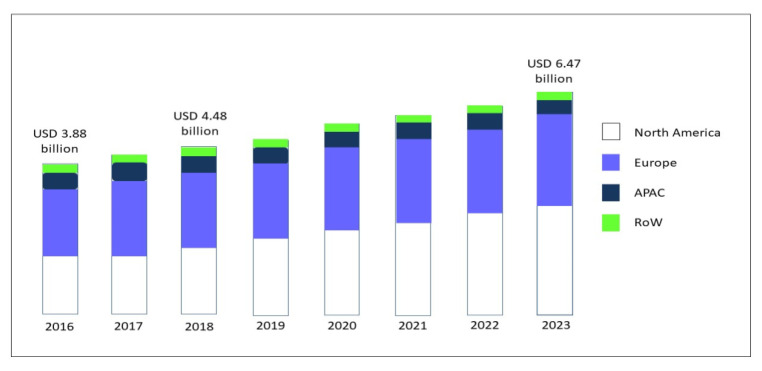
- Research and Markets . Global Gluten-Free Food Market (2018–2023) Report. Research and Markets; Dublin, Ireland: 2019. ID: 4856374.
-
- Kim H.S., Patel K.G., Orosz E., Kothari N., Demyen M.F., Pyrsopoulos N., Ahlawat S.K. Time Trends in the Prevalence of Celiac Disease and Gluten-Free Diet in the US Population. Results From the National Health and Nutrition Examination Surveys 2009–2014. JAMA Intern. Med. 2016;176:1716–1717. doi: 10.1001/jamainternmed.2016.5254. - DOI - PubMed
-
- NPD Group Percentage of U.S. Adults Trying to Cut Down or Avoid Gluten in Their Diets Reaches New High in 2013. [(accessed on 27 June 2020)]; Available online: http://www.npd.com/wps/portal/npd/us/news/press-releases/percentage-of-u....
-
- Gatti S., Lionetti E., Balanzoni L., Verma A.K., Galeazzi T., Gesuita R., Scattolo N., Cinquetti M., Fasano A., Catassi C. Celiac Screening Team. Increased Prevalence of Celiac Disease in School-age Children in Italy. Clin. Gastroenterol. Hepatol. 2020;18:596–603. doi: 10.1016/j.cgh.2019.06.013. - DOI - PubMed
Publication types
MeSH terms
Substances
LinkOut - more resources
Full Text Sources
Medical
