


How to use and assess qualitative research methods
- PMID: 33324920
- PMCID: PMC7650082
- DOI: 10.1186/s42466-020-00059-z
How to use and assess qualitative research methods
Abstract
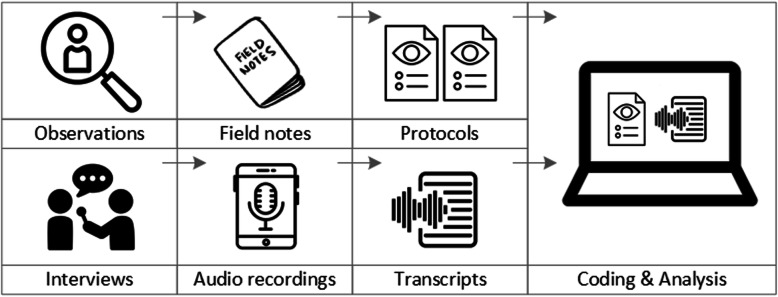
This paper aims to provide an overview of the use and assessment of qualitative research methods in the health sciences. Qualitative research can be defined as the study of the nature of phenomena and is especially appropriate for answering questions of why something is (not) observed, assessing complex multi-component interventions, and focussing on intervention improvement. The most common methods of data collection are document study, (non-) participant observations, semi-structured interviews and focus groups. For data analysis, field-notes and audio-recordings are transcribed into protocols and transcripts, and coded using qualitative data management software. Criteria such as checklists, reflexivity, sampling strategies, piloting, co-coding, member-checking and stakeholder involvement can be used to enhance and assess the quality of the research conducted. Using qualitative in addition to quantitative designs will equip us with better tools to address a greater range of research problems, and to fill in blind spots in current neurological research and practice.
Keywords: Mixed methods; Qualitative research; Quality assessment.
© The Author(s) 2020.
Conflict of interest statement
Competing interestsThe authors declare no competing interests.
Figures



References
-
- Philipsen H, Vernooij-Dassen M. Kwalitatief onderzoek: nuttig, onmisbaar en uitdagend. In: PLBJ L, TCo H, editors. Kwalitatief onderzoek: Praktische methoden voor de medische praktijk. Houten: Bohn Stafleu van Loghum; 2007. pp. 5–12.
-
- Punch, K. F. (2013). Introduction to social research: Quantitative and qualitative approaches. London: Sage.
-
- Howick J, Chalmers I, Glasziou, P., Greenhalgh, T., Heneghan, C., Liberati, A., Moschetti, I., Phillips, B., & Thornton, H. (2011). The 2011 Oxford CEBM evidence levels of evidence (introductory document). Oxford Center for Evidence Based Medicine. https://www.cebm.net/2011/06/2011-oxford-cebm-levels-evidence-introducto....
Publication types
LinkOut - more resources
Full Text Sources
Medical