


Advanced analytics and artificial intelligence in gastrointestinal cancer: a systematic review of radiomics predicting response to treatment
- PMID: 33326049
- PMCID: PMC8113210
- DOI: 10.1007/s00259-020-05142-w
Advanced analytics and artificial intelligence in gastrointestinal cancer: a systematic review of radiomics predicting response to treatment
Abstract
Purpose: Advanced medical image analytics is increasingly used to predict clinical outcome in patients diagnosed with gastrointestinal tumors. This review provides an overview on the value of radiomics in predicting response to treatment in patients with gastrointestinal tumors.
Methods: A systematic review was conducted, according to PRISMA guidelines. The protocol was prospectively registered (PROSPERO: CRD42019128408). PubMed, Embase, and Cochrane databases were searched. Original studies reporting on the value of radiomics in predicting response to treatment in patients with a gastrointestinal tumor were included. A narrative synthesis of results was conducted. Results were stratified by tumor type. Quality assessment of included studies was performed, according to the radiomics quality score.
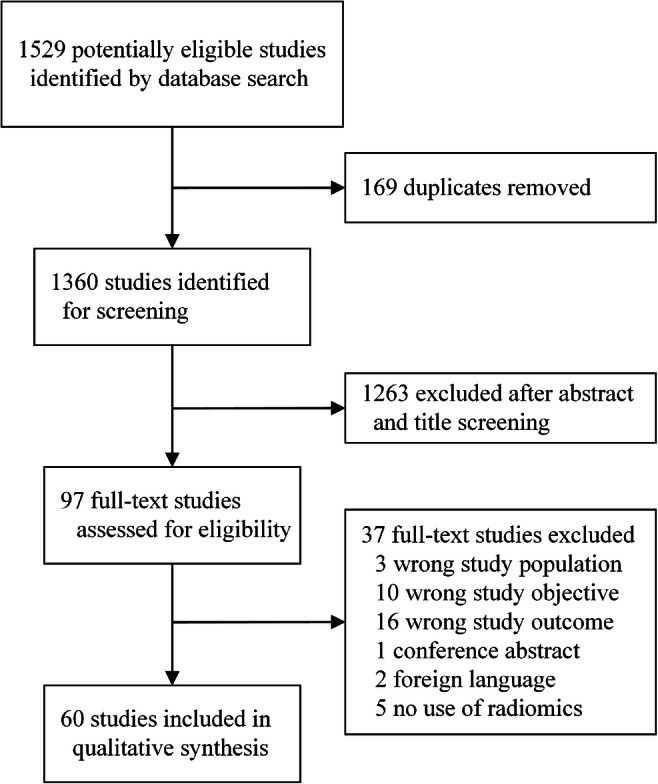
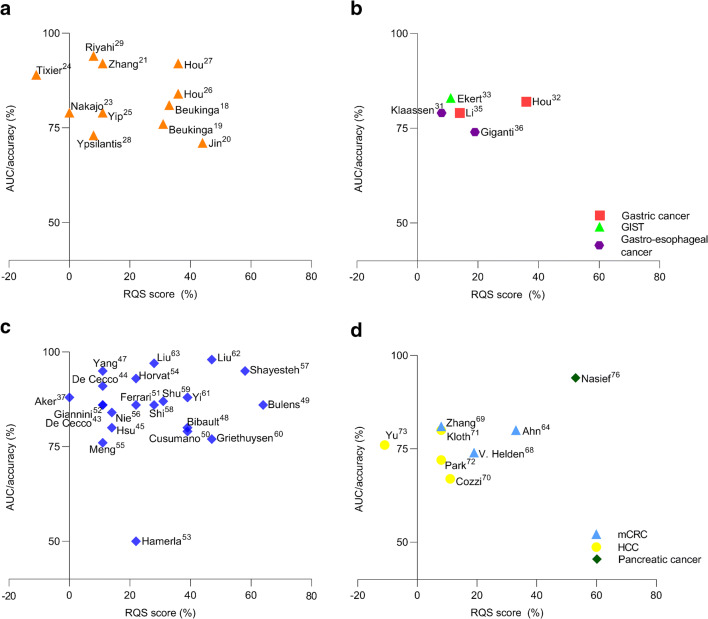
Results: The comprehensive literature search identified 1360 unique studies, of which 60 articles were included for analysis. In 37 studies, radiomics models and individual radiomic features showed good predictive performance for response to treatment (area under the curve or accuracy > 0.75). Various strategies to construct predictive models were used. Internal validation of predictive models was often performed, while the majority of studies lacked external validation. None of the studies reported predictive models implemented in clinical practice.
Conclusion: Radiomics is increasingly used to predict response to treatment in patients suffering from gastrointestinal cancer. This review demonstrates its great potential to help predict response to treatment and improve patient selection and early adjustment of treatment strategy in a non-invasive manner.
Keywords: Advanced analytics; Artificial intelligence; Diagnostic imaging; Gastrointestinal cancer; Radiomics; Treatment response.
Conflict of interest statement
The authors declare that they have no conflict of interest.
Figures
References
-
- Haisley KR, Hart KD, Nabavizadeh N, Bensch KG, Vaccaro GM, Thomas CR, Jr, et al. Neoadjuvant chemoradiotherapy with concurrent cisplatin/5-fluorouracil is associated with increased pathologic complete response and improved survival compared to carboplatin/paclitaxel in patients with locally advanced esophageal cancer. Dis Esophagus. 2017;30(7):1–7. doi: 10.1093/dote/dox015. - DOI - PubMed
Publication types
MeSH terms
LinkOut - more resources
Full Text Sources
