Review
. 2021 Feb;41(2):564-584.
doi: 10.1161/ATVBAHA.120.305565. Epub 2020 Dec 17.

Lysolipids in Vascular Development, Biology, and Disease

Affiliations
Review

Lysolipids in Vascular Development, Biology, and Disease

Eric Engelbrecht et al. Arterioscler Thromb Vasc Biol. 2021 Feb.

Abstract

Membrane phospholipid metabolism forms lysophospholipids, which possess unique biochemical and biophysical properties that influence membrane structure and dynamics. However, lysophospholipids also function as ligands for G-protein-coupled receptors that influence embryonic development, postnatal physiology, and disease. The 2 most well-studied species-lysophosphatidic acid and S1P (sphingosine 1-phosphate)-are particularly relevant to vascular development, physiology, and cardiovascular diseases. This review summarizes the role of lysophosphatidic acid and S1P in vascular developmental processes, endothelial cell biology, and their roles in cardiovascular disease processes. In addition, we also point out the apparent connections between lysophospholipid biology and the Wnt (int/wingless family) pathway, an evolutionarily conserved fundamental developmental signaling system. The discovery that components of the lysophospholipid signaling system are key genetic determinants of cardiovascular disease has warranted current and future research in this field. As pharmacological approaches to modulate lysophospholipid signaling have entered the clinical sphere, new findings in this field promise to influence novel therapeutic strategies in cardiovascular diseases.

Keywords: cardiovascular diseases; embryonic development; endothelial cells; lysophospholipids; sphingosine.


Figures
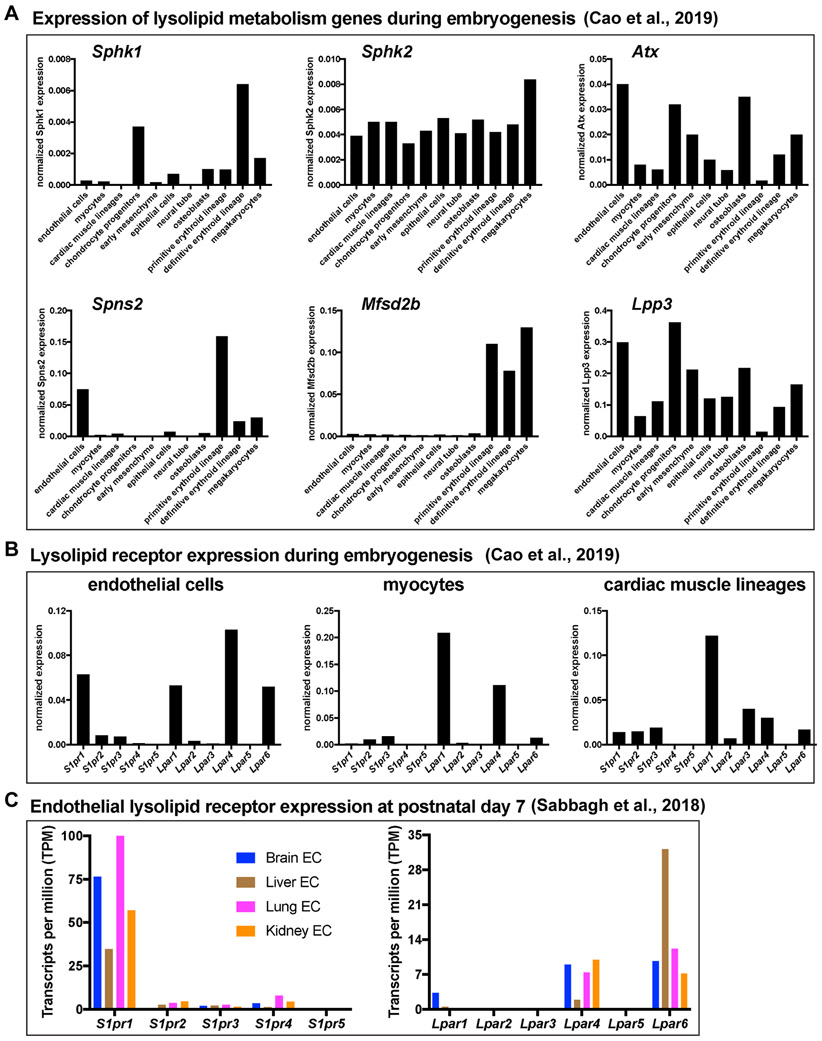
Figure 1.
Figure 1.. Expression of lysolipid metabolic and signaling genes during embryogenesis and in postnatal endothelium.
(A-B) Expression of genes encoding lysolipid metabolic enzymes or transporters (Sphk1, Sphk2, Lpp3, Mfsd2b, Spns2) (A) or receptors (S1pr1-5, Lpar1-6) (B) in selected cell types and embryonic structures. Single-cell (sc)RNA-seq data are from a publicly available database (https://oncoscape.v3.sttrcancer.org/atlas.gs.washington.edu.mouse.rna/landing) provided by the authors . (C) Expression of S1P and LPA receptors from RNA-seq of freshly-isolated EC from postnatal day 7 mouse brain, liver, lung, or kidney .
Figure 2.
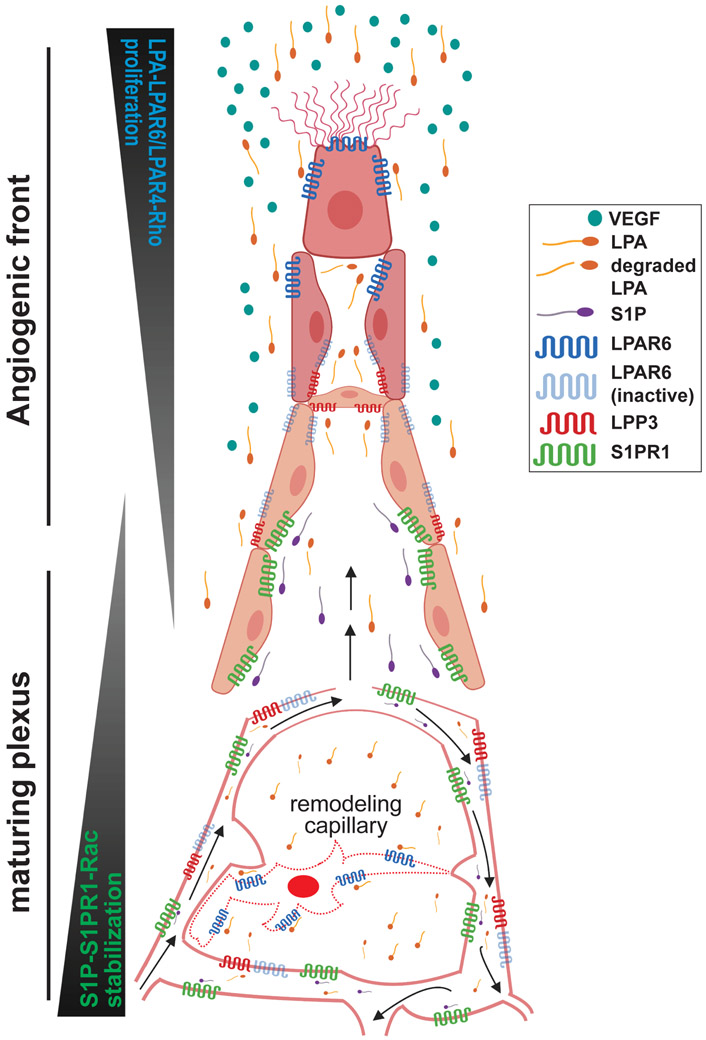
Figure 2.. Schema of LPA and S1P signaling during retinal sprouting angiogenesis.
The angiogenic front of a developing vascular plexus, composed of ~6-10 “rows” of endothelial cells (EC), is surrounded by high levels of VEGF . Here, LPA activates EC LPAR6 (and possibly LPAR4), promoting proliferation and migration downstream of Gα12/13 and Rho family GTPases in cooperation with VEGF receptor signaling. S1PR1 expression is relatively low in these EC. Cell-cell contacts are stronger in more mature vascular regions and are speculated to be enriched with active LPP3, which degrades LPA and limits EC LPAR signaling. Meanwhile, as these maturing vascular regions acquire S1P from flowing blood (black arrows), EC express high levels of S1PR1. S1P-S1PR1 signaling contributes to vascular stability (e.g. stabilization of adherens junctions) and permits organotypic vascular specialization in the retina. These S1PR1-mediated events are likely downstream of RAC1 activation. Growing vascular networks undergo remodeling to optimize tissue perfusion (black arrows). We speculate that poorly perfused EC are “selected” for pruning in part because they become deficient in S1P-S1PR1 signaling. Resultant vascular instability decreases cell-cell adhesions and reduces LPP3 activity, thereby creating micro-domains of LPA that activate LPAR6 on remodeling EC to promote incorporation into well-perfused capillaries.
Figure 3.
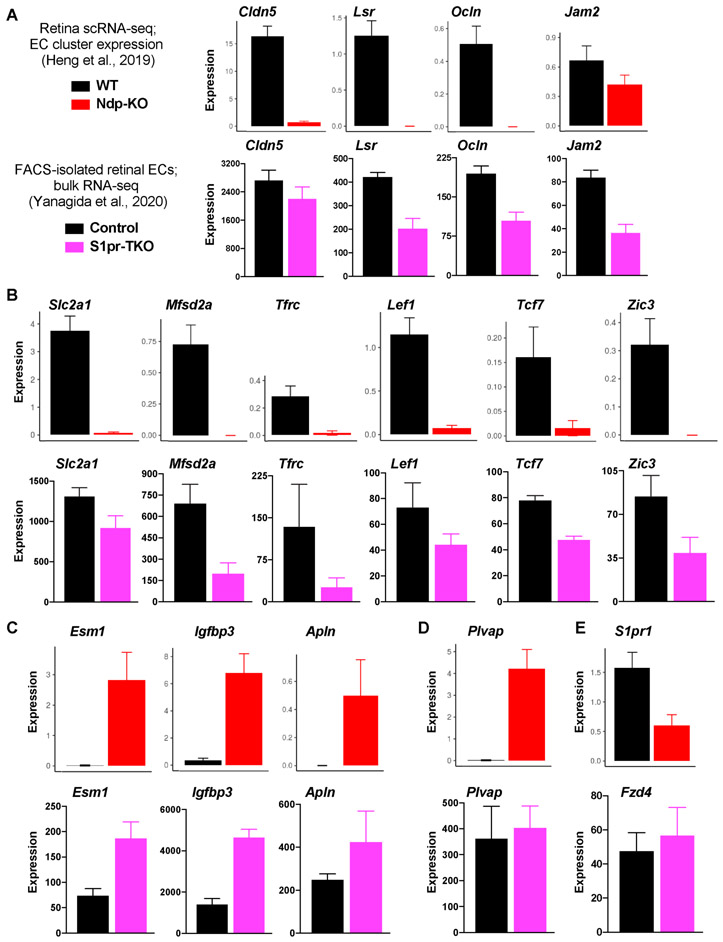
Figure 3.. Gene expression in Norrin-deficient and S1PR-deficient retinal endothelial cells.
(A-E) Expression of selected genes in Norrin knockout (Ndp-KO) and WT retinal EC were acquired from https://jacobheng.shinyapps.io/cnshypoxia/ . For control and S1PR-deficient retinal EC, data were acquired from GEO accession GSE141440. (A-B) Expression of neurovascular-enriched transcripts that encode tight junction components (A), transporters or transcription factors (B). (C) Expression of genes that are enriched in tip cells. (D) Expression of Plvap. (E) S1pr1 or Fzd4 expression in Ndp-KO or S1PR-deficient retinal EC, respectively.

References

    1. Gerhardt H, Golding M, Fruttiger M, Ruhrberg C, Lundkvist A, Abramsson A, Jeltsch M, Mitchell C, Alitalo K, Shima D, Betsholtz C. Vegf guides angiogenic sprouting utilizing endothelial tip cell filopodia. J Cell Biol. 2003;161:1163–1177 - PMC - PubMed
    1. Rattner A, Williams J, Nathans J. Roles of hifs and vegf in angiogenesis in the retina and brain. J Clin Invest. 2019;130:3807–3820 - PMC - PubMed
    1. Kaur H, Carvalho J, Looso M, Singh P, Chennupati R, Preussner J, Gunther S, Albarran-Juarez J, Tischner D, Classen S, Offermanns S, Wettschureck N. Single-cell profiling reveals heterogeneity and functional patterning of gpcr expression in the vascular system. Nat Commun. 2017;8:15700. - PMC - PubMed
    1. Kalucka J, de Rooij L, Goveia J, et al. Single-cell transcriptome atlas of murine endothelial cells. Cell. 2020;180:764–779 e720 - PubMed
    1. Vanlandewijck M, He L, Mae MA, et al. A molecular atlas of cell types and zonation in the brain vasculature. Nature. 2018;554:475–480 - PubMed

Publication types

MeSH terms