


Cellular senescence in ageing: from mechanisms to therapeutic opportunities
- PMID: 33328614
- PMCID: PMC8344376
- DOI: 10.1038/s41580-020-00314-w
Cellular senescence in ageing: from mechanisms to therapeutic opportunities
Abstract
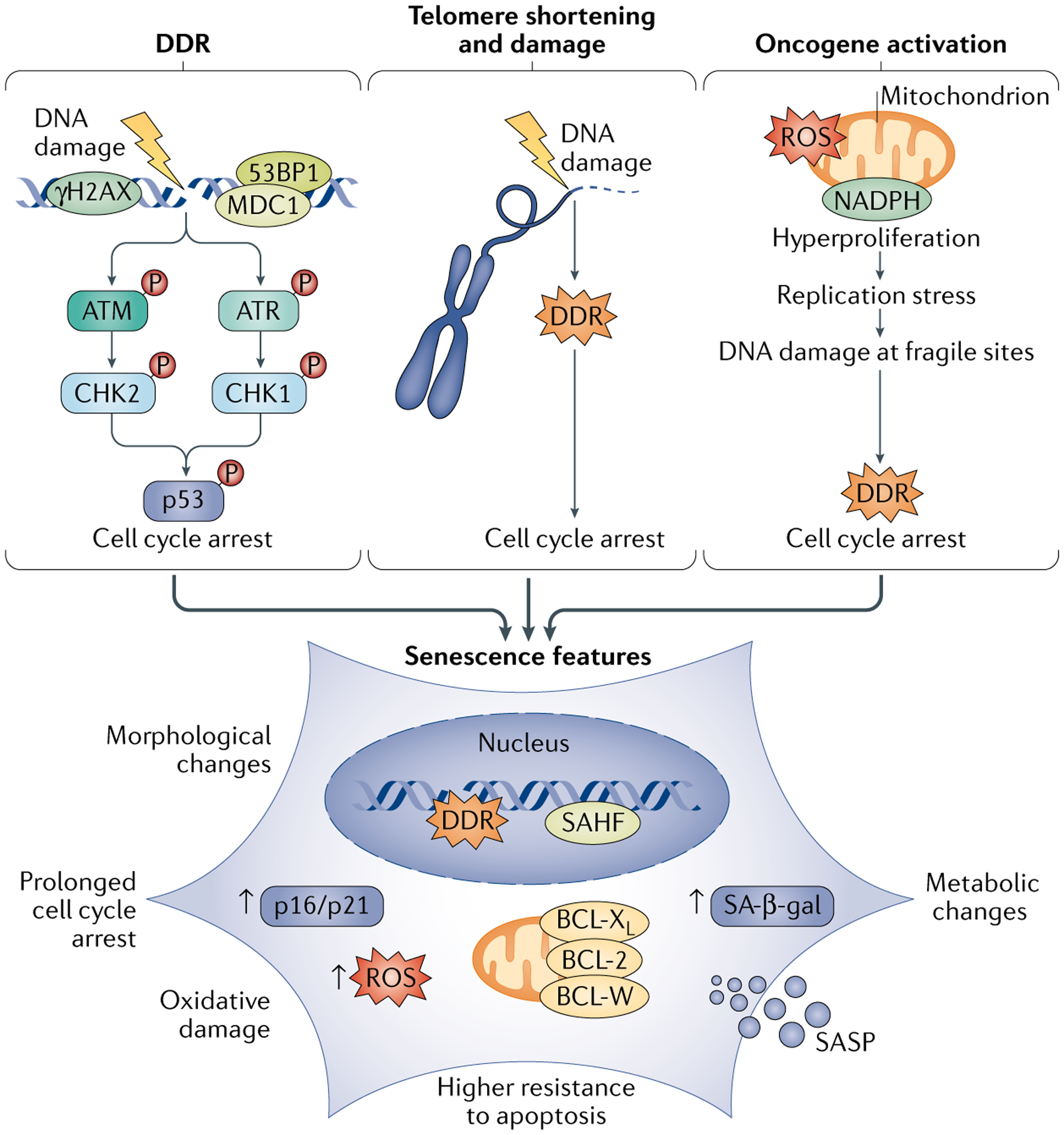
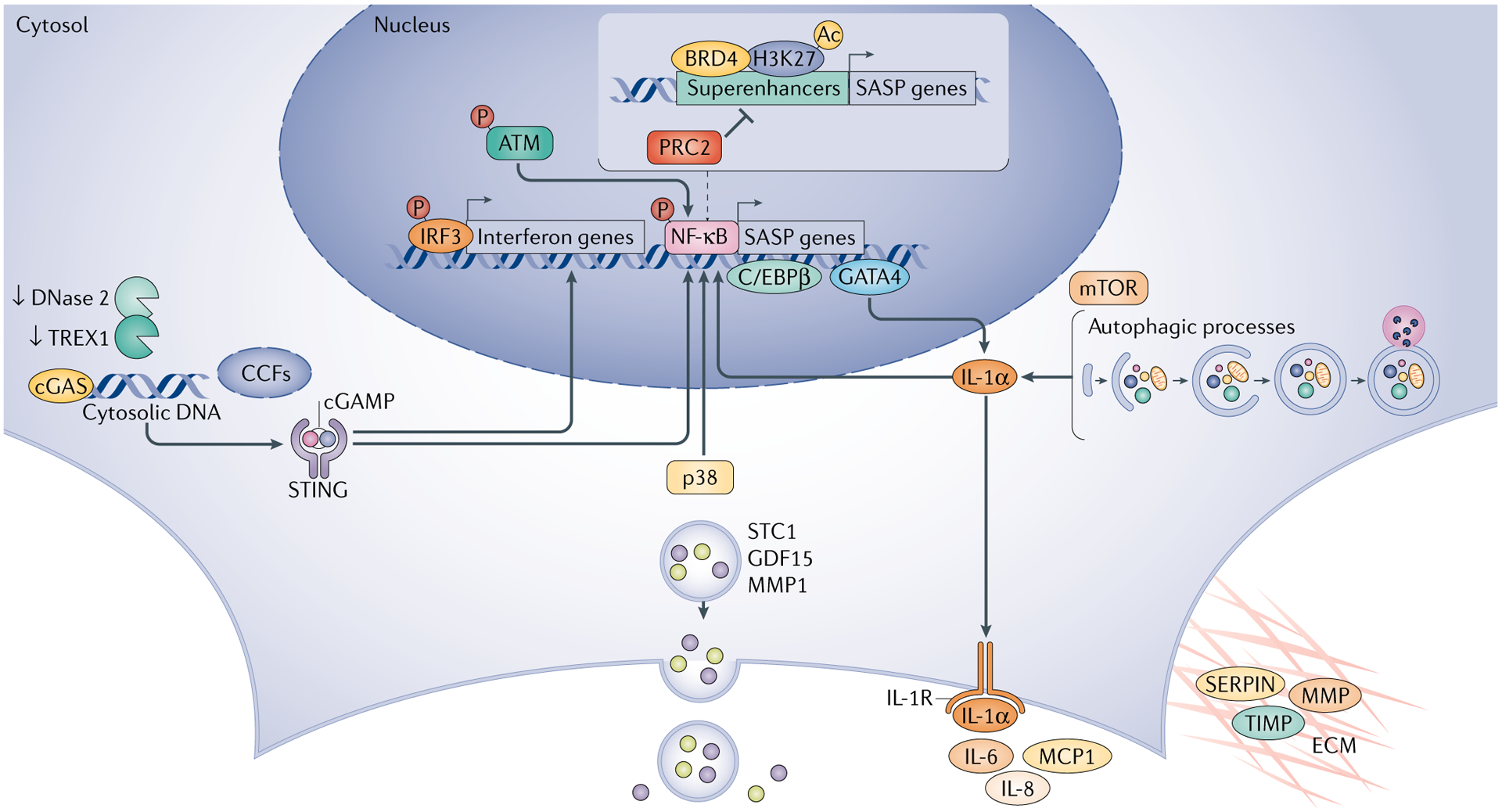
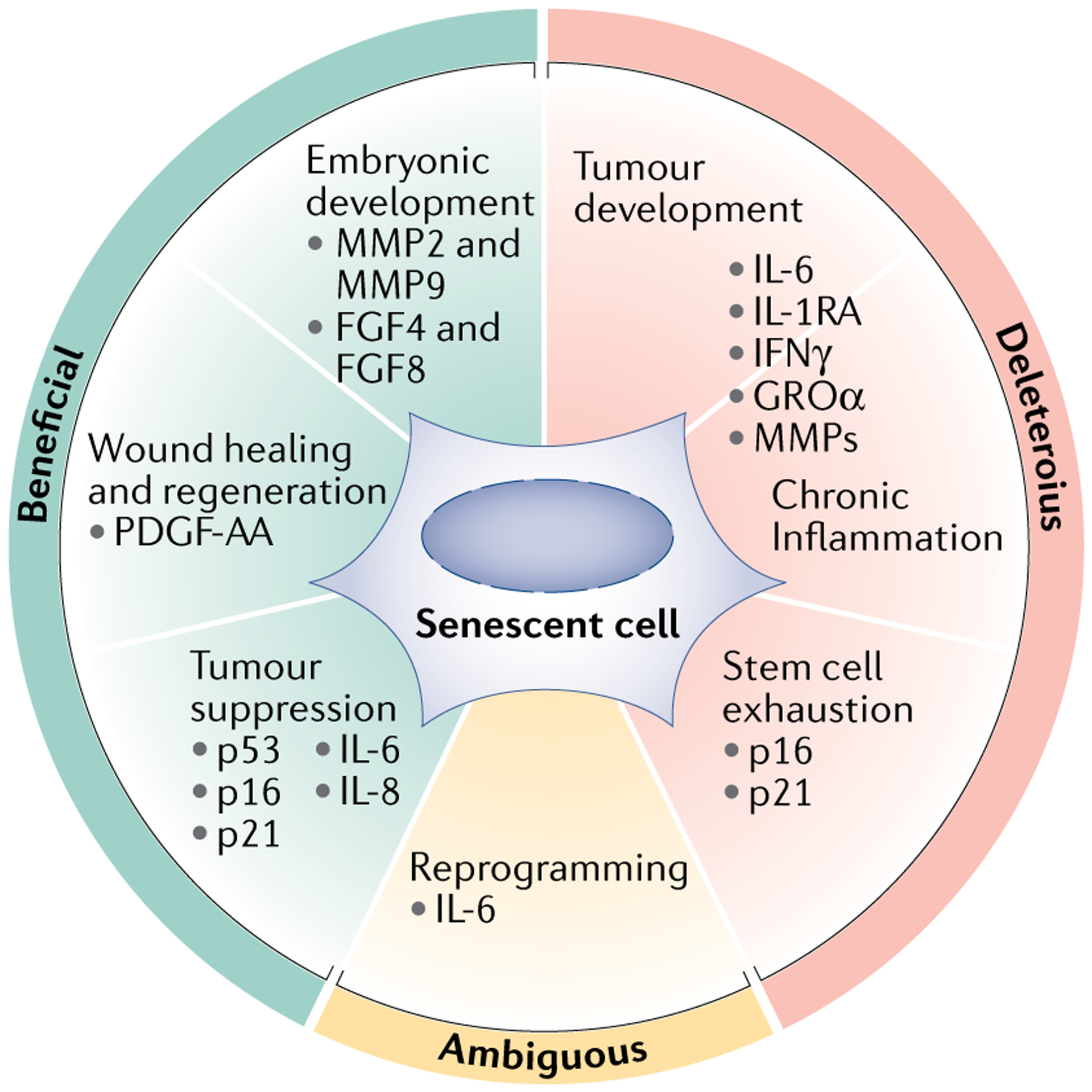
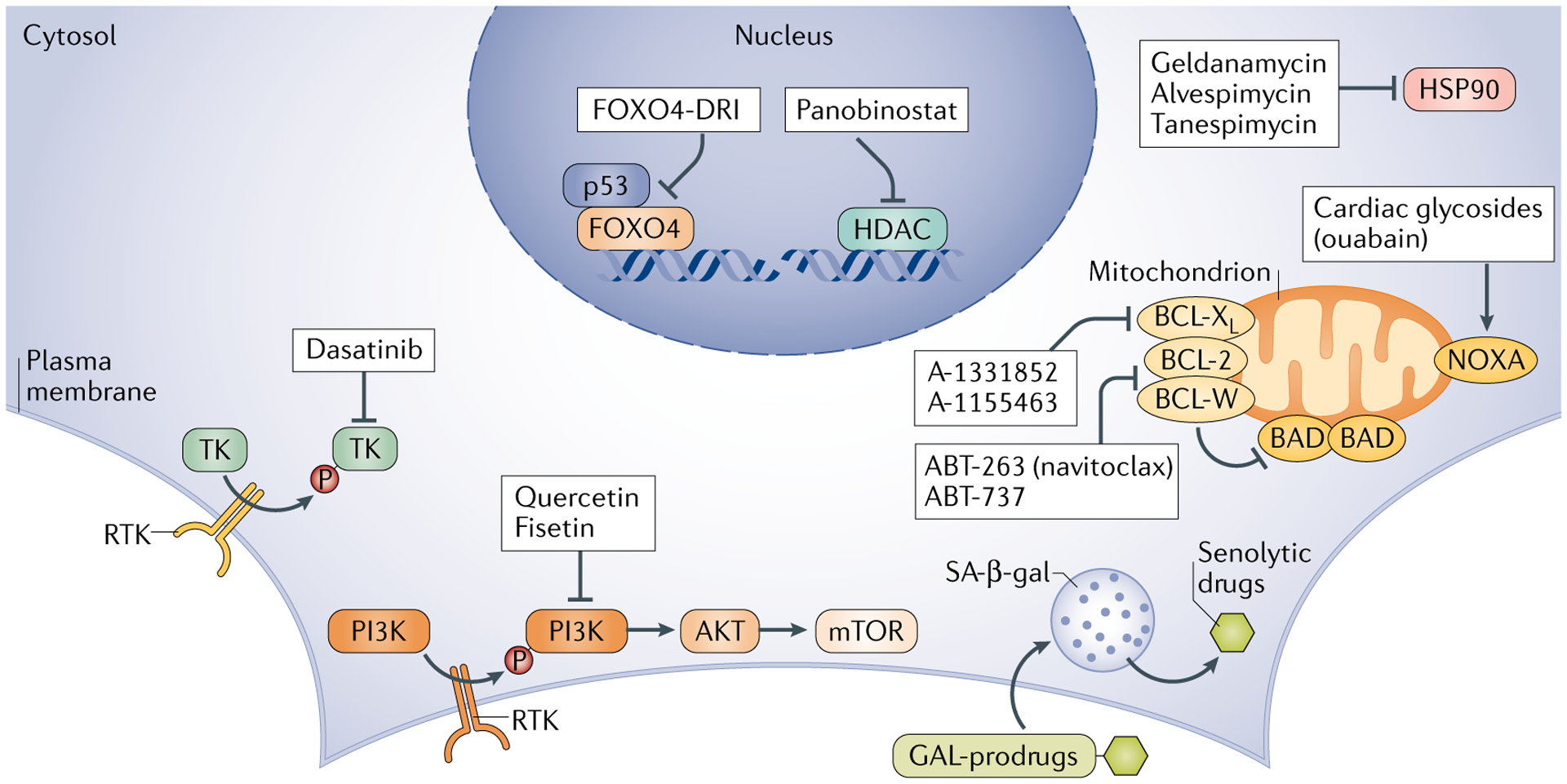
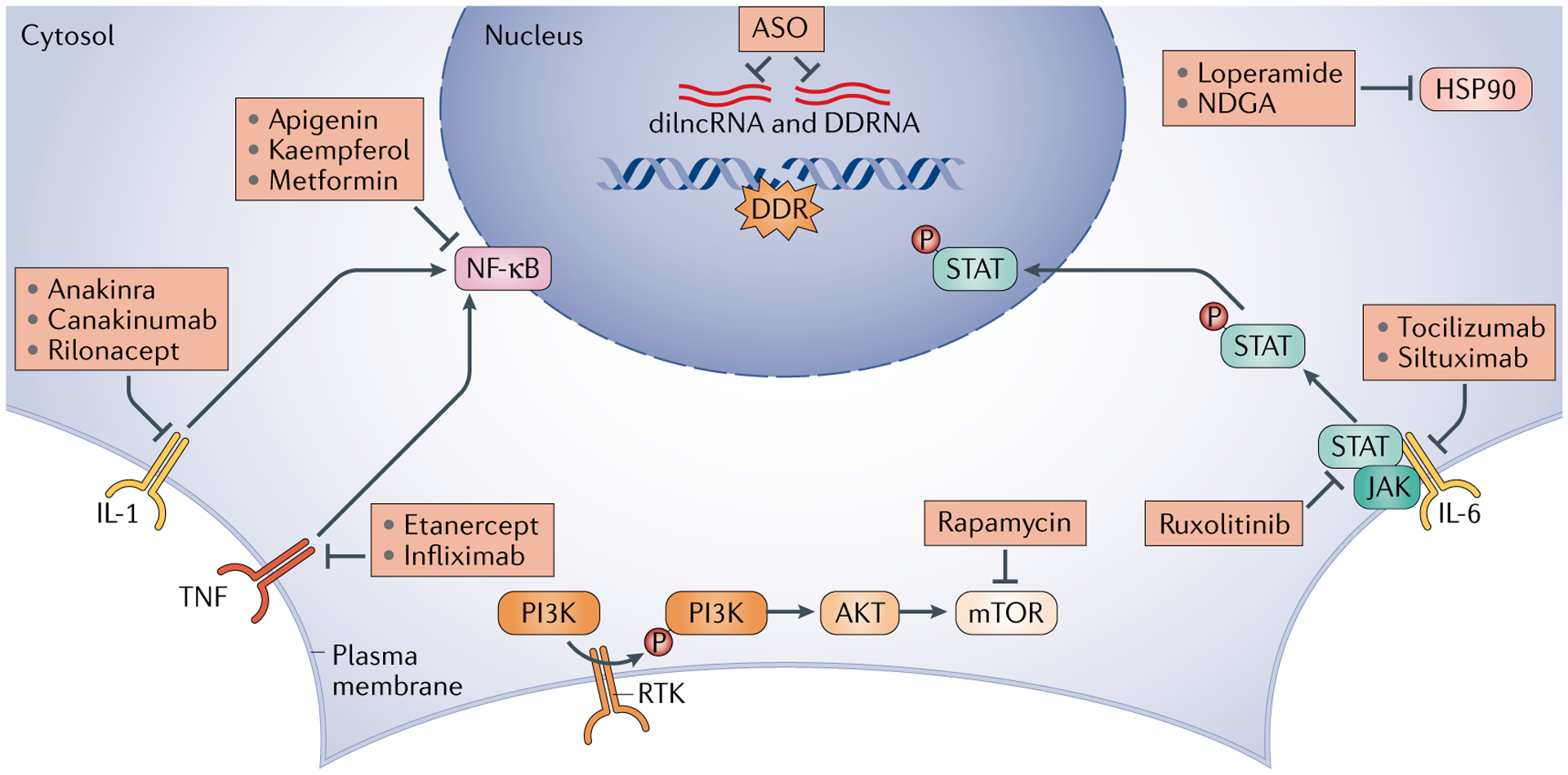
Cellular senescence, first described in vitro in 1961, has become a focus for biotech companies that target it to ameliorate a variety of human conditions. Eminently characterized by a permanent proliferation arrest, cellular senescence occurs in response to endogenous and exogenous stresses, including telomere dysfunction, oncogene activation and persistent DNA damage. Cellular senescence can also be a controlled programme occurring in diverse biological processes, including embryonic development. Senescent cell extrinsic activities, broadly related to the activation of a senescence-associated secretory phenotype, amplify the impact of cell-intrinsic proliferative arrest and contribute to impaired tissue regeneration, chronic age-associated diseases and organismal ageing. This Review discusses the mechanisms and modulators of cellular senescence establishment and induction of a senescence-associated secretory phenotype, and provides an overview of cellular senescence as an emerging opportunity to intervene through senolytic and senomorphic therapies in ageing and ageing-associated diseases.
Conflict of interest statement
Competing interests
D.B. is a co-inventor on patent applications licensed to or filed by Unity Biotechnology, a company developing senolytic medicines, including small molecules that selectively eliminate senescent cells. Research in the Baker laboratory has been reviewed by the Mayo Clinic Conflict of Interest Review Board and is being conducted in compliance with Mayo Clinic conflict of interest policies. V.K. is a co-inventor on patent applications in the field of senolytics, some of which are licensed to Sentaur Bio. F.d’A.d.F. is among the inventors on patent applications for the use of antisense oligonucleotides to target DNA damage-induced transcripts. R.D.M. declares no competing interests.
Figures
References
-
- Hayflick L & Moorhead PS The serial cultivation of human diploid cell strains. Exp. Cell. Res 25, 585–621 (1961). - PubMed
-
- Hayflick L The limited in vitro lifetime of human diploid cell strains. Exp. Cell. Res 37, 614–636 (1965). - PubMed
-
- Serrano M, Hannon GJ & Beach D A new regulatory motif in cell-cycle control causing specific inhibition of cyclin D/CDK4. Nature 366, 704–707 (1993). - PubMed
-
- Serrano M et al. Role of the INK4a locus in tumor suppression and cell mortality. Cell 85, 27–37 (1996). - PubMed
Publication types
MeSH terms
Grants and funding
LinkOut - more resources
Full Text Sources
Other Literature Sources
Medical
