


Changes in evidence for studies assessing interventions for COVID-19 reported in preprints: meta-research study
- PMID: 33334338
- PMCID: PMC7745199
- DOI: 10.1186/s12916-020-01880-8
Changes in evidence for studies assessing interventions for COVID-19 reported in preprints: meta-research study
Abstract
Background: The increasing use of preprints to disseminate evidence on the effect of interventions for the coronavirus disease 2019 (COVID-19) can lead to multiple evidence sources for a single study, which may differ in the reported evidence. We aim to describe the proportion of evidence on the effect of interventions for COVID-19 from preprints and journal articles and map changes in evidence between and within different sources reporting on the same study.
Methods: Meta-research study. We screened the Cochrane living systematic review and network meta-analysis (COVID-NMA) database to identify all preprints and journal articles on all studies assessing interventions for COVID-19 published up to 15 August 2020. We compared all evidence sources (i.e., preprint and associated journal article) and the first and latest versions of preprints for each study to identify changes in two evidence components: study results (e.g., numeric change in hazard ratio, odds ratio, event rate, or change in p value > or < 0.05 in any outcome) and abstract conclusions (classified as positive, negative or neutral regarding the intervention effect, and as reporting uncertainty in the findings or not). Changes in study results were further classified as important changes if they (1) represented a change in any effect estimate by ≥ 10% and/or (2) led to a change in the p value crossing the threshold of 0.05.
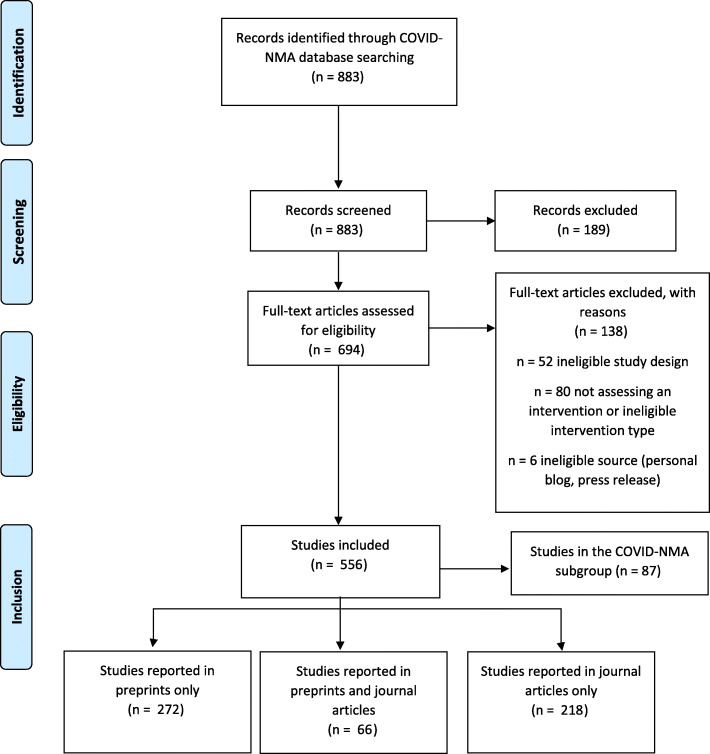
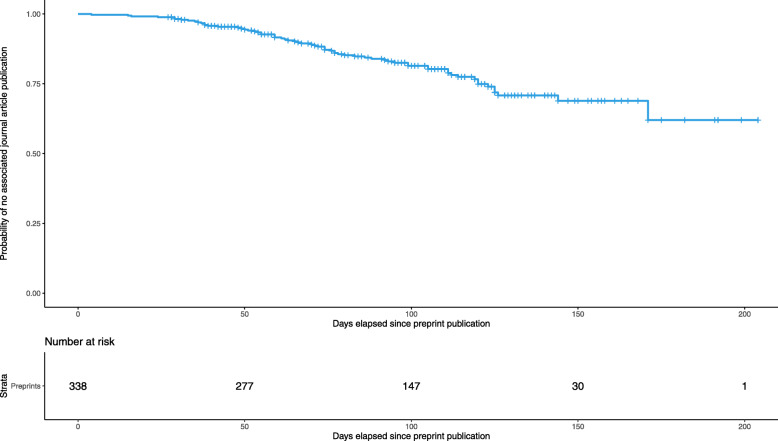
Results: We identified 556 studies. In total, 338 (61%) had been reported in a preprint: 66 (20%) of these had an associated journal article (median time to publication 76 days [interquartile range (IQR) 55-106]) and 91 (27%) had > 1 preprint version. A total of 139 studies (25% of the overall sample) were reported in multiple evidence sources or versions of the same source: for 63 (45%), there was a change in at least one evidence component between or within sources (42 [30%] had a change in study results, and in 29 [21%] the change was classified as important; 33 [24%] had a change in the abstract conclusion). For studies with both a preprint and an article, a median of 29% (IQR 14-50) of total citations were attributed to the preprint instead of the article.
Conclusions: Results on the effect of interventions for COVID-19 are often reported in multiple evidence sources or source versions for a single study. Evidence is not stable between and within evidence sources. Real-time linkage of all sources per study could help to keep systematic reviews up-to-date.
Keywords: COVID-19; Coronavirus; Meta-research; Preprint.
Conflict of interest statement
Theodora Oikonomidi received a fellowship from the doctoral network of the École des Hautes Études en Santé Publique (EHESP, Rennes, France). No other conflicts of interest are reported.
Figures

References
-
- Horbach SPJM. Pandemic publishing: medical journals drastically speed up their publication process for Covid-19. bioRxiv. Published online April 18, 2020:2020.04.18.045963. 10.1101/2020.04.18.045963.
-
- Boutron I, Chaimani A, Devane D, et al. Interventions for preventing and treating COVID-19: protocol for a living mapping of research and a living systematic review. Published online April 8. 2020. 10.5281/zenodo.3744600.
-
- Herzog C, Hook D, Konkiel S. Dimensions: bringing down barriers between scientometricians and data. Quant Sci Stud. 2020;1(1):387–395. doi: 10.1162/qss_a_00020. - DOI
Publication types
MeSH terms
LinkOut - more resources
Full Text Sources
Other Literature Sources
Medical
