


Gender variations in neonatal and early infant mortality in India and Pakistan: a secondary analysis from the Global Network Maternal Newborn Health Registry
- PMID: 33334358
- PMCID: PMC7745348
- DOI: 10.1186/s12978-020-01028-0
Gender variations in neonatal and early infant mortality in India and Pakistan: a secondary analysis from the Global Network Maternal Newborn Health Registry
Abstract
Background: To determine the gender differences in neonatal mortality, stillbirths, and perinatal mortality in south Asia using the Global Network data from the Maternal Newborn Health Registry.
Methods: This study is a secondary analysis of prospectively collected data from the three south Asian sites of the Global Network. The maternal and neonatal demographic, clinical characteristics, rates of stillbirths, early neonatal mortality (1-7 days), late neonatal mortality (8-28 days), mortality between 29-42 days and the number of infants hospitalized after birth were compared between the male and female infants.
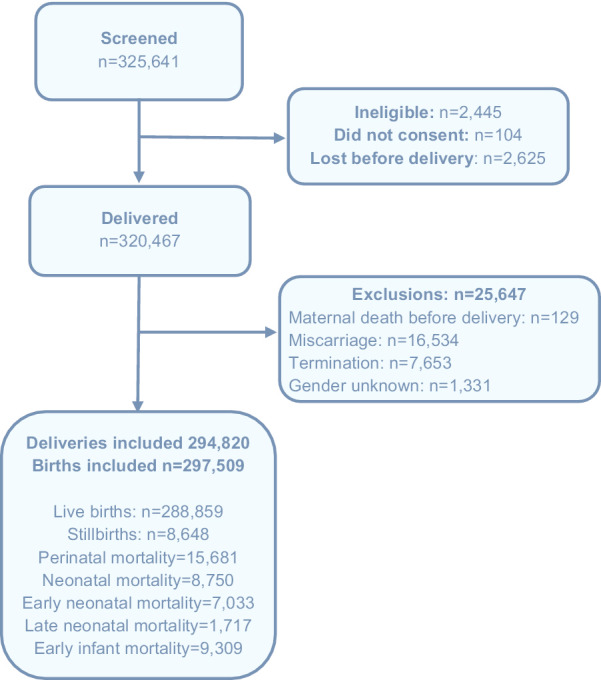
Results: Between 2010 and 2018, 297,509 births [154,790 males (52.03%) and 142,719 females (47.97%)] from two Indian sites and one Pakistani site were included in the analysis [288,859 live births (97.1%) and 8,648 stillbirths (2.9%)]. The neonatal mortality rate was significantly higher in male infants (33.2/1,000 live births) compared to their female counterparts (27.4/1,000, p < 0.001). The rates of stillbirths (31.0 vs. 26.9/1000 births) and early neonatal mortality (27.1 vs 21.6/1000 live births) were also higher in males. However, there were no significant differences in late neonatal mortality (6.3 vs. 5.9/1000 live births) and mortality between 29-42 days (2.1 vs. 1.9/1000 live births) between the two groups. More male infants were hospitalized within 42 days after birth (1.8/1000 vs. 1.3/1000 live births, p < 0.001) than females.
Conclusion: The risks of stillbirths, and early neonatal mortality were higher among male infants than their female counterparts. However, there was no gender difference in mortality after 7 days of age. Our results highlight the importance of stratifying neonatal mortality into early and late neonatal period to better understand the impact of gender on neonatal mortality. The information from this study will help in developing strategies and identifying measures that can reduce differences in sex-specific mortality.
Keywords: Early neonatal mortality; Global network; Late neonatal mortality; Low-middle income countries; Sex variation in mortality; Stillbirth.
Conflict of interest statement
The authors declare that they have no competing interests.
References
-
- Stevenson DK, Verter J, Fanaroff AA, Oh W, Ehrenkranz RA, Shankaran S, Donovan EF, Wright LL, Lemons JA, Tyson JE, et al. Sex differences in outcomes of very low birthweight infants: the newborn male disadvantage. Arch Dis Child Fetal Neonatal Ed. 2000;83:F182–185. doi: 10.1136/fn.83.3.F182. - DOI - PMC - PubMed
MeSH terms
Grants and funding
LinkOut - more resources
Full Text Sources
Medical
