Cardiovascular implications of COVID-19 versus influenza infection: a review
- PMID: 33334360
- PMCID: PMC7746485
- DOI: 10.1186/s12916-020-01816-2
Cardiovascular implications of COVID-19 versus influenza infection: a review
Abstract
Background: Due to the overlapping clinical features of coronavirus disease 2019 (COVID-19) and influenza, parallels are often drawn between the two diseases. Patients with pre-existing cardiovascular diseases (CVD) are at a higher risk for severe manifestations of both illnesses. Considering the high transmission rate of COVID-19 and with the seasonal influenza approaching in late 2020, the dual epidemics of COVID-19 and influenza pose serious cardiovascular implications. This review highlights the similarities and differences between influenza and COVID-19 and the potential risks associated with coincident pandemics.
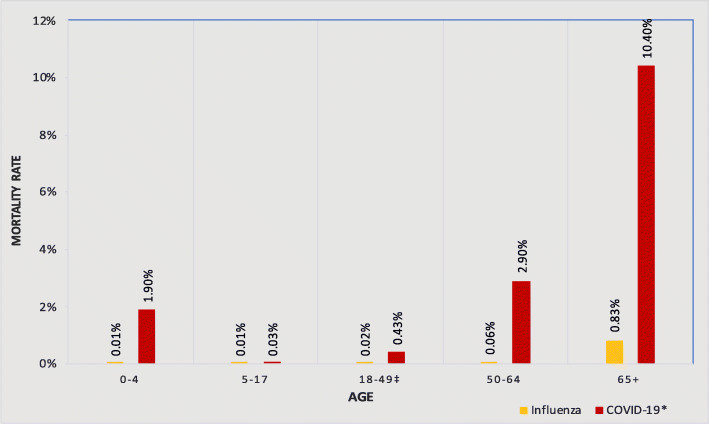
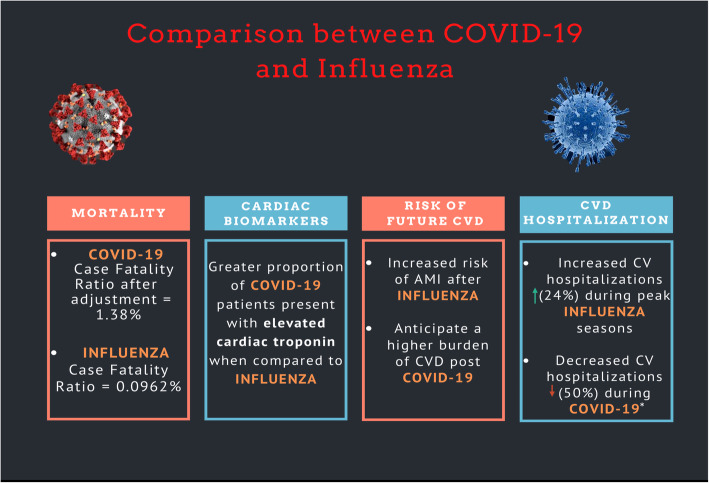
Main body: COVID-19 has a higher mortality compared to influenza with case fatality rate almost 15 times more than that of influenza. Additionally, a significantly increased risk of adverse outcomes has been noted in patients with CVD, with ~ 15 to 70% of COVID-19 related deaths having an underlying CVD. The critical care need have ranged from 5 to 79% of patients hospitalized due to COVID-19, a proportion substantially higher than with influenza. Similarly, the frequency of vascular thrombosis including deep venous thrombosis and pulmonary embolism is markedly higher in COVID-19 patients compared with influenza in which vascular complications are rarely seen. Unexpectedly, while peak influenza season is associated with increased cardiovascular hospitalizations, a decrease of ~ 50% in cardiovascular hospitalizations has been observed since the first diagnosed case of COVID-19, owing in part to deferred care.
Conclusion: In the coming months, increasing efforts towards evaluating new interventions will be vital to curb COVID-19, especially as peak influenza season approaches. Currently, not enough data exist regarding co-infection of COVID-19 with influenza or how it would progress clinically, though it may cause a significant burden on an already struggling health care system. Until an effective COVID-19 vaccination is available, high coverage of influenza vaccination should be of utmost priority.
Conflict of interest statement
The authors declare that they have no competing interests.
Figures