


Epigenetic differences at the HTR2A locus in progressive multiple sclerosis patients
- PMID: 33335118
- PMCID: PMC7747721
- DOI: 10.1038/s41598-020-78809-x
Epigenetic differences at the HTR2A locus in progressive multiple sclerosis patients
Abstract
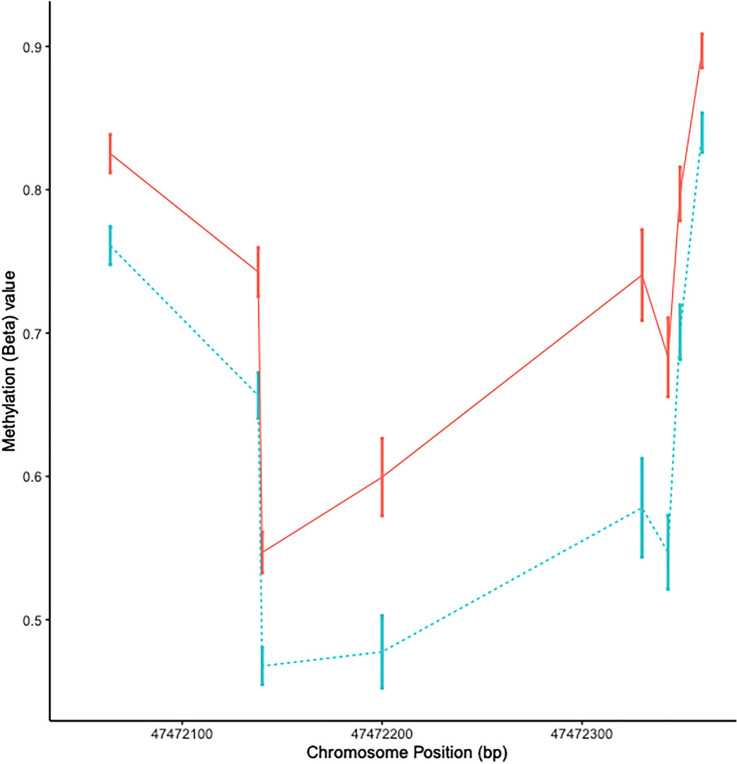
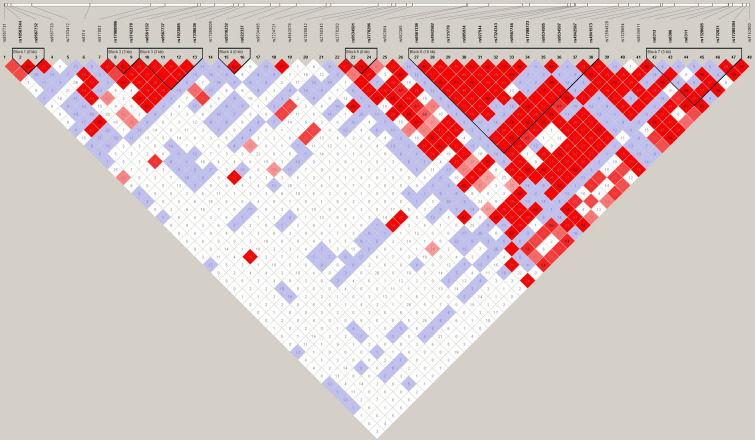
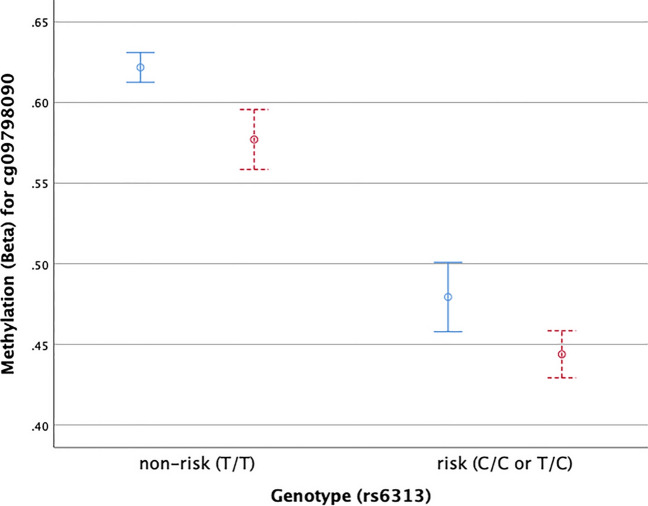
The pathology of progressive multiple sclerosis (MS) is poorly understood. We have previously assessed DNA methylation in the CD4+ T cells of relapsing-remitting (RR) MS patients compared to healthy controls and identified differentially methylated regions (DMRs) in HLA-DRB1 and RNF39. This study aimed to investigate the DNA methylation profiles of the CD4+ T cells of progressive MS patients. DNA methylation was measured in two separate case/control cohorts using the Illumina 450K/EPIC arrays and data was analysed with the Chip Analysis Methylation Pipeline (ChAMP). Single nucleotide polymorphisms (SNPs) were assessed using the Illumina Human OmniExpress24 arrays and analysed using PLINK. Expression was assessed using the Illumina HT12 array and analysed in R using a combination of Limma and Illuminaio. We identified three DMRs at HTR2A, SLC17A9 and HDAC4 that were consistent across both cohorts. The DMR at HTR2A is located within the bounds of a haplotype block; however, the DMR remained significant after accounting for SNPs in the region. No expression changes were detected in any DMRs. HTR2A is differentially methylated in progressive MS independent of genotype. This differential methylation is not evident in RRMS, making it a potential biomarker of progressive disease.
Conflict of interest statement
VEM: has received honoraria for presentations from Biogen and Merck Serono. HB: serves on steering committees and scientific advisory boards for Merck, Biogen, Novartis and Roche. Has received conference travel support from Merck. Institution has received honoraria for speaker engagements for Merck, Biogen, Roche and Novartis. Institution has received research support from Biogen, Roche, Merck, Novartis, NHMRC, MRFF, Trish Foundation, MSRA. Receives personal compensation for serving on the Brain health initiative Steering Committee. JLS’s institution receives non-directed funding as well as honoraria for presentations and membership on advisory boards from Sanofi Aventis, Biogen Idec, Bayer Health Care, Merck Serono, Teva and Novartis Australia. The other authors declare no competing interests.
Figures
References
Publication types
MeSH terms
Substances
Grants and funding
LinkOut - more resources
Full Text Sources
Medical
Research Materials
