


Impact of New UNOS Allocation Criteria on Heart Transplant Practices and Outcomes
- PMID: 33335981
- PMCID: PMC7738116
- DOI: 10.1097/TXD.0000000000001088
Impact of New UNOS Allocation Criteria on Heart Transplant Practices and Outcomes
Abstract
Background: In October 2018, a new heart allocation policy was implemented with intent of prioritizing the sickest patients and decreasing waitlist time. We examined the effects of the new policy on transplant practices and outcomes 1 year before and 1 year after the change.
Methods: Transplant recipients from October 2017 to September 2019 at our institution were identified and divided into 2 cohorts, a preallocation and postallocation criteria change. Patient demographics, clinical data, and bridging strategy were assessed. Early outcomes including ischemic time, severe primary graft dysfunction, need for renal replacement therapy, and duration of hospital stay were investigated.
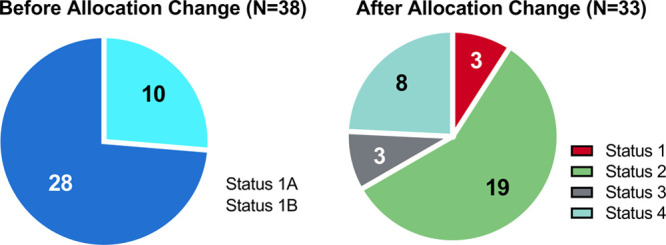
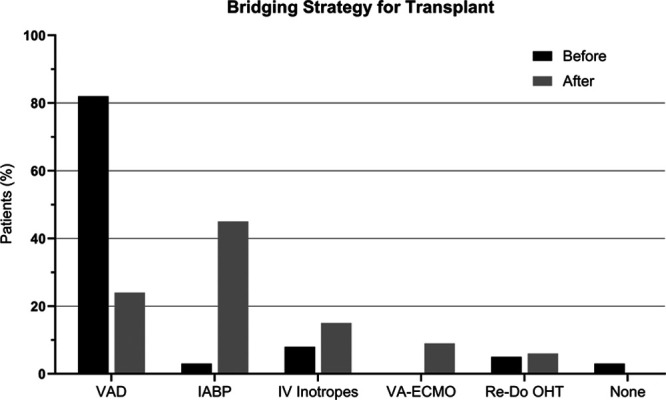
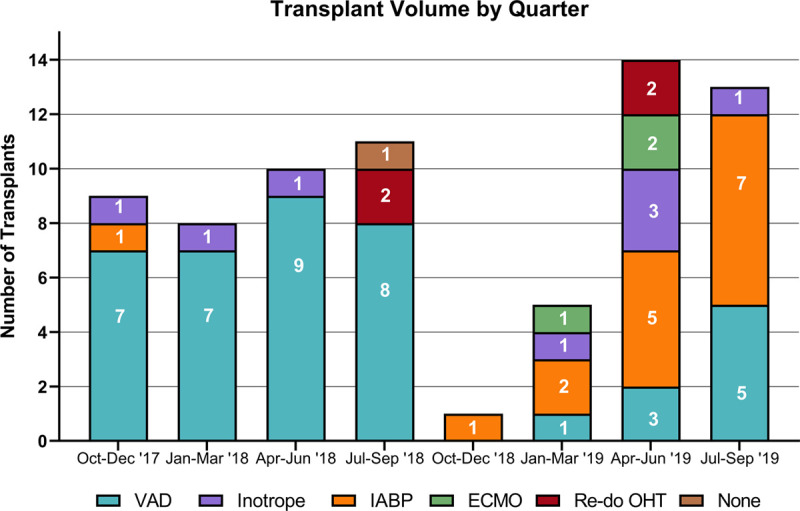
Results: In the 12 months before the change, 38 patients were transplanted as compared to 33 patients in the 12 months after the change. The average wait-time to transplant decreased after the allocation change (49 versus 313 d, P = 0.02). Patients were more likely to be bridged with an intra-aortic balloon pump (45% versus 3%) and less likely to be supported with a durable left ventricular assist device (LVAD) after the change (24% versus 82%). There was an increase in total ischemic time after the change (177 versus 117 min, P ≤ 0.01). There were no significant differences in other early posttransplant outcomes.
Conclusions: Implementation of the new allocation system for heart transplantation resulted in dramatic changes in the bridging strategy utilized at our institution. Temporary mechanical support usage increased following the change and the number of recipients supported with durable LVADs decreased. Early posttransplant outcomes appear similar.
Copyright © 2020 The Author(s). Transplantation Direct. Published by Wolters Kluwer Health, Inc.
Conflict of interest statement
J.D.S. is a speaker for CareDx. The other authors declare no conflicts of interest.
Figures
References
-
- Stevenson LW, Kormos RL, Young JB, et al. Major advantages and critical challenge for the proposed United States heart allocation system. J Heart Lung Transplant. 2016; 35:547–549. - PubMed
-
- Meyer DM, Rogers JG, Edwards LB, et al. The future direction of the adult heart allocation system in the United States. Am J Transplant. 2015; 15:44–54. - PubMed
-
- Rao P, Smith R, Khalpey Z. Potential impact of the proposed revised UNOS thoracic organ allocation system. Semin Thorac Cardiovasc Surg. 2018; 30:129–133. - PubMed
-
- Kirklin JK, Pagani FD, Kormos RL, et al. Eighth annual INTERMACS report: special focus on framing the impact of adverse events. J Heart Lung Transplant. 2017; 36:1080–1086. - PubMed
-
- Wever-Pinzon O, Drakos SG, Kfoury AG, et al. Morbidity and mortality in heart transplant candidates supported with mechanical circulatory support: is reappraisal of the current United network for organ sharing thoracic organ allocation policy justified? Circulation. 2013; 127:452–462. - PMC - PubMed
LinkOut - more resources
Full Text Sources
