


Ectonucleoside triphosphate diphosphohydrolases and ecto-5'-nucleotidase in purinergic signaling: how the field developed and where we are now
- PMID: 33336318
- PMCID: PMC7954995
- DOI: 10.1007/s11302-020-09755-6
Ectonucleoside triphosphate diphosphohydrolases and ecto-5'-nucleotidase in purinergic signaling: how the field developed and where we are now
Abstract
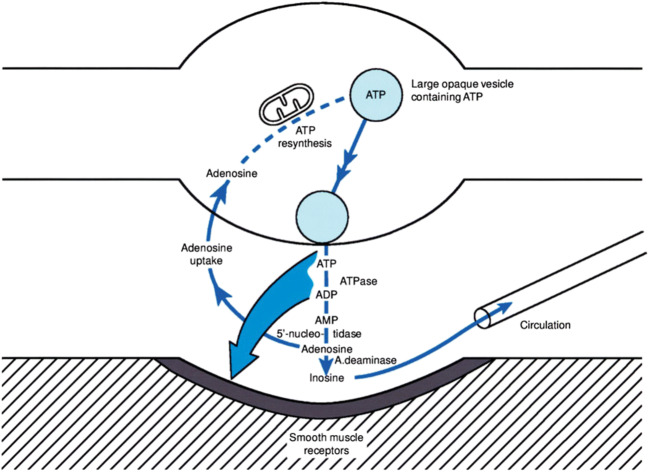
Geoffrey Burnstock will be remembered as the scientist who set up an entirely new field of intercellular communication, signaling via nucleotides. The signaling cascades involved in purinergic signaling include intracellular storage of nucleotides, nucleotide release, extracellular hydrolysis, and the effect of the released compounds or their hydrolysis products on target tissues via specific receptor systems. In this context ectonucleotidases play several roles. They inactivate released and physiologically active nucleotides, produce physiologically active hydrolysis products, and facilitate nucleoside recycling. This review briefly highlights the development of our knowledge of two types of enzymes involved in extracellular nucleotide hydrolysis and thus purinergic signaling, the ectonucleoside triphosphate diphosphohydrolases, and ecto-5'-nucleotidase.
Keywords: ATP; Adenosine; E-NTPDase; Ecto-5′-nucleotidase; Geoffrey Burnstock; History.
Conflict of interest statement
The author declares that he has no conflict of interest.
Figures


References
-
- Burnstock G. Purinergic nerves. Pharmacol Rev. 1972;24:509–581. - PubMed
-
- Zimmermann H, Mishra SK, Shukla V, Langer D, Gampe K, et al. Ecto-nucleotidases, molecular properties and functional impact. An. de la Real Acad Nac de Farm. 2007;73:537–566.
Publication types
MeSH terms
Substances
LinkOut - more resources
Full Text Sources
Molecular Biology Databases
Research Materials
