Review
. 2021 Feb:68:125-133.
doi: 10.1016/j.coi.2020.11.006. Epub 2020 Dec 15.

Inflammasome activation and evasion by bacterial pathogens

Affiliations
Review

Inflammasome activation and evasion by bacterial pathogens

Atri Ta et al. Curr Opin Immunol. 2021 Feb.

Abstract

Innate immune system plays an essential role in combating infectious diseases by recognizing invading pathogens and activating host defense response. Inflammasomes complexes are a central component of the cytosolic innate immune surveillance and are vital in host defense against bacterial pathogens. Bacterial products or pathogen-induced modifications in the intracellular environment are sensed by the inflammasome receptors that form complexes that serve as a platform for caspase-1-dependent or caspase-11-dependent induction of pyroptosis and secretion of cytokines, IL-1β and IL-18. However, several pathogenic bacteria have developed strategies to evade inflammasome activation. This review highlights the recent advances in the mechanism of inflammasome activation by bacterial pathogens and some of the bacterial evasion strategies of inflammasome activation.


Figures

Figure 1.
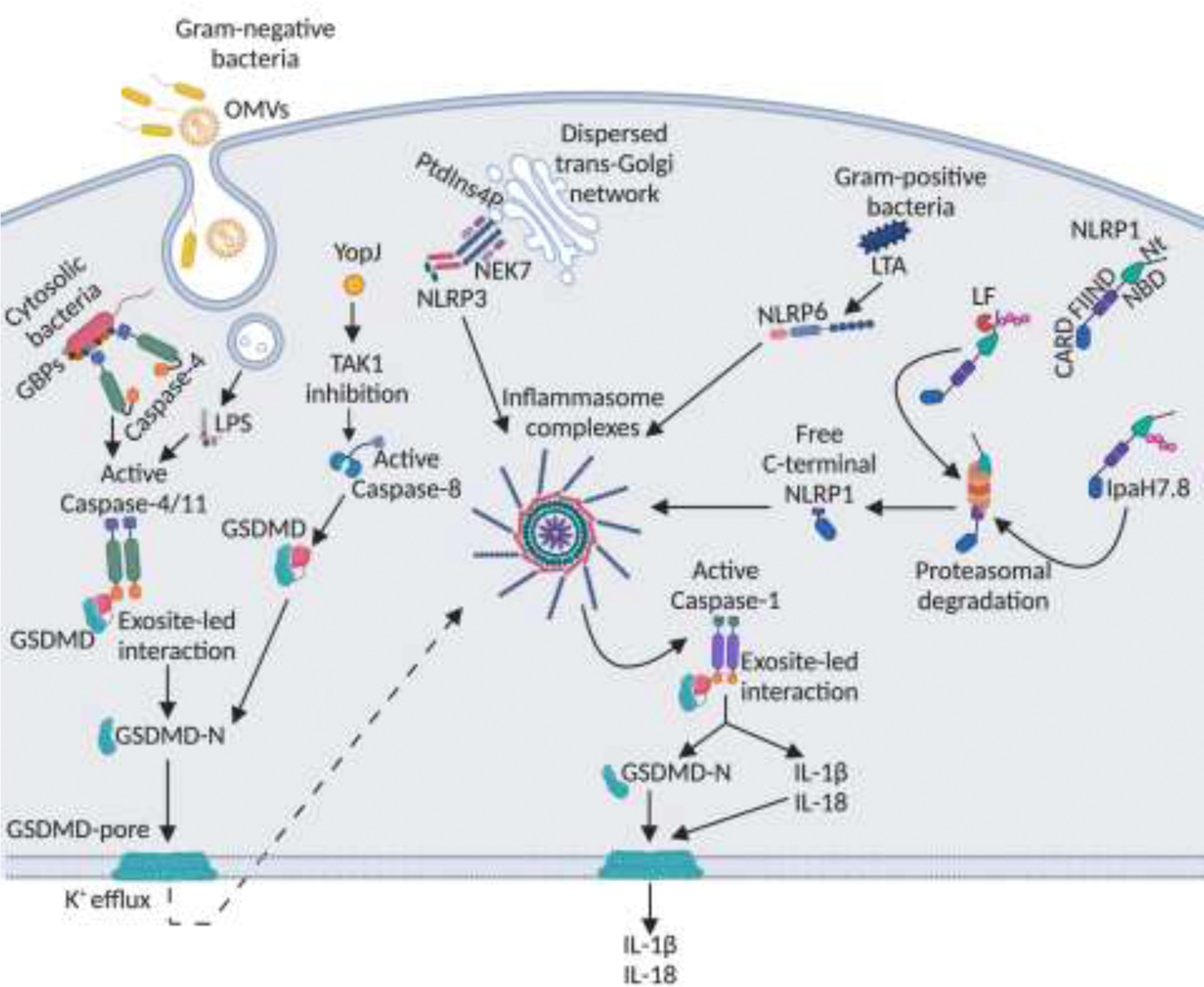
Figure 1.. Recent advances in the mechanisms of inflammasome activation by bacterial pathogens.
LPS from Gram-negative bacteria enters the cytosol from OMV-containing endosomes or directly from cytosolic bacteria. GBPs coat cytosolic bacteria and serve as a platform for caspase-4 recruitment and activation. Active caspase-4/11 interacts with the C-terminus of GSDMD in an exosite-dependent manner leading to GSDMD cleavage into N-terminal fragment, which forms pores on the plasma membrane resulting in pyroptosis. K+ efflux via GSDMD pores leads to NLRP3 activation. YopJ protein of Yersinia inhibits TAK1 leading to activation of caspase-8, which cleaves GSDMD leading to pyroptosis and NLRP3 activation. Certain NLRP3 activators trigger disassembly of trans-Golgi network exposing PtdIns4P, which recruits NLRP3 leading to its aggregation and activation. NEK7 also aids in the NLRP3 oligomerization. Lipoteichoic acid (LTA) of Gram-positive bacteria binds to NLRP6 leading to inflammasome activation. The FIIND domain of NLRP1 undergoes constitutive autoproteolysis during unstimulated conditions, however, the resulting C- and N-terminal polypeptides remain bound together. Anthrax lethal factor (LF) cleaves the N-terminal peptide leading to its ubiquitination. Shigella IpaH7.8 directly ubiquitinates the N-terminal peptide. Ubiquitinated N-terminal peptide undergoes proteasomal degradation releasing a free NLRP1 C-terminal fragment, which assembles into an inflammasome complex. Once the inflammasome complex is assembled, procaspase-1 is cleaved into active caspase-1, which cleaves pro-forms of IL-1 cytokines into their active forms. Active caspase-1 also interacts with the C-terminus of GSDMD in an exosite-dependent manner leading to GSDMD cleavage, pyroptosis, and release of IL-1 cytokines via GSDMD pores.
Figure 2.
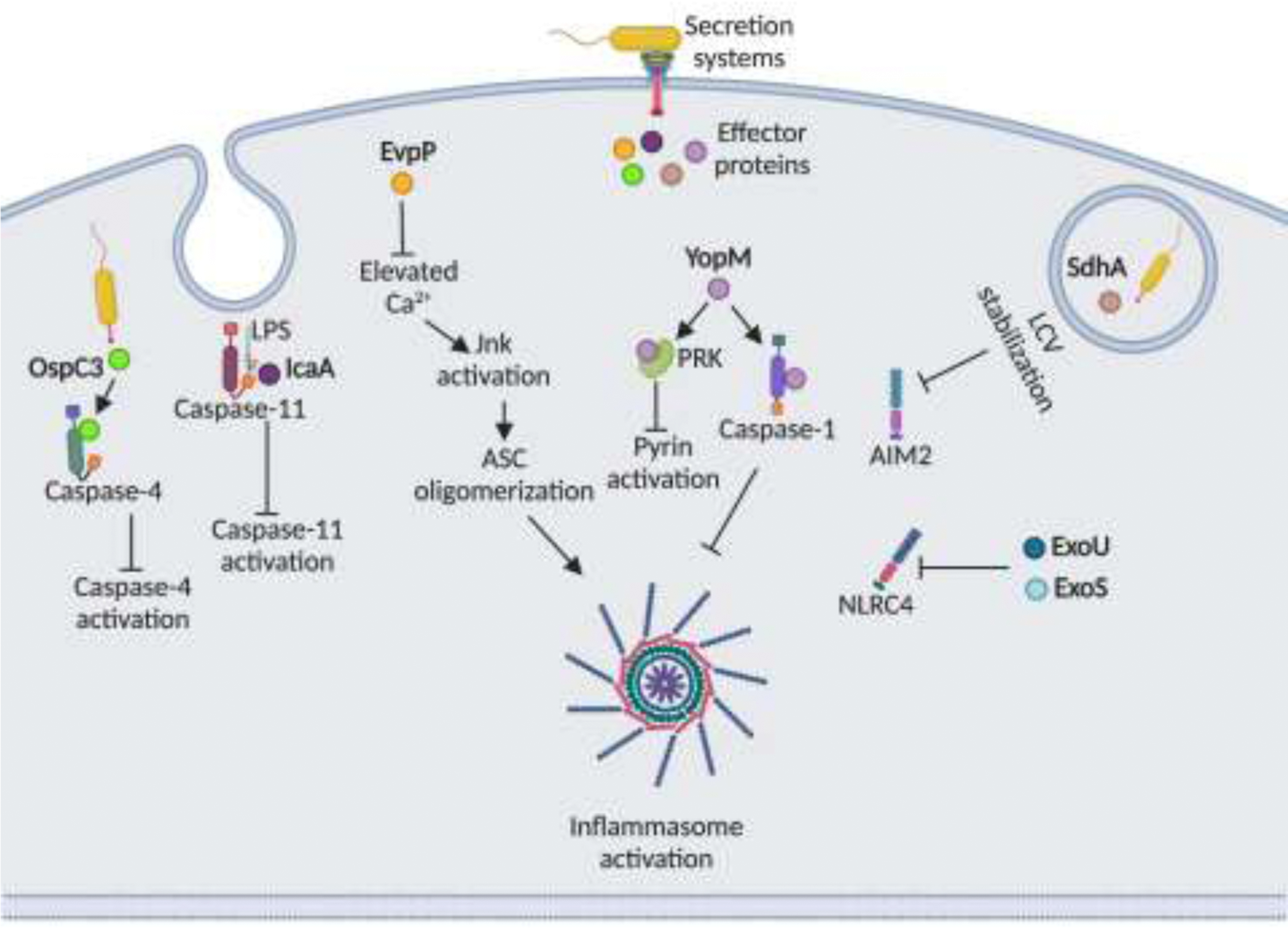
Figure 2.. Inflammasome inhibition by effector proteins of bacterial secretion systems.
Effectors of T3SS/T4SS suppress inflammasome activation by varying mechanisms. OspC3 of Shigella binds to the p19 subunit of caspase-4 and inhibits its interaction with p10 subunit thereby suppressing caspase-4 activation. IcaA of C. burnetti interferes with LPS-caspase-11 interaction to inhibit caspase-11 activation. EvpP of E. tarda blocks elevation of intracellular Ca2+ levels, which is required for JnK activation and ASC oligomerization. Yersinia YopM protein directly binds to caspase-1 and prevents caspase-1-ASC interaction. YopM also inhibits pyrin inflammasome by binding to host PRK kinases, which are required for pyrin activation. SdhA of L. pneumophila maintains the integrity of Legionella-containing vacuole (LCV) to block the escape of dsDNA into the cytosol and subsequent AIM2 activation. ExoU and ExoS exoenzymes of P. aeruginosa inhibits NLRC4 inflammasome activation.

References

    1. Fitzgerald KA, Kagan JC: Toll-like Receptors and the Control of Immunity. Cell 2020, 180:1044–1066. - PMC - PubMed
    1. Rathinam VAK, Fitzgerald KA: Inflammasome Complexes: Emerging Mechanisms and Effector Functions. Cell 2016, 165:792 800. - PMC - PubMed
    1. Martinon F, Burns K, Tschopp J: The inflammasome: a molecular platform triggering activation of inflammatory caspases and processing of proIL-beta. Molecular cell 2002, 10:417 426. - PubMed
    1. Shi J, Zhao Y, Wang K, Shi X, Wang Y, Huang H, Zhuang Y, Cai T, Wang F, Shao F: Cleavage of GSDMD by inflammatory caspases determines pyroptotic cell death. Nature 2015, 526:660–665. - PubMed
    1. Kayagaki N, Stowe IB, Lee BL, O’Rourke K, Anderson K, Warming S, Cuellar T, Haley B, Roose-Girma M, Phung QT, et al. : Caspase-11 cleaves gasdermin D for non-canonical inflammasome signalling. Nature 2015, 526:666–671. - PubMed

Publication types