


Trustworthiness and electrocortical processing of emotionally ambiguous faces in student police officers
- PMID: 33338977
- PMCID: PMC7819151
- DOI: 10.1016/j.pscychresns.2020.111237
Trustworthiness and electrocortical processing of emotionally ambiguous faces in student police officers
Abstract
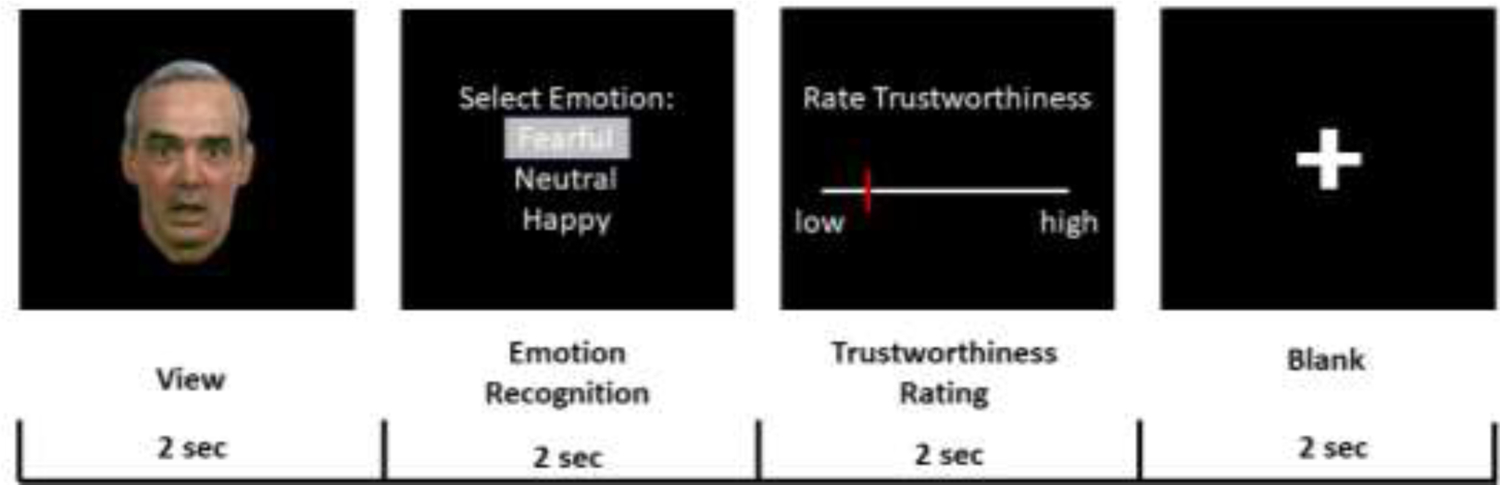
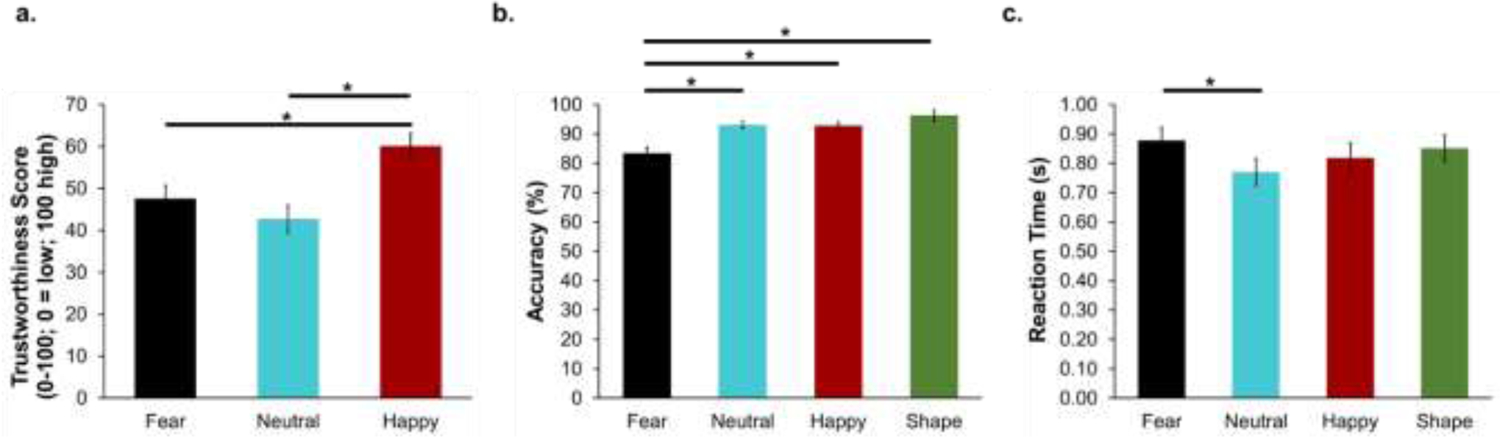
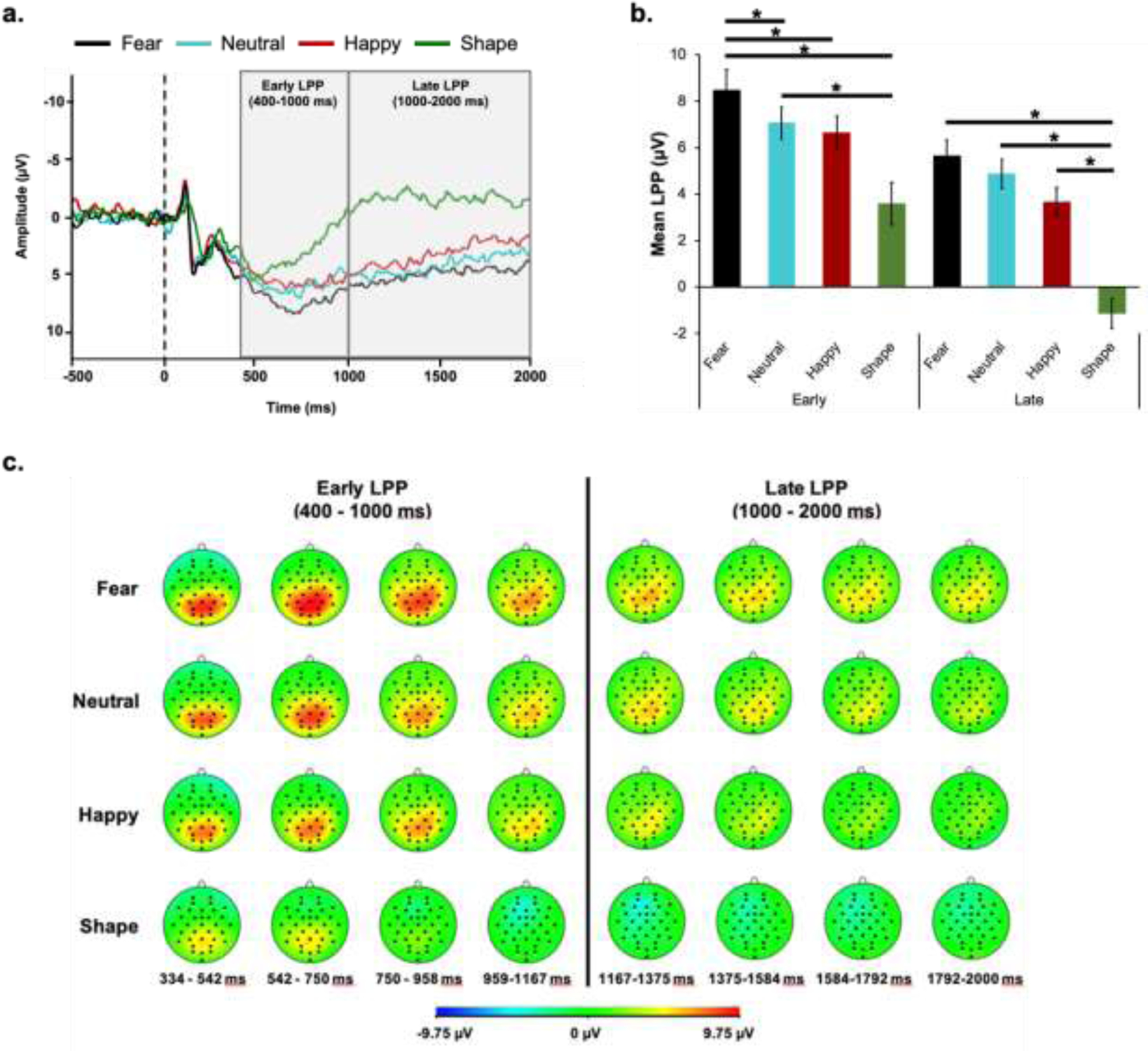
Perceptions of emotional facial expressions and trustworthiness of others guides behavior and has considerable implications for individuals who work in fields that require rapid decision making, such as law enforcement. This is particularly complicated for more ambiguous expressions, such as 'neutral' faces. We examined behavioral and electrocortical responses to facial expressions in 22 student police officers (18 males; 23.2 ± 3.63 years). Participants completed an emotional face appraisal task that involved viewing three expressions (fearful, neutral, happy) and were asked to identify the emotion and rate the trustworthiness of each face. The late positive potential (LPP), an event-related potential that tracks emotional intensity and/or salience of a stimulus, was measured during the task. Overall, participants rated neutral faces similarly to fearful faces and responded fastest to these expressions. Neutral faces also elicited a robust late LPP response that did not differ from LPP to fearful or happy faces, and there was substantial individual variation in trustworthiness ratings for neutral faces. Together, 'neutral' facial expressions elicited similar trustworthiness ratings to negatively-valenced stimuli. Brain and behavioral responses to neutral faces also varied across student officers; thus, encounters with ambiguous faces in the field may promote increased perceived threat in some officers, which may have real-world consequences (e.g., decision to shoot, risk of psychopathology).
Keywords: Emotion; Late positive potential; Police officers; Trustworthiness.
Copyright © 2020. Published by Elsevier B.V.
Conflict of interest statement
Conflict of interest
The authors have no conflicts of interest to declare with the work submitted.
Figures
References
-
- Alkus S, Padesky C, 1983. Special Problems of Police Officers: Stress-Related Issues and Interventions. Couns. Psychol 11, 55–64.
-
- Anshel MH, 2000. A Conceptual Model and Implications for Coping with Stressful Events in Police Work. Crim. Justice Behav 27, 375–400.
-
- Beck A, Alford B, 2009. Part III: Theoretical Aspects of Depression, in: Depression: Causes and Treatment. University of Pennsylvania Press, Philadelphia, pp. 212–223.
Publication types
MeSH terms
Grants and funding
LinkOut - more resources
Full Text Sources
Other Literature Sources
