


Patients receiving a high burden of antibiotics in the community in Spain: a cross-sectional study
- PMID: 33340264
- PMCID: PMC7749514
- DOI: 10.1002/prp2.692
Patients receiving a high burden of antibiotics in the community in Spain: a cross-sectional study
Abstract
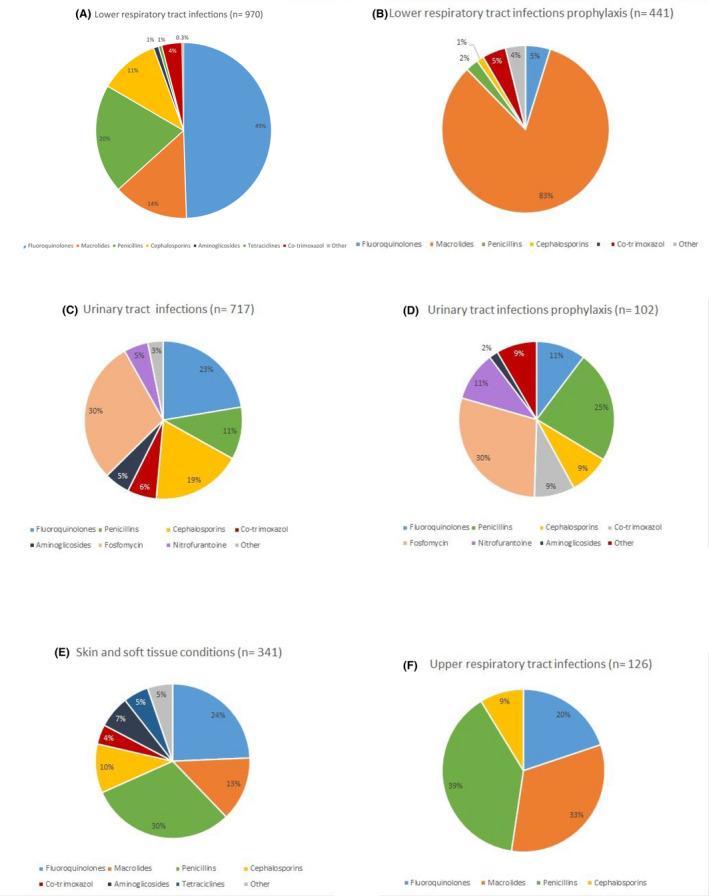
Some patients in the community receive a high burden of antibiotics. We aimed at describing the characteristics of these patients, antibiotics used, and conditions for which they received antibiotics. We carried out a cross-sectional study. Setting: Thirty Health Primary Care Areas from 12 regions in Spain, covering 5,960,191 inhabitants. Patients having at least 30 packages of antibacterials for systemic use dispensed in 2017 were considered. Main outcome measures: Prevalence of antibiotic use, conditions for which antibiotics were prescribed, clinical characteristics of patients, comorbidities, concomitant treatments, and microbiological isolates. Patient's average age was 70 years; 52% were men; 60% smokers/ex-smokers; 54% obese. Overall, 93% of patients had, at least, one chronic condition, and four comorbidities on average. Most common comorbidities were cardiovascular and/or hypertension (67%), respiratory diseases (62%), neurological/mental conditions (32%), diabetes (23%), and urological diseases (21%); 29% were immunosuppressed, 10% were dead at the time of data collection. Patients received three antibiotic treatments per year, mainly fluoroquinolones (28%), macrolides (21%), penicillins (19%), or cephalosporins (12%). Most frequently treated conditions were lower respiratory tract (infections or prophylaxis) (48%), urinary (27%), and skin/soft tissue infections (11%). Thirty-five percent have been guided by a microbiological diagnosis, being Pseudomonas aeruginosa (30%) and Escherichia coli (16%) the most frequent isolates. In conclusion, high antibiotic consumers in the community were basically elder, with multimorbidity and polymedication. They frequently received broad-spectrum antibiotics for long periods of time. The approach to infections in high consumers should be differentiated from healthy patients receiving antibiotics occasionally.
Keywords: ambulatory Care; antibiotic prescribing; antimicrobial stewardship programs; infection; outpatients.
© 2020 The Authors. Pharmacology Research & Perspectives published by John Wiley & Sons Ltd, British Pharmacological Society and American Society for Pharmacology and Experimental Therapeutics.
Conflict of interest statement
ON has been reimbursed by Novartis and Mundipharma for Congress attendance. VO has received funding for conference attendance from Novonordisk Lab, and Lilly has participated as an author of a book sponsored by Pfizer, and received training course enrollment by Amgen Lab. The other authors declare that they have no conflict of interests to disclose.
Figures
References
-
- WMA Statement on Resistance to Antimicrobial Drugs , 59th WMA General Assembly, Seoul, Korea, October 2008. https://www.wma.net/policies‐post/wma‐statement‐on‐resistance‐to‐antimic.... Accessed July 29, 2020.
-
- MacKenzie FM, Struelens MJ, Towner KJ. et al on behalf of the ARPAC Steering Group and the ARPAC Consensus Conference Participants . Report of the consensus conference on antibiotic resistance; prevention and control (ARPAC). Clin Microbiol Infect 2005; 11:937–954. - PubMed
