


Increased Behavioral Deficits and Inflammation in a Mouse Model of Co-Morbid Traumatic Brain Injury and Post-Traumatic Stress Disorder
- PMID: 33342261
- PMCID: PMC7755938
- DOI: 10.1177/1759091420979567
Increased Behavioral Deficits and Inflammation in a Mouse Model of Co-Morbid Traumatic Brain Injury and Post-Traumatic Stress Disorder
Abstract
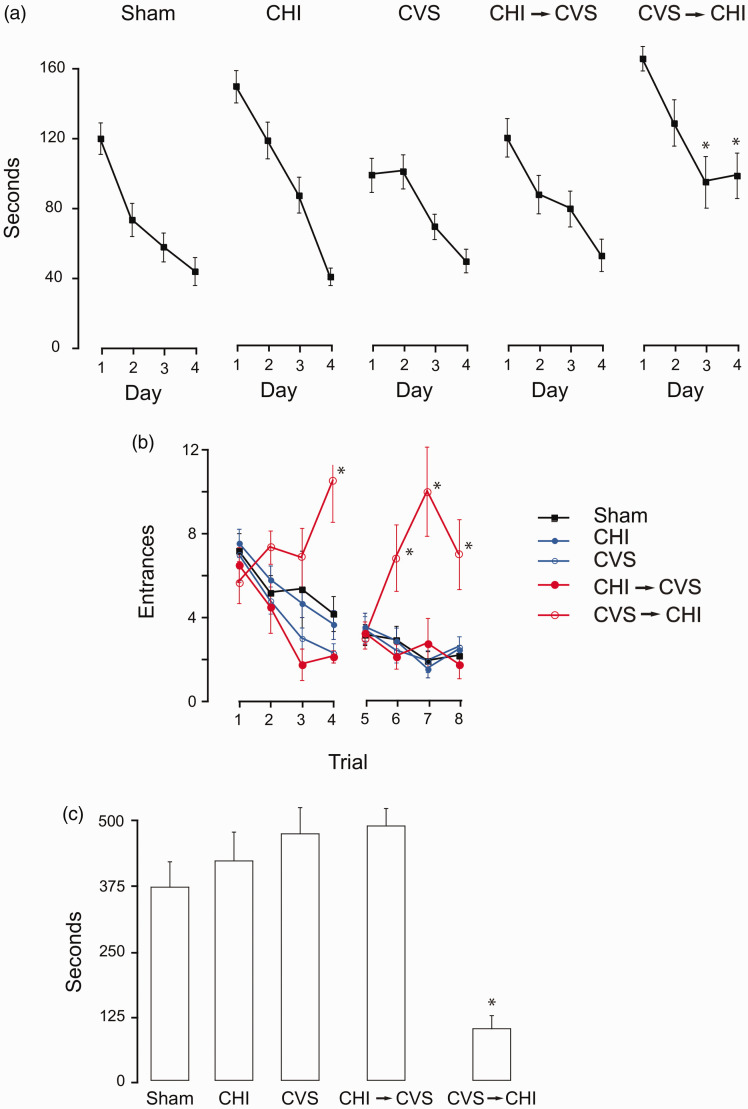
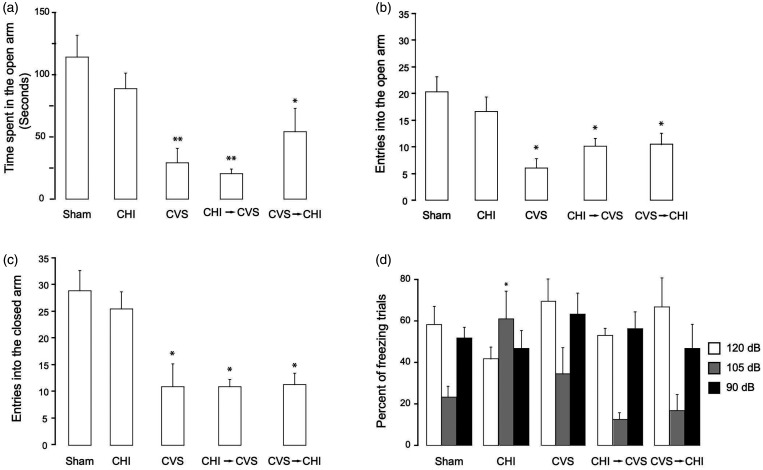
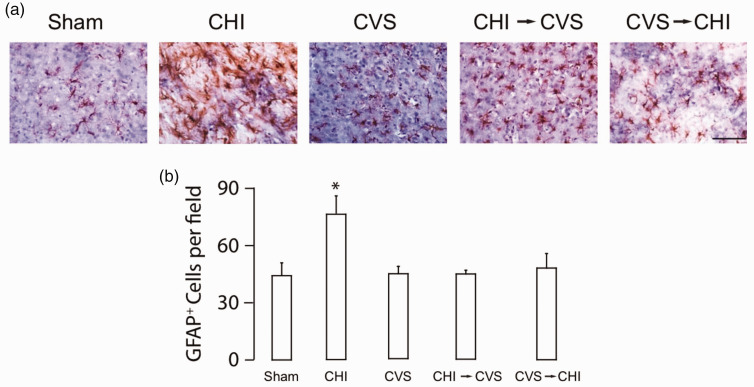
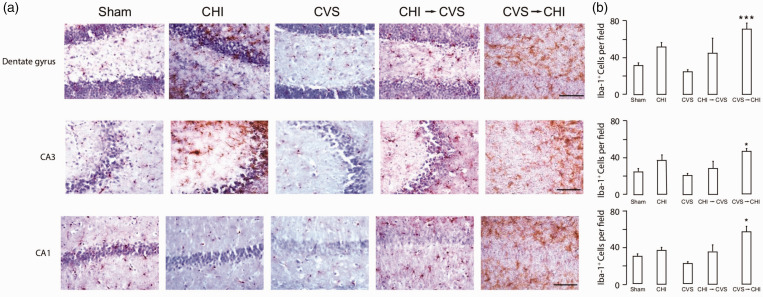
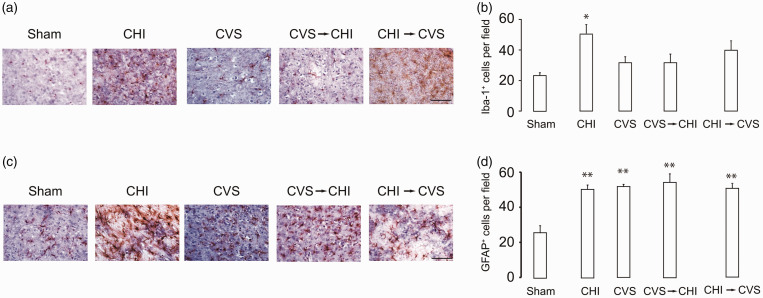
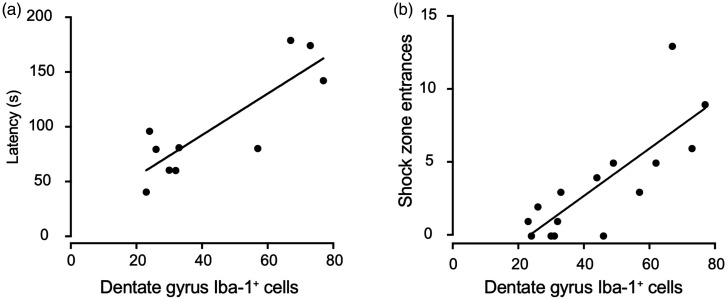
Comorbid post-traumatic stress disorder with traumatic brain injury (TBI) produce more severe affective and cognitive deficits than PTSD or TBI alone. Both PTSD and TBI produce long-lasting neuroinflammation, which may be a key underlying mechanism of the deficits observed in co-morbid TBI/PTSD. We developed a model of co-morbid TBI/PTSD by combining the closed head (CHI) model of TBI with the chronic variable stress (CVS) model of PTSD and examined multiple behavioral and neuroinflammatory outcomes. Male C57/Bl6 mice received sham treatment, CHI, CVS, CHI then CVS (CHI → CVS) or CVS then CHI (CVS → CHI). The CVS → CHI group had deficits in Barnes maze or active place avoidance not seen in the other groups. The CVS → CHI, CVS and CHI → CVS groups displayed increased basal anxiety level, based on performance on elevated plus maze. The CVS → CHI had impaired performance on Barnes Maze, and Active Place Avoidance. These performance deficits were strongly correlated with increased hippocampal Iba-1 level an indication of activated MP/MG. These data suggest that greater cognitive deficits in the CVS → CHI group were due to increased inflammation. The increased deficits and neuroinflammation in the CVS → CHI group suggest that the order by which a subject experiences TBI and PTSD is a major determinant of the outcome of brain injury in co-morbid TBI/PTSD.
Keywords: astrocytes; behavior; cognition; macrophage/microglia; memory.
Conflict of interest statement
Figures


References
-
- Abdel Baki S. G., Kao H.-Y., Kelemen E., Fenton A. A., Bergold P. J. (2009). A hierarchy of neurobehavioral tasks discriminates between mild and moderate brain injury in rats. Brain Research, 1280, 98–106. - PubMed
-
- Aungst S. L., K S., Thompson S. M., Stoica B. M., Faden A. I. (2014). Repeated mild traumatic brain injury causes chronic neuroinflammation, changes in hippocampal synaptic plasticity, and associated cognitive deficits. Journal of Cerebral Blood Flow and Metabolism: Official Journal of the International Society of Cerebral Blood Flow and Metabolism, 34(7), 1223–1232. - PMC - PubMed
-
- Barnes C. A. (1979). Memory deficits associated with senescence: A neurophysiological and behavioral study in the rat. Journal of Comparative and Physiological Psychology, 93(1), 74–104. - PubMed
Publication types
MeSH terms
Grants and funding
LinkOut - more resources
Full Text Sources
Medical
