


Cochlear implant and tinnitus-a meta-analysis
- PMID: 33342697
- PMCID: PMC9422519
- DOI: 10.1016/j.bjorl.2020.11.006
Cochlear implant and tinnitus-a meta-analysis
Abstract
Introduction: Tinnitus is a frequent symptom in cochlear implant patients, often reported as persistent and disabling in implant candidates. Tinnitus is rarely considered in the preoperative evaluation of patients who are eligible for cochlear implantation. Many studies have shown that a cochlear implant leads to a significant change in the perception of tinnitus.
Objective: To identify evidence in the scientific literature indicating that cochlear implant in eligible patients with tinnitus can improve tinnitus perception.
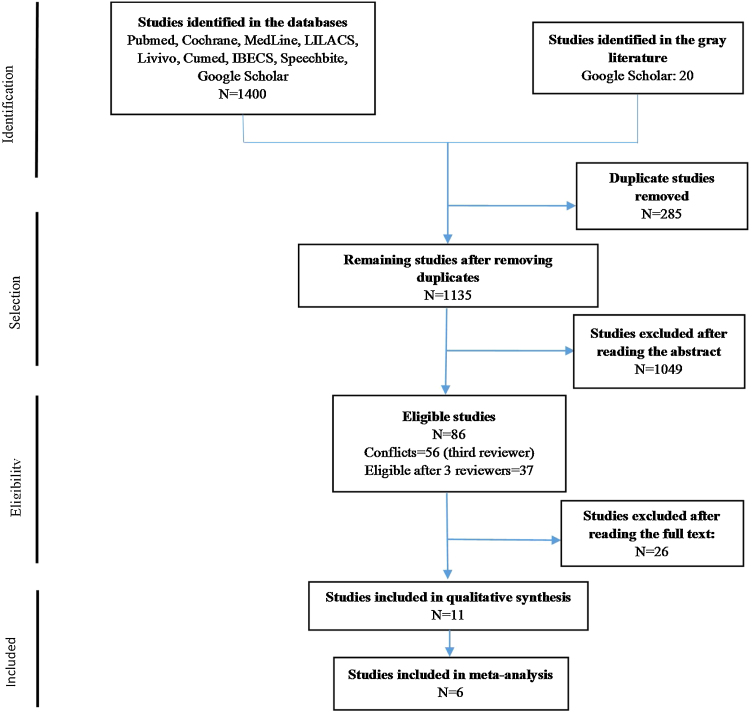
Methods: One hundred forty articles were found from nine databases, and 20 articles from the gray literature mentioned the relationship between cochlear implant and tinnitus perception in patients eligible for cochlear implant. The PICOS (population, intervention, comparison, and outcome) strategy, was used to define the eligibility criteria. The studies that met the inclusion criteria for this second step were included in a qualitative synthesis, and each type of study was analyzed using the Joanna Briggs Institute critical appraisal checklist for quasi-experimental studies and the Joanna Briggs Institute critical appraisal checklist for randomized clinical trials.
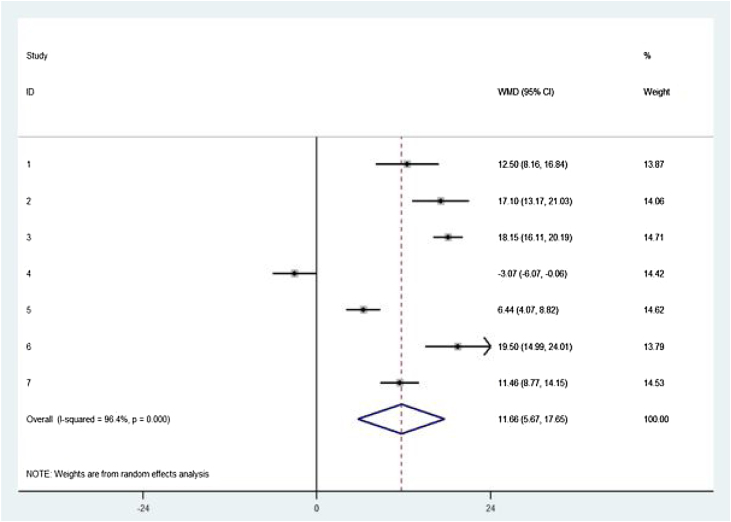
Results: The full texts of 11 articles were read, and 6 studies were selected for the meta-analysis. The total sample size in the evaluated articles was 136 patients with tinnitus who were eligible for cochlear implantation.
Conclusions: Taken together, these findings support the feasibility of cochlear implantation to reduce the perception of tinnitus, thus providing a new perspective in the treatment of tinnitus in patients with hearing loss who are candidates for cochlear implantation.
Keywords: Cochlear implant; Hearing loss; Tinnitus; Tinnitus perception.
Copyright © 2020 Associação Brasileira de Otorrinolaringologia e Cirurgia Cérvico-Facial. Published by Elsevier Editora Ltda. All rights reserved.
Figures
References
-
- Quaranta N., Wagstaff S., Baguley D.M. Tinnitus, and cochlear implantation. Int J Audiol. 2004;43:245–251. - PubMed
-
- Di Nardo W., Cantore I., Cianfrone F., Melillo P., Scorpecci A., Paludetti G. Tinnitus modifications after cochlear implantation. Eur Arch Otorhinolaryngol. 2007;264:1145–1149. - PubMed
-
- van Schoonhoven J., Sparreboom M., van Zanten B.G.A., Scholten R.J., Mylanus E.A., Dreschler W.A., et al. The effectiveness of bilateral cochlear implants for severe-to-profound deafness in adults: a systematic review. Otol Neurotol. 2013;34:190–198. - PubMed
-
- Amoodi H.A., Mick P.T., Shipp D.B., Friesen L.M., Nedzelski J.M., Chen J.M., et al. The effects of unilateral cochlear implantation on the tinnitus handicap inventory and the influence on quality of life. Laryngoscope. 2011;121:1536–1540. - PubMed
Publication types
MeSH terms
LinkOut - more resources
Full Text Sources
Other Literature Sources
Medical
Miscellaneous
