


A 5-min Cognitive Task With Deep Learning Accurately Detects Early Alzheimer's Disease
- PMID: 33343337
- PMCID: PMC7744695
- DOI: 10.3389/fnagi.2020.603179
A 5-min Cognitive Task With Deep Learning Accurately Detects Early Alzheimer's Disease
Erratum in
-
Corrigendum: A 5-min Cognitive Task With Deep Learning Accurately Detects Early Alzheimer's Disease.Front Aging Neurosci. 2022 Mar 17;14:879453. doi: 10.3389/fnagi.2022.879453. eCollection 2022. Front Aging Neurosci. 2022. PMID: 35370626 Free PMC article.
Abstract
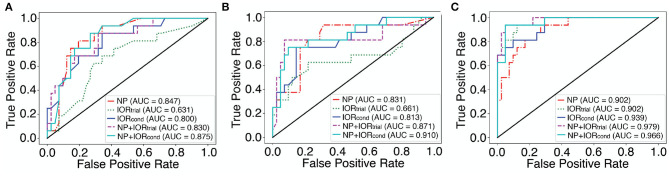
Introduction: The goal of this study was to investigate and compare the classification performance of machine learning with behavioral data from standard neuropsychological tests, a cognitive task, or both. Methods: A neuropsychological battery and a simple 5-min cognitive task were administered to eight individuals with mild cognitive impairment (MCI), eight individuals with mild Alzheimer's disease (AD), and 41 demographically match controls (CN). A fully connected multilayer perceptron (MLP) network and four supervised traditional machine learning algorithms were used. Results: Traditional machine learning algorithms achieved similar classification performances with neuropsychological or cognitive data. MLP outperformed traditional algorithms with the cognitive data (either alone or together with neuropsychological data), but not neuropsychological data. In particularly, MLP with a combination of summarized scores from neuropsychological tests and the cognitive task achieved ~90% sensitivity and ~90% specificity. Applying the models to an independent dataset, in which the participants were demographically different from the ones in the main dataset, a high specificity was maintained (100%), but the sensitivity was dropped to 66.67%. Discussion: Deep learning with data from specific cognitive task(s) holds promise for assisting in the early diagnosis of Alzheimer's disease, but future work with a large and diverse sample is necessary to validate and to improve this approach.
Keywords: Alzheimer's disease; artificial neural networks; inhibition of return; machine learning; neuropsychological test.
Copyright © 2020 Almubark, Chang, Shattuck, Nguyen, Turner and Jiang.
Conflict of interest statement
The authors declare that the research was conducted in the absence of any commercial or financial relationships that could be construed as a potential conflict of interest.
Figures

References
-
- Albert M. S., DeKosky S. T., Dickson D., Dubois B., Feldman H. H., Fox N. C., et al. (2011). The diagnosis of mild cognitive impairment due to Alzheimer's disease: recommendations from the national institute on aging-Alzheimer's association workgroups on diagnostic guidelines for Alzheimer's disease. Alzheimers Dement. 7, 270–279. 10.1016/j.jalz.2011.03.008 - DOI - PMC - PubMed
-
- Almubark I., Alsegehy S., Jiang X., Chang L. (2020). Classification of Alzheimer's disease, mild cognitive impairment, and normal controls with multilayer perceptron neural network and neuropsychological test data, in Proceedings of the 12th International Joint Conference on Computational Intelligence - Vol. 1: NCTA. 439–446. 10.5220/0010143304390446 - DOI
-
- Almubark I., Chang L.-C., Nguyen T., Turner R. S., Jiang X. (2019). Early detection of alzheimer's disease using patient neuropsychological and cognitive data and machine learning techniques, in 2019 IEEE International Conference on Big Data (Big Data) (Los Angeles, CA: ), 5971–5973. 10.1109/BigData47090.2019.9006583 - DOI
-
- Amit Y., Geman D. (1997). Shape quantization and recognition with randomized trees. Neural Comput. 9, 1545–1588. 10.1162/neco.1997.9.7.1545 - DOI
Grants and funding
LinkOut - more resources
Full Text Sources
