


Safe but Lonely? Loneliness, Anxiety, and Depression Symptoms and COVID-19
- PMID: 33343454
- PMCID: PMC7747668
- DOI: 10.3389/fpsyg.2020.579181
Safe but Lonely? Loneliness, Anxiety, and Depression Symptoms and COVID-19
Abstract
Background: The COVID-19 pandemic has led governments worldwide to implement unprecedented response strategies. While crucial to limiting the spread of the virus, "social distancing" may lead to severe psychological consequences, especially in lonely individuals.
Methods: We used cross-sectional (n = 380) and longitudinal (n = 74) designs to investigate the links between loneliness, anxiety, and depression symptoms (ADS) and COVID-19 risk perception and affective response in young adults who implemented social distancing during the first 2 weeks of the state of epidemic threat in Poland.
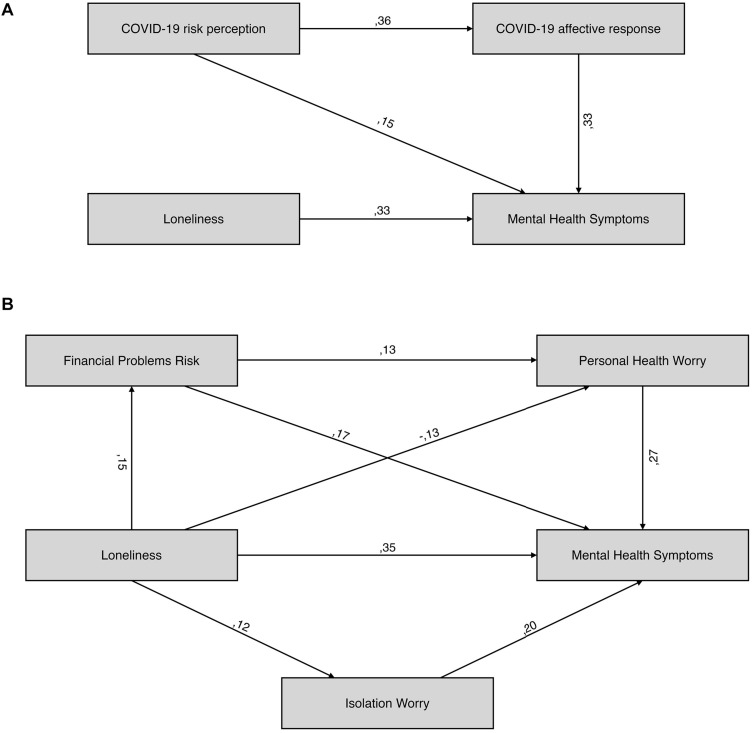
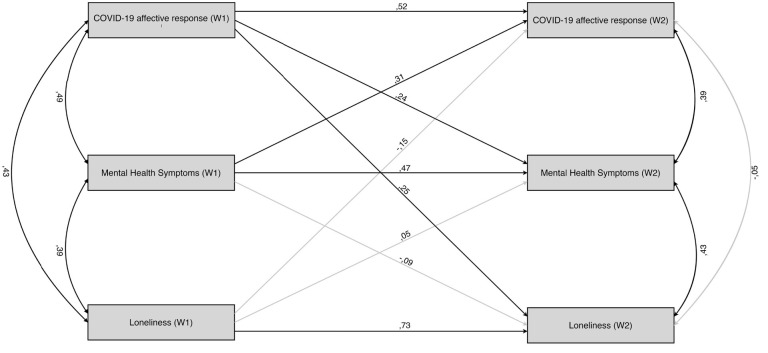
Results: Loneliness was correlated with ADS and with affective response to COVID-19's threat to health. However, increased worry about the social isolation and heightened risk perception for financial problems was observed in lonelier individuals. The cross-lagged influence of the initial affective response to COVID-19 on subsequent levels of loneliness was also found.
Conclusion: The reciprocal connections between loneliness and COVID-19 response may be of crucial importance for ADS during the COVID-19 crisis.
Keywords: COVID-19; anxiety and depression; loneliness; mental well-being; risk perception.
Copyright © 2020 Okruszek, Aniszewska-Stańczuk, Piejka, Wiśniewska and Żurek.
Conflict of interest statement
The authors declare that the research was conducted in the absence of any commercial or financial relationships that could be construed as a potential conflict of interest.
Figures
References
-
- Beam C. R., Kim A. J. (2020). Psychological sequelae of social isolation and loneliness might be a larger problem in young adults than older adults. Psychol. Trauma Theory Res. Pract. Policy 12:S58. - PubMed
LinkOut - more resources
Full Text Sources
Medical
