


An early warning system to predict and mitigate wheat rust diseases in Ethiopia
- PMID: 33343688
- PMCID: PMC7680955
- DOI: 10.1088/1748-9326/ab4034
An early warning system to predict and mitigate wheat rust diseases in Ethiopia
Abstract
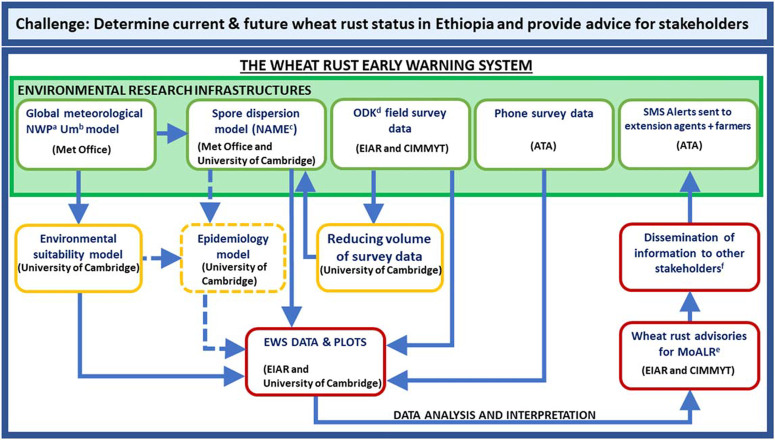
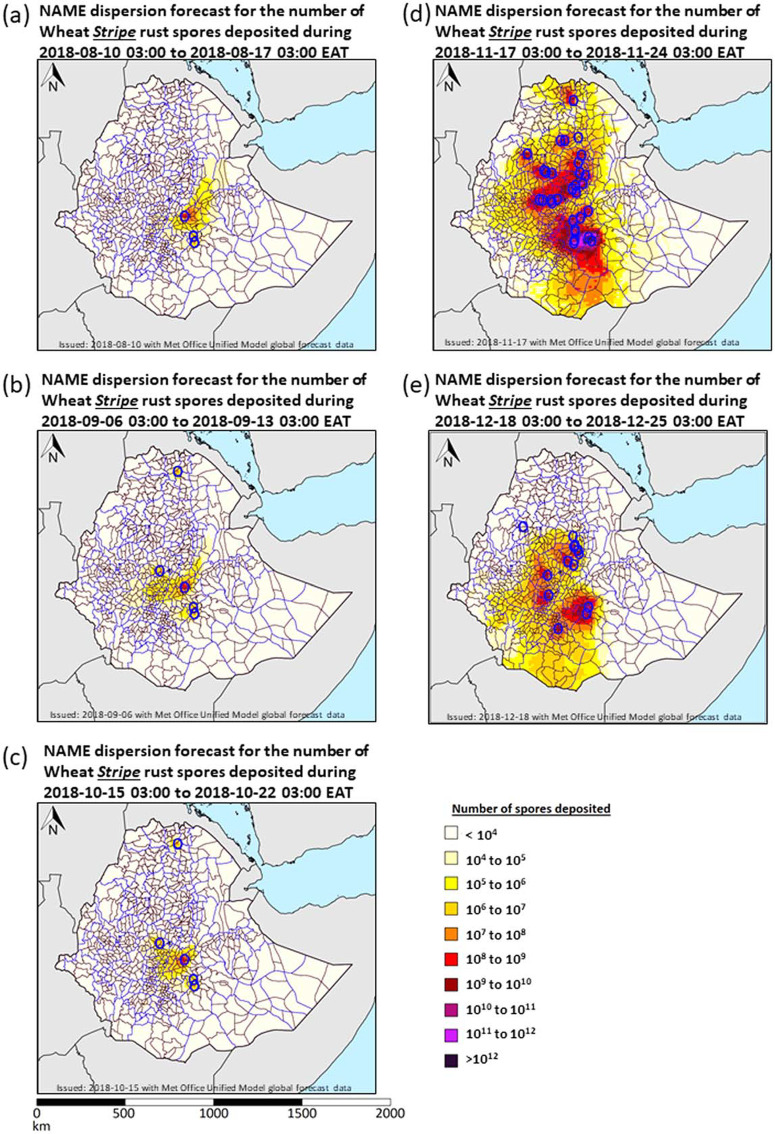
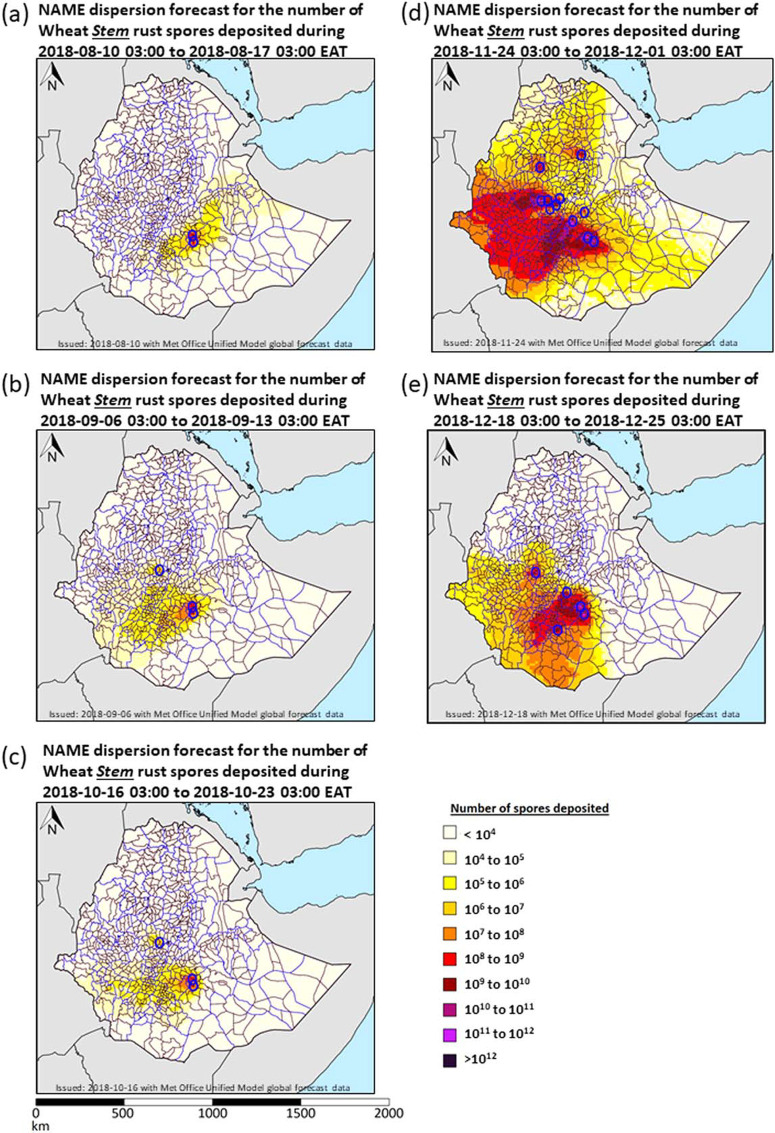
Wheat rust diseases pose one of the greatest threats to global food security, including subsistence farmers in Ethiopia. The fungal spores transmitting wheat rust are dispersed by wind and can remain infectious after dispersal over long distances. The emergence of new strains of wheat rust has exacerbated the risks of severe crop loss. We describe the construction and deployment of a near realtime early warning system (EWS) for two major wind-dispersed diseases of wheat crops in Ethiopia that combines existing environmental research infrastructures, newly developed tools and scientific expertise across multiple organisations in Ethiopia and the UK. The EWS encompasses a sophisticated framework that integrates field and mobile phone surveillance data, spore dispersal and disease environmental suitability forecasting, as well as communication to policy-makers, advisors and smallholder farmers. The system involves daily automated data flow between two continents during the wheat season in Ethiopia. The framework utilises expertise and environmental research infrastructures from within the cross-disciplinary spectrum of biology, agronomy, meteorology, computer science and telecommunications. The EWS successfully provided timely information to assist policy makers formulate decisions about allocation of limited stock of fungicide during the 2017 and 2018 wheat seasons. Wheat rust alerts and advisories were sent by short message service and reports to 10 000 development agents and approximately 275 000 smallholder farmers in Ethiopia who rely on wheat for subsistence and livelihood security. The framework represents one of the first advanced crop disease EWSs implemented in a developing country. It provides policy-makers, extension agents and farmers with timely, actionable information on priority diseases affecting a staple food crop. The framework together with the underpinning technologies are transferable to forecast wheat rusts in other regions and can be readily adapted for other wind-dispersed pests and disease of major agricultural crops.
Keywords: agricultural science; atmospheric transport; crops; epidemic modelling; food security; weather; wheat.
© 2019 The Author(s).
Figures
References
-
- Ali S and Hodson D. 2017. Wheat rust surveillance: field disease scoring and sample collection for phenotyping and molecular genotyping Wheat Rust Diseases: Methods and Protocols ed Periyannan S. (Berlin: Springer; ) pp 3–11 - PubMed
-
- Bekele E. 1986. Review of research on diseases of barley, tef and wheat in Ethiopia. A review of crop protection research in Ethiopia Proc. First Crop Protection Symp. (Addis Ababa, Ethiopia:IAR; ) pp79–108
-
- Bekele H. 2003. Short report on stripe rust and stem rust Proc. Agronomy Workshop ed Bedada G. (Addis Ababa, Ethiopia: Bale Agricultural Development Enterprise; ) pp67–78 BADE 2003
-
- Burrage SW1970 Environmental factors influencing the infection of wheat by. Puccinia graminis Ann Appl. Biol. 66 429
LinkOut - more resources
Full Text Sources