. 2020 Mar;7(1):12-21.
doi: 10.1007/s40496-020-00249-3. Epub 2020 Jan 10.

Porphyromonas gingivalis: Immune subversion activities and role in periodontal dysbiosis

Affiliations

Porphyromonas gingivalis: Immune subversion activities and role in periodontal dysbiosis

George Hajishengallis et al. Curr Oral Health Rep. 2020 Mar.

Abstract

Purpose of review: This review summarizes mechanisms by which Porphyromonas gingivalis interacts with community members and the host so that it can persist in the periodontium under inflammatory conditions that drive periodontal disease.

Recent findings: Recent advances indicate that, in great part, the pathogenicity of P. gingivalis is dependent upon its ability to establish residence in the subgingival environment and to subvert innate immunity in a manner that uncouples the nutritionally favorable (for the bacteria) inflammatory response from antimicrobial pathways. While the initial establishment of P. gingivalis is dependent upon interactions with early colonizing bacteria, the immune subversion strategies of P. gingivalis in turn benefit co-habiting species.

Summary: Specific interspecies interactions and subversion of the host response contribute to the emergence and persistence of dysbiotic communities and are thus targets of therapeutic approaches for the treatment of periodontitis.

Keywords: P. gingivalis; dysbiosis; immune subversion; inflammation; periodontitis.


Conflict of interest statement

Conflict of Interest: George Hajishengallis is an inventor of a patent that describes the use of complement inhibitors for therapeutic purposes in periodontal disease. Patricia I. Diaz declares that she has no conflict of interest.

Figures
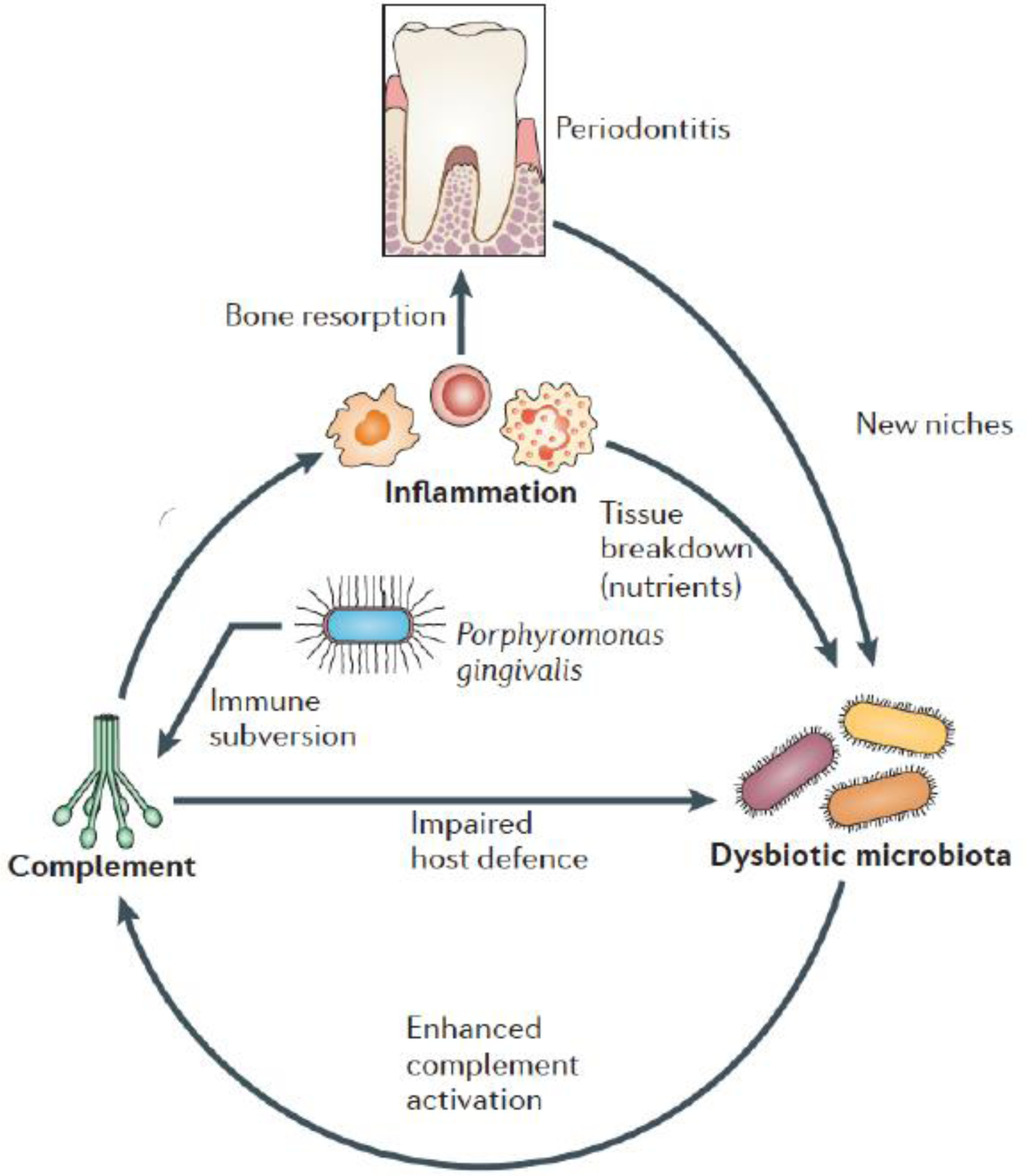
Figure 1.
Figure 1.. Keystone pathogen-induced dysbiosis in periodontal disease.
P. gingivalis subverts complement in a manner that compromises antimicrobial defense while enhancing inflammation. These effects contribute to dysbiotic changes of the periodontal microbiota (altered composition, increased total counts), which causes further inflammation, in great part through complement activation. Inflammatory tissue destruction fuels further bacterial growth by generating a nutrient-rich gingival inflammatory exudate (containing degraded host proteins and hemin, sources of amino acids and iron, respectively). These environmental changes favor proteolytic and asaccharolytic bacteria, thus explaining, at least in part, why inflammation causes compositional changes in the bacterial community. Moreover, inflammatory bone loss provides new niches for colonization by the dysbiotic microbiota. Overall, these changes create a self-sustained ‘vicious cycle’, where inflammation and dysbiosis are reciprocally reinforced. It should be noted, however, that whereas P. gingivalis can initiate dysbiosis, it is not an obligatory condition for dysbiosis. From reference [27]. Used by permission.
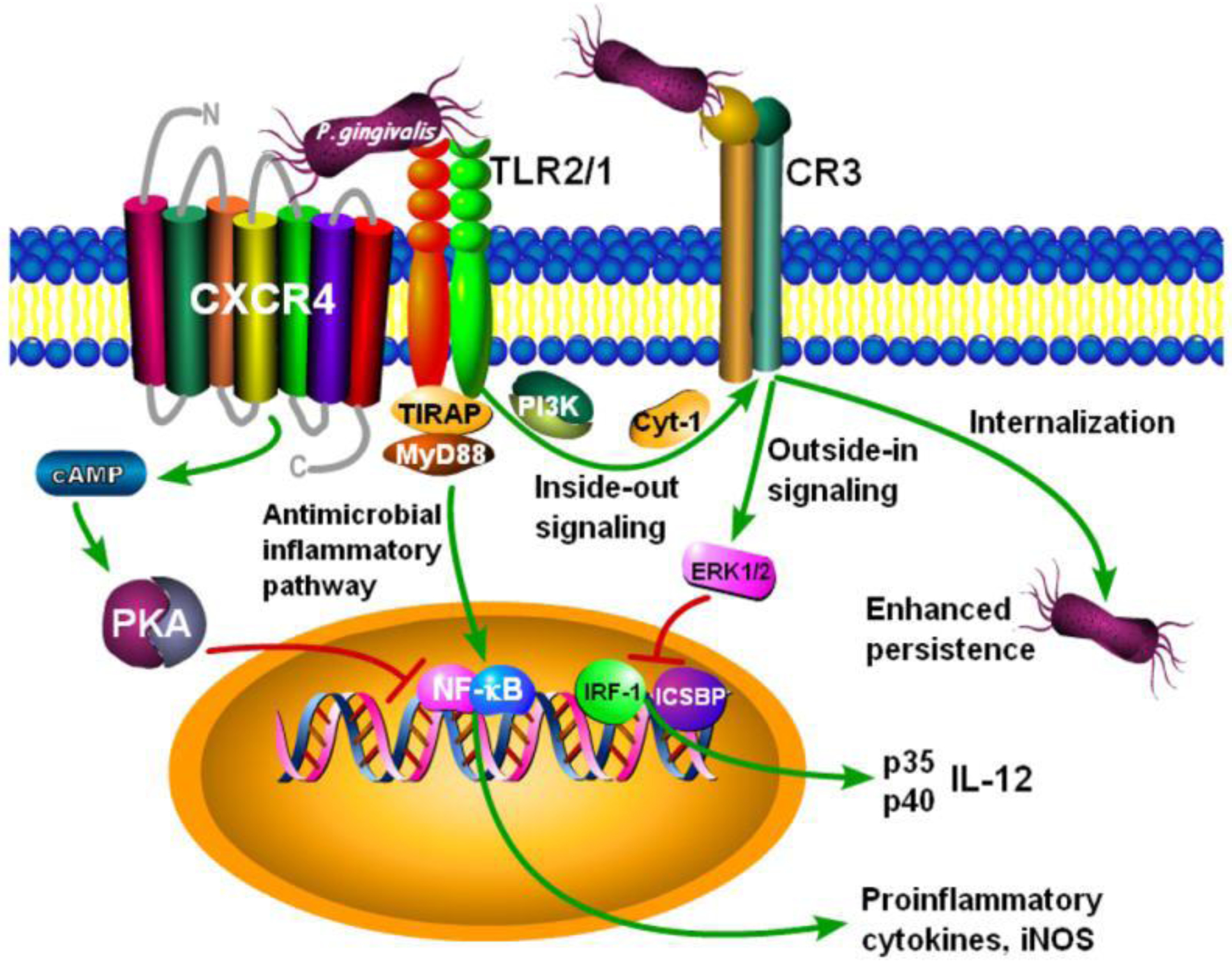
Figure 2.
Figure 2.. P. gingivalis instigates TLR2-CXCR4 and TLR2-CD11b/CD18 crosstalk interactions to subvert macrophages.
Through its FimA fimbriae, P. gingivalis can bind TLR2 (specifically the TLR2/TLR1 heterodimer; TLR2/1). Through a different structural component of the same molecule, P. gingivalis interacts with CXCR4 which cross-talks with and inhibits the TLR2/1-induced TIRAP/MyD88-mediated antimicrobial pathway. The underlying mechanism involves CXCR4-mediated stimulation of cAMP-dependent protein kinase A (PKA) signaling which limits NF-κB activation and induction of the inducible nitric oxide synthase (iNOS) that generates nitric oxide. The inhibitory effect on the production of nitric oxide, a potent antimicrobial mechanism for intracellular killing, promotes P. gingivalis survival in vitro and in vivo. By activating TLR2/1, P. gingivalis initiates inside-out signaling, which proceeds via phosphatidylinositol 3-kinase (PI3K) and cytohesin-1 to induce the high-affinity conformation of CD11b/CD18 (a β2 integrin also known as complement receptor 3). P. gingivalis binds activated CD11b/CD18 and is thereby internalized in a relatively safe manner as CD11b/CD18 is not linked to potent microbicidal mechanisms. Moreover, the P. gingivalis-CD11b/CD18 interaction activates extracellular signal-related kinase 1/2 (ERK1/2) signaling which downregulates IL-12 p35 and p40 mRNA expression. From reference [16]. Used by permission.
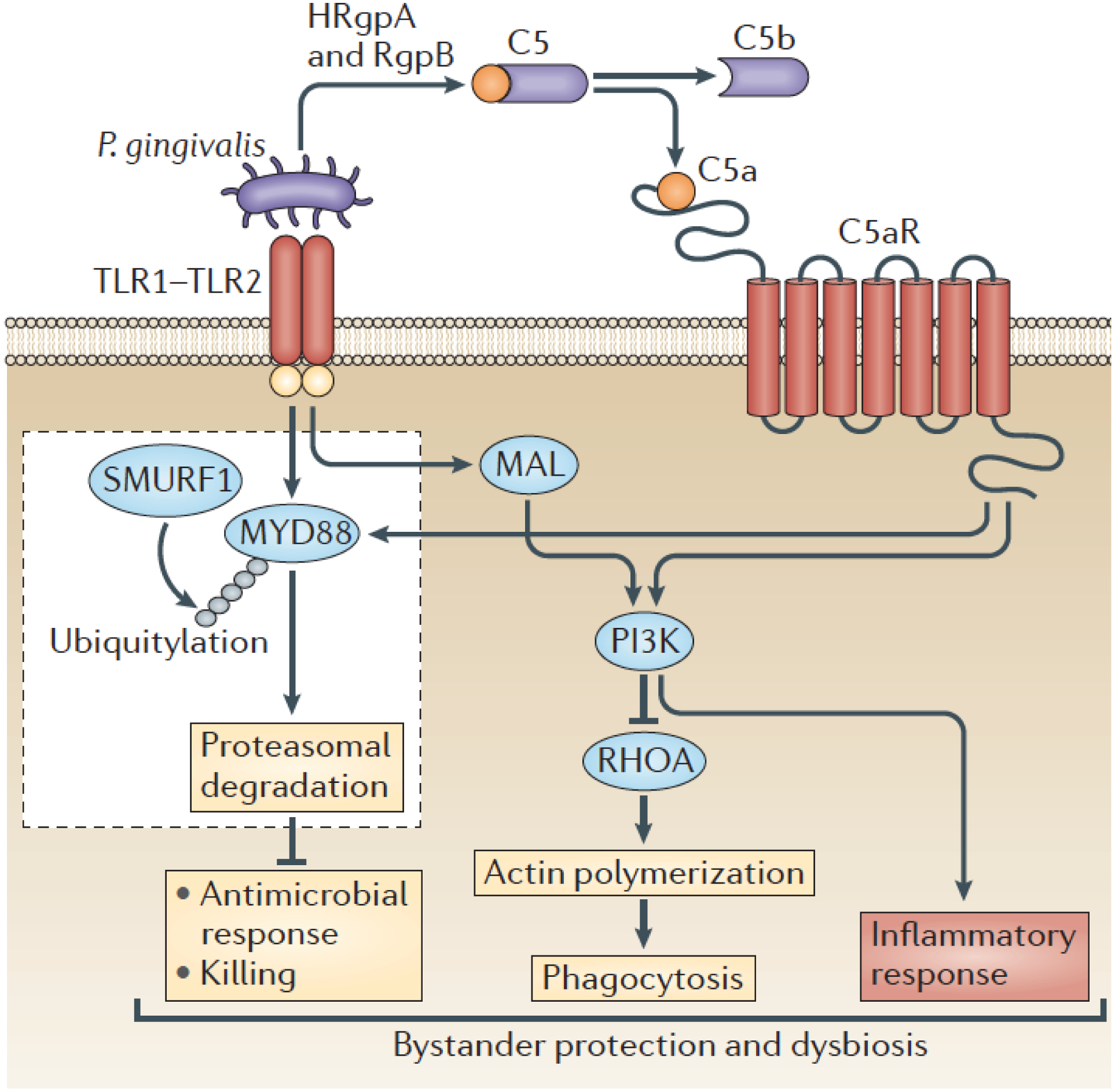
Figure 3.
Figure 3.. P. gingivalis dissociates immune clearance from inflammatory responses in neutrophils.
P. gingivalis activates the TLR1-TLR2 heterodimer and C5aR1, the latter through the generation of C5a by its gingipains. Specifically, these enzymes (HRgpA and RgpB) can cleave C5 to release biologically active C5a. The co-activation of TLR2 and C5aR1 by P. gingivalis and the resulting signaling crosstalk leads to the ubiquitylation (via SMURF, an E3 ubiquitin-protein ligase) and proteasomal degradation of the TLR2 adaptor MYD88, thereby blocking a host-protective antimicrobial mechanism. Moreover, the TLR2/C5aR1 crosstalk activates PI3K, which limits phagocytosis through the inhibition of the GTPase RHOA and hence actin polymerization. On the other hand, PI3K stimulates the production of inflammatory cytokines. Contrary to MYD88, another TLR2 adaptor, MYD88-like adaptor protein (MAL), participates in immune subversion by acting upstream of PI3K. These functionally integrated pathways offer ‘bystander’ protection to otherwise susceptible periodontal organisms and enhance polymicrobial dysbiotic inflammation in vivo. From reference [6]. Used by permission.

References

    1. Socransky SS, Haffajee AD, Cugini MA, Smith C, Kent RL Jr. Microbial complexes in subgingival plaque. J Clin Periodontol. 1998;25(2):134–44. - PubMed
    1. Diaz PI, Hoare A, Hong BY. Subgingival Microbiome Shifts and Community Dynamics in Periodontal Diseases. Journal of the California Dental Association. 2016;44(7):421–35. - PubMed
    1. Kebschull M, Demmer RT, Papapanou PN. “Gum bug leave my heart alone”: Epidemiologic and mechanistic evidence linking periodontal infections and atherosclerosis. J Dent Res. 2010;89:879–902. - PMC - PubMed
    1. Dominy SS, Lynch C, Ermini F, Benedyk M, Marczyk A, Konradi A et al. Porphyromonas gingivalis in Alzheimer’s disease brains: Evidence for disease causation and treatment with small-molecule inhibitors. Sci Adv. 2019;5(1):eaau3333. - PMC - PubMed
    2. ••This study identified the presence of gingipains from the keystone pathogen Porphyromonas gingivalis in the brain of Alzheimer’s patients, and showed that inhibition of gingipains by small-molecule inhibitors reduced the P. gingivalis load in a preclinical brain infection model.

    1. Potempa J, Mydel P, Koziel J. The case for periodontitis in the pathogenesis of rheumatoid arthritis. Nature reviews Rheumatology. 2017;13(10):606–20. - PubMed

LinkOut - more resources