Benign multicystic peritoneal mesothelioma: literature review and update
- PMID: 33344293
- PMCID: PMC7703464
- DOI: 10.4322/acr.2020.159
Benign multicystic peritoneal mesothelioma: literature review and update
Abstract
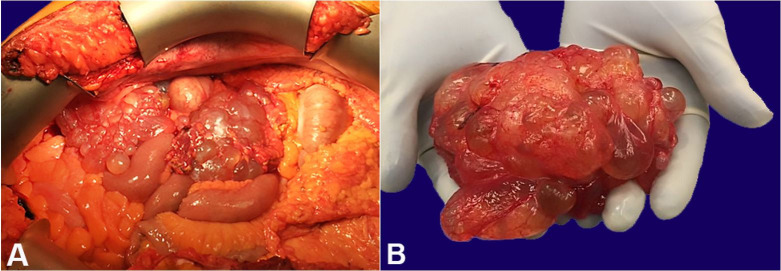
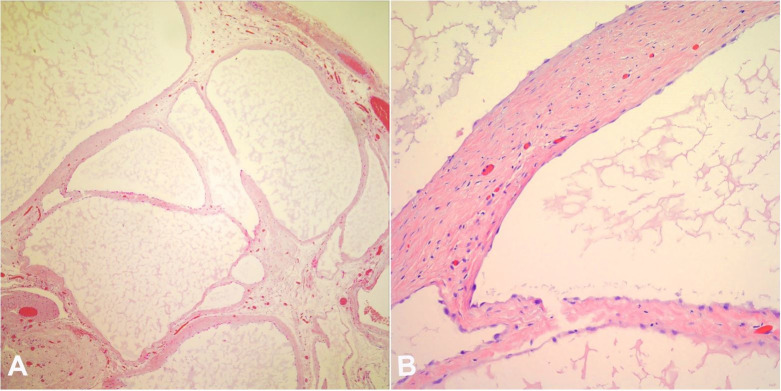
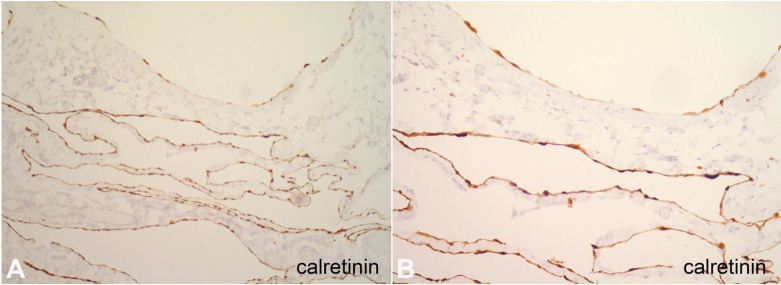
Benign multicystic peritoneal mesothelioma (BMPM) is a rare peritoneal tumor diagnosed predominantly in pre-menopausal women. Associated risk factors include endometriosis and pelvic inflammatory disease in women, and prior abdominal surgery in both genders. To date, the pathogenesis of this disease remains controversial with possible etiologies, including a neoplastic versus a reactive process. Given the risk factors, some authors believe that this disease is secondary to a reactive process. However, because some studies describe cases where there is no prior surgical history or inflammatory milieu present, and because of this entity's predilection for recurrence, some authors believe the origin to be neoplastic. Some genetic and familial associations have also been reported. Malignant transformation is extremely rare, with only two cases reported in the literature, despite the recurrence potential. Like the etiology, the name of this entity is also controversial. Some authors prefer the term "peritoneal inclusion cyst (PCM)" instead of "benign cystic mesothelioma" and argue that the term mesothelioma should only be used when there is evidence of atypia. Most cases of BMPM are discovered incidentally. Others reflect sequela of tumor mass effect. It appears intra-operatively as large, multi-focal, cystic lesions in the peritoneal and pelvic cavity. Diagnosis is achieved through surgical sampling with histopathological examination. Immunobiologically, BMPM exhibits multiple small cystic spaces with flattened lining containing calretinin positive cells without atypical features, mitotic figures, or tissue invasion. Treatment includes cytoreductive surgery. Here we present a case of BMPM in a 60-year-old male - a rare disease in an uncommon patient population.
Keywords: Asbestos; BAP1 protein; Cystic Lymphangioma; Cystic Mesothelioma; Mesothelioma; human.
Autopsy and Case Reports. ISSN 2236-1960. Copyright © 2020.
Conflict of interest statement
Conflict of interest: None
Figures
References
-
- Rapisarda AMC, Cianci A, Caruso S, et al. Benign multicystic mesothelioma and peritoneal inclusion cysts: are they the same clinical and histopathological entities? A systematic review to find an evidence-based management. Arch Gynecol Obstet. 2018;297(6):1353–1375. doi: 10.1007/s00404-018-4728-2. - DOI - PubMed
-
- Dzieniecka M, Kałużyński A. Benign multicystic peritoneal mesothelioma (BMPM) - case report and review of the literature. Pol J Pathol. 2011;62(2):122–124. - PubMed