


Habituation to Transport Helps Reducing Stress-Related Behavior in Donkeys During Loading
- PMID: 33344531
- PMCID: PMC7744657
- DOI: 10.3389/fvets.2020.593138
Habituation to Transport Helps Reducing Stress-Related Behavior in Donkeys During Loading
Abstract
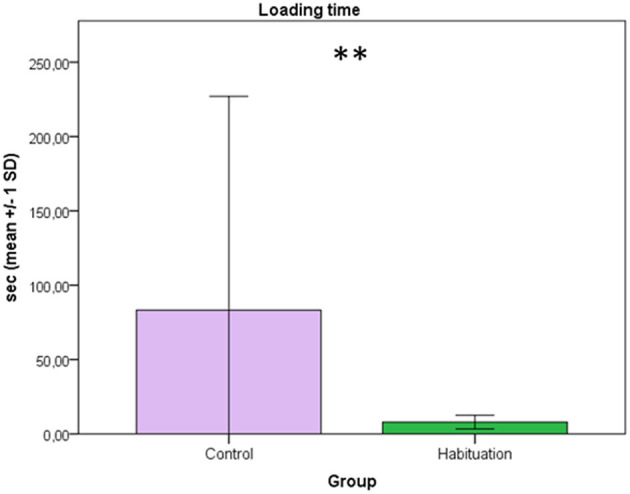
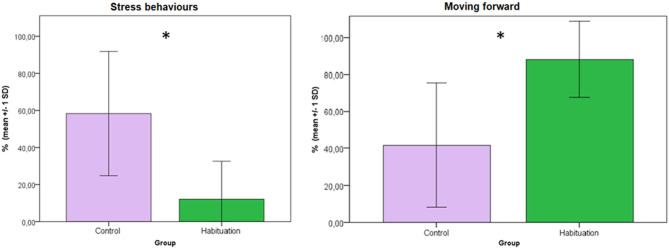
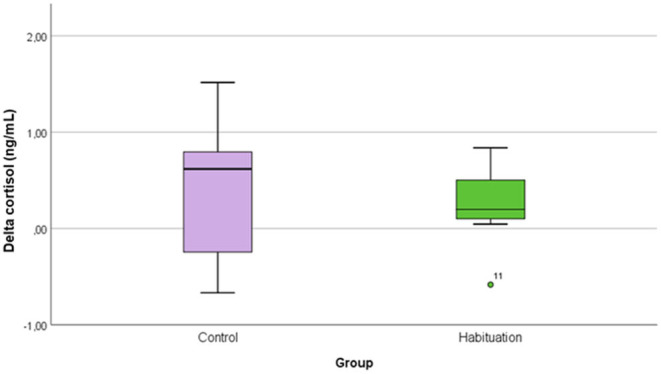
Adopting proper animal management strategies, including training, might reduce to a substantial extent the adverse effects of transport-related stress in animals. The aim of this study was to evaluate the effect of habituation to transport on stress-related behaviors and physiological indicators during loading and unloading in donkeys. Fourteen donkeys were recruited and divided in two treatment groups: Habituation (H; M = 5, F = 2) and Control (C; M = 5, F = 2). H donkeys were gradually habituated to be transported, traveling together with their mothers and other adult donkeys well-accustomed to transport, while C donkeys had never been transported before. Loading and unloading phases were video recorded and behavior was analyzed. Saliva samples for cortisol concentration determination were collected at rest and after unloading. Latency time to load was significantly shorter for H donkeys than C donkeys (Mann-Whitney; p = 0.004). C donkeys also showed significantly more stress-related behaviors (Mann-Whitney; p = 0.026) and required a higher but not statistically significant number of human interventions to load. Cortisol concentration increased in both groups, but no differences were found between them (Mann-Whitney; p > 0.05). These results suggest that habituation to transport could mitigate stress during loading procedures in donkeys reducing loading time, frequency of stress-related behaviors and diminishing the need of human intervention.
Keywords: behavior; donkey; habituation; stress; transport; welfare.
Copyright © 2020 Dai, Mazzola, Cannas, Heinzl, Padalino, Minero and Dalla Costa.
Conflict of interest statement
The authors declare that the research was conducted in the absence of any commercial or financial relationships that could be construed as a potential conflict of interest.
Figures
References
-
- FAOSTAT (2018). Available online at: http://www.fao.org/faostat/en/#data/QA (accessed June 2, 2020).
-
- Banca Dati Equidi (2020). Available online at: http://www.anagrafeequidi.it/tabstatistiche_Report_report.php (accessed June 2, 2020).
LinkOut - more resources
Full Text Sources
