. 2020 Dec 4:7:596933.
doi: 10.3389/fvets.2020.596933. eCollection 2020.

Comprehensive Survey of the Litter Bacterial Communities in Commercial Turkey Farms

Affiliations

Comprehensive Survey of the Litter Bacterial Communities in Commercial Turkey Farms

Bishnu Adhikari et al. Front Vet Sci. .

Abstract

The importance of microbiota in the health and diseases of farm animals has been well-documented for diverse animal species. However, studies on microbiotas in turkey and turkey farms are relatively limited as compared to other farm animal species. In this study, we performed a comprehensive survey of the litter microbiotas in 5 commercial turkey farms in the Northwest Arkansas (H, M, V, K, and R farms) including one farm with positive incidence of cellulitis (R farm). Altogether 246 boot swabs were used for 16S rRNA gene profiling of bacterial communities. At phylum level, 11 major bacterial phyla (≥0.01%) were recovered. At genus level, 13 major bacterial genera were found whose relative abundance were ≥2%. The microbial composition at both phylum and genus levels as well as their diversities varied across different farms, which were further affected by different flocks within the same farms and the ages of turkeys. Generally, the Firmicutes were higher in the flocks of younger birds, while the Actinobacteria and Bacteroidetes were higher in the flocks of the older birds. The Proteobacteria were highly enriched (47.97%) in K farm housing 56-day-old turkeys (K-56), but Bacteroidetes were found the highest in the flock C of M farm housing 63-day-old turkeys (M-C-63; 22.38%), followed by K-84 group (17.26%). Four core bacterial genera (Staphylococcus, Brevibacterium, Brachybacterium, and Lactobacillus) were identified in all samples except for those from R farm. In contrast, 24 core bacterial genera were found based in all cellulitis-associated samples (R farm), including Corynebacterium, an unknown genus of family Bacillaceae, Clostridium sensu stricto 1 (>97% similarity with C. septicum), and Ignatzschineria among others, suggesting their possible roles in etiopathogenesis of cellulitis in turkeys. Overall results of this study may provide valuable foundation for future studies focusing on the role of microbiota in the health and diseases of turkeys.

Keywords: 16S rRNA gene sequencing; Clostridium septicum; commercial farms; litter microbiotas; turkey.


Conflict of interest statement

BW was employed by Cargill Inc. The remaining authors declare that the research was conducted in the absence of any commercial or financial relationships that could be construed as a potential conflict of interest.

Figures
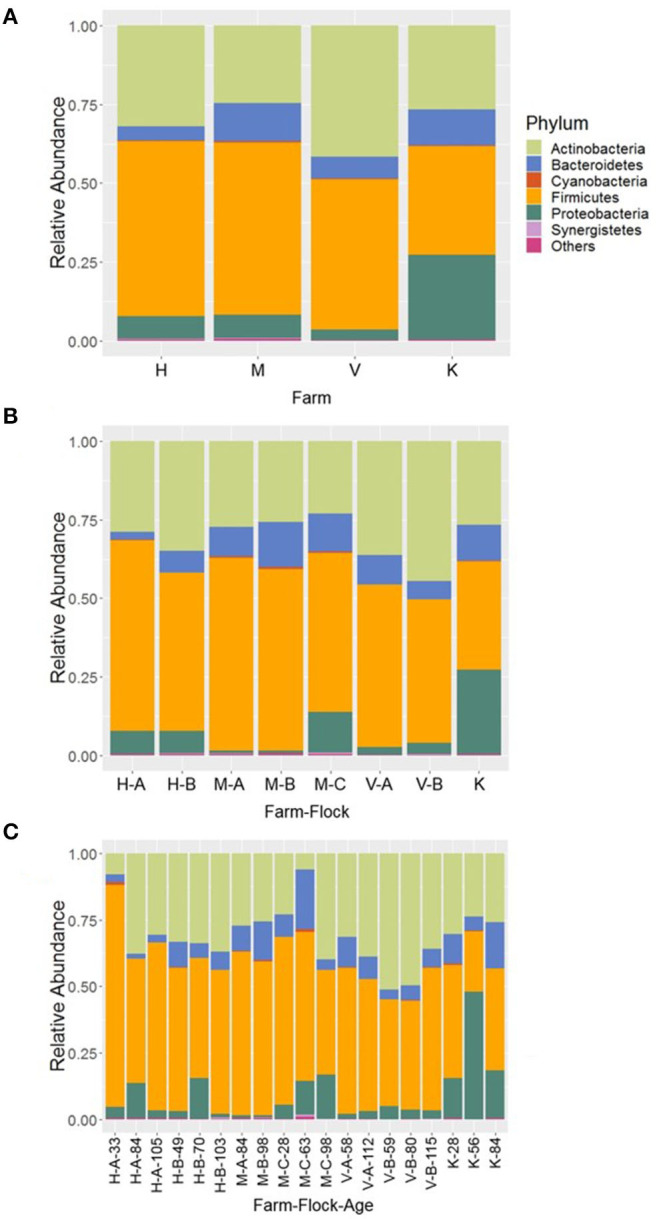
Figure 1
Figure 1
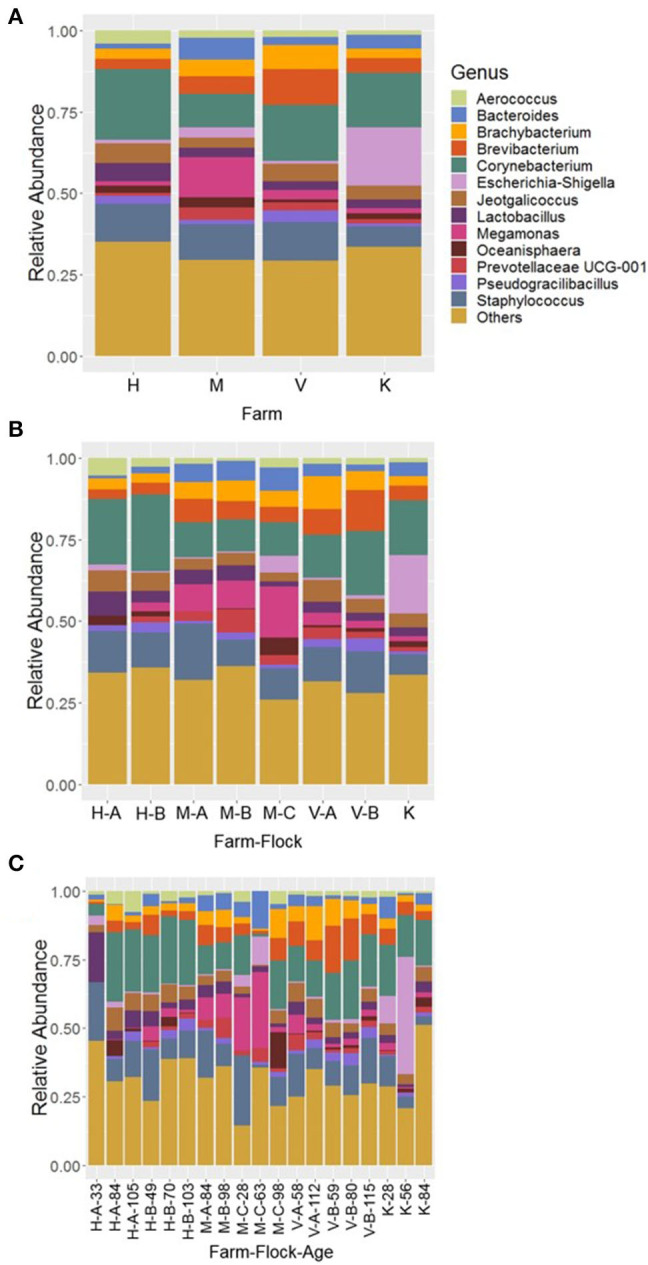
Composition of the litter microbiotas in four different commercial turkey farms of Northwest Arkansas at phylum level for different (A) farms, (B) farm-flocks, and (C) farm-flock-ages. “Others” represent the minor phyla whose relative abundance were <0.1%.
Figure 2
Figure 2
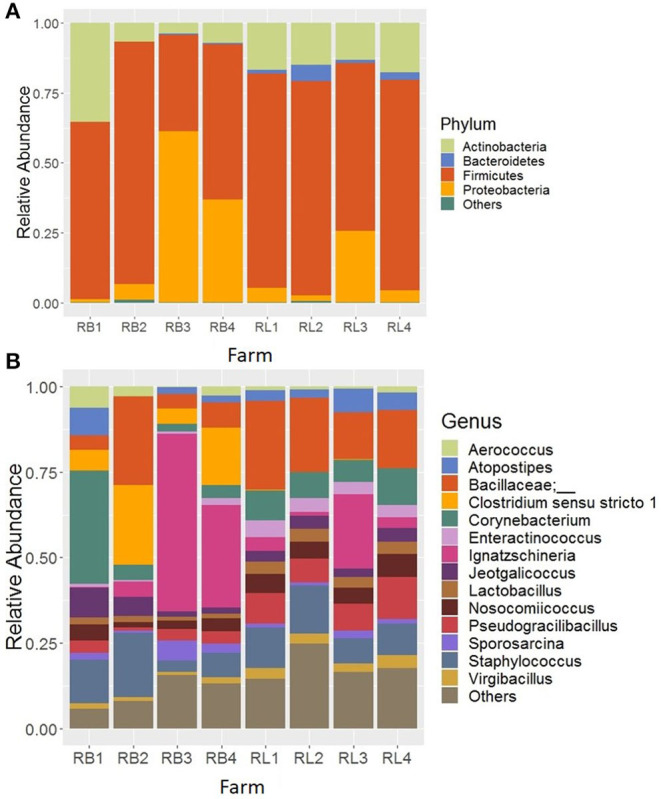
Composition of the litter microbiotas in R farm with incidence of cellulitis at (A) phylum and (B) genus level. RB and RL represent sponge swab samples collected directly from the birds with cellulitis and boot sponge swab samples collected from the litter surrounding those birds, respectively. “Others” in (A) represent the minor phyla whose relantive abundance were <0.1% and in (B) the minor genera whose relative abundance were >2.0%.
Figure 3
Figure 3
Composition of the litter microbiotas in four different commercial turkey farms of Northwest Arkansas at genus level for different (A) farms, (B) farm-flocks, and (C) farm-flock-ages. “Others” represent the minor genera whose relative abundance were <2.0%.
Figure 4
Figure 4
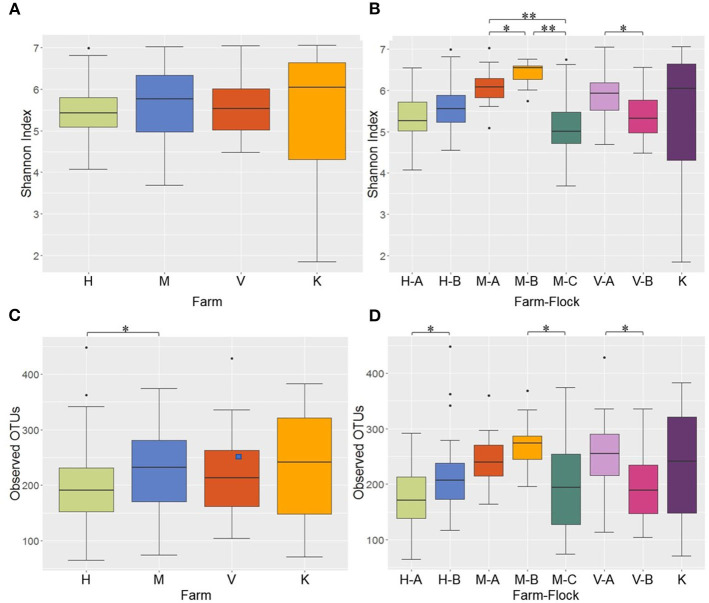
Alpha diversity of the litter microbiotas in four different farms of Northwest Arkansas for different farms and farm-flocks as measured by Shannon Index [(A,B), respectively] and Observed OTUs [(C,D), respectively]. Significant difference is indicated at adjusted P (q) < 0.05 (*) or < 0.01(**).
Figure 5
Figure 5
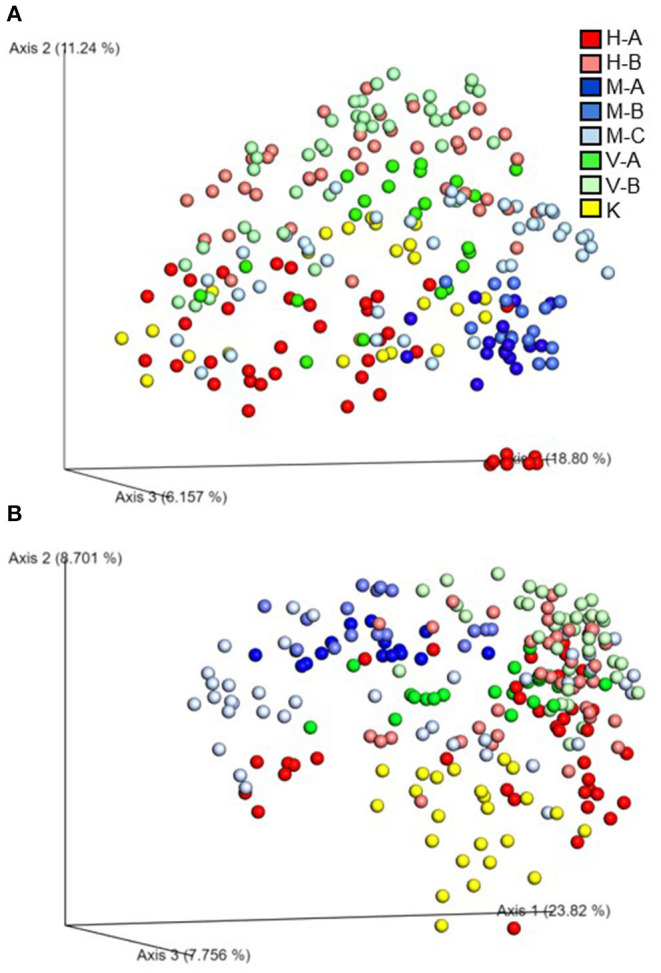
Emperor plot showing beta diversity distances among the different samples from the four farms in Northwest Arknasas as measured by (A) unweighted UniFrac distance and (B) Bray-Curtis distance indices. A, B, and C represent different flocks.
Figure 6
Figure 6
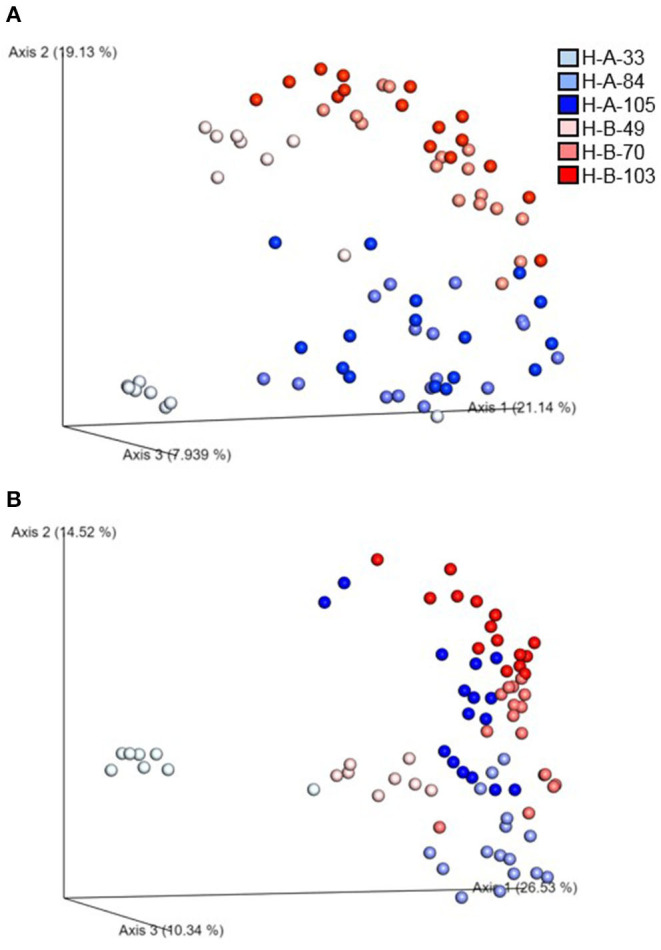
Emperor plot showing beta diversity distances among the different samples in H farm in Northwest Arkansas as measured by (A) unweighted UniFrac distance and (B) Bray-Curtis distance indices. (A,B) represent two different flocks of H farm, whereas the number represents the ages of turkeys when samples were collected.

References

    1. Muir P, Li S, Lou S, Wang D, Spakowicz DJ, Salichos L, et al. The real cost of sequencing: scaling computation to keep pace with data generation. Genome Biol. (2016) 17:1–9. 10.1186/s13059-016-0961-9 - DOI - PMC - PubMed
    1. Jovel J, Patterson J, Wang W, Hotte N, O'Keefe S, Mitchel T, et al. Characterization of the gut microbiome using 16S or shotgun metagenomics. Front Microbiol. (2016) 7:459 10.3389/fmicb.2016.00459 - DOI - PMC - PubMed
    1. Scupham AJ. Succession in the intestinal microbiota of preadolescent turkeys. FEMS Microbiol Ecol. (2007) 60:136–47. 10.1111/j.1574-6941.2006.00245.x - DOI - PubMed
    1. Scupham AJ. Campylobacter colonization of the turkey intestine in the context of microbial community development. Appl Environ Microbiol. (2009) 75:3564–71. 10.1128/AEM.01409-08 - DOI - PMC - PubMed
    1. Scupham AJ, Patton TG, Bent E, Bayles DO. Comparison of the cecal microbiota of domestic and wild turkeys. Microbial Ecol. (2008) 56:322–31. 10.1007/s00248-007-9349-4 - DOI - PubMed

LinkOut - more resources