


Retrospective study of dilated cardiomyopathy in dogs
- PMID: 33345431
- PMCID: PMC7848368
- DOI: 10.1111/jvim.15972
Retrospective study of dilated cardiomyopathy in dogs
Abstract
Background: The United States Food and Drug Administration is investigating possible diet-associated dilated cardiomyopathy (DCM) in dogs and cats.
Objectives: To retrospectively review DCM cases for signalment, diet information, echocardiographic changes, and survival.
Animals: Client-owned dogs (n = 71).
Methods: Medical records of dogs diagnosed with DCM between January 1, 2014 and September 30, 2018 were reviewed. Dogs were grouped into "traditional" or "nontraditional" diet categories and whether or not diet was changed after diagnosis.
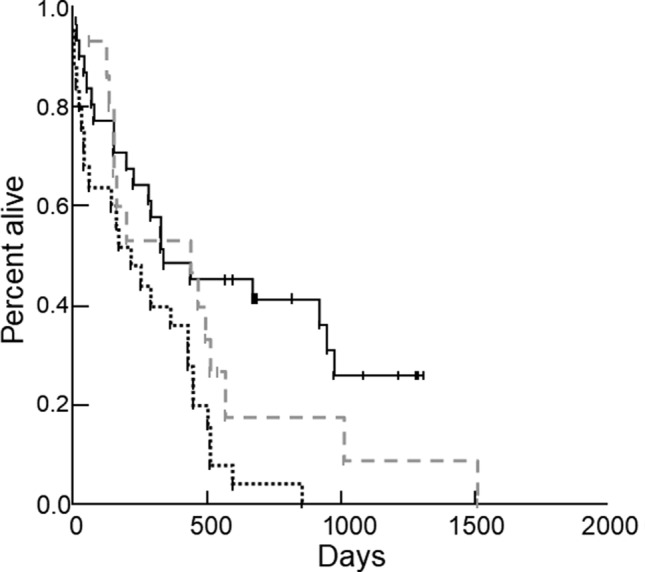
Results: For dogs eating nontraditional diets, those that had their diets changed had a larger percentage decrease in normalized systolic left ventricular internal dimension (P = .03) and left atrial:aorta ratio (P < .001) compared to those that did not have their diets changed. Survival time was significantly longer for dogs with DCM eating nontraditional diets that had their diets changed (median survival, 337 days; range, 9-1307 days) compared to dogs eating nontraditional diets that did not have their diets changed (median survival, 215 days; range, 1-852 days; P = .002).
Conclusions and clinical importance: Dogs with DCM eating nontraditional diets can experience improvement in cardiac function after diet change but additional research is needed to examine possible associations between diet and DCM.
Keywords: cardiology; congestive heart failure; grain-free; nutritional.
© 2020 The Authors. Journal of Veterinary Internal Medicine published by Wiley Periodicals LLC on behalf of American College of Veterinary Internal Medicine.
Conflict of interest statement
In the last 3 years, Dr. Freeman has received research funding from, given sponsored lectures for, and/or provided professional services to Aratana Therapeutics, Elanco, Hill's Pet Nutrition, Nestlé Purina PetCare, P&G Pet Care (now Mars), and Royal Canin. In the last 3 years, Dr. Rush has received research funding from, given sponsored lectures for, and/or provided professional services to Aratana Therapeutics, Boehringer Ingelheim, Elanco, IDEXX, Nestlé Purina PetCare, and Royal Canin.
Figures


References
-
- Martin MWS, Stafford Johnson MJ, Celona B. Canine dilated cardiomyopathy: a retrospective study of signalment, presentation and clinical findings in 369 cases. J Small Anim Pract. 2009;50(1):23‐29. - PubMed
-
- Meurs KM, Lahmers S, Keene BW, et al. A splice site mutation in a gene encoding for PDK4, a mitochondrial protein, is associated with the development of dilated cardiomyopathy in the Doberman pinscher. Hum Genet. 2012;131(8):1319‐1325. - PubMed
-
- Oyama MA, Chittur SV, Reynolds CA. Decreased triadin and increased calstabin2 expression in Great Danes with dilated cardiomyopathy. J Vet Intern Med. 2009;23(5):1014‐1019. - PubMed
-
- Kramer GA, Kittleson MD, Fox PR, Lewis J, Pion PD. Plasma taurine concentrations in normal dogs and in dogs with heart disease. J Vet Intern Med. 1995;9(4):253‐258. - PubMed
MeSH terms
Grants and funding
LinkOut - more resources
Full Text Sources
Miscellaneous
