


The cardiovascular aspect of COVID-19
- PMID: 33345626
- PMCID: PMC7784826
- DOI: 10.1080/07853890.2020.1861644
The cardiovascular aspect of COVID-19
Abstract
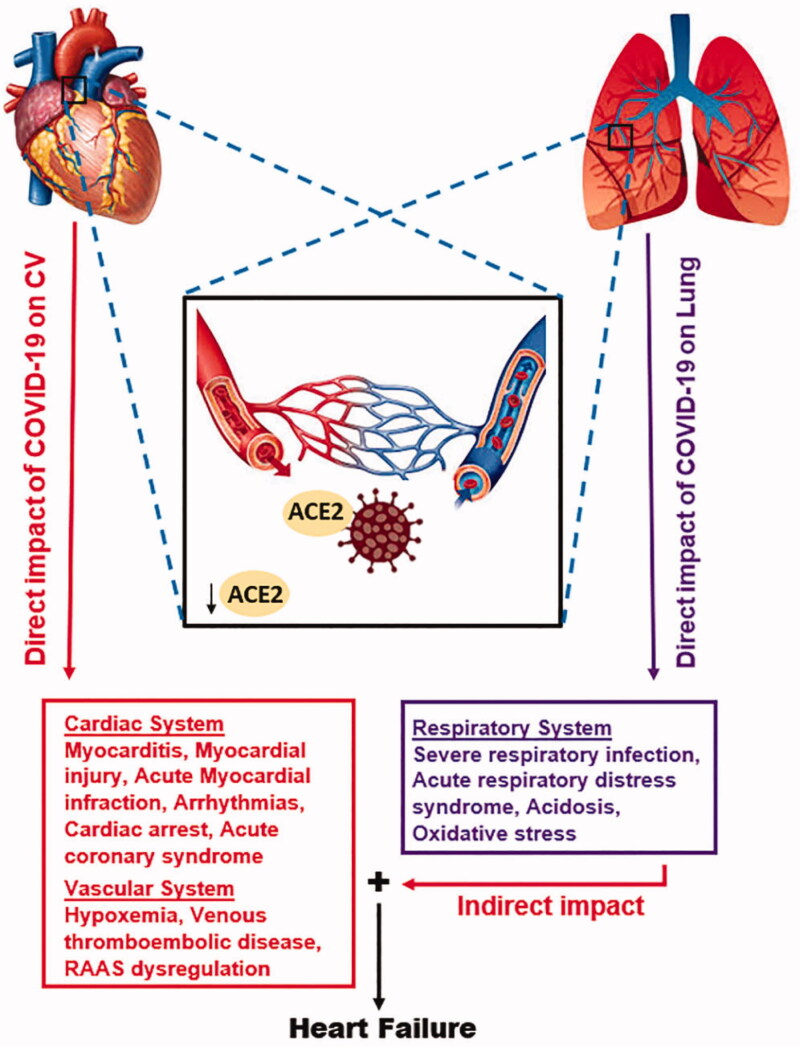
The coronavirus disease-2019 (COVID-19), an infectious disease caused by Severe Acute Respiratory Syndrome Coronavirus 2(SARS-CoV-2), has hit the world very hard by affecting millions of people across countries hence posing a major health threat on a global scale. This novel virus is thought to enter and cause infection in its host through the attachment of its structural protein known as the S-glycoprotein to angiotensin-converting enzyme 2 (ACE2). Given the rapid spread of COVID-19 with its consequences globally, it is mandatory that health caregivers and researchers across all disciplines abreast themselves with the potential effects that this novel virus may have on their fields and the medical society at large. During the infection, the cardiovascular system is affected by unknown pathomechanistic processes, hence accounting for an increased prevalence of cardiovascular diseases (CVDs) among COVID-19 patients. As cardiovascular researchers, we are more concerned about the cardiovascular aspect of SARS-CoV-2/COVID-19. Hence, this concise review addresses these aspects where CVD as a risk factor of COVID-19, the prevalence of CVDs in COVID-19, and the potential cardiovascular disorders which may evolve owing to COVID-19 are discussed. A better understanding of these issues will be pivotal to improve cardiovascular health during this SARS-CoV-2/COVID-19 pandemic and beyond.
Keywords: COVID-19; SARS-CoV-2; acute respiratory distress syndrome; angiotensin-converting enzyme 2; cardiovascular disease.
Conflict of interest statement
No potential conflict of interest was reported by the author(s).
Figures
References
-
- Ksiazek TG, Erdman D, Goldsmith CS, SARS Working Group, et al. A novel coronavirus associated with severe acute respiratory syndrome. N Engl J Med. 2003;348(20):1953–1966. - PubMed
Publication types
MeSH terms
Substances
Grants and funding
LinkOut - more resources
Full Text Sources
Medical
Research Materials
Miscellaneous
