. 2021 Jan 5;10(1):e018993.
doi: 10.1161/JAHA.120.018993. Epub 2020 Dec 21.

Colchicine Inhibits Neutrophil Extracellular Trap Formation in Patients With Acute Coronary Syndrome After Percutaneous Coronary Intervention

Affiliations

Colchicine Inhibits Neutrophil Extracellular Trap Formation in Patients With Acute Coronary Syndrome After Percutaneous Coronary Intervention

Kaivan Vaidya et al. J Am Heart Assoc. .

Abstract

Background Release of neutrophil extracellular traps (NETs) after percutaneous coronary intervention (PCI) in acute coronary syndrome (ACS) is associated with periprocedural myocardial infarction, as a result of microvascular obstruction via pro-inflammatory and prothrombotic pathways. Colchicine is a well-established anti-inflammatory agent with growing evidence to support use in patients with coronary disease. However, its effects on post-PCI NET formation in ACS have not been explored. Methods and Results Sixty patients (40 ACS; 20 stable angina pectoris) were prospectively recruited and allocated to colchicine or no treatment. Within 24 hours of treatment, serial coronary sinus blood samples were collected during PCI. Isolated neutrophils from 10 patients with ACS post-PCI and 4 healthy controls were treated in vitro with colchicine (25 nmol/L) and stimulated with either ionomycin (5 μmol/L) or phorbol 12-myristate 13-acetate (50 nmol/L). Extracellular DNA was quantified using Sytox Green and fixed cells were stained with Hoechst 3342 and anti-alpha tubulin. Baseline characteristics were similar across both treatment and control arms. Patients with ACS had higher NET release versus patients with stable angina pectoris (P<0.001), which was reduced with colchicine treatment (area under the curve: 0.58 versus 4.29; P<0.001). In vitro, colchicine suppressed unstimulated (P<0.001), phorbol 12-myristate 13-acetate-induced (P=0.009) and ionomycin-induced (P=0.002) NET formation in neutrophils isolated from patients with ACS post-PCI, but not healthy controls. Tubulin organization was impaired in neutrophils from patients with ACS but was restored by colchicine treatment. Conclusions Colchicine suppresses NET formation in patients with ACS post-PCI by restoring cytoskeletal dynamics. These findings warrant further investigation in randomized trials powered for clinical end points. Registration URL: https://anzctr.org.au; Unique identifier: ACTRN12619001231134.

Keywords: acute coronary syndrome; inflammation; percutaneous coronary intervention; pharmacology.


Conflict of interest statement

None.

Figures
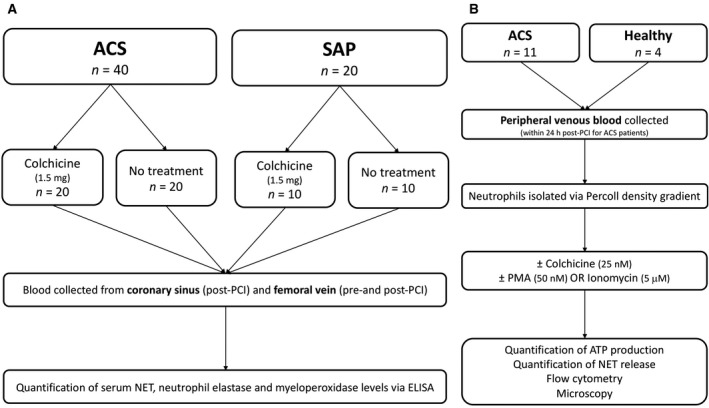
Figure 1
Figure 1. Participant flow.
(A) In vivo study: Patients with ACS and SAP were randomized to either colchicine (total dose 1.5 mg) or no treatment. Blood samples were collected from the coronary sinus and femoral vein of patients undergoing PCI for quantification of NET, NE, and MPO levels. (B) Ex vivo study: Peripheral venous blood was collected from healthy volunteers and patients with ACS (within 24 hours post‐PCI). Neutrophils were isolated using a Percoll density gradient and incubated with colchicine (25 nmol/L) or vehicle control, followed by stimulation with PMA (50 nmol/L) or ionomycin (5 μmol/L) and assessment of NET release, cytoskeletal organization, chromatin swelling, ROS production, and cell viability. ACS indicates acute coronary syndrome; MPO, myeloperoxidase; NE, neutrophil elastase; NET, neutrophil extracellular trap; PCI, percutaneous coronary intervention; PMA, phorbol 12‐myristate 13‐acetate; SAP, stable angina pectoris; and ROS, reactive oxygen species.
Figure 2
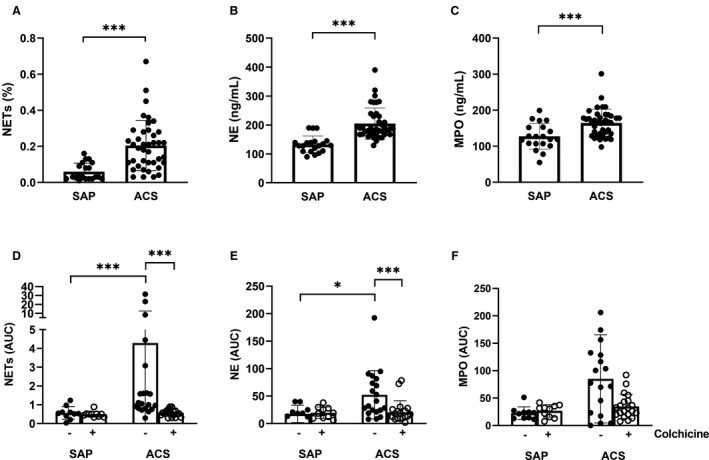
Figure 2. Patients with ACS have enhanced neutrophil activity that is acutely suppressed by colchicine.
Blood was collected from the coronary sinus before percutaneous coronary intervention and levels of (A) NETs, (B) NE, and (C) MPO quantified. Patients with SAP or ACS were or were not treated with colchicine. Blood was collected from the coronary sinus during the procedure. (D) NETs, (E) NE and (F) MPO levels were measured over time and area under the curve was calculated. Error bars represent SD of the mean. ***P<0.005;*P<0.05. ACS indicates acute coronary syndrome; MPO, myeloperoxidase; NE, neutrophil elastase; NETs, neutrophil extracellular traps; and SAP, stable angina pectoris.
Figure 3
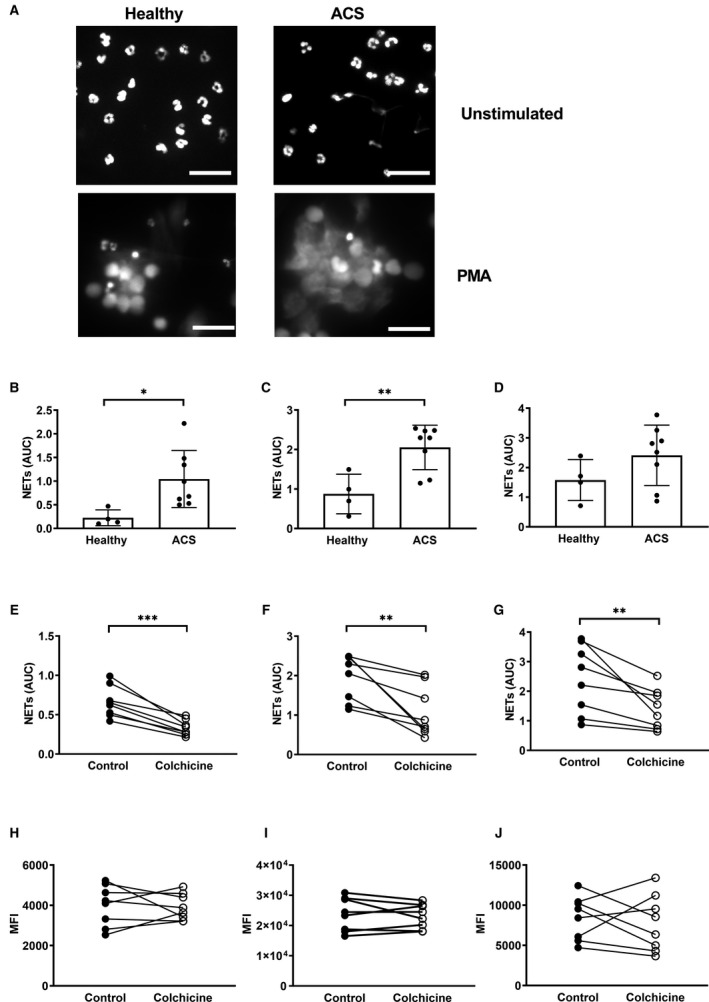
Figure 3. Colchicine inhibits NETosis in primed neutrophils from patients with ACS independently of ROS generation.
Neutrophils from patients with ACS and healthy participants were isolated and (A) NETosis imaged after 2 hours in unstimulated or PMA‐stimulated cells. NET release was measured using a fluorescent plate–based method in (B) unstimulated cells or in cells stimulated with (C) PMA or (D) ionomycin. Neutrophils from patients with ACS were isolated and treated with 25 nmol/L colchicine for 1.5 hours before measurement of NET release in (E) unstimulated cells or in cells stimulated with (F) PMA or (G) ionomycin. Neutrophils from patients with ACS were isolated and treated with 25 nmol/L colchicine for 1.5 hours before quantification of reactive oxygen species production using dihydrorhodamine 123 in (H) unstimulated, (I) PMA‐, and (J) ionomycin‐stimulated cells. Error bars represent SD from the mean. Scale bar=20 µm. ***P<0.001; **P<0.01; *P<0.05. ACS indicates acute coronary syndrome; AUC, area under the curve; MFI, median fluorescence intensity; PMA, phorbol 12‐myristate 13‐acetate; and NETs, neutrophil extracellular trap.
Figure 4
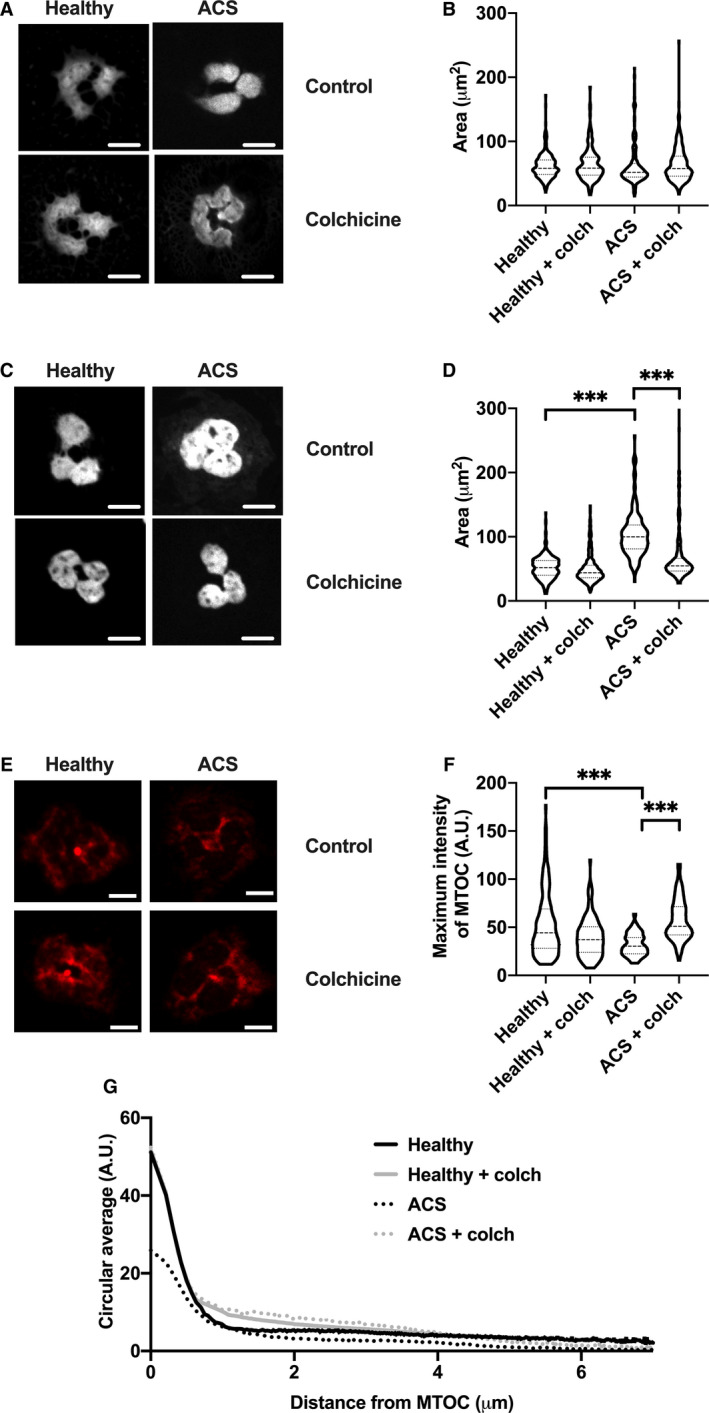
Figure 4. Colchicine inhibits premature chromatin swelling and restores α‐tubulin organization in neutrophils from patients with ACS.
For quantification of chromatin swelling, neutrophils isolated from healthy participants and patients with ACS were treated with colchicine (colch; 25 nmol/L) or vehicle control for 1.5 hours. These cells were then fixed immediately (A, B) or stimulated with PMA (50 nmol/L) for 1 hour then fixed (C, D). All cells were stained with Hoechst 3342 before colchicine treatment and visualized by confocal microscopy. Chromatin area for individual cells was recorded in μm2 and compared between groups. For quantification of MTOC dynamics, neutrophils from healthy participants and patients with ACS were isolated, treated with colchicine (25 nmol/L) or vehicle control for 1.5 hours, then fixed and stained with anti‐α‐tubulin and visualized by confocal microscopy (E). Maximum intensity of the MTOC (F) and intensity as a function of distance from the MTOC (G) were quantified for each condition. Scale bar=5 µm. ***P<0.005. ACS indicates acute coronary syndrome; A.U., arbitrary units; MTOC, microtubule‐organizing center; and PMA, phorbol 12‐myristate 13‐acetate.

References

    1. Kereiakes DJ. Adjunctive pharmacotherapy before percutaneous coronary intervention in non‐ST‐elevation acute coronary syndromes: the role of modulating inflammation. Circulation. 2003;108:Iii22‐Iii27. DOI: 10.1161/01.CIR.0000086951.09881.51. - DOI - PubMed
    1. Bekkers SCAM, Yazdani SK, Virmani R, Waltenberger J. Microvascular obstruction: underlying pathophysiology and clinical diagnosis. J Am Coll Cardiol. 2010;55:1649–1660. - PubMed
    1. Mangold A, Alias S, Scherz T, Hofbauer T, Jakowitsch J, Panzenbock A, Simon D, Laimer D, Bangert C, Kammerlander A, et al. Coronary neutrophil extracellular trap burden and deoxyribonuclease activity in ST‐elevation acute coronary syndrome are predictors of ST‐segment resolution and infarct size. Circ Res. 2015;116:1182–1192. - PubMed
    1. Papayannopoulos V, Zychlinsky A. Nets: a new strategy for using old weapons. Trends Immunol. 2009;30:513–521. DOI: 10.1016/j.it.2009.07.011. - DOI - PubMed
    1. Carbone F, Mach F, Montecucco F. Update on the role of neutrophils in atherosclerotic plaque vulnerability. Curr Drug Targets. 2015;16:321–333. - PubMed

Publication types

MeSH terms