Effects of Fecal Microbiome Transfer in Adolescents With Obesity: The Gut Bugs Randomized Controlled Trial
- PMID: 33346848
- PMCID: PMC7753902
- DOI: 10.1001/jamanetworkopen.2020.30415
Effects of Fecal Microbiome Transfer in Adolescents With Obesity: The Gut Bugs Randomized Controlled Trial
Abstract
Importance: Treatment of pediatric obesity is challenging. Preclinical studies in mice indicated that weight and metabolism can be altered by gut microbiome manipulation.
Objective: To assess efficacy of fecal microbiome transfer (FMT) to treat adolescent obesity and improve metabolism.
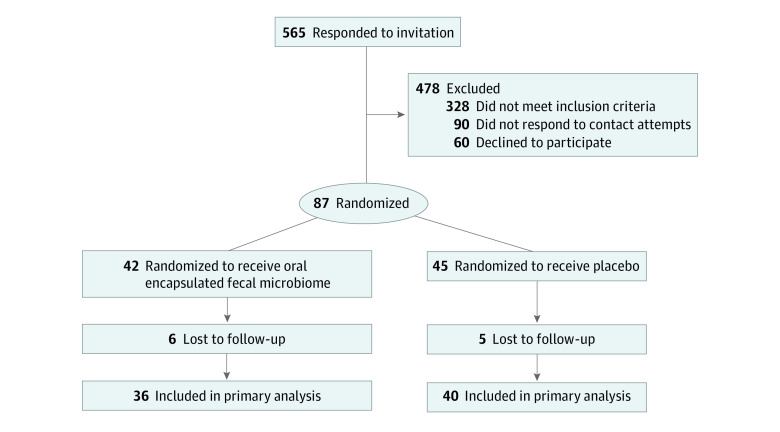
Design, setting, and participants: This randomized, double-masked, placebo-controlled trial (October 2017-March 2019) with a 26-week follow-up was conducted among adolescents aged 14 to 18 years with a body mass index (BMI; calculated as weight in kilograms divided by height in meters squared) of 30 or more in Auckland, New Zealand. A total of 87 individuals took part-565 individuals responded to advertisements, 328 were ineligible, and 150 declined participation. Clinical data were analyzed from September 2019 to May 2020.
Interventions: Single course of oral encapsulated fecal microbiome from 4 healthy lean donors of the same sex or saline placebo.
Main outcomes and measures: Primary outcome was BMI standard deviation score at 6 weeks using intention-to-treat analysis. Secondary outcomes included body composition, cardiometabolic parameters, well-being, and gut microbiome composition.
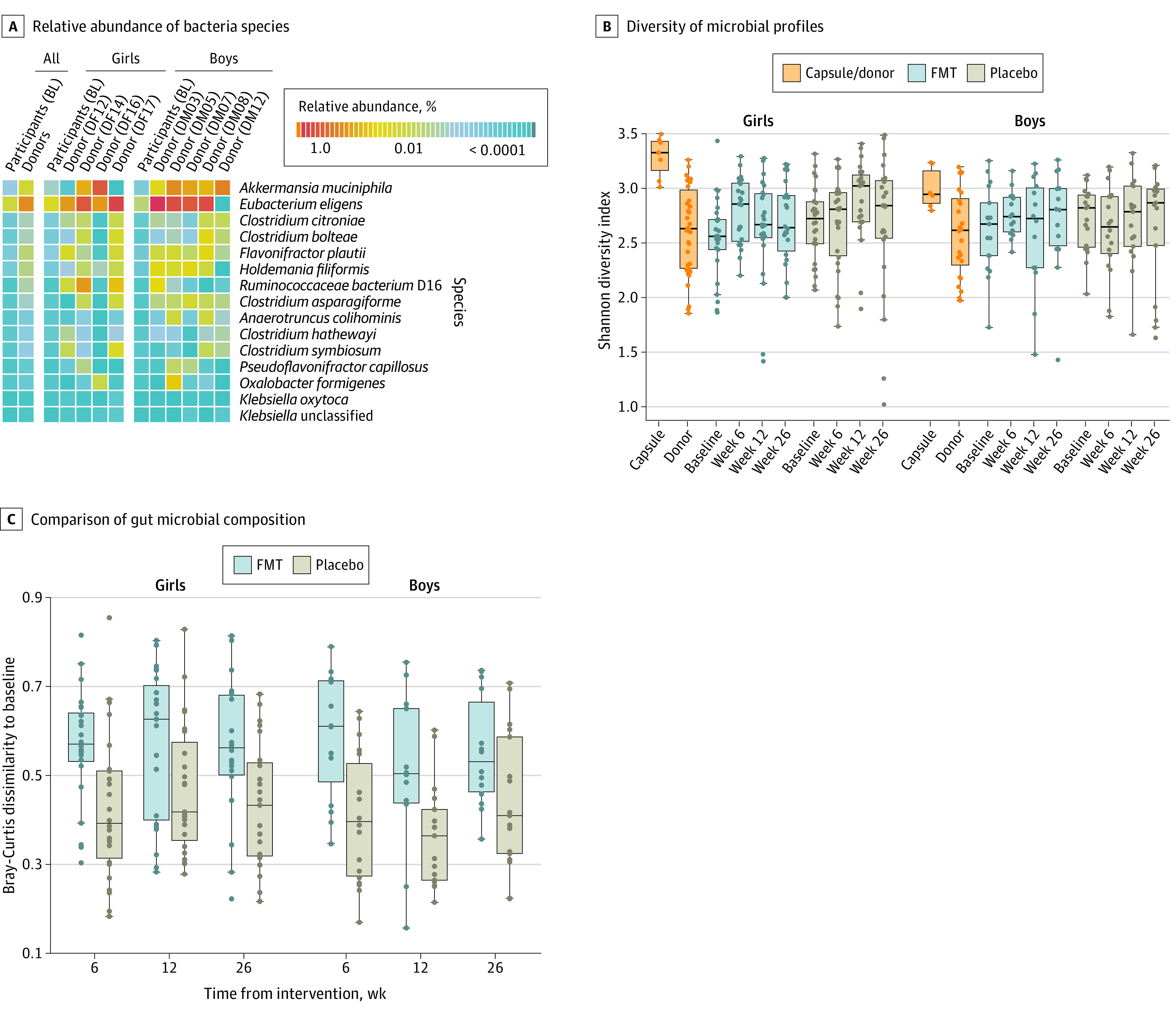
Results: Eighty-seven participants (59% female adolescents, mean [SD] age 17.2 [1.4] years) were randomized 1:1, in groups stratified by sex, to FMT (42 participants) or placebo (45 participants). There was no effect of FMT on BMI standard deviation score at 6 weeks (adjusted mean difference [aMD] -0.026; 95% CI -0.074, 0.022). Reductions in android-to-gynoid-fat ratio in the FMT vs placebo group were observed at 6, 12, and 26 weeks, with aMDs of -0.021 (95% CI, -0.041 to -0.001), -0.023 (95% CI, -0.043 to -0.003), and -0.029 (95% CI, -0.049 to -0.008), respectively. There were no observed effects on insulin sensitivity, liver function, lipid profile, inflammatory markers, blood pressure, total body fat percentage, gut health, and health-related quality of life. Gut microbiome profiling revealed a shift in community composition among the FMT group, maintained up to 12 weeks. In post-hoc exploratory analyses among participants with metabolic syndrome at baseline, FMT led to greater resolution of this condition (18 to 4) compared with placebo (13 to 10) by 26 weeks (adjusted odds ratio, 0.06; 95% CI, 0.01-0.45; P = .007). There were no serious adverse events recorded throughout the trial.
Conclusions and relevance: In this randomized clinical trial of adolescents with obesite, there was no effect of FMT on weight loss in adolescents with obesity, although a reduction in abdominal adiposity was observed. Post-hoc analyses indicated a resolution of undiagnosed metabolic syndrome with FMT among those with this condition. Further trials are needed to confirm these results and identify organisms and mechanisms responsible for mediating the observed benefits.
Trial registration: Australian New Zealand Clinical Trials Registry Identifier: ACTRN12615001351505.
Conflict of interest statement
Figures