


Establishing a telerehabilitation program for patients with Duchenne muscular dystrophy in the COVID-19 pandemic
- PMID: 33346889
- PMCID: PMC7750780
- DOI: 10.1007/s00508-020-01786-8
Establishing a telerehabilitation program for patients with Duchenne muscular dystrophy in the COVID-19 pandemic
Abstract
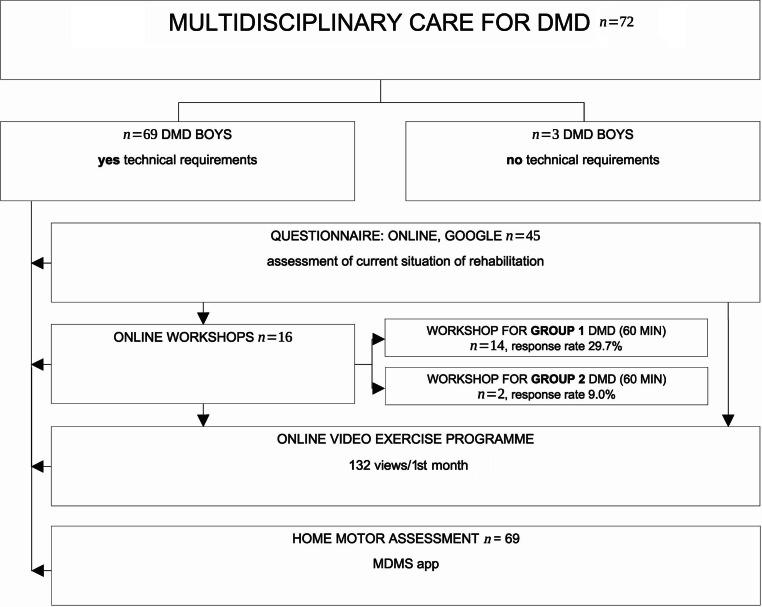
Background: Duchenne muscular dystrophy is a genetic disease characterized by gradual loss of motor function, respiratory failure and cardiomyopathy. During the time of the global coronavirus pandemic, maintenance of social distancing and self-isolation might complicate regular multidisciplinary care of patients with Duchenne muscular dystrophy but on the other hand may lead to new medical care telehealth solutions. The aim of the study was to investigate patients' situation regarding rehabilitation in the pandemic, to establish an online rehabilitation program and motor assessment and to determine the needs of telerehabilitation in this group.
Methods: The project involved 69 boys with Duchenne muscular dystrophy. The rehabilitation program was presented during online workshops for patients and caregivers. The same program was recorded on video and published in the internet. The online motor assessment tool consisted of six motor tests, caregivers were asked to perform the tasks and share a photograph of the patient's posture using a designed app.
Results: In the nonambulant group the emphasis was placed on chest physiotherapy, stretching of upper extremities, positioning and wheelchair ergonomics. The program for the ambulant group focused on lower extremities stretching and full body exercises. Response rate for the workshops for ambulant patients was 29.7%, and only 9.0% for nonambulant patients. Videos showing exercises were displayed 132 times within a month.
Conclusion: With the physiotherapist guidance (online communication or video) patients with caregivers' help can continue home based rehabilitation. Online videos/instructions/video guidelines are more acceptable by parents/caregivers of patients with Duchenne muscular dystrophy than live workshops.
Keywords: Digital rehabilitation; Home-based exercise; Motor assessment; Neuromuscular disease; Physical therapy.
Conflict of interest statement
A. Sobierajska-Rek, Ł. Mański, J. Jabłońska-Brudło, K. Śledzińska, A. Ucińska, and J. Wierzba declare that they have no competing interests.
Figures
References
-
- World Muscle Society. Covid-19 and people with neuromuscular disorders: World Muscle Society position and advice. 2020. https://www.worldmusclesociety.org/news/view/150. Accessed 20 May 2020.
-
- Birnkrant DJ, Bushby K, Bann CM, et al. Diagnosis and management of Duchenne muscular dystrophy, part 1: diagnosis, and neuromuscular, rehabilitation, endocrine, and gastrointestinal and nutritional management. Lancet Neurol. 2018;17(3):251–267. doi: 10.1016/S1474-4422(18)30024-3. - DOI - PMC - PubMed
MeSH terms
LinkOut - more resources
Full Text Sources
Medical
