


Bergenin protects pancreatic beta cells against cytokine-induced apoptosis in INS-1E cells
- PMID: 33347462
- PMCID: PMC7751853
- DOI: 10.1371/journal.pone.0241349
Bergenin protects pancreatic beta cells against cytokine-induced apoptosis in INS-1E cells
Abstract
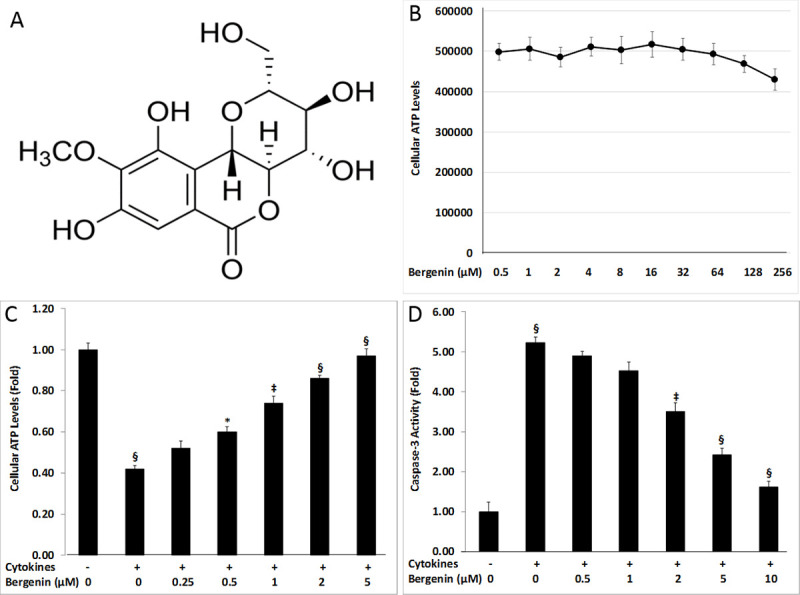
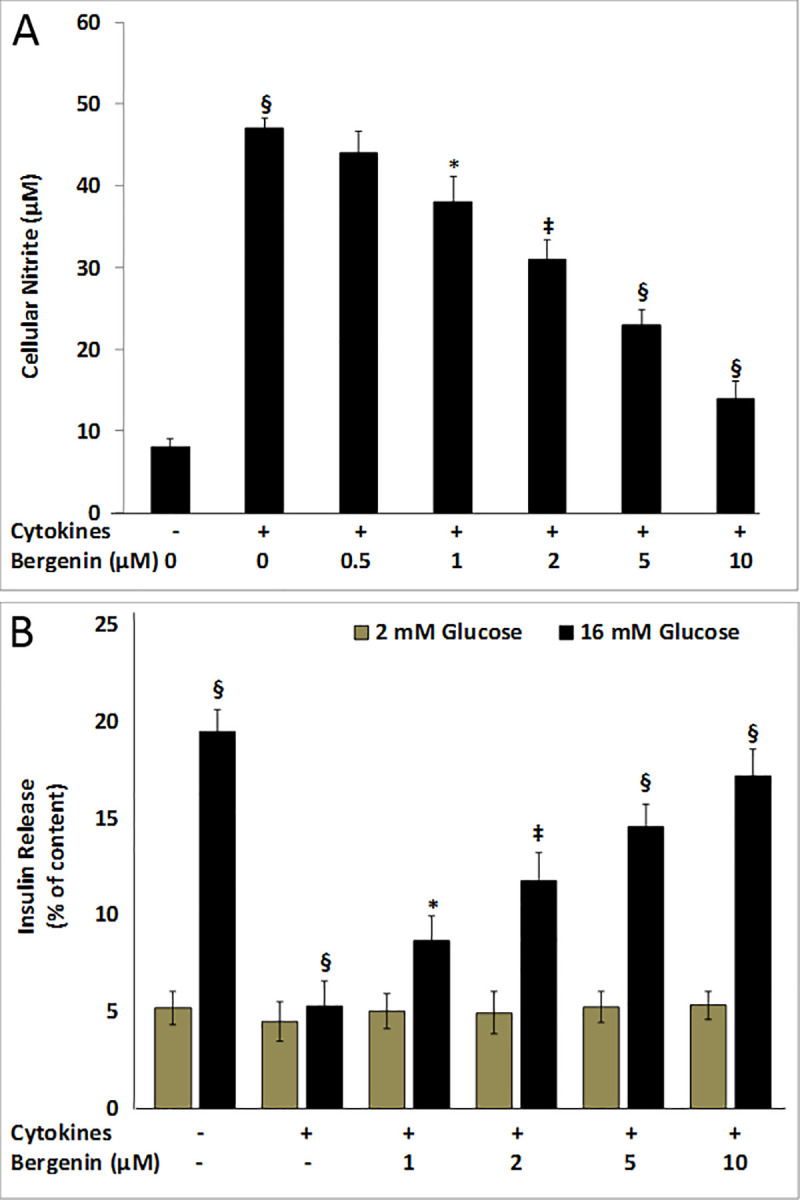
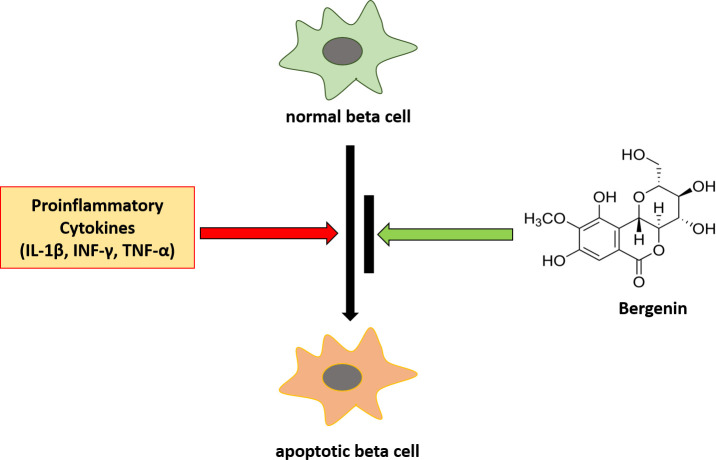
Beta cell apoptosis induced by proinflammatory cytokines is one of the hallmarks of diabetes. Small molecules which can inhibit the cytokine-induced apoptosis could lead to new drug candidates that can be used in combination with existing therapeutic interventions against diabetes. The current study evaluated several effects of bergenin, an isocoumarin derivative, in beta cells in the presence of cytokines. These included (i) increase in beta cell viability (by measuring cellular ATP levels) (ii) suppression of beta cell apoptosis (by measuring caspase activity), (iii) improvement in beta cell function (by measuring glucose-stimulated insulin secretion), and (iv) improvement of beta cells mitochondrial physiological functions. The experiments were carried out using rat beta INS-1E cell line in the presence or absence of bergenin and a cocktail of proinflammatory cytokines (interleukin-1beta, tumor necrosis factor-alpha, and interferon- gamma) for 48 hr. Bergenin significantly inhibited beta cell apoptosis, as inferred from the reduction in the caspase-3 activity (IC50 = 7.29 ± 2.45 μM), and concurrently increased cellular ATP Levels (EC50 = 1.97 ± 0.47 μM). Bergenin also significantly enhanced insulin secretion (EC50 = 6.73 ± 2.15 μM) in INS-1E cells, presumably because of the decreased nitric oxide production (IC50 = 6.82 ± 2.83 μM). Bergenin restored mitochondrial membrane potential (EC50 = 2.27 ± 0.83 μM), decreased ROS production (IC50 = 14.63 ± 3.18 μM), and improved mitochondrial dehydrogenase activity (EC50 = 1.39 ± 0.62 μM). This study shows for the first time that bergenin protected beta cells from cytokine-induced apoptosis and restored insulin secretory function by virtue of its anti-inflammatory, antioxidant and anti-apoptotic properties. To sum up, the above mentioned data highlight bergenin as a promising anti-apoptotic agent in the context of diabetes.
Conflict of interest statement
The authors have read the journal's policy and have the following competing interests: Searle Pharmaceuticals Pakistan Ltd. provided funds for publishing this work. This does not alter our adherence to PLOS ONE policies on sharing data and materials. There are no patents, products in development or marketed products associated with this research to declare.
Figures



References
-
- Ahmed E, Arshad M, Ahmad M, Saeed M, Ishaque M. Ethnopharmacological survey of some medicinally important plants of Galliyat Areas of NWFP, Pakistan. Asian Journal of Plant Sciences. 2004;3(4):410–5. https://scialert.net/abstract/?doi=ajps.2004.410.415
-
- Da Silva SL, Oliveira VG, Yano T, Nunomura RD. Antimicrobial activity of bergenin from Endopleura uchi (Huber) Cuatrec [Atividade antimicrobiana de bergenina isolada de Endopleura uchi (Huber) Cuatrec]. v. 39, n. 1 2009. 10.1590/S0044-59672009000100019 - DOI
-
- Uddin G, Sadat A, Siddiqui BS. Comparative antioxidant and antiplasmodial activities of 11-O-galloylbergenin and bergenin isolated from Bergenia ligulata. Trop Biomed. 2014. March 1;31(1):143–8. - PubMed
Publication types
MeSH terms
Substances
LinkOut - more resources
Full Text Sources
Research Materials
